
What to See Inside Abu Simbel Temples: Full Visitor Guide
Can you go inside Abu Simbel Temples? The answer is an exciting and resounding yes! Visitors can step inside both temples to explore their grand chambers, sacred sanctuaries, and intricate carvings, all of which showcase the brilliance of ancient Egyptian architecture. This unforgettable experience allows travelers to connect closely with one of the world’s most remarkable and awe-inspiring temple complexes.

Exterior of the Great Temple at Abu Simbel.
Key Takeaways – Abu Simbel Temple
- You can visit the interiors of both Abu Simbel temples, following the open visitor route and staff instructions.
- Inside the Great Temple, look for the Osirid statues, second hall, side chambers and sanctuary with four seated figures.
- Do not cross barriers or enter areas closed to visitors.
- The official ticket page lists mobile-phone photography as free; check other equipment permissions before your visit.
- The Great Temple and Small Temple have different interior layouts and decoration.
- Check the current admission option for its inclusions; see the ticket section below for the dedicated price guide.
Can You Go Inside Abu Simbel Temples?
Visitors can indeed enter both Abu Simbel temples and explore their interiors. The complex features the majestic Great Temple of Ramses II and the beautifully crafted Small Temple dedicated to Hathor and Queen Nefertari. Follow the open visitor route and any barriers or staff instructions; access to individual areas may change. A few guidelines help preserve these historic treasures:
- Do not touch the statues or the wall carvings.
- Follow current on-site photography instructions regarding flash and other equipment.
Visiting the temples is a fascinating experience. As you step inside, you’ll transition from bright open spaces to quiet halls filled with ancient carvings and breathtaking statues.
What You Will See Inside Abu Simbel
Stepping into the Great Temple at Abu Simbel, visitors pass through a series of halls and chambers, beginning with the impressive entrance hall lined with eight colossal statues of Ramesses II. Each chamber offers a unique glimpse into the grandeur and religious significance of this iconic temple complex.
1. First Hypostyle Hall (Osirid Pillars)
This hall features eight massive Osirid statues of Ramesses II, arms crossed and holding symbols of power. The walls are adorned with detailed carvings portraying Ramesses II at the Battle of Kadesh, designed to showcase his authority and military prowess.
2. Second Hypostyle Hall
The smaller second hall includes four pillars. The walls depict Ramesses II presenting offerings to the gods, highlighting his devotion and his role as protector of the New Kingdom. Beyond this hall, a vestibule leads to the sanctuary.
3. The Side Chambers
Side chambers branch off the main interior spaces. Where access is permitted, take a moment to look at their wall decoration as well as the larger halls. Follow the marked visitor route rather than assuming every doorway is open.
4. The Sanctuary (Holy of Holies)
The most sacred part of the temple, the sanctuary houses four seated statues of Ptah, Amun-Ra, Ra-Horakhty, and Ramesses II. Twice a year, sunlight reaches three of the figures while Ptah remains in shadow, creating one of ancient Egypt’s most remarkable solar alignments.
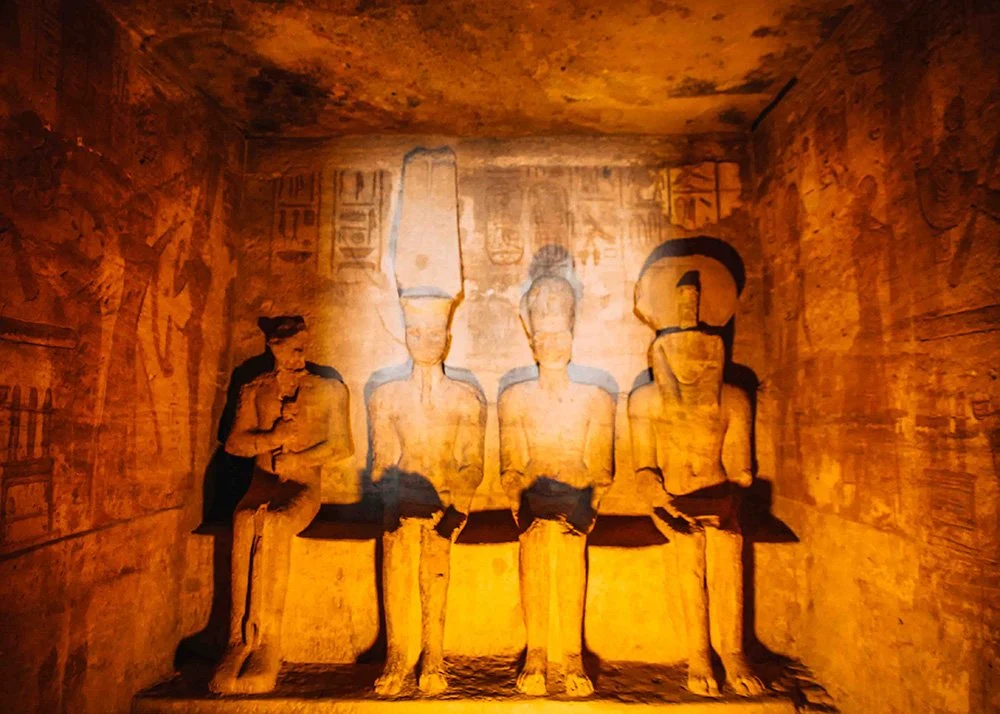
The four figures in the Great Temple sanctuary at Abu Simbel.
Differences Between Entering the Great Temple vs The Small Temple
The experience is different in each temple. Here’s a quick comparison:
| The Great Temple | The Small Temple |
|---|---|
| Dedicated to Ramesses II, Re-Horakhty, Amun, and Ptah | Dedicated to Goddess Hathor and Queen Nefertari |
| Built to display the pharaoh’s power and honor the gods of the New Kingdom. | Built to honor Goddess Hathor and celebrate Queen Nefertari, the Great Royal Wife of Ramesses II. |
| Larger, with a deeper sequence of halls leading to the sanctuary | Smaller, with a more compact interior |
| The first hall has eight Osirid statues of Ramesses II | The main hall has six pillars with Hathor-headed capitals |
| Political, military and religious carvings | Scenes of Ramesses II and Nefertari making offerings to the gods |
Photography Rules Inside Abu Simbel
There are a few important points to check when taking photos inside Abu Simbel:
- The official Abu Simbel ticket page lists mobile-phone photography as free of charge.
- Follow current on-site photography instructions regarding flash and other equipment.
- If you plan to use a DSLR, tripod, lighting equipment or a professional setup, confirm current permissions and any charges with the site before your visit. Do not assume the mobile-phone policy covers other equipment.
Lighting & Visibility Inside the Temples
Both temples are carved directly into the mountain, which makes their interiors naturally dim. This darkness adds a mysterious and dramatic atmosphere. Allow your eyes to adjust when moving from bright daylight into the interior, and take your time looking at the carvings.

Interior halls of the Great Temple, looking toward the sanctuary.
Are There Any Areas You Cannot Enter?
Some areas may be closed to visitors for conservation or site operations. Follow the route open on the day of your visit:
- Do not cross rope barriers or enter areas marked closed.
- Follow staff instructions around any work in progress.
- Ask before entering a side room if access is unclear.
How Long Does It Take to Visit Inside Abu Simbel?
Allow around 90 minutes to 2 hours to explore both temple interiors at an unhurried pace; this is a planning estimate, not a fixed visit length. The visit may take longer if you’re with a guided tour, as guides often explain the history and meaning behind the carvings. Take your time—there is a lot to see inside these sacred halls. Allow additional time for entry, the exterior areas and any queues.
Is It Safe to Go Inside Abu Simbel?
The temple interiors are open to visitors. Walk carefully as your eyes adjust to the dimmer light, follow barriers and staff instructions, and avoid blocking narrow passages. If you have mobility or visibility concerns, check current access arrangements with the site or your operator before travelling.
Do You Need a Guide to Enter the Temples?
The official admission information does not state a mandatory guide requirement. However, having a guide can enrich your experience. A guide can explain the meaning behind the carvings and provide historical context. Confirm what your tour includes and follow any current on-site instructions.
Does the Ticket Include Entry Inside the Temples?
Check the current Abu Simbel admission option for its inclusions before paying, and follow any access notices on the day. A temple admission ticket is not the same as a guided-tour package. For current prices, ticket categories and purchase information, see our Abu Simbel ticket-price guide.
Conclusion
Visiting the inside of Abu Simbel is truly an unforgettable experience. The temples are filled with remarkable carvings, sacred chambers, and the timeless beauty of ancient Egyptian architecture. Whether you’re exploring the Great Temple or the Small Temple, each space tells a powerful story that leaves a lasting impression.
If you would like a guided visit from Aswan, explore our Abu Simbel day trip from Aswan and check the itinerary and inclusions before booking.
FAQs – Visiting Inside Abu Simbel Temples
Can you go inside Abu Simbel Temples?
Yes — visitors can enter both temple interiors. Follow the open visitor route, barriers and staff instructions; access to individual areas may change.
Do you need a guide to explore Abu Simbel?
The official admission information does not state a mandatory guide requirement. A guide can help explain the carvings, history and layout; confirm your tour’s inclusions and current on-site arrangements.
Does the ticket include entry inside the temples?
Check the current admission option for its inclusions and any access notices. Temple admission and a guided-tour package are different purchases; the dedicated ticket-price guide covers current prices and purchase information.
How long do you need inside Abu Simbel?
Allow around 90 minutes to 2 hours for an unhurried look inside both temples. This is a planning estimate; allow additional time for entry, the exterior areas, queues and any guided explanation.
Can you take photos inside Abu Simbel?
The official ticket page lists mobile-phone photography as free. Follow current on-site photography instructions regarding flash and other equipment, and confirm permissions and any charges for other equipment before visiting.
Is it safe to go inside Abu Simbel?
The interiors are open to visitors. Walk carefully in dim light, follow staff instructions, and check current access arrangements if you have mobility or visibility concerns.