
What is Hieroglyphics? Ancient Egyptian Writing Explained
Hieroglyphics is the formal writing system of ancient Egypt, using signs that represent sounds, words, and meaning categories. Its individual characters are called hieroglyphs. They recorded the Egyptian language on temples, tombs, statues, and other objects; they were more than decorative pictures.
This guide explains what hieroglyphics means, when it developed, how to recognize its reading direction, and where to see it in Egypt. For individual signs and worked examples, see our guide to hieroglyphic symbols and meanings.
What Is Hieroglyphics
The term hieroglyph comes from Greek words meaning “sacred carving.” Hieroglyphic writing was closely connected with religious and royal display, but it could express language, not just sacred ideas.
A bird, a foot, or a plant could function as a sound sign; other signs could write a word or help identify its meaning. Understanding an inscription therefore requires Egyptian vocabulary and grammar as well as recognition of the pictures.
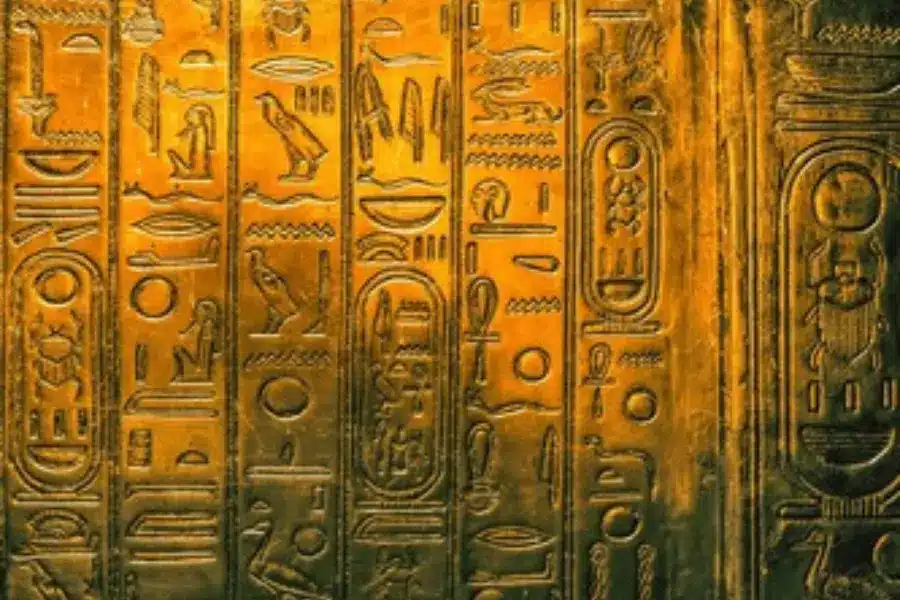
- Hieroglyph: one character in the script.
- Hieroglyphs or hieroglyphics: common terms for the writing; “hieroglyphic” is also the adjective, as in “hieroglyphic inscription.”
- Ancient Egyptian: the language recorded by the script, which changed over time.
Formal inscriptions on temples and tombs preserved names, titles, offerings, and religious texts. For handwritten documents, scribes also used related scripts suited to writing with a brush.
When and Where Did Hieroglyphics Begin?
Egyptian writing emerged in the late fourth millennium BCE, around 3200–3100 BCE. Early evidence includes short inscriptions on labels, vessels, and objects associated with the developing Egyptian state.
These early marks are not always easy to interpret: the boundary between an identifying image and a sign recording language can be uncertain. UCL’s overview of the development of writing explains this distinction.
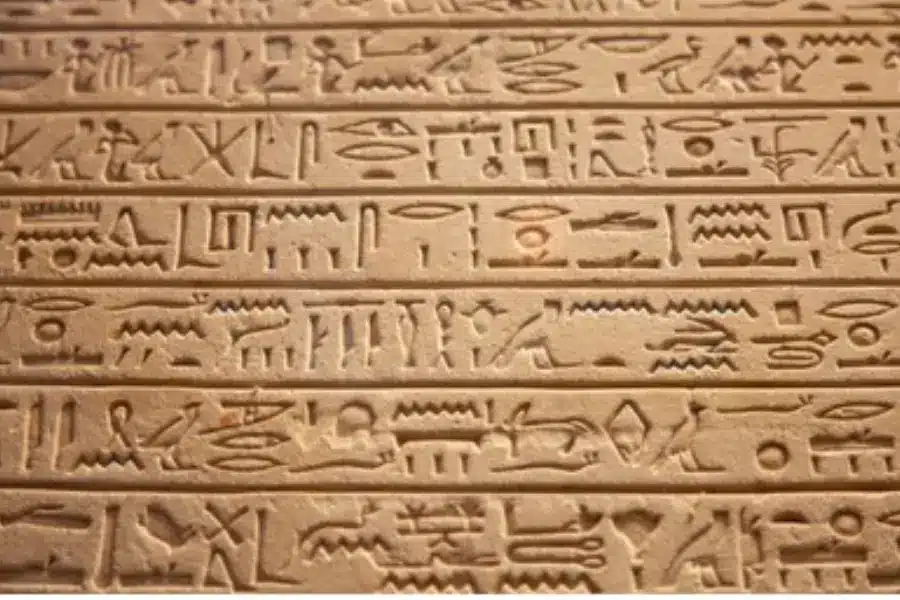
From Early Inscriptions to the Roman Period
- Late fourth millennium BCE: the earliest stages of Egyptian writing.
- Pharaonic history: hieroglyphs were used alongside cursive forms of writing, with changing styles, spellings, and uses.
- Ptolemaic and Roman periods: temples continued to use hieroglyphic inscriptions.
- 394 CE: the latest dated ancient hieroglyphic inscription is recorded at Philae, near Aswan.
The script remained recognizable over more than 3,000 years, but neither the writing nor the Egyptian language stayed completely unchanged.
How Did Egyptian Hieroglyphs Work?
Hieroglyphic writing combined sound signs with signs that supplied meaning. The same recognizable picture could have different functions depending on its context, so it cannot always be translated by naming the object it depicts.
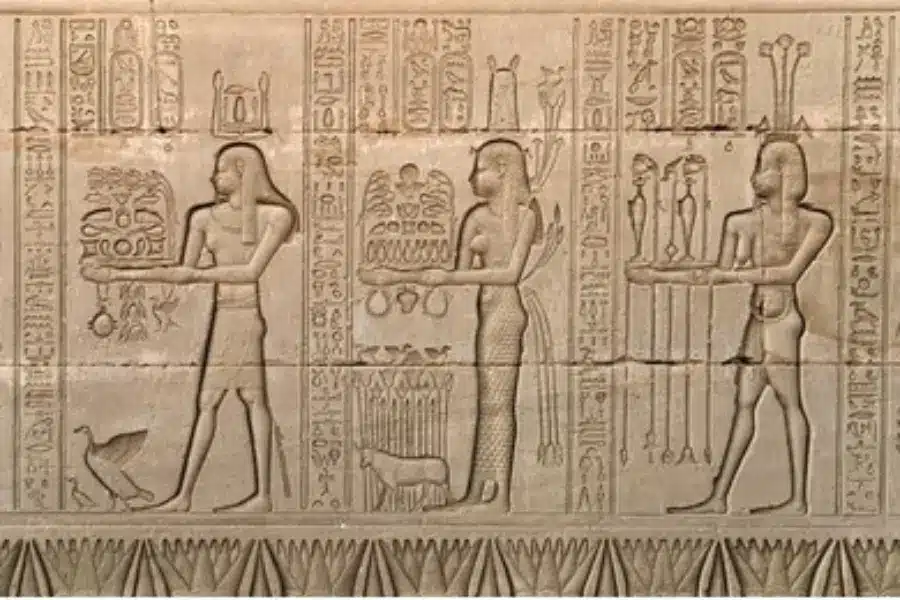
Three Main Functions of Hieroglyphic Signs
- Phonograms: signs for one, two, or three consonants. For example, the owl can represent m.
- Logograms: signs used to write whole words. A sign depicting a house can write the word for “house,” although it can also have a sound-based use.
- Determinatives: unpronounced signs that help classify a word’s meaning. Walking legs, for example, can indicate a connection with movement.
See UCL’s explanation of the hieroglyphic writing system for examples of these functions within an inscription.
Vowels were generally not written in hieroglyphic spelling. Modern Egyptological pronunciations help students discuss words, but they should not be mistaken for a complete reconstruction of ancient speech. Learning a few signs is a starting point, not a substitute for learning the language.
How Were Hieroglyphs Read?
For a typical inscription, look first at the human and animal figures. They face toward the beginning of the text:
- Figures face right: start at the right and read toward the left.
- Figures face left: start at the left and read toward the right.
- Vertical columns: read from top to bottom; the figures help indicate which column comes first.
Signs are arranged in balanced groups rather than separated by modern word spaces. A short sign may sit above another sign within a group. Knowing the direction helps you follow the layout, but translating still requires the words and grammar.
The Metropolitan Museum of Art illustrates these principles in The Art of Ancient Egypt (pp. 47–48).
Who Could Read and Write Hieroglyphics?
Reading and writing were specialist skills, especially important for scribes, officials, and priests. Literacy was limited, but estimates vary by period and by what counts as the ability to read or write.
Scribes kept accounts, copied texts, and prepared correspondence and records. Much of this work used cursive scripts on papyrus or on pieces of pottery and limestone, rather than formal hieroglyphs carved in stone.
Calling hieroglyphics a “secret language” is misleading. It was a writing system for Egyptian; access to training and the setting of a text affected who could understand it.
Where Can You See Hieroglyphs Today in Egypt?
Egypt’s temples and tombs let you see how writing was combined with architecture and images. These are useful places to look:
- Karnak Temple and Luxor Temple: look for royal names and titles on columns and walls.
- Valley of the Kings: notice the relationship between painted religious texts and scenes inside the tombs open to visitors.
- Edfu Temple: compare the dense inscriptions with the ritual scenes carved beside them.
- Philae Temple: explore a sanctuary associated with the final centuries of hieroglyphic writing.
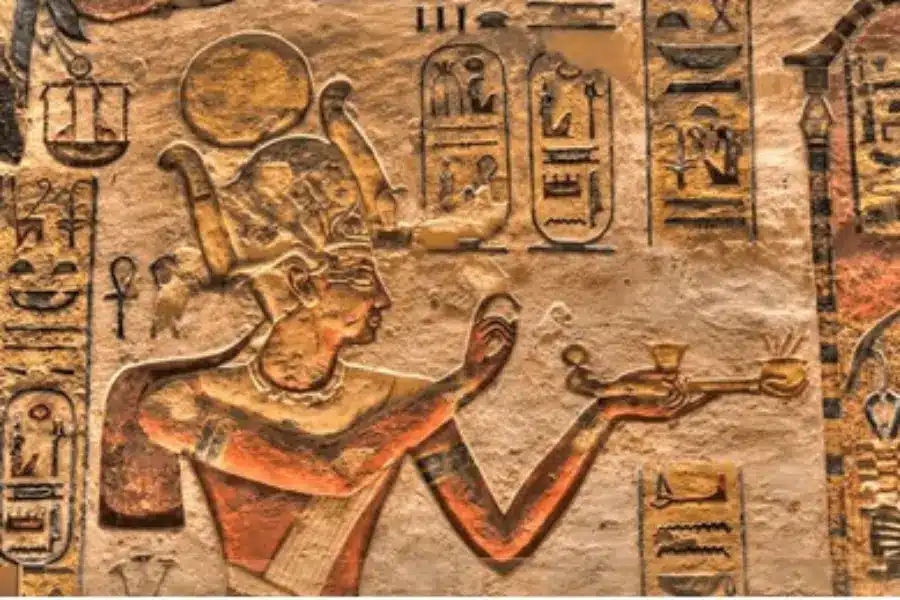
Start by finding a cartouche, the oval enclosure around a royal name, then check which way nearby human and animal signs face. A guide can help identify the king and explain the surrounding scene. Recognizing the layout is different from translating the inscription.
The Rosetta Stone and Deciphering Hieroglyphs
As traditional temple institutions declined in late antiquity, knowledge of hieroglyphic writing gradually disappeared. The script was not abandoned everywhere at one fixed moment.
The Rosetta Stone, found in 1799, provided a crucial comparison: a decree from 196 BCE in two languages, Egyptian and Greek, written in three scripts: hieroglyphic, Demotic, and Greek.
- Recognizing names: the known Greek text helped scholars identify royal names in the Egyptian versions.
- Thomas Young: made important progress with Demotic and the sound values in royal names.
- Jean-François Champollion: announced his breakthrough in 1822, using comparisons between inscriptions and his knowledge of Coptic to show how the writing recorded Egyptian speech.
The achievement depended on more than matching pictures to letters. Read the American Research Center in Egypt’s account of the decipherment for the roles of the stone, other inscriptions, and the scholars involved.
Why Are Hieroglyphs Important Today?
Hieroglyphic inscriptions help researchers identify rulers, date monuments, and study religious practices. They also let us compare what an image shows with the names and statements written beside it.
The wider written record, including texts in cursive scripts, preserves accounts, letters, and literature as well as royal and religious works. UCL’s survey of Egyptian written sources shows how varied this evidence is. It is useful to distinguish this whole written heritage from the formal hieroglyphs most visitors notice on monuments.
Are Hieroglyphs Still Used?
Hieroglyphs are studied and reproduced today, but they are not Egypt’s everyday writing system. Egyptologists learn them to read ancient texts, while museums, teachers, artists, and designers use them to explain or draw on Egypt’s heritage.
You may see modern name designs on jewelry and souvenirs at places such as Khan el-Khalili. These simplified designs are a creative introduction to the signs, rather than a full translation into the ancient Egyptian language.
Hieroglyphics, Hieratic, and Demotic: What Is the Difference?
Ancient Egyptian could be written in several scripts. They were used for different purposes and overlapped in time:
- Hieroglyphic: detailed signs familiar from formal inscriptions on monuments and objects.
- Hieratic: a cursive form used from early Egyptian history for handwriting, including accounts, letters, literary works, and religious texts.
- Demotic: a later, more cursive script attested from the seventh century BCE, used for documents and, later, literature and other texts.
Hieratic and Demotic were normally written from right to left. They did not simply replace all hieroglyphic writing: the scripts coexisted. UCL provides separate introductions to Hieratic and Demotic.
Frequently Asked Questions About Hieroglyphics
Is hieroglyphics a language?
Hieroglyphics is a writing system, not a separate language. It records ancient Egyptian, which was also written in other scripts at different times.
How many hieroglyphs are there?
There is no single total for every period. The script used hundreds of signs, and the repertoire expanded over its long history. Counts differ depending on the date of the texts and whether variant forms are counted separately.
Can hieroglyphs be translated?
Yes. Egyptologists translate hieroglyphic texts by studying the signs, Egyptian vocabulary, grammar, and context. Damaged inscriptions and unusual words can still leave uncertainties; an English-letter substitution chart cannot translate a full ancient text.
Are hieroglyphs pictures or letters?
Many signs look like pictures, but their functions vary. A sign may represent consonant sounds, write a whole word, or clarify a meaning category without being pronounced. Hieroglyphics is therefore not simply an alphabet or a set of picture labels.
Conclusion
Understanding hieroglyphics starts with three distinctions: the signs record a language, their function depends on context, and their arrangement tells you where to begin reading. Use this overview to recognize the writing on your next museum or temple visit, then explore our hieroglyphic symbols guide for specific signs and examples.
Explore temple inscriptions and royal tombs with Egypt Tours Group. Choose an Egypt itinerary or a guided day tour that includes the sites you want to understand in more detail.