
King Khufu: The Visionary Pharaoh Behind Egypt’s Most Magnificent Pyramid
Welcome to a journey into the remarkable life and enduring legacy of King Khufu, the most famous pharaoh of ancient Egypt’s Old Kingdom. In this blog post, we delve into the captivating history and extraordinary achievements of this iconic ruler, who is best known globally for commissioning the monumental Great Pyramid of Giza. Join us as we unravel the fascinating tale of King Khufu and explore the enduring mystery that surrounds his powerful reign.
Reign and Lineage of the Pyramid Builder
King Khufu was a central figure of the Old Kingdom, reigning as the second king of the powerful Fourth Dynasty. His primary claim to fame is his role as the builder of the Great Pyramid at Giza Plateau, a structure that stood as the largest building in the world at that time.
Lineage: Khufu was the son of the respected Pharaoh Sneferu and Queen Hetepheres I.
Reign Duration: According to the historical record preserved in the Turin Papyrus, he ruled ancient Egypt for an estimated period of about 23 years.
King Khufu
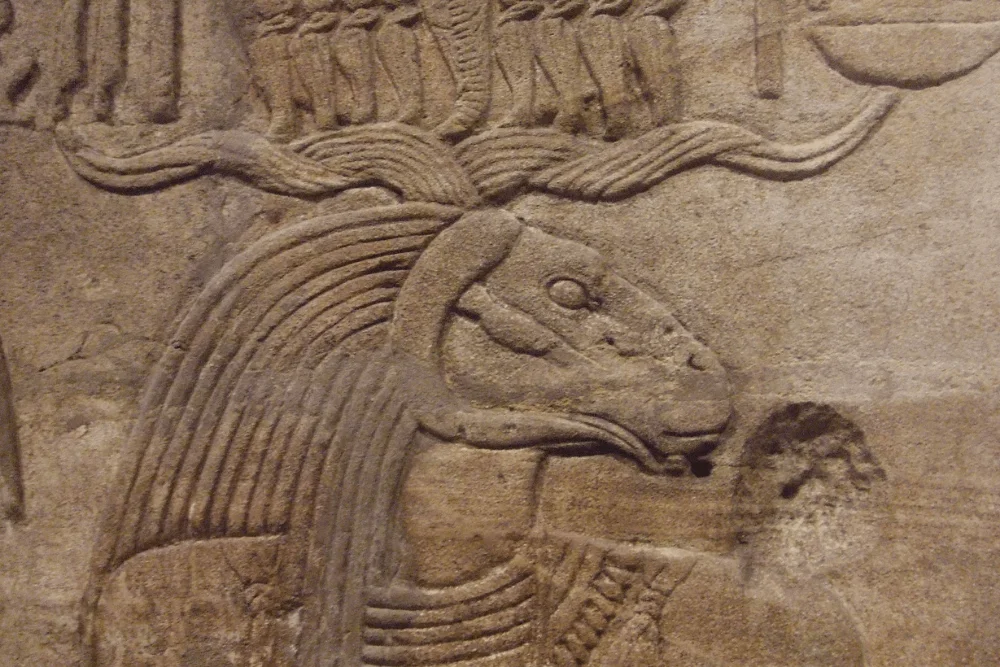
How is Khufu’s name related to the Egyptian god Khnum?
The name Khufu is a powerful shortened form (a nickname) of the pharaoh’s full, official name: Khnum-khufwy. This name is a direct reference to the ancient Egyptian god Khnum, one of the earliest and most significant deities in Egyptian history.
God Khnum’s Role: Khnum was revered as the guardian of the vital source of the Nile River and, notably, as the divine creator who fashioned human children on his potter’s wheel.
Theophoric Meaning: As Khnum’s prominence grew, it became common for ancient Egyptian parents to give their children theophoric names honoring him. Thus, the young Khufu’s full name, Khnum-khufwy, translates powerfully to: “Khnum is my Protector.” The Greeks later knew him as Suphis or Cheops.
Khnum’s Legacy
King Khufu’s Family
King Khufu maintained the royal traditions of the Fourth Dynasty through several strategic marriages, leading to a large and influential family:
Queen Meritites I: Khufu married his half-sister, Meritites I, who held high favor with both Khufu and his father, Sneferu. She was the mother of his eldest son, Crown Prince Kawab, and is strongly considered the mother of his second son and first successor, Djedefre.
Queen Henutsen: He also married Henutsen, who may also have been his half-sister, though details about her life are scarce. She mothered at least two princes, Khufukhaf and Minkhaf. Both queens are believed to be buried in the prestigious Queen’s Pyramid Complex at Giza.
In total, Khufu fathered a massive royal family, including 9 sons and 6 daughters. His legacy is confirmed by the fact that two of his sons, Djedefra and Khafre, would both ascend to the throne and reign as pharaohs following his death.
Egypt’s Mining Industry During Khufu’s Reign
King Khufu significantly developed Egypt’s crucial mining industry, focusing on both essential construction materials and highly prized precious materials like copper and turquoise. Evidence of his aggressive resource extraction is found across the land:
Wadi Maghareh (Terraces of Turquoise): At this site in the Sinai Peninsula, famed for turquoise mining, impressive royal reliefs of Khufu have been discovered, indicating direct pharaonic control.
Quarry Inscriptions: Khufu’s name is also inscribed at major quarry sites such as:
Hatnub, the source of fine Egyptian alabaster.
Wadi Hammamat, where basalts and gold-containing quartz were extracted.
Vast amounts of limestone and granite were also quarried and transported, necessary for the colossal building project he was undertaking.
The Great Pyramid of Giza & Khufu’s Greatest Legacy
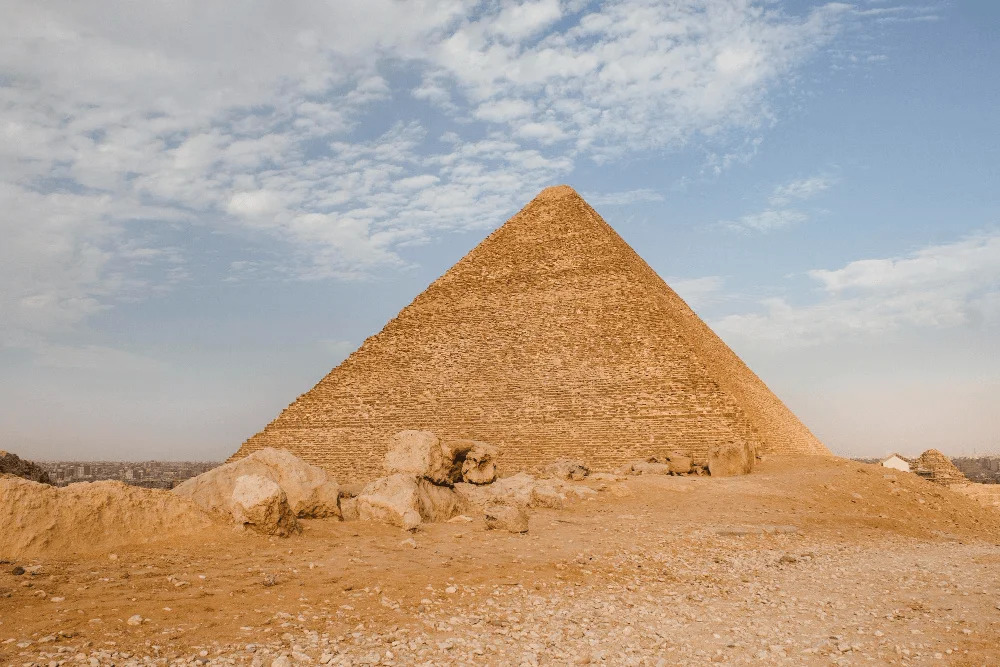
The Great Pyramid is, without a doubt, Khufu’s greatest legacy. Built over an estimated 27 years, it is the largest structure in the Giza complex, flanked by the Kharfe pyramid and the Menkaure Pyramid.
Purpose and Name: It was constructed as a magnificent tomb for the great pharaoh, who named it Akhet-Khufu, meaning the “Horizon of Khufu.”
Colossal Scale: Measuring an awe-inspiring 481 feet tall, Khufu strategically chose a high, natural plateau for its placement, ensuring it could be seen from vast distances.
World Record: For nearly four millennia, it held the title as the tallest building on the planet, only finally surpassed in 1311 by the spire of Lincoln Cathedral.
Today, the Great Pyramid holds the distinction of being the last remaining of the Seven Wonders of the Ancient World that is still in existence.
Khufu’s Masterpiece
Claim of using Slavery in building the Pyramid
For centuries, the Greek historian Herodotus‘s account has shadowed the reputation of King Khufu, accusing him of cruelty and of forcing enslaved Egyptians to construct his Great Pyramid. However, modern archaeological and historical perspectives strongly suggest that this opinion is likely inaccurate. Several points refute the claim of forced labor:
Divine Mandate and Volunteerism: In Khufu’s era, the pharaoh was revered as a living representation of God on Earth. The people believed that by participating in the pyramid’s construction, they would gain the satisfaction of the gods. This participation resembled a civic or religious duty, similar to how modern communities might volunteer to construct major religious sites like churches and mosques.
Economic and Seasonal Employment: The Pyramid project was of immense economic importance. It provided crucial job opportunities for the population, particularly during the annual Nile inundation season. When the Nile’s floodwaters covered agricultural lands, work ceased in the fields, making the construction a vital source of seasonal employment and income.
Quality of Workmanship: It is widely recognized that forced, hard labor rarely produces structures as technically precise and enduringly wonderful as the Great Pyramid. The quality of engineering suggests skilled, motivated workers.
Worker Welfare Evidence: Archaeological discoveries have definitively proven that dedicated towns were established for the pyramid builders. These workers were provided with consistent and high-quality provisions, including medical care and food. This standard of welfare strongly indicates they were treated as skilled laborers or compensated workers, not as enslaved people.
The Famous Statuette of King Khufu
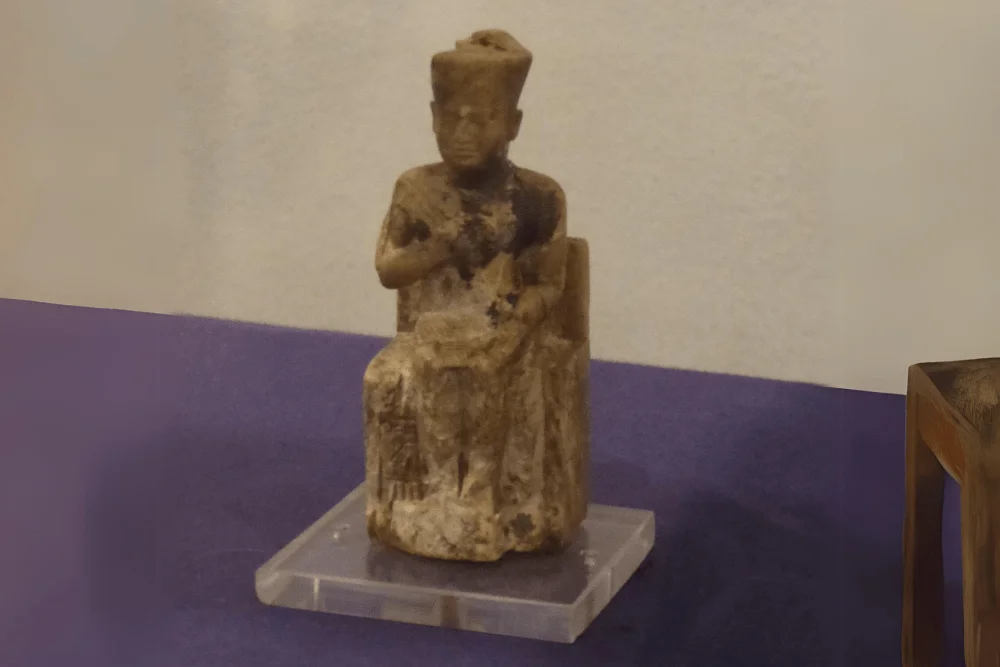
Despite commissioning the largest structure ever built—the Great Pyramid of Giza—the physical representation of King Khufu is surprisingly rare. The most significant artifact linking us to his image is a small, yet immensely important, royal figurine:
Composition and Size: This priceless relic is skillfully carved from ivory and measures approximately 7.5 cm tall.
Discovery Location: It was unearthed in 1903 by the renowned archaeologist Sir Flinders Petrie at the temple of Khentiamentiyu in Abydos.
Historical Significance: This tiny statuette holds immense historical value because it is the only three-dimensional statue of King Khufu that has ever been discovered, making it an irreplaceable piece of Old Kingdom art and portraiture.
King Khufu – Majestic King
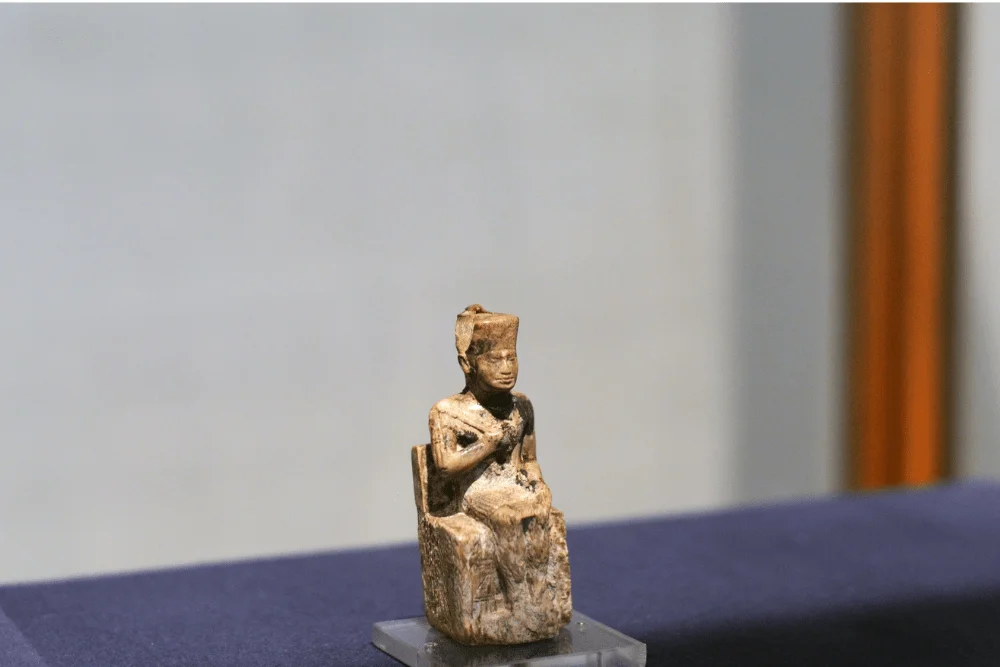
Description of the Statuette:
The precious ivory statuette depicts King Khufu seated majestically on his throne. The intricate iconography confirms his royal status:
Regalia: He wears the Red Crown (dSrt), the traditional headdress of Lower Egypt, and the short kilt (Sndyt). He is shown clutching the nhh flail, a symbol of royal authority.
Facial Features: The portraiture includes a full, round face, pronounced eyebrows, wide eyes, a delicate nose, high cheekbones, and a calm mouth, reflecting the artistic conventions of the era.
Inscriptions: The right side of the throne bears the Horus name of the king. Unfortunately, the cartouche (containing his birth name) on the left side of the throne was found demolished.
A fascinating footnote in its discovery is that the head of the figurine was found first, followed by the body three weeks later, allowing for its complete reconstruction.
Controversy: Dating the Khufu Figurine
Despite its discovery near his pyramid, a notable academic opinion suggests this figurine was actually created during the 26th Dynasty (Late Period), not Khufu’s own 4th Dynasty. This theory is supported by several compelling arguments:
Cult Revival: The cults of the great 4th Dynasty kings were significantly revived in the 26th Dynasty. Many small figurines of these revered rulers were produced during this period and used as amulets.
Neo-Memphite School: The artistic style of the Old Kingdom was intentionally imitated during this later period—a movement known as the Neo-Memphite School. Artists purposefully created statues to match the classical style of the 4th Dynasty.
Quality of Workmanship: The statuette’s quality is less refined than might be expected from the peak of the 4th Dynasty. The rapid production of numerous commemorative statuettes in the Late Period often resulted in work that was not perfectly executed.
Conclusion
King Khufu remains one of ancient Egypt’s most famous and consequential pharaohs, universally remembered primarily for the colossal Great Pyramid built during his 23-year reign. His rule, like the Great Pyramid itself, stands as an eternal testament to ancient Egypt’s unparalleled organizational and architectural achievements. Ultimately, his story serves as a powerful reminder of how the deeds of a single, monumental leader can echo through millennia, indelibly inscribed in stone and memory.