Abu Simbel Sun Alignment: Myth or Historical Truth?
Millions of people believe the Abu Simbel Sun Alignment marks Ramses II’s birthday.
It’s one of the most famous stories in Egypt’s ancient history.
But what if that story isn’t true at all?
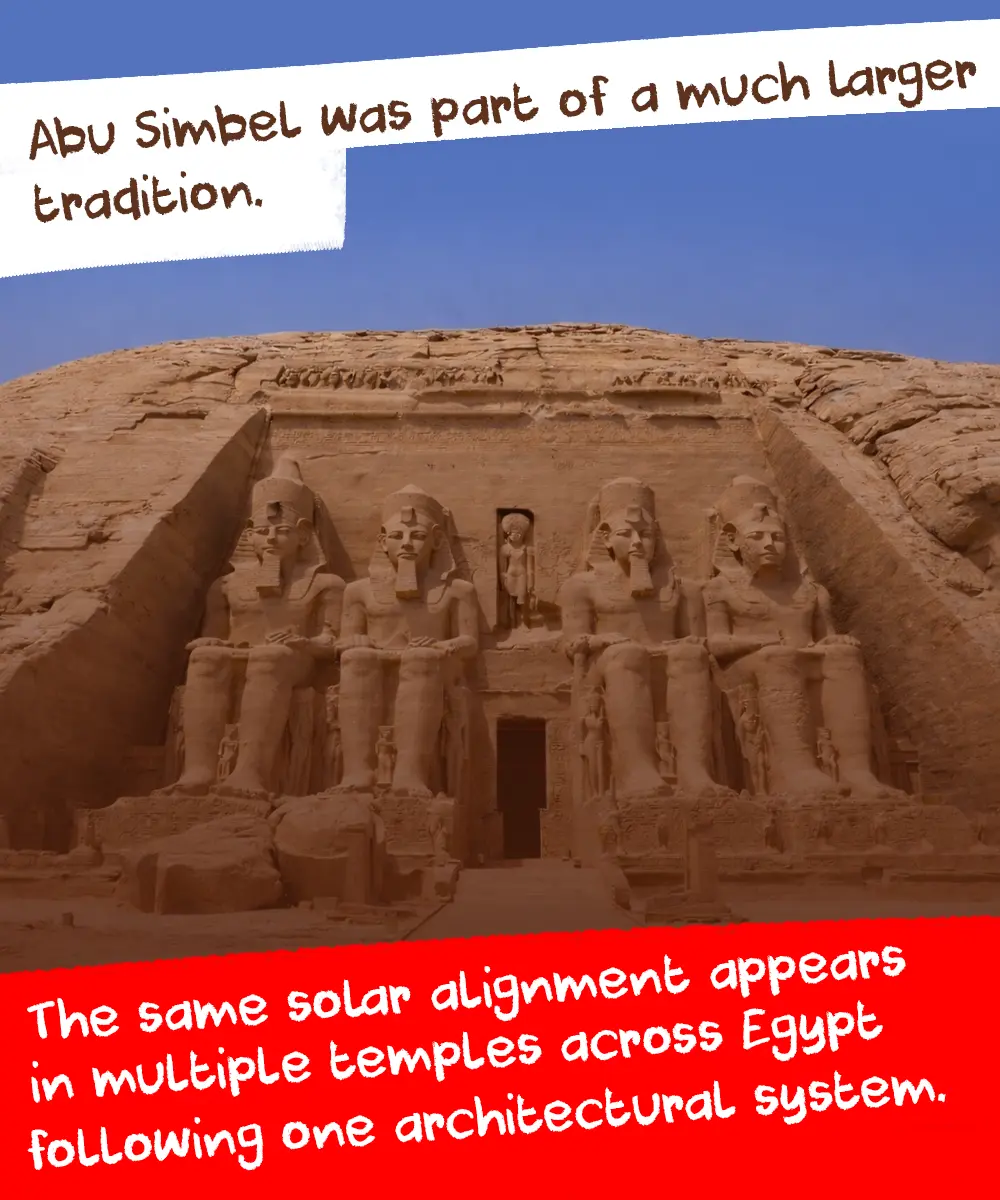
Every year, on February 22 and October 22, thousands gather at Abu Simbel Temple to watch sunlight reach the face of Ramses II deep inside the sanctuary.
It’s often said this moment marks his birthday — but history tells a different story.
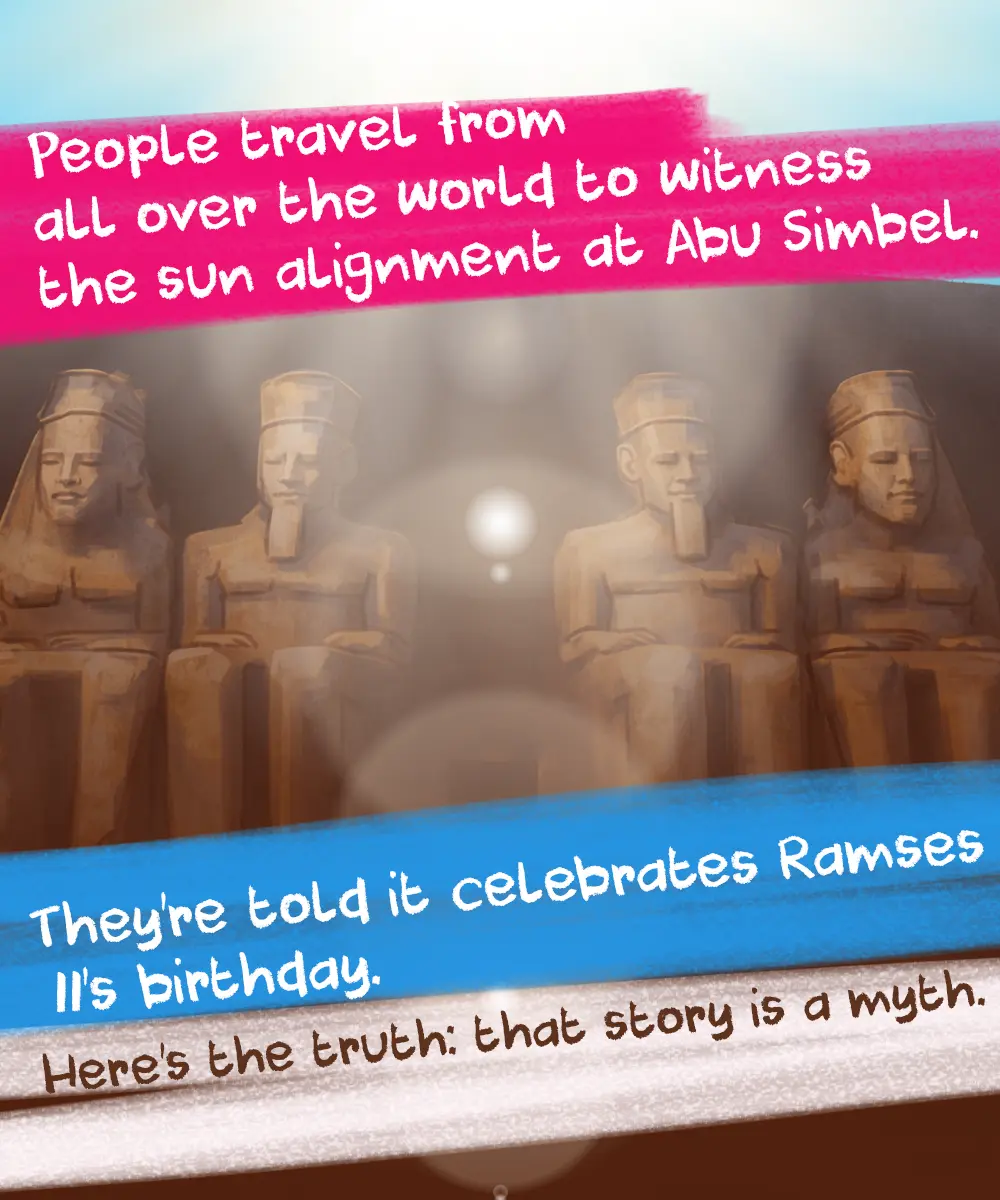
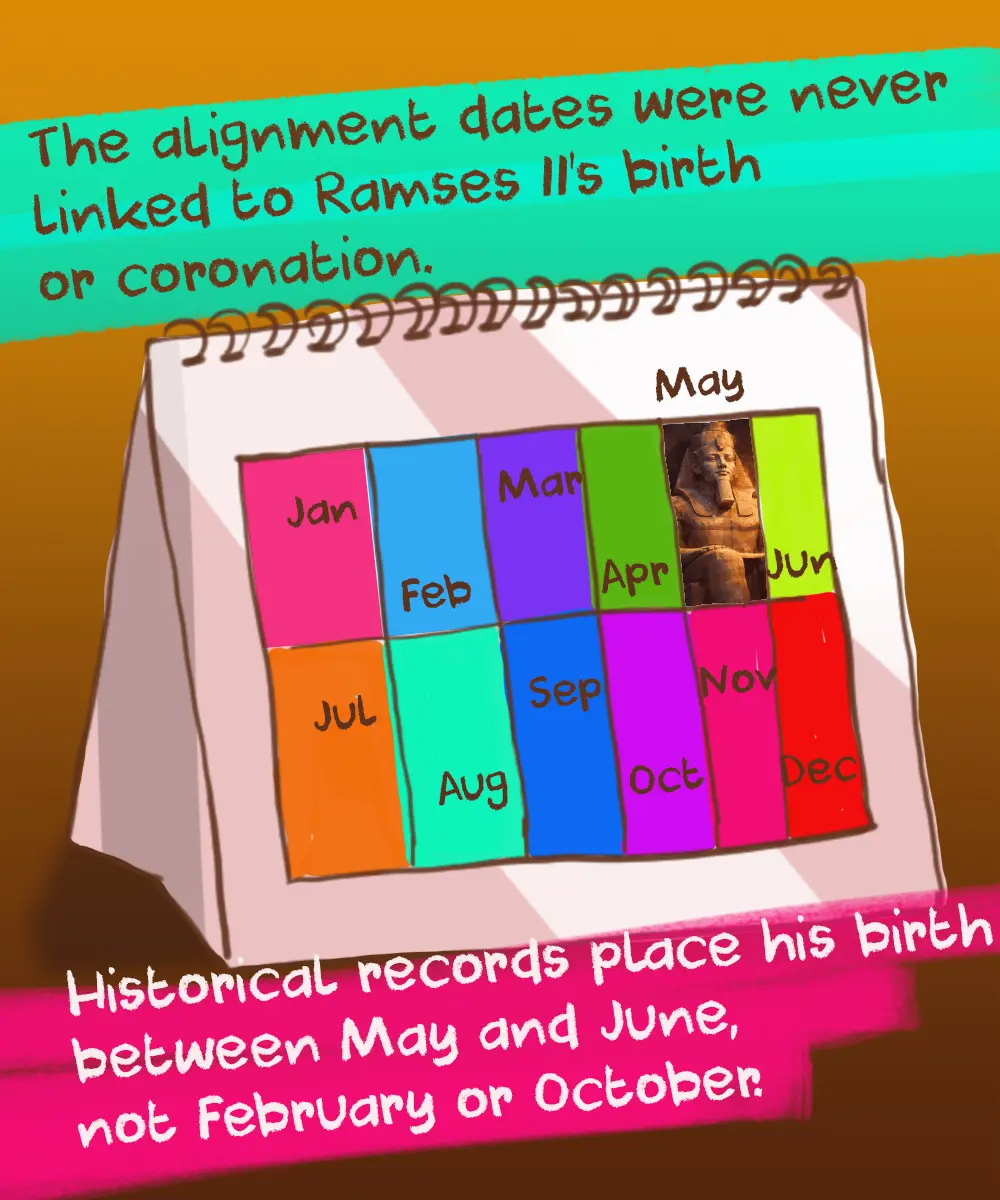
Ancient records never mention any connection between these dates and Ramses II’s life.
In fact, most historians agree his birth occurred months later, during the late spring or early summer.
This was not a coincidence.
Temple architects intentionally aligned sacred spaces with the movement of the sun, allowing light to enter the sanctuary at specific moments of the year.
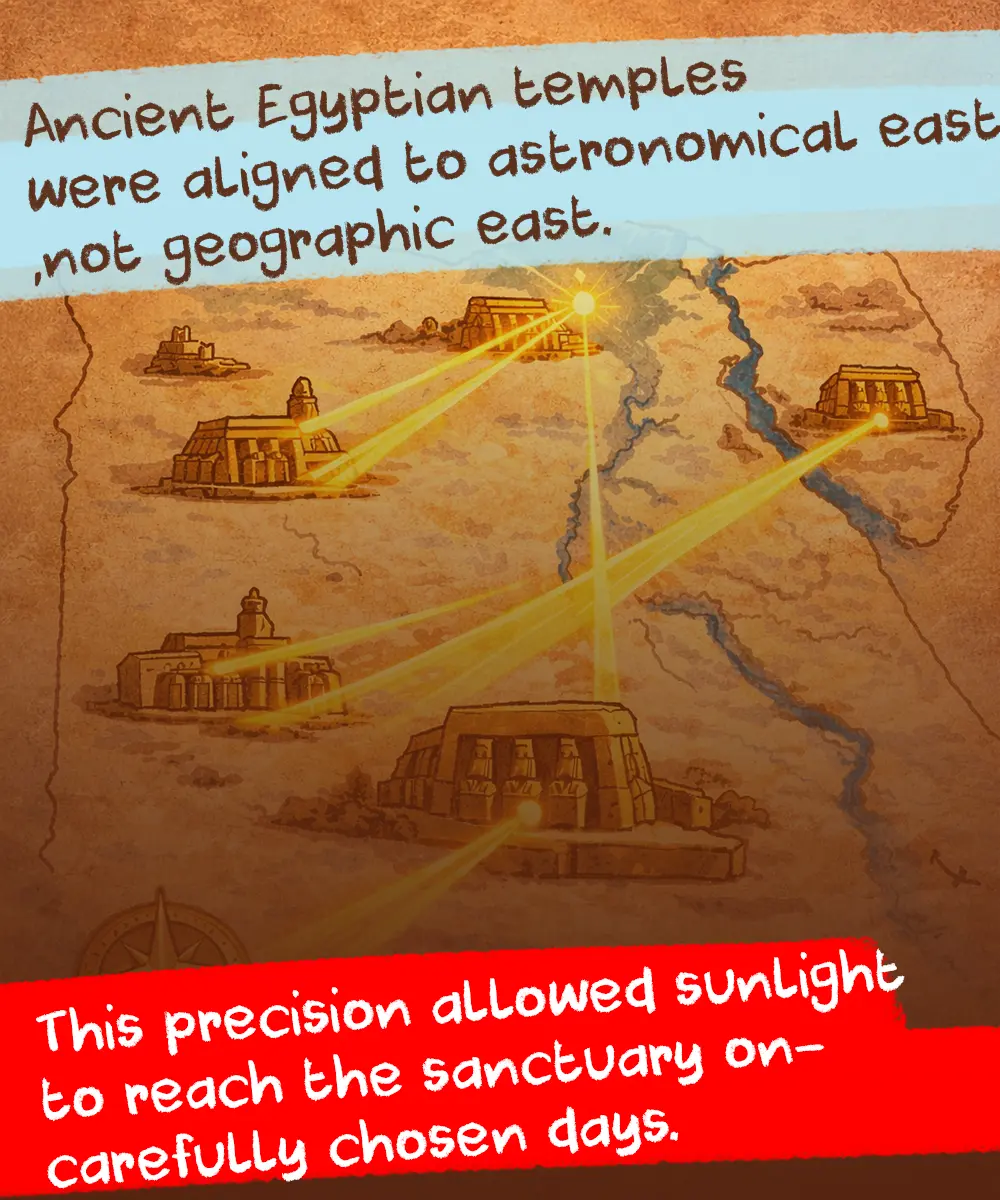
From Abu Simbel to Edfu and beyond, solar alignment followed a shared architectural and religious system.
That’s why historians describe Ramses II’s alignment as a phenomenon — not because it was unique, but because it reveals extraordinary ancient knowledge.
Want More Ancient Egypt Stories?
Get next week’s story delivered to your inbox