Abydos Egypt: Complete Guide to History, Temples & Meaning
Abydos Egypt: Complete Guide to the Ancient Holy City
Abydos is one of the oldest and most sacred cities of ancient Egypt. Located about 11 kilometers west of the Nile near Al-Balyana, it was known in the ancient Egyptian language as Abedju.
Today, Abydos is considered one of the most important archaeological sites in Egypt. It is closely linked to the earliest periods of Egyptian history, and many scholars believe it played a major role in the early formation and unification of the Egyptian state. The site preserves remarkable inscriptions and monuments connected to some of Egypt’s earliest kings.
Abydos was also the principal center of the worship of Osiris, the god of the afterlife and resurrection. Its importance grew even further with monuments such as the Temple of Seti I, home to the famous Abydos King List.
With its deep religious meaning, royal connections, and extraordinary archaeological remains, Abydos remains one of the most significant ancient sites for understanding the roots of Egyptian civilization.
Where Is Abydos Located in Egypt? (Location & Map)
Abydos is located in Upper Egypt, in Sohag Governorate, near the modern town of Al Balyana. The archaeological site lies on the west bank of the Nile, around 11 kilometers west of the Nile River, within the desert edge near El Araba El Madfuna.
Its position on the western side of the Nile was deeply significant in ancient Egyptian belief, as the west was traditionally associated with death and burial. This helps explain why Abydos became one of the most important sacred and funerary centers in ancient Egypt.
Today, Abydos is known as one of Egypt’s most important archaeological areas, preserving monuments that reflect both its royal past and its religious importance.

Abydos vs Dendera: Quick Comparison
Abydos and Dendera are often mentioned together, but they are not the same kind of site. Each one reflects a different side of ancient Egyptian religion and history.
| Feature | Dendera | Abydos |
|---|---|---|
|
Main association |
Hathor, temple worship, artistic decoration |
Osiris, early kingship, burial traditions |
|
Most famous monument |
Temple of Hathor |
Temple of Seti I |
|
Historical character |
Decorative, religious, well-preserved |
Sacred, royal, funerary |
|
Best known for |
Astronomical ceiling, vivid reliefs, preserved temple design |
Abydos King List, Osireion, royal necropolis |
|
Visitor experience |
Visually striking and architecturally impressive |
Deeply spiritual and historical |
Together, Abydos and Dendera help visitors understand how diverse ancient Egyptian temple culture could be.
Historical Background & Abydos Meaning
Abydos was one of the earliest and most important centers of ancient Egyptian civilization. Its history goes back to the earliest stages of the Egyptian state, and the site was closely connected to early kingship, royal burials, and the development of religious traditions.
The name Abydos is the Greek form of the city’s ancient name, Abedju. In ancient Egypt, the city was strongly associated with royal tombs and sacred ground, which helped shape its lasting religious importance.
Over time, Abydos became the principal cult center of Osiris, the god of resurrection and the afterlife. Ancient Egyptians believed that Osiris was buried there, and this belief transformed Abydos into one of the holiest pilgrimage destinations in the country. Many people hoped to visit the site or be buried nearby to gain a spiritual connection with Osiris and the promise of eternal life.
Because of its early royal associations and its later religious role, Abydos held a unique place in ancient Egypt as both a sacred city and an important center in the story of Egypt’s early formation.

Why Is Abydos Important in Ancient Egypt?
Abydos holds a unique place in ancient Egyptian history because it combines political origins, religious importance, and remarkable archaeological remains in one location. The site was closely connected to the earliest phases of Egyptian kingship, and many early rulers chose to associate their burial traditions with the area.
Over time, Abydos developed into one of the most sacred religious centers in Egypt. Its temples, ceremonial structures, and sacred inscriptions reflect how strongly the site was linked to royal memory and spiritual belief.
Because of this combination of early royal history and powerful religious symbolism, Abydos became one of the most respected and meaningful places in ancient Egyptian civilization.
Was Abydos the First Capital of Egypt?
Many scholars associate Abydos with the earliest stages of the Egyptian state, and it is often described as one of the earliest royal centers in Egypt during the Early Dynastic Period. Its importance is reflected in the burials of several First Dynasty rulers, which show that the site held exceptional political and ceremonial value.
The desert area of Abydos known as Umm El-Qa’ab served as a royal cemetery for the 1st and 2nd Dynasties. It contains tombs linked to some of Egypt’s earliest kings, reinforcing Abydos’ strong connection to early kingship and royal tradition.
Over time, Abydos developed from an early royal center into one of the most important religious cities in ancient Egypt. As the cult of Osiris grew, the city became a sacred destination closely associated with death, resurrection, and the afterlife.
This combination of royal memory and religious meaning gave Abydos a unique place in ancient Egyptian civilization.

Abydos and the Cult of Osiris
One of the most important reasons for Abydos’ fame in ancient Egypt was its close association with the god Osiris. In Egyptian belief, Osiris represented resurrection, rebirth, and the promise of life after death.
Ancient traditions connected Abydos with the story of Osiris, and the site gradually became one of the main pilgrimage destinations in Egypt. Religious festivals and ceremonies were held there to honor the god and to reenact elements of the Osiris myth.
For many Egyptians, visiting Abydos was considered a spiritual act. Some people left inscriptions or memorial stelae at the site in hopes of sharing in the divine protection and eternal life associated with Osiris.

Abydos Temples & Monuments
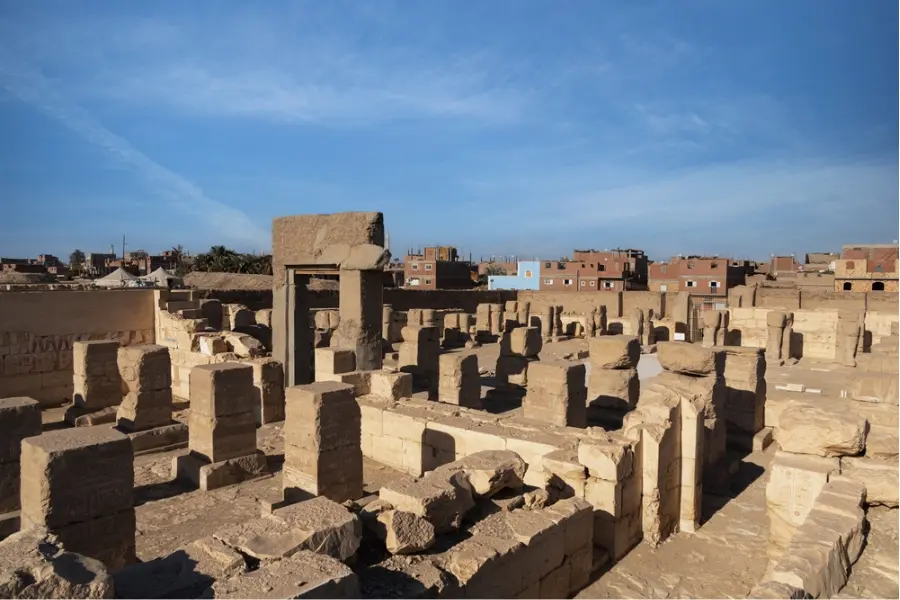
Abydos is home to some of the most important temples and monuments in ancient Egypt. The site preserves a remarkable collection of religious, royal, and funerary structures that reflect its long history as both a sacred center and an early royal landscape.
Among its most famous monuments are the Temple of Seti I, the Osireion, the Temple of Ramesses II, Shunet El Zebib, and the royal cemetery of Umm El-Qa’ab. Abydos also includes smaller shrines, chapels, and archaeological remains that reveal its lasting connection to kingship, pilgrimage, and the cult of Osiris.
Temple of Seti I, Hieroglyphs, and the Abydos King List
The Temple of Seti I is one of the most celebrated monuments in Abydos and one of the finest temples of the New Kingdom. Built by Pharaoh Seti I during the 19th Dynasty, the temple was dedicated to Osiris and other major deities, and it became one of the most important ritual centers in the city.
The temple is especially admired for its refined reliefs, sacred hieroglyphs, and remarkable artistic decoration. The hieroglyphic carvings on its walls are among the most important inscriptions in Abydos, preserving religious scenes, royal imagery, and texts that reflect the spiritual importance of the site.
One of the temple’s most famous features is the Abydos King List, carved on its walls. This inscription shows Seti I and his son Ramesses II honoring a line of earlier pharaohs, making it one of the most valuable historical records for understanding ancient Egyptian kingship and royal tradition.

Osireion and Other Important Monuments in Abydos
The Osireion, located behind the Temple of Seti I, is one of the most mysterious structures in Abydos. It is widely believed to have served as a symbolic tomb of Osiris, representing themes of death, rebirth, and eternal life. Built below ground level with massive stone blocks and a central island surrounded by water, the monument has a striking and unusual design that sets it apart from typical Egyptian temples.
Another important monument at Abydos is the Temple of Ramesses II, built during the 19th Dynasty. The temple reflects the artistic and religious traditions of the New Kingdom and is especially known for its decorated reliefs, including scenes connected to the Battle of Kadesh. It stands as an important example of royal ideology, temple art, and religious devotion in ancient Egypt.
Abydos also preserves several early dynastic monuments, including Shunet El Zebib and Umm El-Qa’ab. Shunet El Zebib, built by King Khasekhemwy, was a large ceremonial enclosure associated with royal ritual and burial traditions. Umm El-Qa’ab served as a royal cemetery for the 1st and 2nd Dynasties and later became closely linked with the cult of Osiris, making it one of the most sacred burial grounds in Egypt.
Nearby, the Falcon Cemetery adds another layer to Abydos’ religious significance. The discovery of falcon burials there reflects the symbolic connection between Horus, kingship, and sacred ritual in the early history of Egypt.

Recent Archaeological Discoveries in Abydos
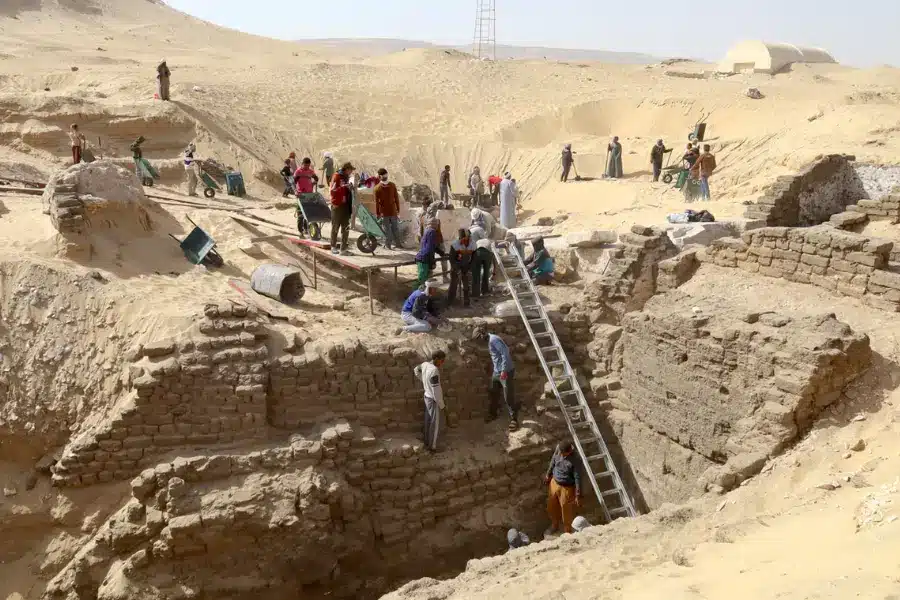
Archaeological work at Abydos continues to reveal new insights into the earliest periods of Egyptian history. Excavations in the region have uncovered additional tombs, inscriptions, and architectural remains that help scholars better understand the development of kingship and religious traditions in ancient Egypt.
Recent discoveries near the site have included royal burial structures and previously unknown monuments connected to early dynastic rulers. These findings continue to reshape historians’ understanding of Abydos and confirm its importance as one of the oldest sacred landscapes in Egypt.
Because of ongoing research and excavation, Abydos remains an active archaeological site where new discoveries still contribute to the study of ancient Egyptian civilization.
Can You Visit Abydos Today?
Yes, Abydos can still be visited today during a day tour from Luxor or a Nile Cruise and remains one of the most impressive archaeological destinations in Upper Egypt. The site is especially famous for the Temple of Seti I, which preserves some of the finest relief carvings of the New Kingdom.
Although Abydos is less crowded than sites such as Luxor or Giza, it attracts historians, archaeologists, and travelers interested in exploring one of Egypt’s most sacred ancient cities. Many visitors include Abydos as part of a cultural trip through Upper Egypt, often combining it with nearby historical sites.
Walking through the temples and ancient structures of Abydos offers a rare opportunity to experience a place that played a central role in both the political and spiritual life of ancient Egypt.
If you are fascinated by the history of Abydos and the sacred landscapes of ancient Egypt, visiting the site with an experienced guide can make the experience even more meaningful. From the Temple of Seti I to the mysterious Osireion, Abydos offers a remarkable journey into one of Egypt’s oldest religious centers.
Explore our carefully designed travel experiences that allow you to discover Abydos and many other iconic destinations across Egypt.
Conclusion
Abydos remains one of the most important and fascinating archaeological sites in ancient Egypt. From the Temple of Seti I and the Osireion to Umm El-Qa’ab and other early monuments, the site brings together royal history, religious belief, and remarkable artistic achievement in one sacred landscape.
For anyone interested in ancient Egyptian civilization, Abydos offers far more than impressive ruins. It reveals how kingship, burial traditions, and the cult of Osiris shaped one of the holiest places in Egypt, making it an essential destination for understanding the spiritual and historical foundations of the ancient world.
What is Abydos in Egypt?
Abydos is one of the oldest and most sacred cities of ancient Egypt. It was a major religious center and is best known as the main cult center of Osiris. The site also preserves some of Egypt’s earliest royal tombs.
Where was Abydos located in ancient Egypt?
In ancient Egypt, Abydos was located in Upper Egypt on the west bank of the Nile. Its position near the desert made it an important place for temples, tombs, and sacred burial sites.
Where is Abydos located in Egypt today?
Today, Abydos is located in Sohag Governorate in southern Egypt, near the town of El-Balyana. The archaeological site lies about 11 kilometers west of the Nile River.
What are the most important temples and monuments in Abydos Egypt?
-
The most famous monument in Abydos is the Temple of Seti I, known for its reliefs and the Abydos King List. The site also includes the Osireion, the Temple of Ramesses II, Umm El-Qa’ab, and other important shrines and burial structures.
What is the Osireion in Abydos?
The Osireion is a symbolic structure located behind the Temple of Seti I in Abydos. It is closely associated with Osiris and represents death, rebirth, and eternal life in ancient Egyptian belief.
Why is Abydos important in ancient Egypt?
Abydos is important because it was both an early royal center and one of the holiest religious sites in Egypt. It is closely linked to Osiris, early kingship, and some of the oldest royal burials in Egyptian history.
Can you visit Abydos today?
Yes, Abydos can still be visited today and is one of the most impressive archaeological sites in Upper Egypt. It is especially known for the Temple of Seti I and its beautifully preserved carvings.