Divorce in Ancient Egypt: Laws and Rights 2,500 Years Ago
Most people think divorce is a modern concept. Ancient Egypt would disagree.
In Divorce in Ancient Egypt, separation was recognized with legal rights, written contracts, and personal freedom, all over 2,500 years before modern family laws.
Divorce in Ancient Egypt
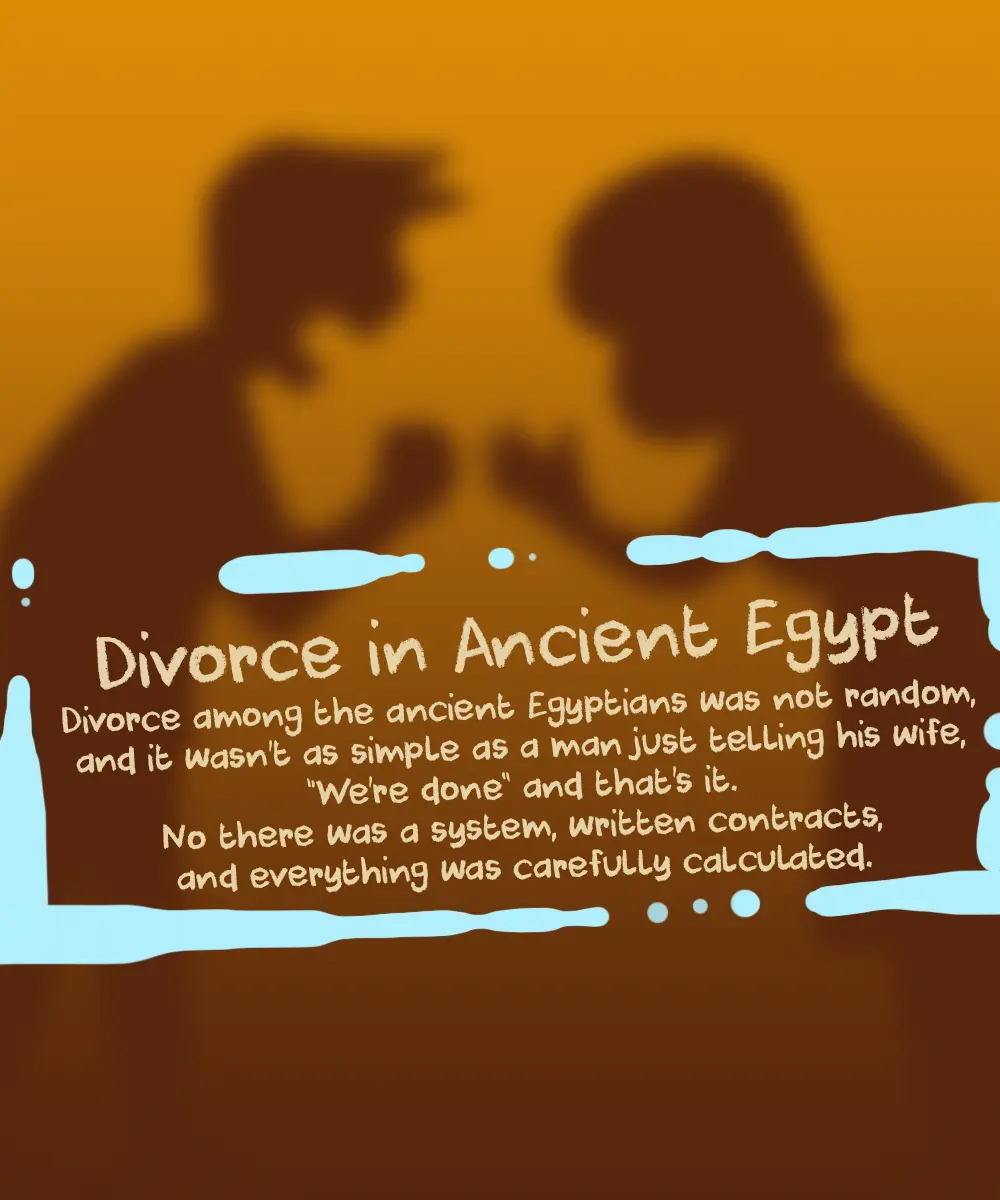
In Ancient Egypt, divorce wasn’t a sudden decision or a simple “we’re done.” It was a legal, organized process, often documented in written agreements, with witnesses and clear responsibilities. What surprises many people is that divorce in Ancient Egypt followed rules, and those rules were designed to protect rights, not just end a relationship.
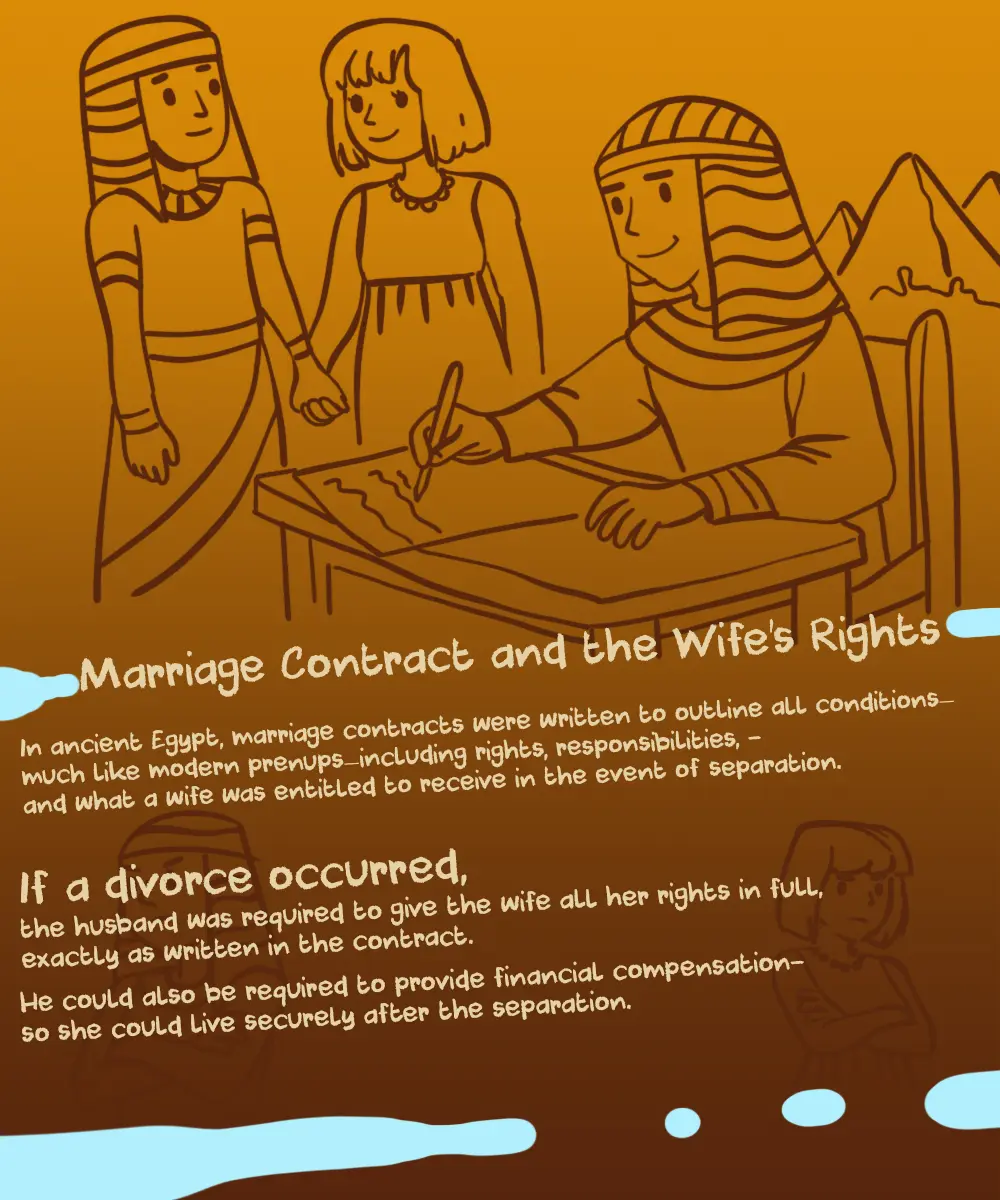
Marriage Contract and the Wife’s Rights
Marriage wasn’t only a social bond; it was also a contract. Ancient Egyptian marriage contracts could list the dowry, property terms, responsibilities, and exactly what the wife should receive if separation happened. In many cases, the husband was required to return agreed property and provide financial compensation, which highlights how women’s rights in Ancient Egypt were taken seriously in legal practice.
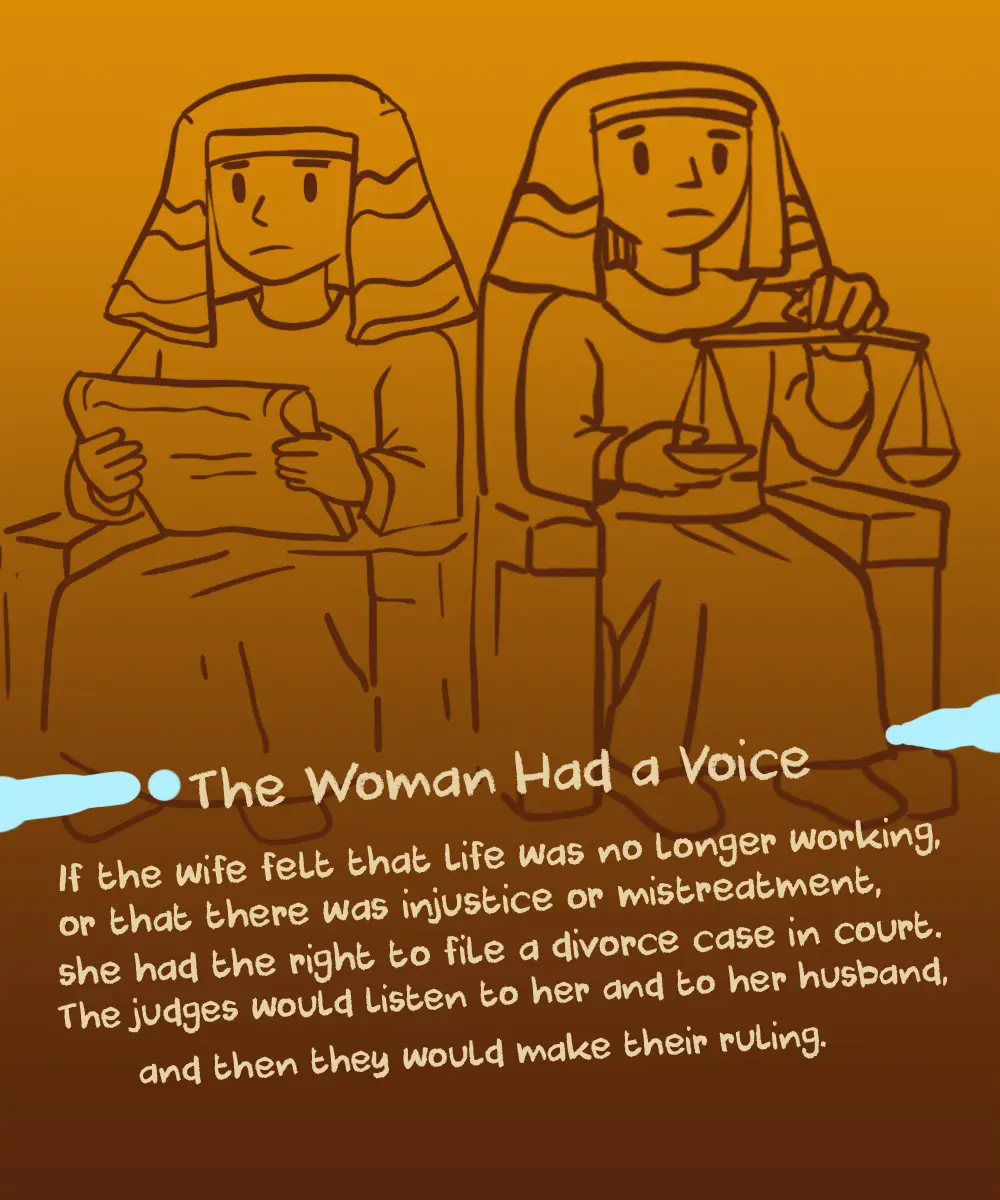
The Woman Had a Voice
It wasn’t only the husband who could decide. If a woman faced injustice, mistreatment, or a life that no longer worked, she could take the case to court. Judges would listen to both sides before ruling—showing that women could actively participate in legal decisions. This is one reason the topic of women and divorce in Ancient Egypt still fascinates historians today.
Divorce Was Not a Stigma
In many periods, divorce wasn’t viewed as shameful or “the end of someone’s social life.” It could be treated as a normal life event, and remarriage was possible without heavy stigma. That social flexibility is part of what makes Ancient Egyptian family life different from what many imagine when they think about the ancient world.
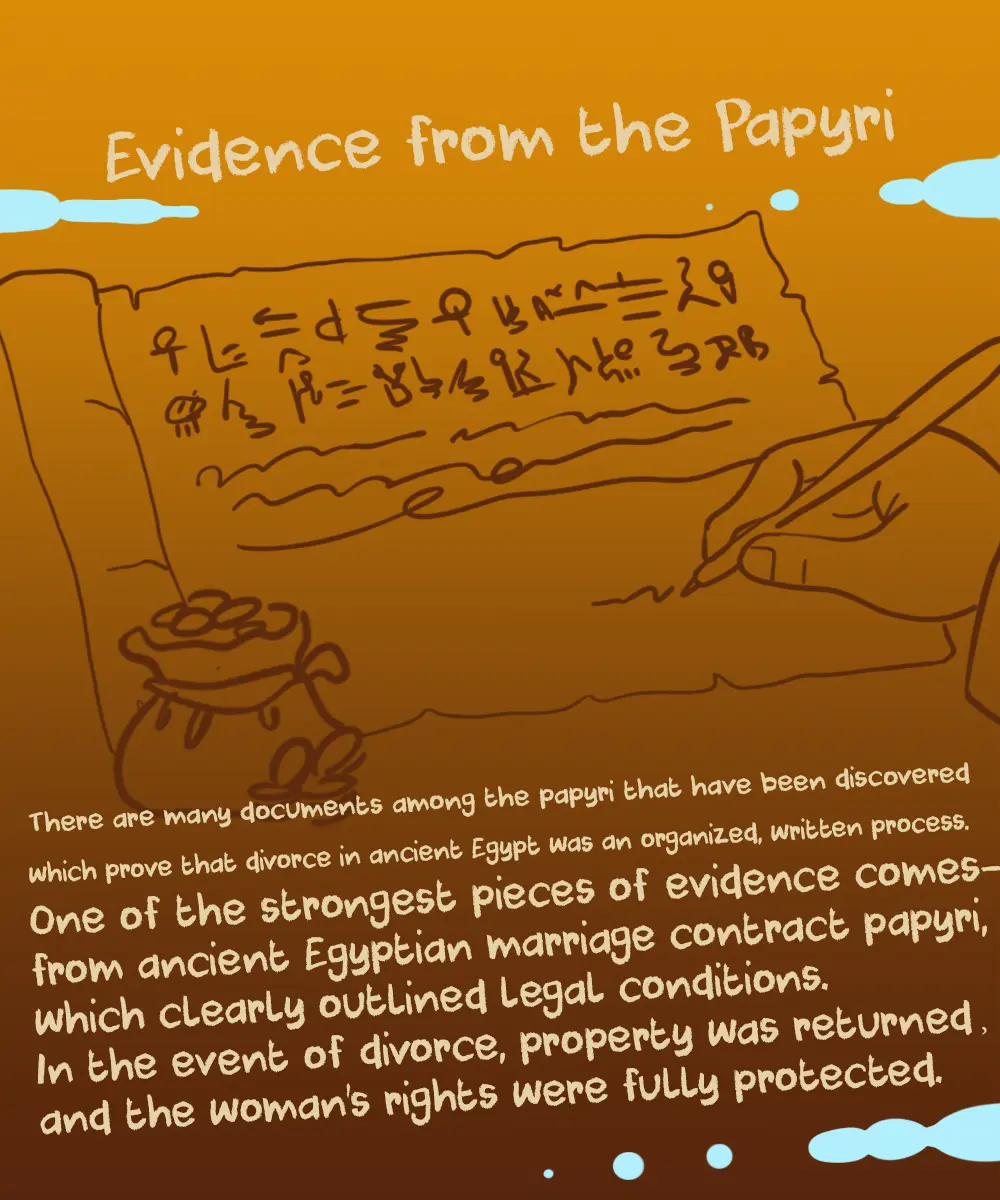
Evidence from the Papyri
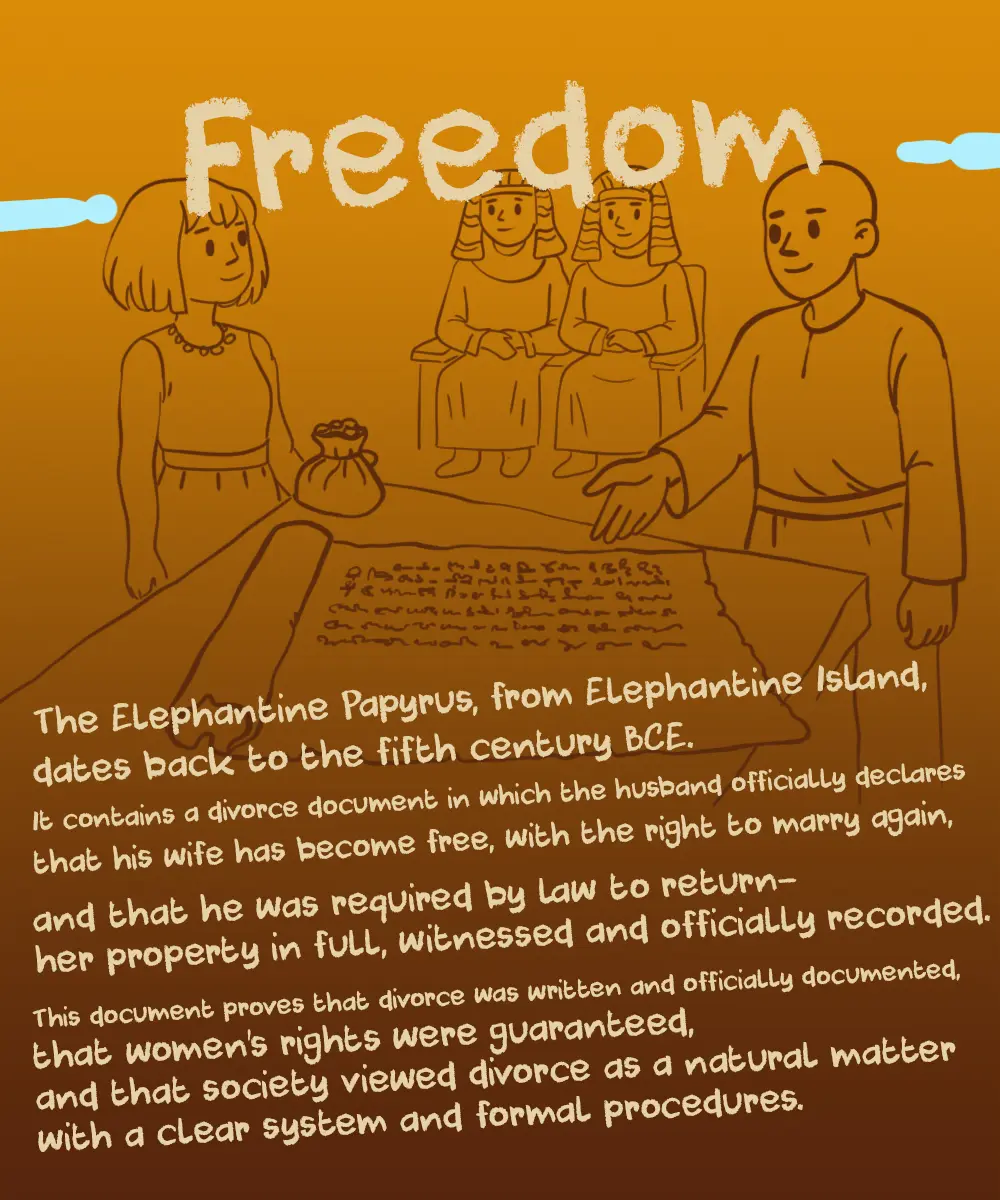
So… is there real proof? Yes. Archaeologists discovered multiple papyri and legal documents that show divorce was recorded in writing. These texts include marriage agreements and separation statements that confirm the process was formal, and that property rights—especially for the wife—were clearly stated. In other words, papyrus evidence supports that divorce in Ancient Egypt was not a rumor, it was documented law.
Freedom — The Elephantine Papyrus
One of the most famous examples comes from Elephantine Island. The Elephantine Papyrus (dated to the 5th century BCE) includes a divorce document where the husband formally declares the wife “free,” with the right to remarry, and confirms the return of property as required. Witnesses and official recording made it legally valid—proof that divorce documents in Ancient Egypt followed structured procedures, not emotion or impulse.