Egyptian Arabic for Travel: Everyday Words & Phrases
Language in Egypt is more than just a way of communication; it’s the key to real interaction with locals and their culture. If you’re planning a trip, learning a few everyday Egyptian Arabic phrases can completely change your experience. Even using simple words makes a noticeable difference in how people respond to you and instantly makes conversations warmer and easier.
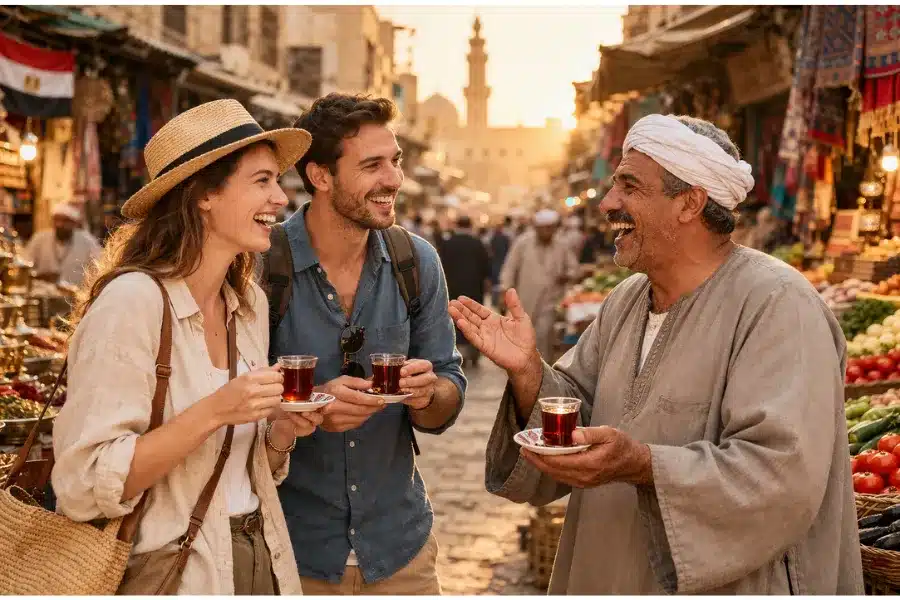
Egyptians are known for their sense of humor and talkative nature, and attempting to speak their dialect breaks barriers almost immediately. A small effort in Egyptian Arabic opens doors to friendliness, smiles, and genuine hospitality. These daily Egyptian phrases don’t require perfect pronunciation or grammar; they simply help you feel closer to people and experience the country in a more authentic and meaningful way.
Why Is Using Egyptian Phrases Important for Tourists?
Using a few simple Egyptian Arabic phrases can make a noticeable difference during your trip. Egyptians genuinely appreciate any effort to speak their local dialect, even if it’s just one or two words. That small attempt often leads to friendlier conversations and more welcoming interactions.
Simple Egyptian words also build confidence and make communication faster and smoother. You’ll naturally use these phrases in taxis, shops, hotels, restaurants, and even during guided tours. In many everyday situations, knowing basic Arabic phrases for tourists helps avoid confusion and creates a more comfortable experience overall.
Looking for a complete vocabulary list? See our full Egyptian Arabic words and phrases guide.
Romantic & Emotional Phrases in Egyptian Arabic
Expressing feelings in Egyptian Arabic is simple, natural, and heartfelt. Many romantic phrases are part of daily life in Egypt—not only between couples, but also among friends and family members. Learning a few emotional expressions, such as how to say “I love you” in Egyptian Arabic, helps you understand the culture better and makes interactions warmer and more personal.
- The word for love in Egyptian Arabic is “Hubb.”
- “I love you” from a man to a woman: Ana behibbik
- “I love you” from a woman to a man: Ana behibbak
These small differences reflect how gender is expressed in the language, which is a normal and important part of Egyptian Arabic.
Common Romantic Phrases in Egyptian Arabic
How to Say “How Are You?” in Egyptian Arabic
“How are you?” — or “Ezayak?” — is one of the most common Egyptian Arabic phrases you’ll hear in Egypt. It usually comes right after a greeting and is part of everyday conversation. Even if your pronunciation isn’t perfect, using this simple question leaves a positive impression and opens the door to friendly communication.
You can use it in the street, with taxi drivers, in shops, hotels, restaurants, or during guided tours. It’s one of those small phrases that instantly makes conversations feel more natural.
Many travelers search for “How to say how are you in Arabic?” The formal answer in Modern Standard Arabic is “Kayfa haluk?” However, Egyptians rarely use this expression in daily life. In real conversations, locals prefer their dialect.
In Egyptian Arabic, the most common forms are:
- Ezayak? (when speaking to a man)
- Ezayek? (when speaking to a woman)
Common Replies There are some simple and very common replies that you may use or hear:
- Ana tamam – I’m fine
- Kwayes / Kwayesa – Good (male / female)
- Elhamdulillah – Thank God (the most common reply in Egypt)
Simple Conversation Example
A: Ezayak?
B: Ana tamam, shokran!
This short exchange may seem simple, but it has a big impact. Even basic Egyptian Arabic greetings can make communication smoother and more personal, especially if your Arabic is limited.
Egyptian Arabic Greetings for Everyday Use
Everyday greetings are among the most common Egyptian Arabic phrases you’ll use during your trip. They are the first step toward friendly communication and often set the tone for the entire conversation. Whether it’s early in the morning, late at night, or any time during the day, using a simple Egyptian greeting helps you connect quickly and leave a positive impression.
In Egyptian Arabic, greetings are easy to learn and don’t require perfect pronunciation — effort matters more than accuracy.
Here are the most common ones:
- Sabah el kheir – Good morning
The reply is Sabah el noor, which also means good morning (literally “morning of light”). - Tesbah ala khair – Good night
The reply is Wenta men ahlo, which also means good night (a friendly response meaning “and may you be among its people”).
These greetings are used daily in Egypt and are part of natural, warm communication between people.
Egyptian Arabic Greetings with Pronunciation Guide
This is a table showing you how to say good morning in Arabic, and how to say good night in Arabic:
Expressing Feelings & Emotions in Egyptian Arabic
Expressing feelings in Egyptian Arabic is a natural part of everyday speech. Egyptians tend to show their emotions openly, whether they are happy, excited, tired, or upset. Using simple emotional phrases makes your Arabic sound more natural and helps you connect with locals, even if your language skills are still basic.
Positive Emotions
- Ana mabsout (for men) / Ana mabsouta (for women) – I’m happy
- Ana mutahammes (for men) / Ana mutahammessa (for women) – I’m excited
There are a few easy phrases you can use to express positive feelings in Egyptian Arabic:
These expressions are common in daily conversations and are often used when talking about travel, experiences, or good news.
Negative Emotions
- Ana ta‘ban (for men) / Ana ta‘bana (for women) – I’m tired or sick
- Ana za‘lan (for men) / Ana za‘lana (for women) – I’m sad or upset
There are also simple phrases used to express negative feelings:
In Egyptian culture, tone of voice and facial expressions are just as important as the words themselves. Try to express the feeling naturally, and people will easily understand what you mean.
Polite Everyday Words & Phrases in Egyptian Arabic
Using polite Egyptian Arabic words in daily life is very important because they reflect respect and good manners. Tourists who use simple, polite expressions often receive a warmer welcome, whether they are in taxis, shops, hotels, restaurants, or speaking with tour guides.
Here are some of the most common polite phrases in Egypt:
- Law samaht (for men) / Law samahti (for women) – Please
- Asif (for men) / Asfa (for women) – Sorry
- Wala yehimmak / Mafeesh mushkela – Don’t worry / No problem
- Tamam / Mashi – Okay
- Mesh fahim (for men) / Mesh fahma (for women) – I don’t understand
These words are simple but powerful. Even if your Arabic isn’t perfect, using polite phrases makes communication smoother and shows appreciation for the local culture.
Mini Conversation Examples for Tourists
Using short conversations in Egyptian Arabic can help tourists feel more confident when speaking with locals. These examples are common in everyday situations and easy to remember. Even a few simple phrases can make interactions warmer and more natural.
Example 1 – In a Market
- A: Bekam da? (How much is this?)
- B: Asherah geneh. (Ten pounds.)
- A: Ghali shwaya! (A bit expensive!)
This type of conversation is very common in Egyptian markets. Even if your pronunciation isn’t perfect, sellers will usually understand you and appreciate the effort.
Example 2 – With a Guide
- Tourist: Tesbah ala khair! (Good night!)
- Guide: Wenta men ahlo! (Good night to you too!)
These simple exchanges help break barriers and build a friendly relationship with guides and locals, leaving a positive impression during your trip.
How to Learn Egyptian Arabic Fast
Learning Egyptian Arabic fast doesn’t require complicated grammar or long study hours. What really makes a difference is daily practice and exposure to the language in real situations. Egyptian Arabic is relatively simple and conversational, and with a few consistent attempts, you’ll start understanding and speaking it faster than you expect.
Practice a Few Words Daily
Try to practice a few words every day, even basic greetings or polite phrases. Repeating common Egyptian Arabic expressions helps them stay in your memory, so you can use them naturally during your trip.
Watch Egyptian TV Shows and Movies
Watching Egyptian TV shows and movies is one of the most effective ways to learn how the dialect sounds in real life. You’ll improve your pronunciation, understand natural speaking speed, and notice how tone and facial expressions are used in conversation.
Listen to Egyptian Songs
Listening to Egyptian songs helps you get used to the rhythm and flow of the language. Artists like Amr Diab and Sherine use clear pronunciation and everyday language that’s easy to follow for learners.
Simple Tips for Faster Learning
- Use language apps such as Duolingo or Pimsleur to practice regularly.
- Repeat greetings and essential travel phrases every day.
- Don’t hesitate to ask locals to correct your pronunciation — Egyptians usually enjoy helping and appreciate the effort.
With regular exposure and a little confidence, learning basic Egyptian Arabic becomes easier than most travelers expect.
The best way to learn Egyptian Arabic is to use it. Come experience Egypt with people who love sharing their culture.
Final Thoughts
Speaking Egyptian Arabic isn’t just about memorizing words; it’s about connecting with the culture and understanding the spirit of the people. Even a few simple Egyptian Arabic phrases can truly change your experience in Egypt, making interactions warmer, more personal, and more meaningful.
In Egypt, effort matters. The attempt itself is highly appreciated, and sometimes a single word is enough to open the door to a smile, helpful advice, or a friendly conversation in the street, the market, a hotel, or during a guided tour.
If you’re planning your trip, try using a few everyday Egyptian Arabic phrases — you might be surprised how quickly they bring you closer to the people and make your journey feel more authentic.
FAQ
How do you say “I love you” in Egyptian Arabic?
Learn how to express love in Egyptian Arabic, whether you’re a man or woman, with phrases like Ana behibbik or Ana behibbak.
How do you say good morning in Arabic?
Find out the common greetings in Egypt, including Sabah el kheir and how to reply politely with Sabah el noor.
What are the most common Egyptian Arabic phrases for tourists?
Discover key phrases for everyday conversations, from greetings and thanks to polite expressions, that make your trip easier and friendlier.
Is Egyptian Arabic different from Standard Arabic?
Yes. Egyptian Arabic is the everyday spoken dialect used in Egypt, while Modern Standard Arabic (like “Kayfa haluk?”) is more formal and rarely used in daily conversations.
Is Egyptian Arabic easy to learn for tourists?
Egyptian Arabic is considered one of the easiest Arabic dialects to understand. With a few basic phrases and daily practice, most tourists can communicate comfortably during their trip.
Do Egyptians speak English?
Many Egyptians, especially in tourist areas, speak English. However, using a few simple Egyptian Arabic phrases often leads to warmer and more friendly interactions.