Egyptian Slang Words Tourists Hear, Learn, and Love in Egypt
The first thing you will notice when visiting Egypt is not only the crowd, history, or even the pyramids, but the laughter. Egyptians talk and laugh at the same time, as if the sense of humor is a main part of the language itself. Even a simple sentence can be turned into a nice comment or a quick reply that can make you smile.
Egyptian Arabic is not just a way of communication, it’s a whole spirit that contains light exaggeration, playful word choices, and expressions that you may hear for the first time and feel are strange, but at the same time lovable. This is what makes Egyptian slang words enjoyable for any traveler who wants to truly understand the Egyptian street, not only the formal words in books.
- Egyptian Arabic is famous for laughter and playful word jokes.
- Egyptian slang words appear in daily speech, in taxis, markets, and TV series.
- Learning some simple words can make you feel closer to people.
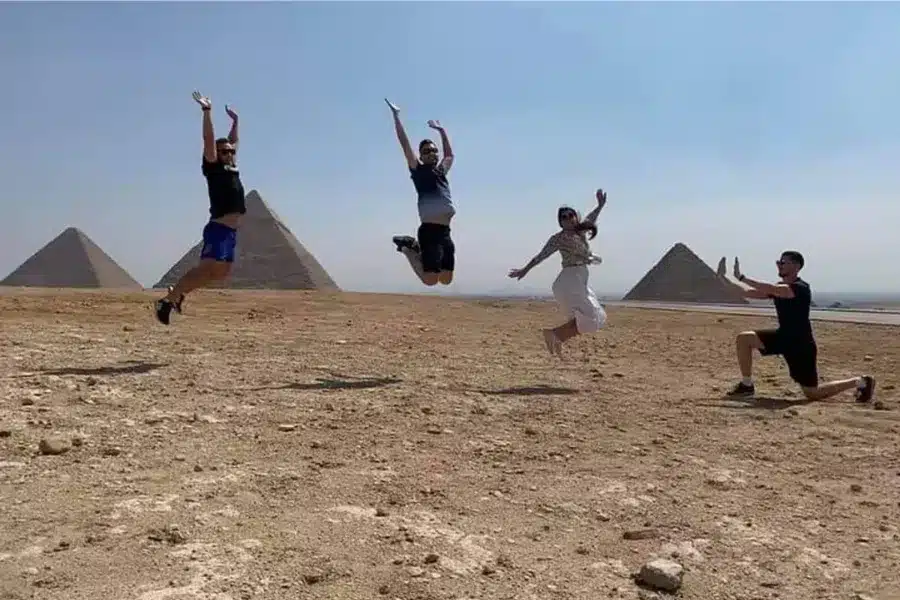
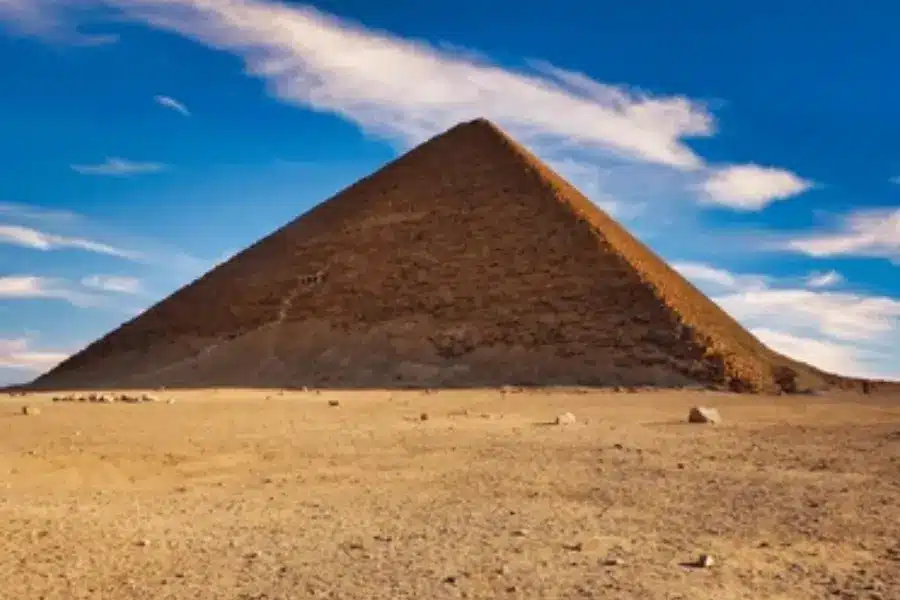
Laughter and playful moments are part of the travel experience in Egypt, even at iconic places like the Giza Pyramids.
What Does “Slang” Mean in Egyptian Arabic?
To understand the meaning of Egyptian slang words, you should know that Egyptian Arabic words and phrases are quite different from Modern Standard Arabic, which is formal, taught in schools, or heard in the news. Egyptian Arabic is simpler, faster, and closer to people’s daily life, which is why it’s full of unique expressions and very special terms.
Modern Standard Arabic is clear and precise, but Egyptian Arabic carries the spirit of the streets, including abbreviations and words that have developed over time and become part of the culture itself. So, you will find words that are understood across all Arab countries, and other words that are uniquely Egyptian.
Examples:
Words like Yalla, Habibi, and Khalas are understood everywhere.
Others like Feloos (money) or Zahma (crowded) are purely Egyptian.
Funny & Quirky Egyptian Words Tourists Love
One of the most beautiful things in Egyptian Arabic is the funny Egyptian words that you can hear in the streets, taxis, or even in TV series. These words not only make your day more enjoyable, they also help you feel the spirit of Egyptians and their way of speaking. Knowing some funny Arabic words and phrases makes it easier to use Egyptian slang words and understand the culture more deeply.
Everyday Funny Words
- “Ya Salam!” means wow or amazing!
- “Wala eh!” means really?
- “Ashta!” means good!
- “Tayyeb” means okay, and sometimes it is used sarcastically.
Cute or Sweet Expressions
- “Ya gamel!” means oh, beautiful!
- “Ya 3asal!” means you’re sweet!
- “Ya rohi!” means my soul, and it is used to express affection.
Note: Egyptians sometimes exaggerate in a funny way; tone and facial expressions are a big part of the joke!
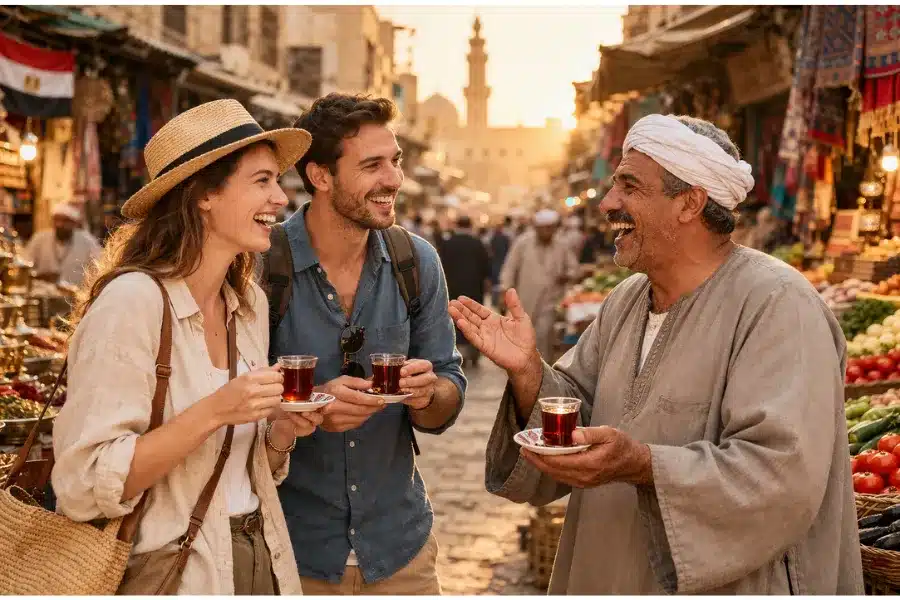
A warm and lively moment between tourists and an Egyptian local in a traditional market, reflecting the humor, friendliness, and charm of everyday Egyptian expressions.
Slang You Might Want to Avoid
While Egyptian slang words are fun and expressive, not every phrase is suitable for tourists to use. Some expressions may sound funny between Egyptian friends, but when said by a foreigner, they can feel awkward, too informal, or even slightly rude. Context, tone, and relationship matter a lot in Egyptian culture. If you are not sure how or when to use a phrase, it is better to keep your language simple and polite.
Light Examples
- “Batal lazzaza” means “stop joking around” or “stop being annoying.” It can sound playful between friends, but may feel impolite in other situations.
- “Keda keteer!” means “that’s too much!” It can be used humorously, but tone makes a big difference.
- “Ya Sahby!” means an informal or teasing way to address someone, often used casually between men.
Warning: Avoid copying phrases you hear in street arguments, movies, or comedies. They might sound funny, but out of context they can come across as rude or disrespectful.
This section helps visitors understand Egyptian slang culture while keeping their conversations friendly and respectful.
Slang Words in Egyptian Pop Culture
If you want to understand Egyptian slang words quickly, the best way is to watch Egyptian movies and listen to popular Egyptian songs. Pop culture in Egypt plays a major role in spreading Egyptian Arabic slang, and many funny Arabic phrases became famous because of a memorable movie scene or a catchy line in a TV series.
From Movies & TV Shows
- “Eh da?!” means “What’s this?!” and is usually used to express surprise or shock.
- “Mesh mohem.” means “It doesn’t matter.”
- “Ana keda!” means “That’s just how I am!” and is often said confidently or dramatically.
Music & Songs
In songs, you will often hear repeated words like “Khalas” (enough / finished), “Habibi” (my love), and “Ya bent el eih.” Music has helped spread Egyptian colloquial Arabic beyond Egypt, making these words familiar even to people who do not speak Arabic.
Watching movies and listening to songs is a fun and natural way to learn Egyptian slang without feeling like you are studying.
How to Practice Egyptian Slang Words Like a Local
If you are eager to learn Egyptian street language naturally without feeling like you’re studying, it’s very easy. Practicing Arabic slang words comes from listening and repeating, especially when it’s about the culture itself, not just memorizing some words. The more you interact with people and daily life, you will find yourself using Egyptian funny expressions more naturally.
- Watch Egyptian comedy such as movies of Adel Imam and Mohammed Henedi, you will enjoy hearing many common Egyptian sayings.
- Listen to famous songs of Amr Diab or Wegz, songs are a strong way to understand Egyptian colloquial Arabic.
- Repeat short words with local people, even one word for every situation.
- Use the words naturally, don’t try to appear like you’re memorizing them.
Direct communication is the fastest way to get Egyptian slang and understand the voice tone, because pronunciation and expression complete the meaning together, not only the word.
From lively streets and local culture to iconic temples and Nile views, our tours help you discover the real spirit of Egypt.
Final thoughts
Egyptian Arabic isn’t just some words, it’s a direct reflection of the Egyptian people’s spirit, sense of humor, and warm way of communication. When you learn some words of Egyptian slang and use them at the right time, you will notice that smiles appear immediately on faces. It’s not about being perfect at the language, it’s about the attempt itself to be close to people and understand their culture. A simple word from Egyptian colloquial Arabic opens the door to a long conversation, and makes you joke with Egyptians, not at them, and feel that you’re part of the true local atmosphere.
People also Ask
What are some common Egyptian slang words?
Some common Egyptian slang words include Yalla (let’s go), Habibi (my dear), Tamam (okay), Khalas (enough / done), Meshy (fine), and Feloos (money). These words are widely used in daily conversations in Egyptian colloquial Arabic.
What does “yalla” mean in Egyptian Arabic?
“Yalla” means “let’s go” or “come on.” It is one of the most popular Egyptian slang words and is used to encourage someone to move, hurry up, or start something.
What are funny Egyptian Arabic expressions tourists can use?
Tourists can use funny Egyptian Arabic expressions like “Ya salam!” (wow!), “Ashta!” (cool!), and “Wala eh!” (really?!). These light expressions are common in Egyptian street language and are easy to use in casual conversations.