
Ramesses III Assassination: Inside the Harem Conspiracy
One conspirator was condemned.
Another disappeared from history.
No clear record. No final trace.
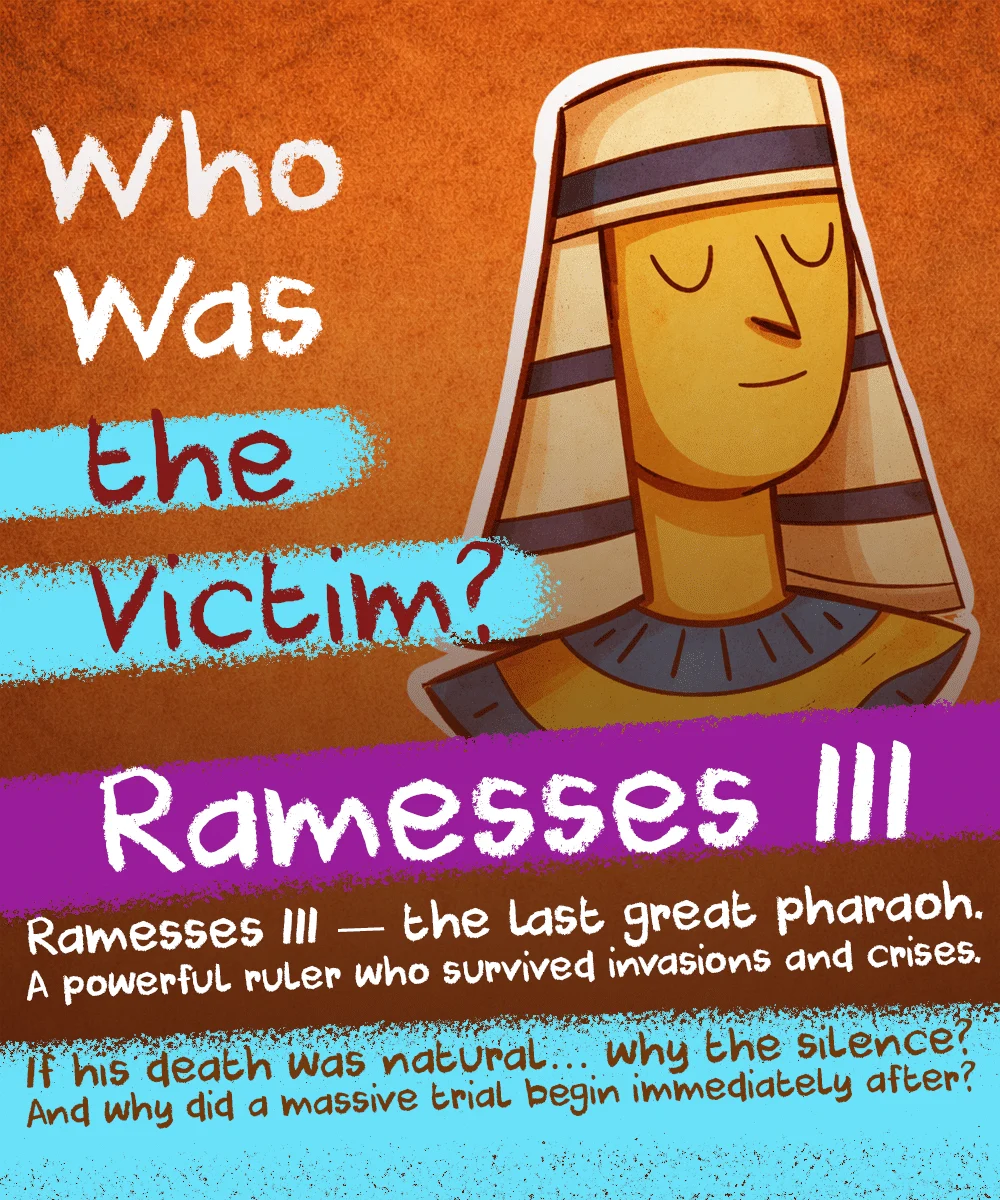
At the centre of the mystery was Pharaoh Ramesses III, whose death became linked to one of the most dramatic palace conspiracies in Ancient Egypt.
This is the story of the Ramesses III assassination and the infamous Harem Conspiracy—a plot born inside the royal palace, where ambition, betrayal, and a struggle for the throne ended in murder.
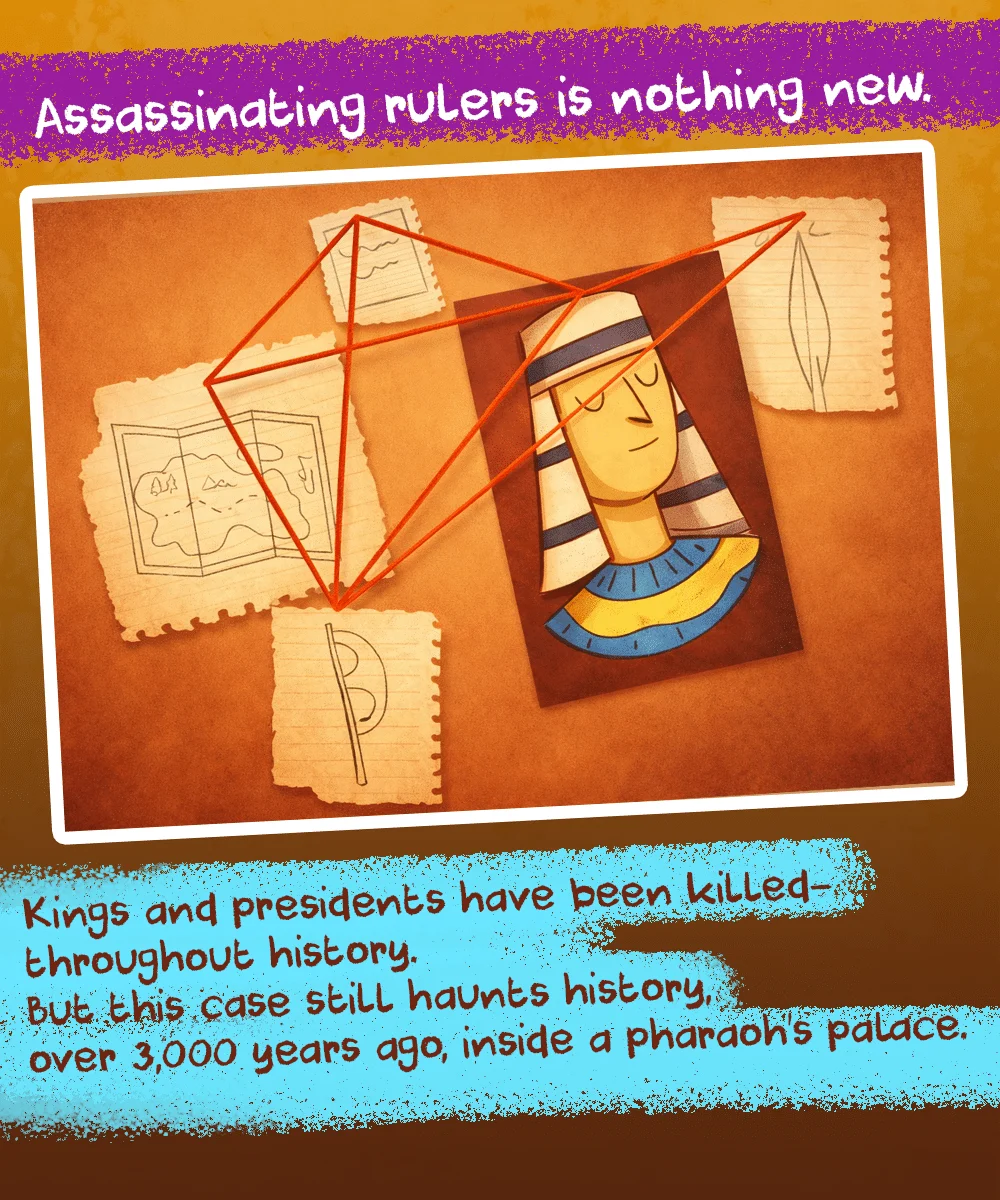
Some assassinations change borders.
Others reveal how fragile power can be.
More than 3,000 years ago, a conspiracy unfolded inside the palace of Pharaoh Ramesses III. The plot was recorded, the conspirators were brought to trial, and the case survived in ancient documents.
Yet one mystery remained for centuries:
Did the conspirators actually succeed in killing the king?
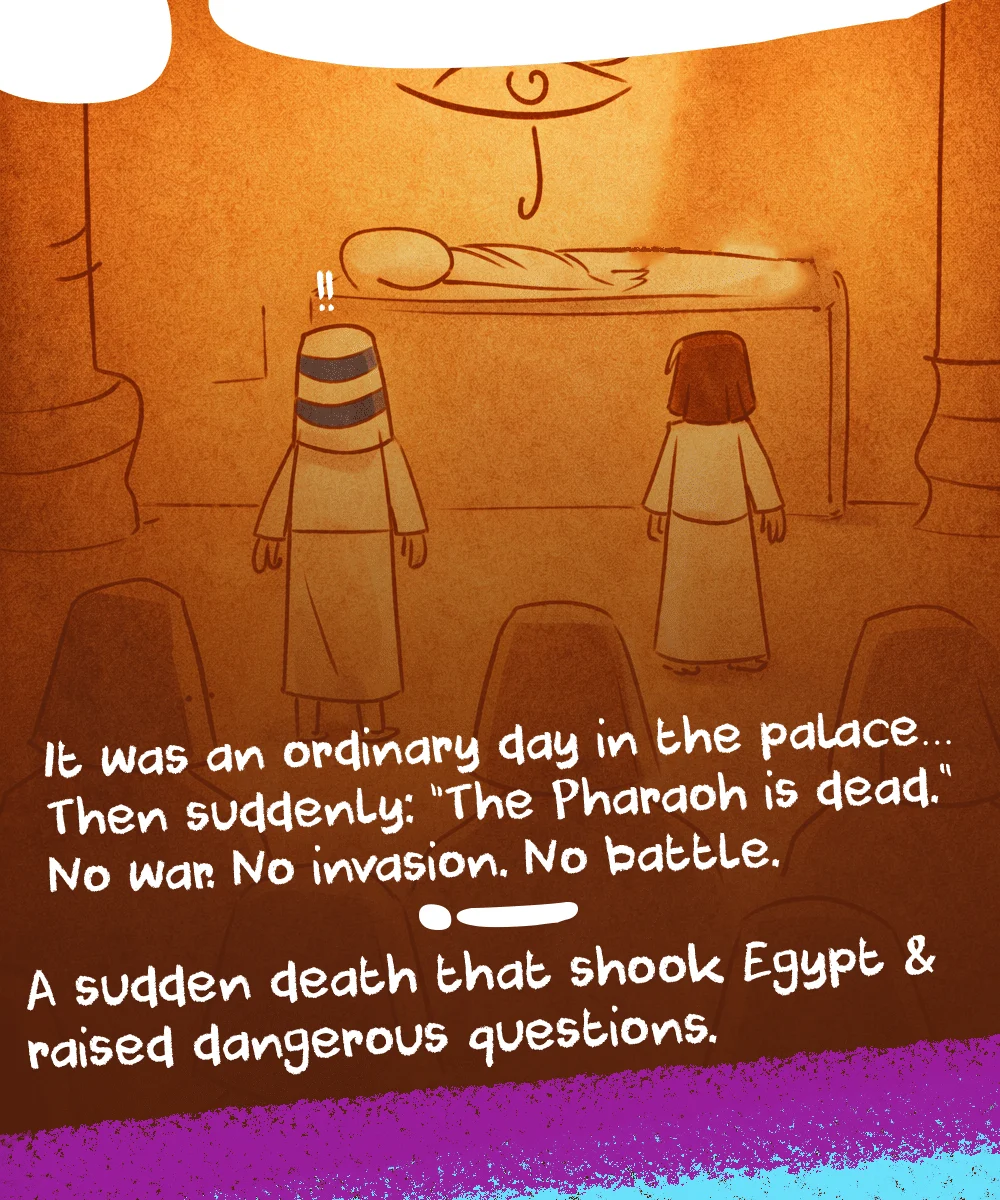
Powerful rulers rarely die without questions.
Ramesses III had survived foreign invasions, political pressure, and years of unrest. Yet the threat that ultimately surrounded him did not come from an enemy army.
It came from much closer to the throne.
And that is what made his sudden death so disturbing.
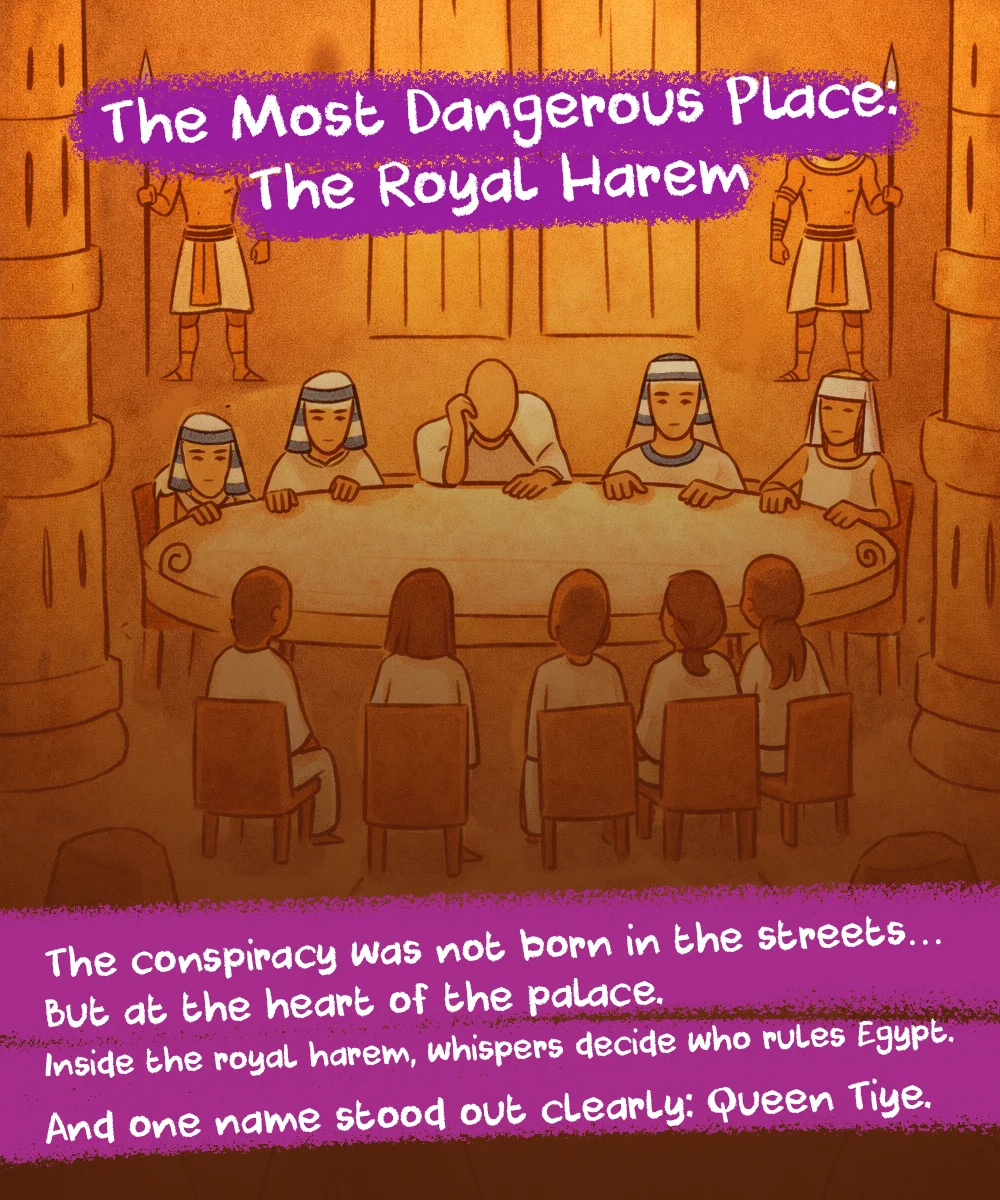
The royal harem was more than private quarters. It was a place where influence could shape succession—and where rival ambitions could grow quietly behind palace walls.
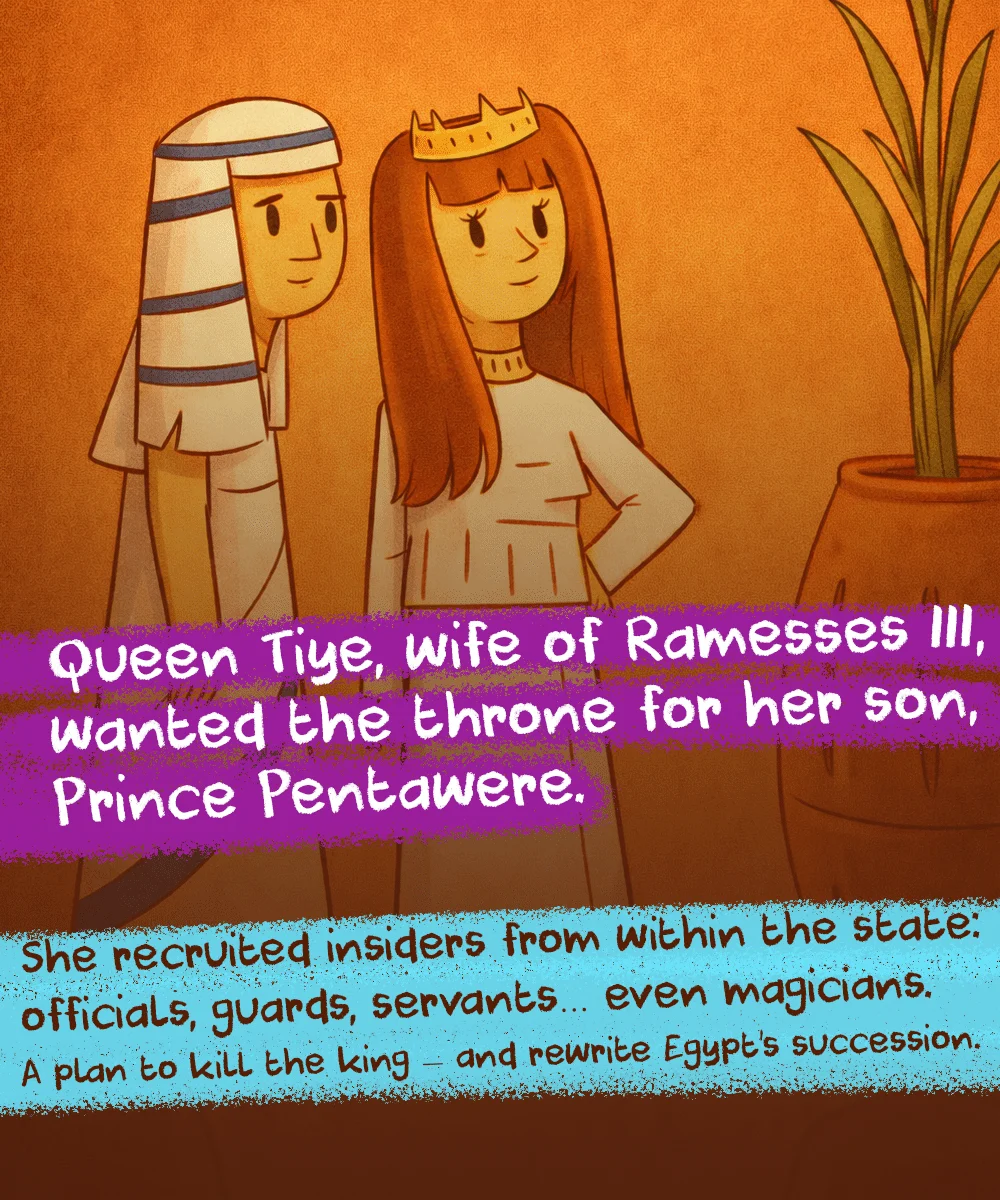
At the centre of the plot stood Queen Tiye, who wanted her son Prince Pentawere to take the throne instead of Ramesses III’s appointed heir. What began as palace intrigue was turning into the Harem Conspiracy.
Ancient Egypt recorded the conspiracy in remarkable detail.
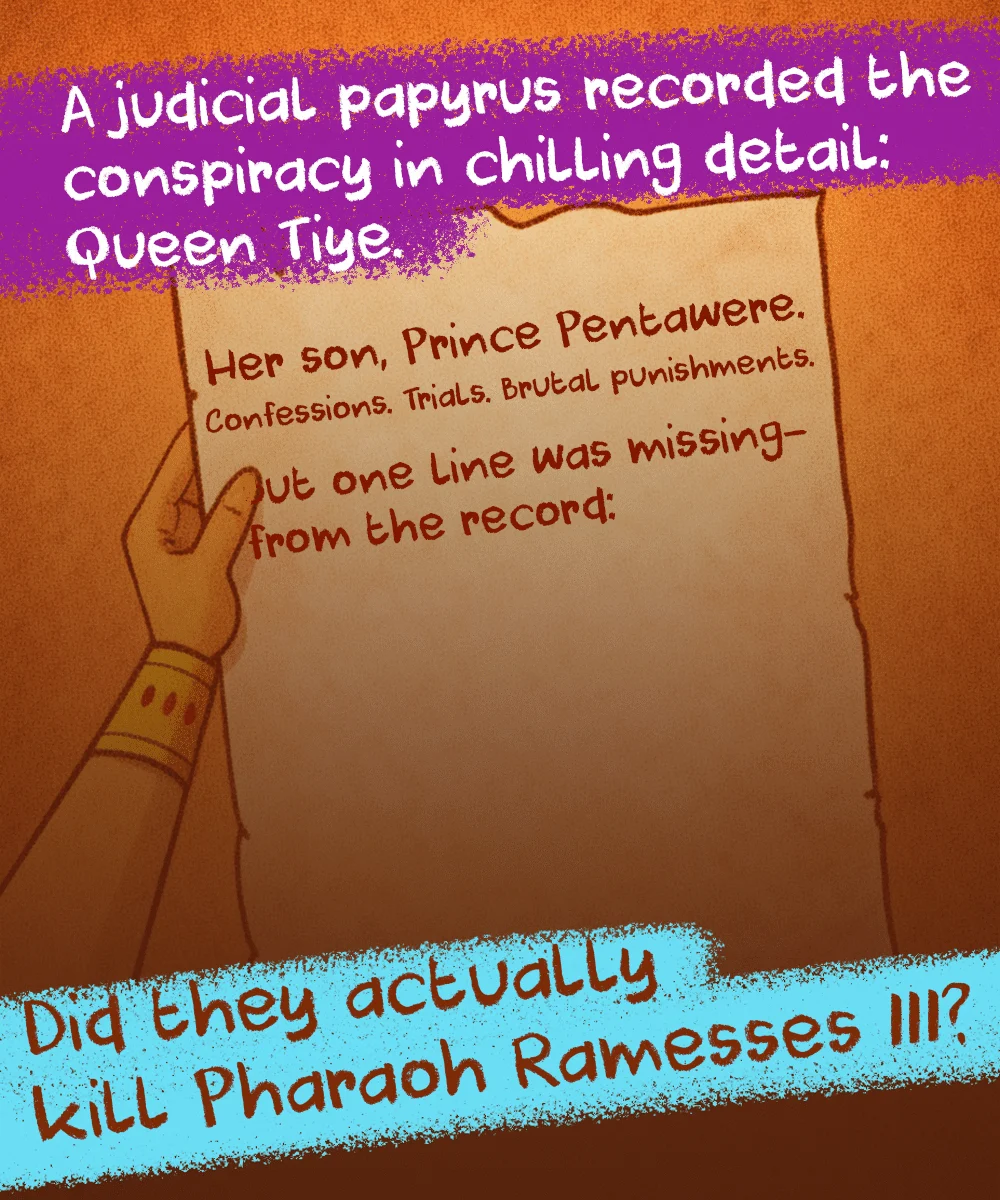
Names were listed. Charges were brought. Punishments followed.
Yet the Judicial Papyrus of Turin never clearly states whether the plot actually killed Ramesses III.
For centuries, that missing answer left one question hanging over the entire case:
Did the conspirators succeed—or did the pharaoh die another way?
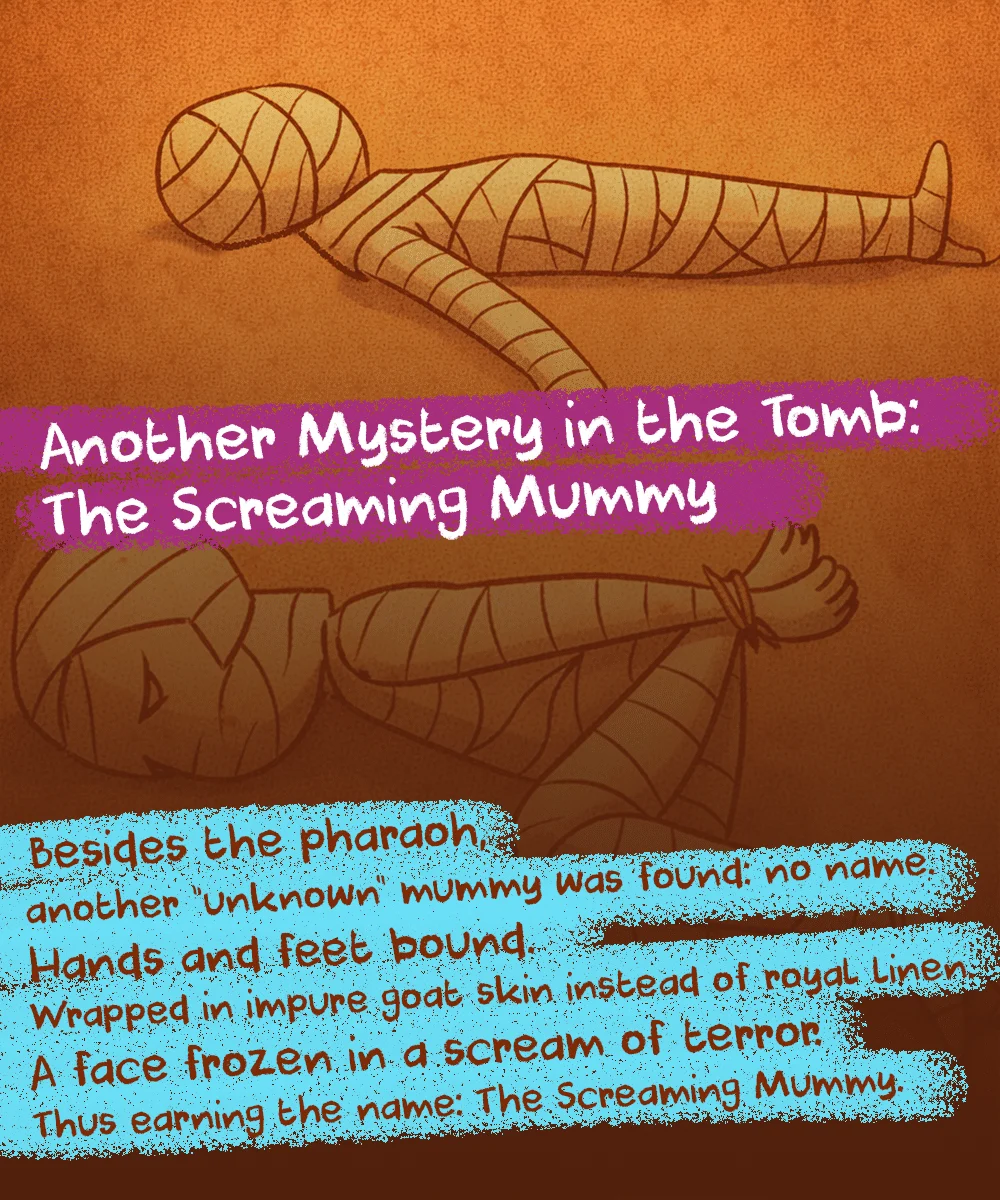
Beside Ramesses III, archaeologists found another disturbing clue: a mysterious mummy known as “Unknown Man E.”
His body had not been prepared like a typical royal burial. The unusual mummification, the goatskin covering, and signs of a violent death immediately raised questions.
DNA later showed that he was closely related to Ramesses III—most likely his son.
Could this mysterious “Screaming Mummy” have been Prince Pentawere, the man accused of joining the conspiracy against his own father?
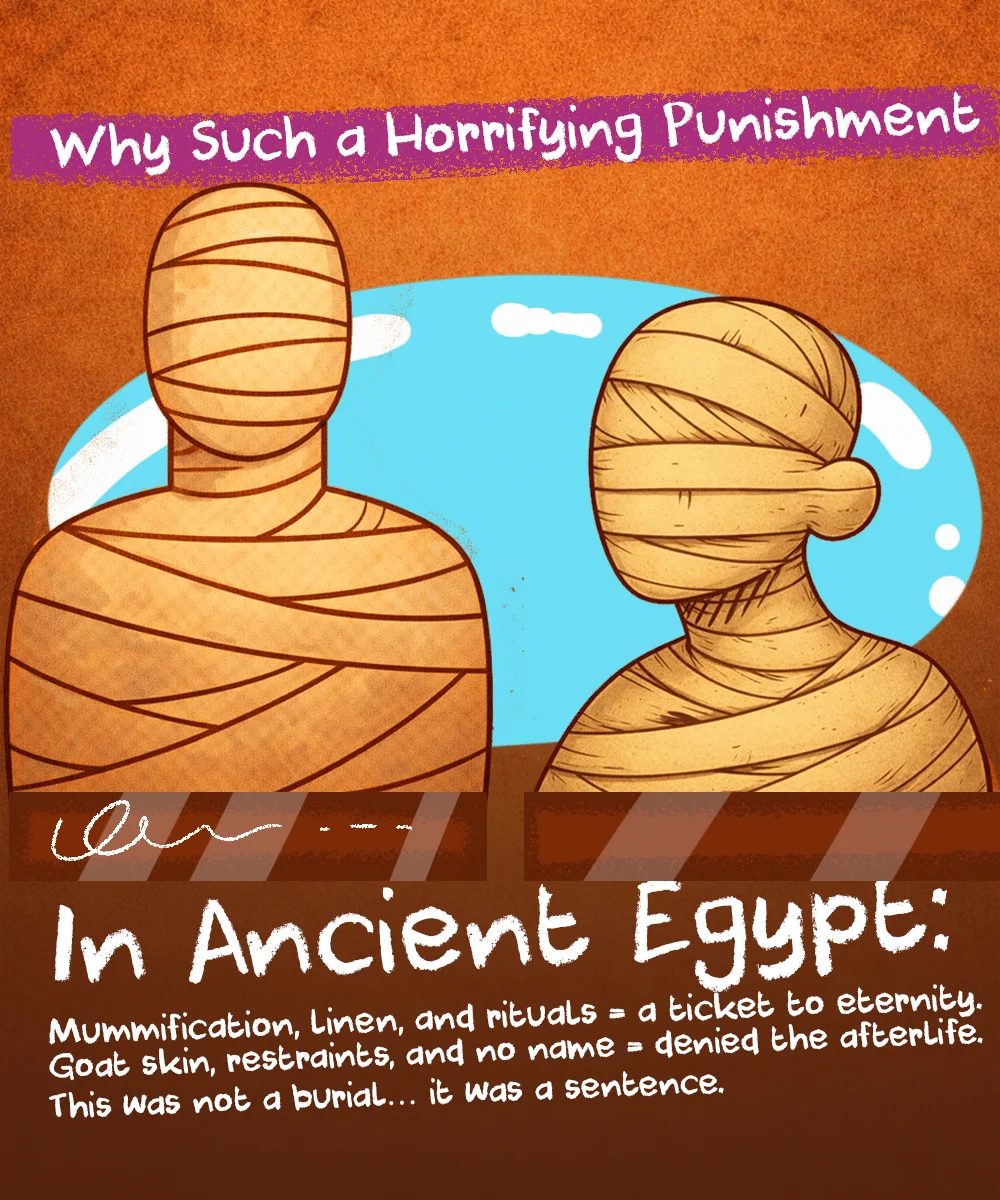
In Ancient Egypt, burial was more than a way to preserve the body—it was part of the journey into the afterlife. Proper mummification and funerary rituals were meant to help secure that passage.
But Unknown Man E was treated differently. His unusual mummification and goatskin covering have been interpreted as possible signs of disgrace or punishment.
If this really was Prince Pentawere, then his punishment may not have ended with death.
Even his burial may have been part of the sentence.
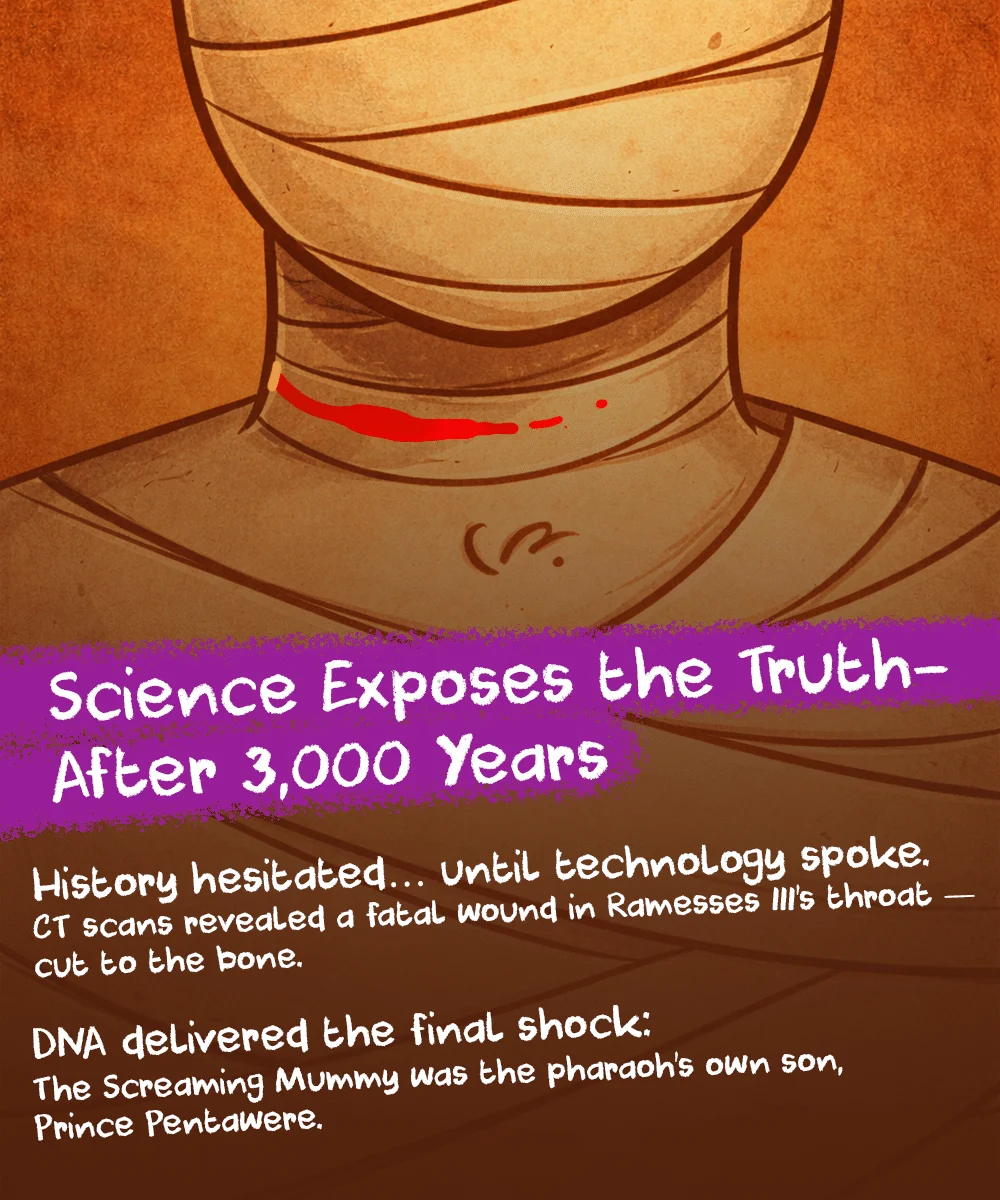
Modern science finally examined what the ancient records could not show.
CT scans of Ramesses III revealed a deep wound across his throat—severe enough to have caused his death.
The mystery was no longer just about whether a conspiracy existed.
The pharaoh had been murdered.
And DNA evidence would soon connect another mysterious mummy to the royal family, bringing investigators even closer to the men behind the plot.
Pentawere’s fate was recorded.
He was found guilty and was allowed to take his own life.
But Queen Tiye—the woman identified as the instigator of the Harem Conspiracy—simply fades from the surviving record. Her final punishment and fate remain uncertain.
The plot failed to put Pentawere on the throne. Ramesses IV became pharaoh instead.
But more than 3,000 years later, the conspiracy still leaves one unsettling lesson:
The greatest threat to a king did not always come from beyond the palace walls.