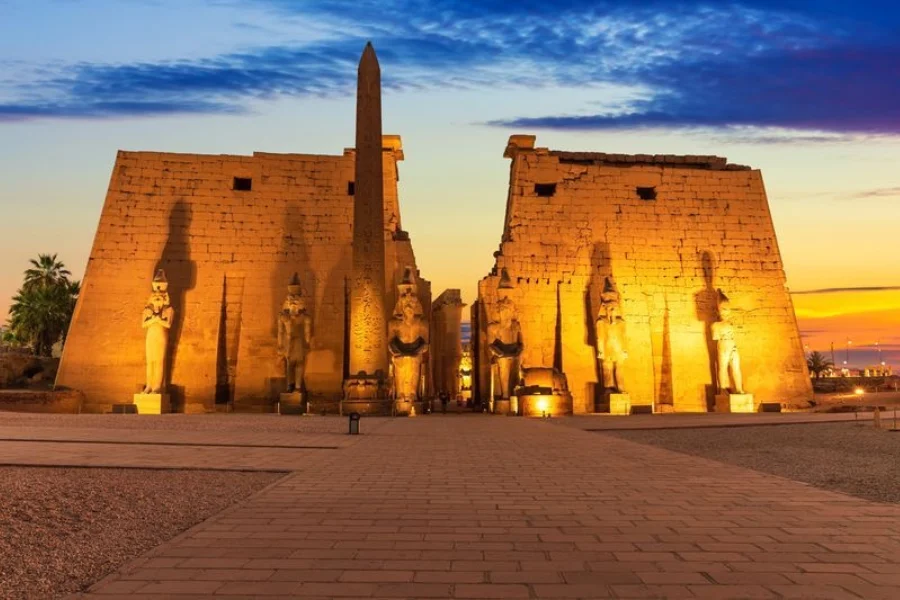

God Anubis – Ancient Egyptian Jackal God of the Afterlife
God Anubis is one of the most iconic ancient Egyptian gods, instantly recognized by his jackal head and black form. Known as the guardian of cemeteries, embalmer of mummies, and guide of souls, Anubis was central to funerary rituals and beliefs about the afterlife.
This guide covers Anubis’s origins, family, funerary roles, symbols and worship, the weighing of the heart in Spell 125, and his place in modern tattoos and popular culture.
Who was God Anubis?
Anubis (Egyptian: Inpu/Anpu) was among the earliest and most famous deities of ancient Egypt. Revered as the god of mummification and the guardian of cemeteries, he presided over funerary rituals and the safe passage of souls into the afterlife.
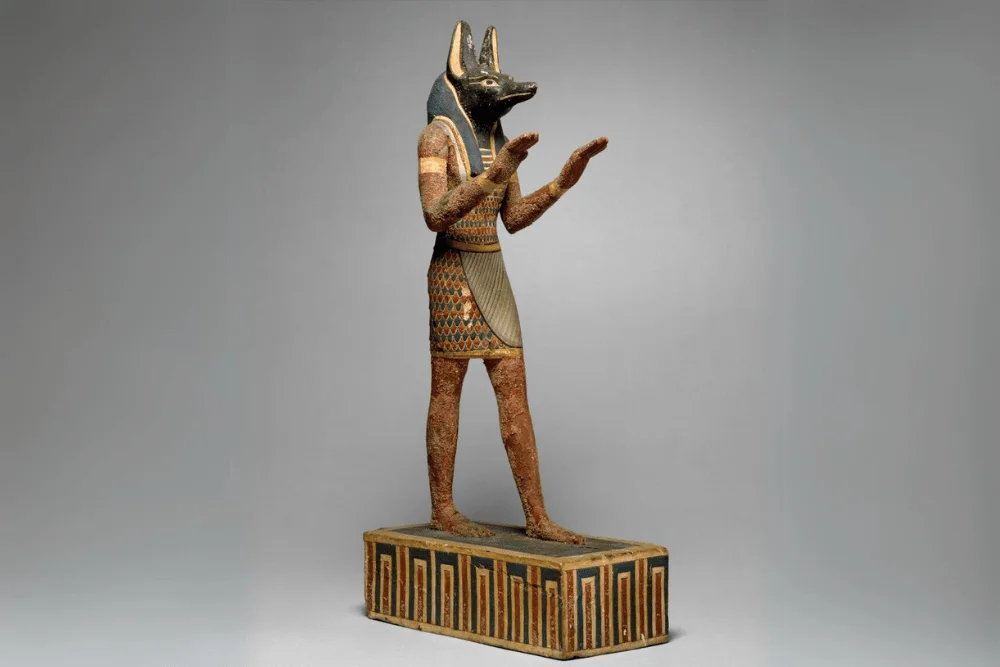
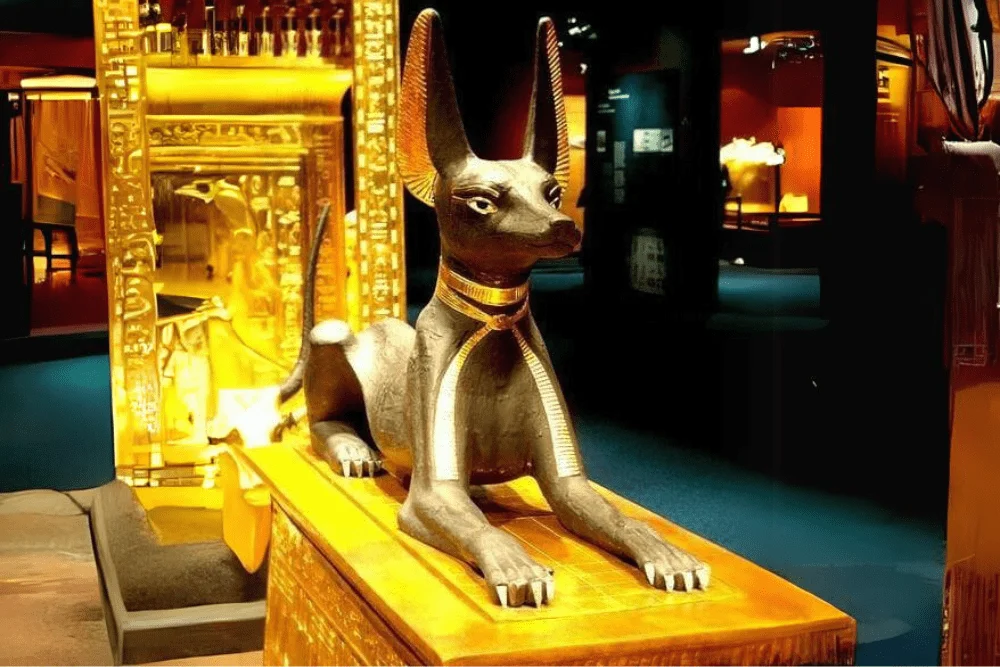
Depicted as a black jackal or a man with a jackal head, his color symbolized death and rebirth—echoing the fertile black soil of the Nile.
Anubis was also the chief deity of the 17th Nome of Upper Egypt, Cynopolis (“City of the Dog”), and one of the most recognizable Egyptian gods throughout history.
Why did the Ancient Egyptians Worship Anubis?
Jackals roamed the edges of cemeteries, an association often used to explain Anubis’s role as guardian of the necropolis. Egyptians looked to him to protect the dead and oversee embalming.
His Egyptian name may be connected with inp, a word for a royal child, though its origin is uncertain.
Names and Titles of God Anubis
His Egyptian name is rendered as Anpu, Inpu or Ienpw. Imy-wt, sometimes written Imiut or Imeut, is an epithet associated with embalming rather than another spelling of his name. The Greek form “Anubis” spread in later eras. Titles included: Counter of Hearts, First of the Westerners, Lord of the Mummy Wrapping, Chief of the Necropolis, Prince of the Court of Justice, and Master of Secrets.
Origin and Family of Anubis
Traditions vary: Anubis could be called a son of Ra, while Bastet also appears as his mother. Other accounts make him the son of Osiris and Isis, or of Osiris and Nephthys, the wife of Set. In Plutarch’s account, Isis raises Nephthys’s child as her own. In these Osirian genealogies, Anubis is a brother or half-brother of Horus, linking him to stories of kingship and resurrection.
Wepwawet, another canine deity, was often paired with Anubis in protecting the dead, while retaining his own identity.
Symbolism of the Egyptian God Anubis
Black skin signified rebirth through the Nile’s fertile soil, while the jackal head connected Anubis with cemeteries. The crook and flail were shared symbols of royal and divine authority, associated especially with Osiris but also with Anubis. From the Old Kingdom onward, he embodied protection and transformation.
Roles of Anubis in the Afterlife
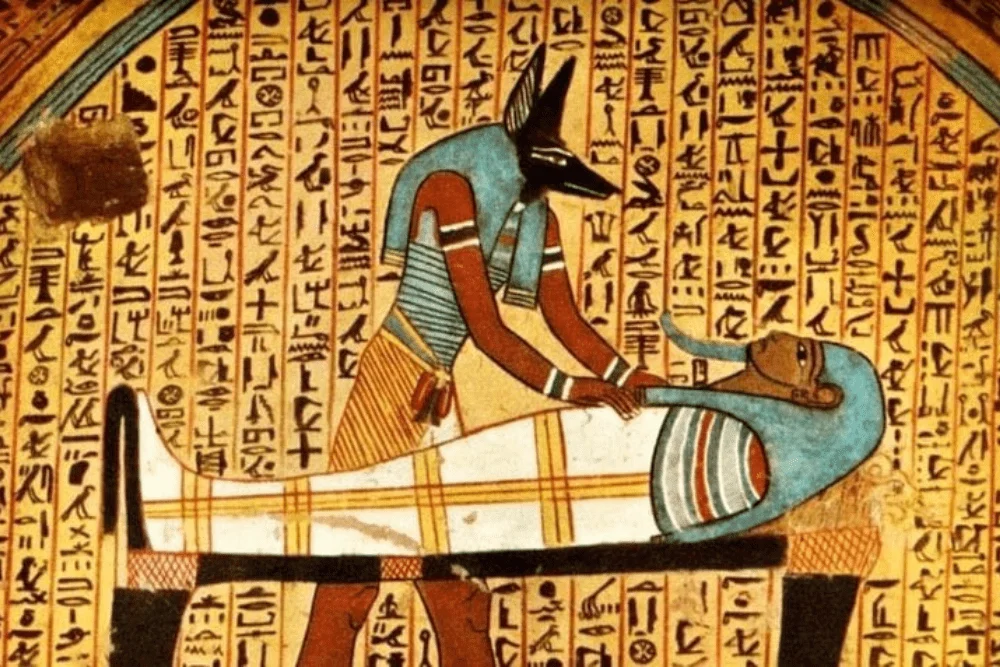
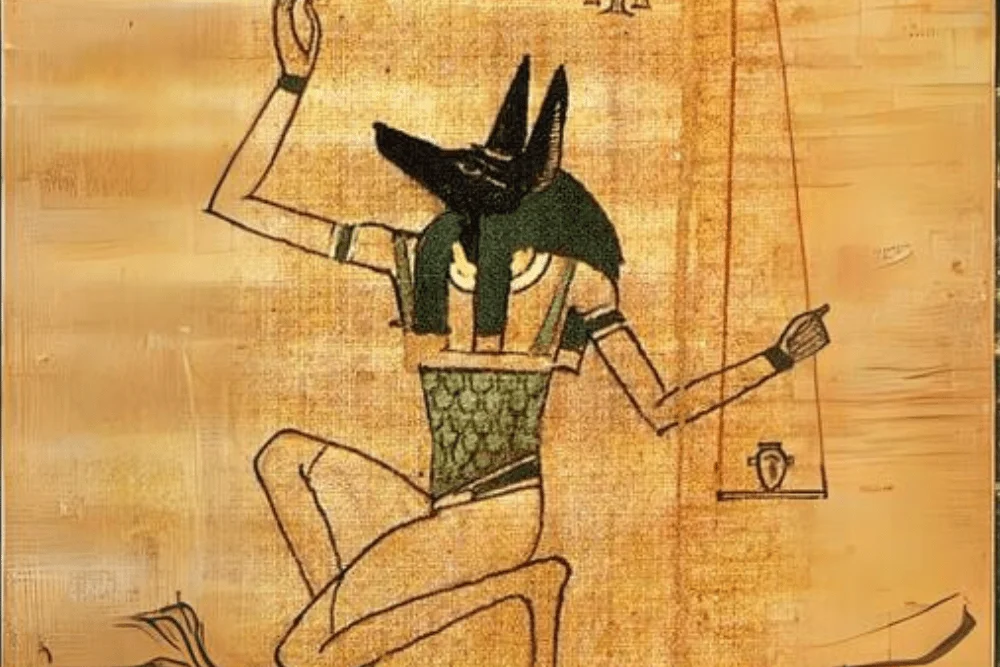
I. Embalmer
As “He who is in the residence of embalming,” Anubis presided over mummification—myths tell how he assisted Isis in embalming Osiris.
II. Protector of Tombs
“Foremost of the Westerners” and “He who is upon his mountain” reflect his vigilant guardianship over cemeteries and sacred lands.
III. Guide of Souls
He led the deceased through the perilous journey to the afterlife, ensuring safe passage to the Hall of Judgment.
IV. Weigher of Hearts
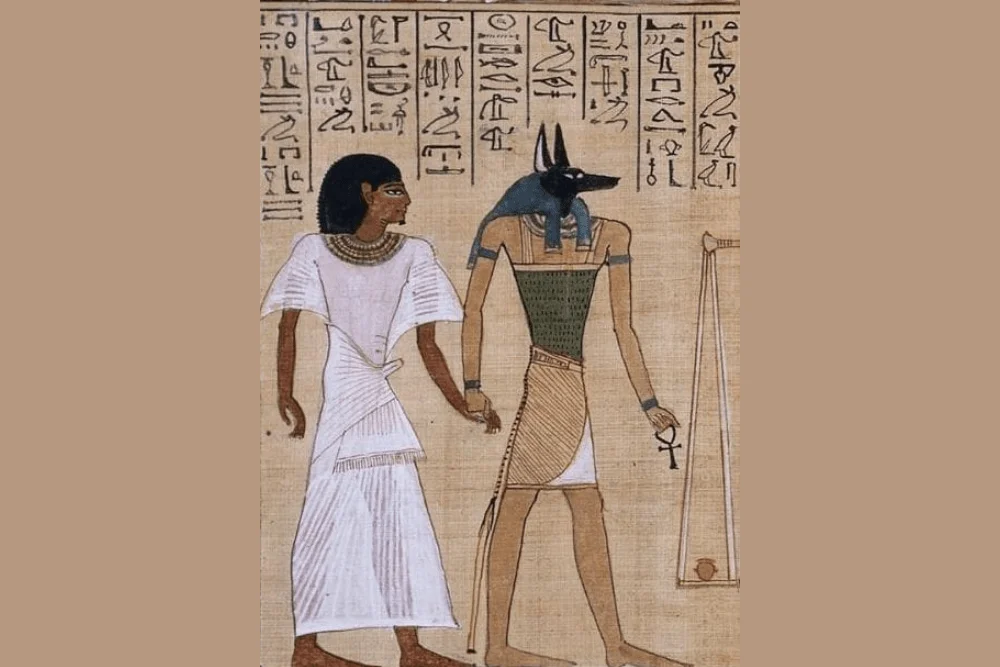
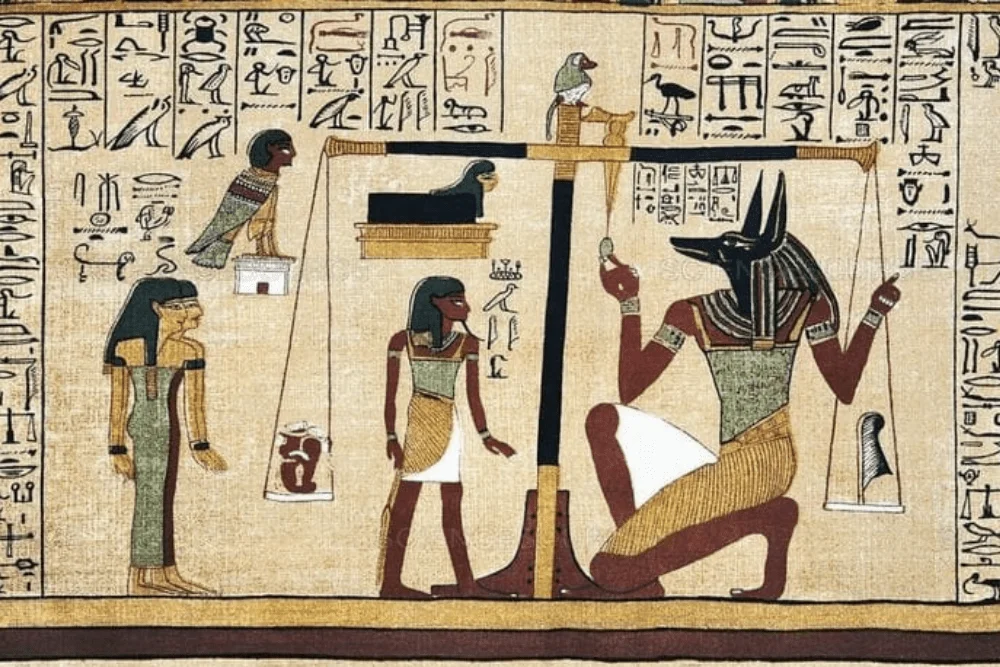
Anubis oversaw the weighing of the heart against the feather of Maat—a pure heart earned eternal life.
Spell 125 – The Weighing of the Heart
In the Book of the Dead, Spell 125 concerns the deceased’s judgment and declarations of innocence. The accompanying weighing scene shows Anubis checking the scales as the heart is weighed against the feather of Maat. Thoth records the result and Osiris presides over the judgment. The righteous pass into the afterlife, while the unworthy face annihilation by Ammit.
This iconic scene cemented Anubis as guarantor of justice, purity, and moral balance in the afterlife.
Anubis Tattoos – Meanings & Design Ideas
In modern culture, Anubis tattoos can express protection, transformation or fearlessness in the face of death; their meaning depends on the wearer. Design ideas include a jackal head in profile, scales, the crook and flail, or a full canine form in black ink.
Design cues: geometric lines, hieroglyphic borders, or pairing with the feather of Maat to emphasize balance and truth.
Where Was Anubis Worshipped?
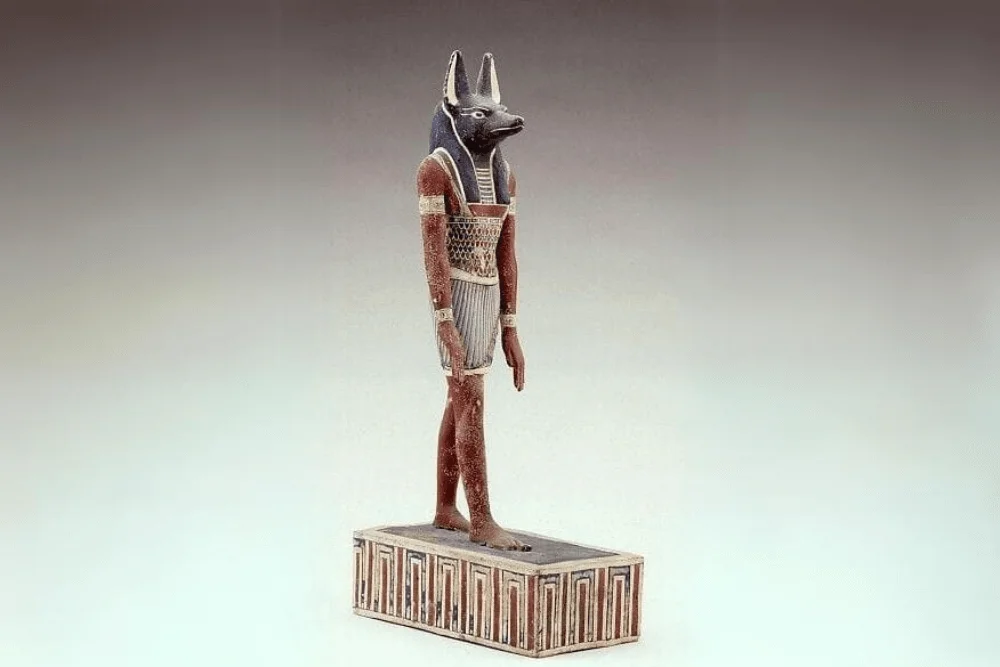
Cemeteries and tombs were central to Anubis’s worship, but he also had temples. The Anubeion at Saqqara was a temple precinct, and the associated dog catacombs received mummified canids as votive offerings.
His cult centers in Cynopolis and Asyut reflect his close connection with the necropolis.
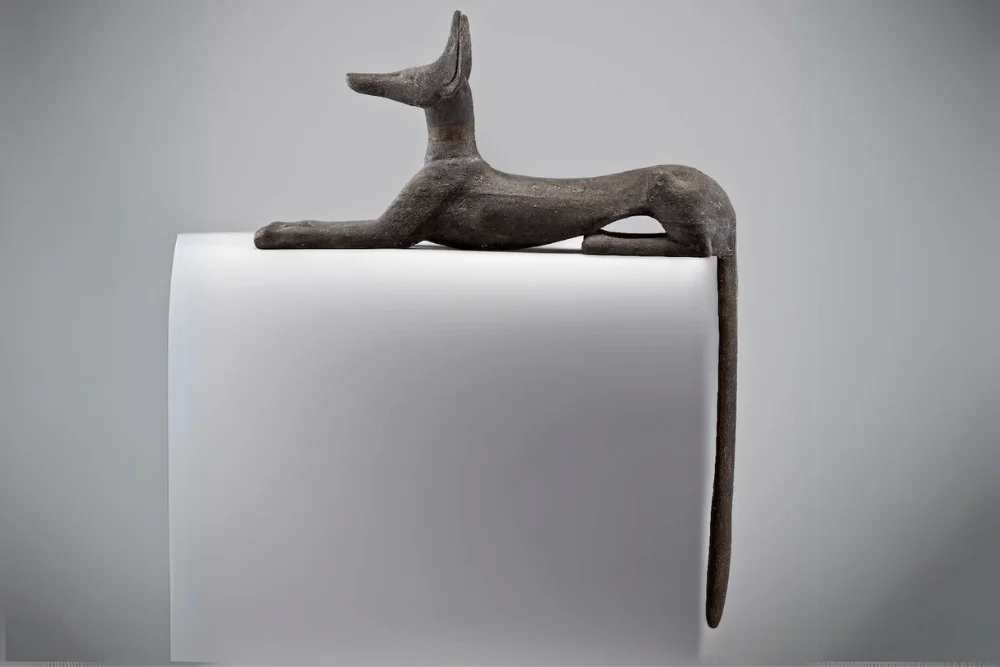
Cult of the Egyptian God Anubis
Priests of Anubis performed funerary rites and wore jackal masks during ceremonies, embodying the god’s presence and authority over death and rebirth.
Active devotion included prayers, offerings, and votive deposits—reinforcing Anubis’ role as guardian of body and soul.
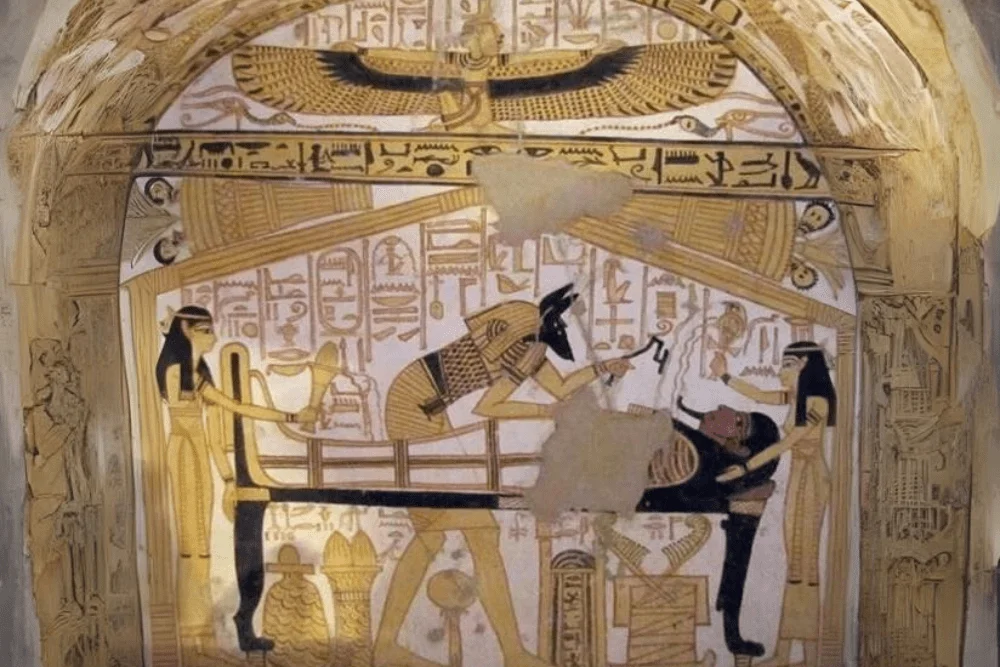
Legacy and Cultural Impact of Anubis
Anubis adorned amulets, coffins, and tomb walls as a protective emblem; the Weighing of the Heart remains an enduring icon of justice and truth.
Today, he features in books, films, games, and tattoos—standing for mystery, protection, and the eternal cycle of life and death.
Anubis vs Osiris — What’s the Difference?
While Anubis guided and protected the dead—preparing the body and leading the soul through judgment—Osiris presided as the lord of the afterlife and the ultimate judge. In the Weighing of the Heart, Anubis operated the scales, Thoth recorded the verdict, and Osiris delivered the final judgment.
Anubis in Modern Pop Culture
Beyond temples and tombs, God Anubis appears in films, TV, games, comics, and contemporary art. His jackal-headed silhouette symbolizes mystery, justice, and transformation.
Today, Anubis also inspires modern symbolic jewelry, especially necklaces worn as a personal expression of protection, strength, and connection to ancient Egyptian heritage. You can explore this modern symbolism in this guide to the Anubis necklace meaning.
Discover Anubis Through Egypt Tours
Learning about God Anubis is even more fascinating when you explore Egypt in person. From ancient necropolises to temples and museums, our tours bring you closer to the myths and monuments of the jackal-headed guardian of the afterlife.
- Egypt Tour Packages – complete journeys across Cairo, Luxor, Aswan & more.
- Egypt Nile River Cruises – sail between temples along the Nile.
- Egypt Shore Excursions – quick trips from ports to Egypt’s treasures.
- Egypt Day Tours – guided visits to pyramids, museums & necropolises.
Conclusion
As guardian of cemeteries, embalmer and weigher of hearts, God Anubis brought together Egyptian beliefs about protecting the body and judging the dead. His images remain recognizable in art, jewelry and popular culture today.
FAQ – Egyptian God Anubis
Who was Anubis in ancient Egypt?
Anubis was the jackal-headed god of mummification, funerary rites, and the afterlife. He guided souls and oversaw the weighing of the heart ritual.
What did Anubis symbolize?
He symbolized death, protection, resurrection, and transformation. His black color represented rebirth through the Nile’s fertile soil.
Did Anubis have temples?
Yes. The Anubeion at Saqqara was a temple precinct associated with Anubis. Cemeteries, shrines and embalming places were also important settings for his worship.
Is Anubis still relevant today?
Yes—he remains a cultural icon in literature, films, games, and tattoos, representing protection and the balance of life and death.