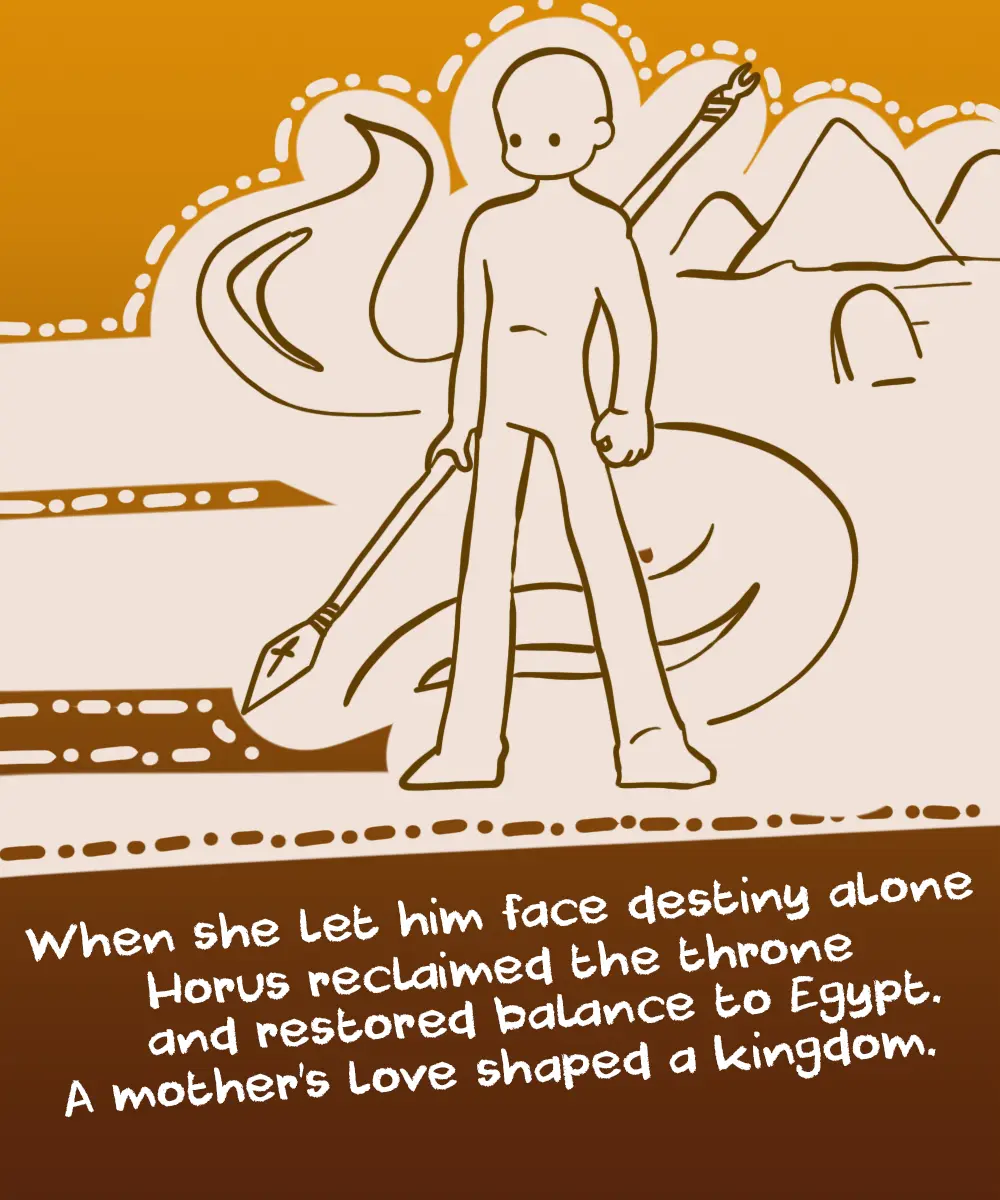
The Story of Sinuhe: Exile and Nostalgia in Ancient Egypt
There is a pain that doesn’t appear immediately.
It comes when you realize that leaving home may not be temporary.
That some journeys don’t lead back.
More than 4,000 years ago, one man felt this fear in silence.
He didn’t know it then, but his life would become a story about exile, belonging, and the quiet pull of home.
This is the story of Sinuhe.
More than 4,000 years ago, one man lived a life that felt complete.
He did not feel lost.
He did not feel afraid.
That would come later.

Everything in his life made sense.
His place was clear.
His future felt secure.
Sinuhe had no reason to imagine leaving Egypt.
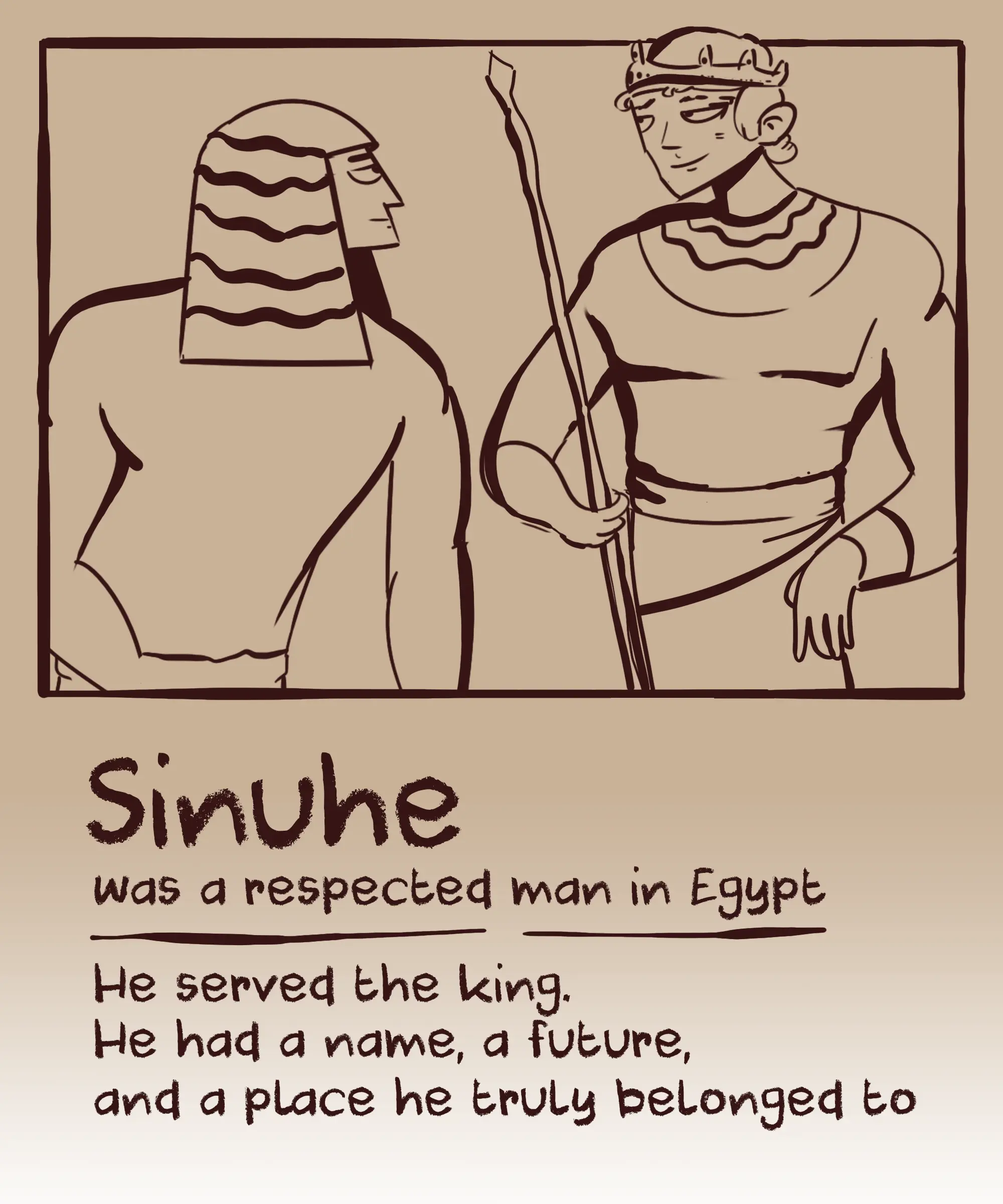
Then suddenly, King Amenemhat died.
No one accused Sinuhe.
No crime was spoken of.
But uncertainty spread through the court — and that was enough to make him flee.
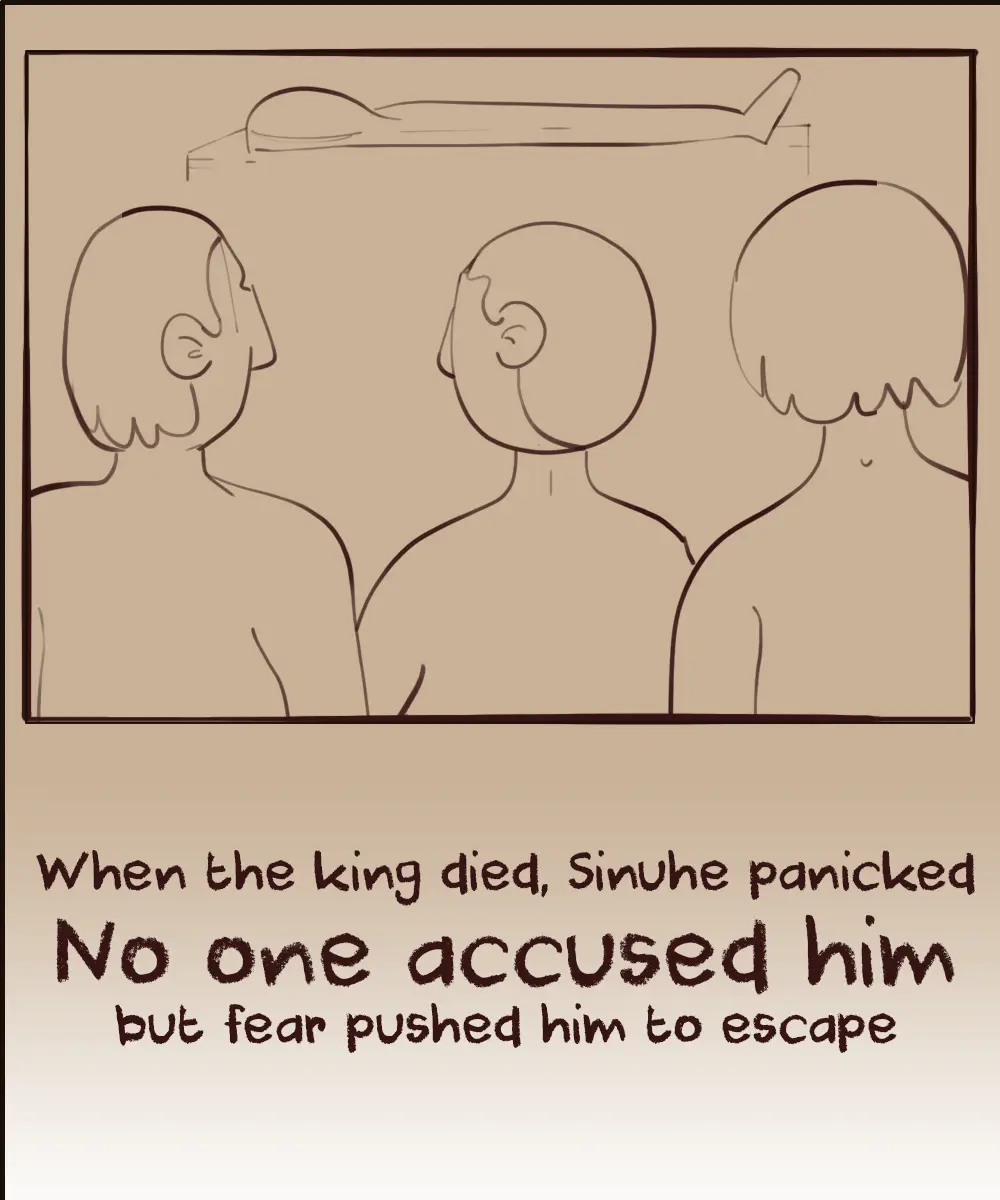
Sinuhe fled Egypt alone.
He left behind the Nile, his people, and the land that shaped his soul.
In Ancient Egypt, to leave your homeland was to risk eternity itself.
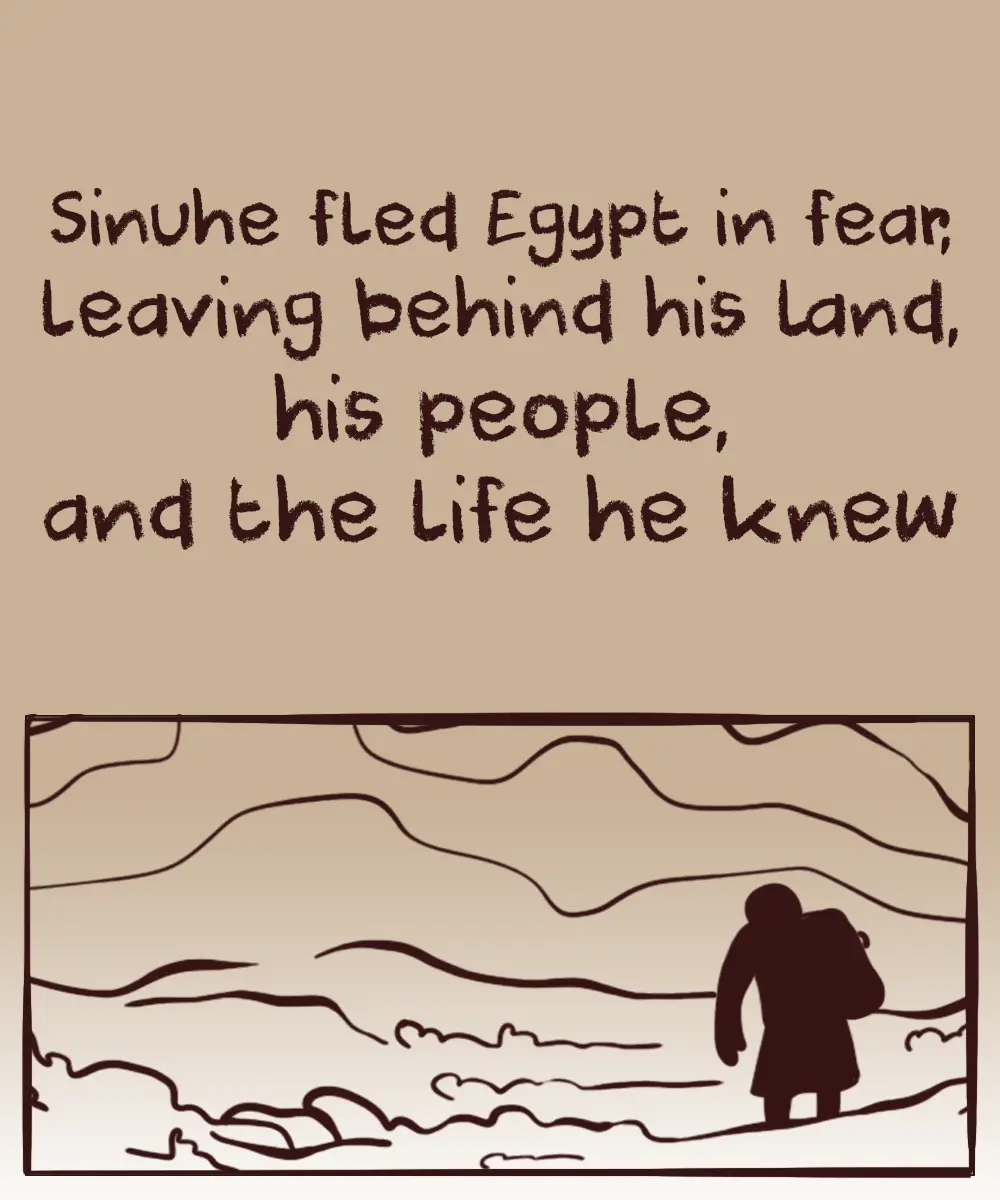
Abroad, Sinuhe built a new life.
He became successful.
Respected.
Even powerful.
Yet nothing he gained could replace what he had lost.
Outside Egypt, his body lived — but his soul remained restless.
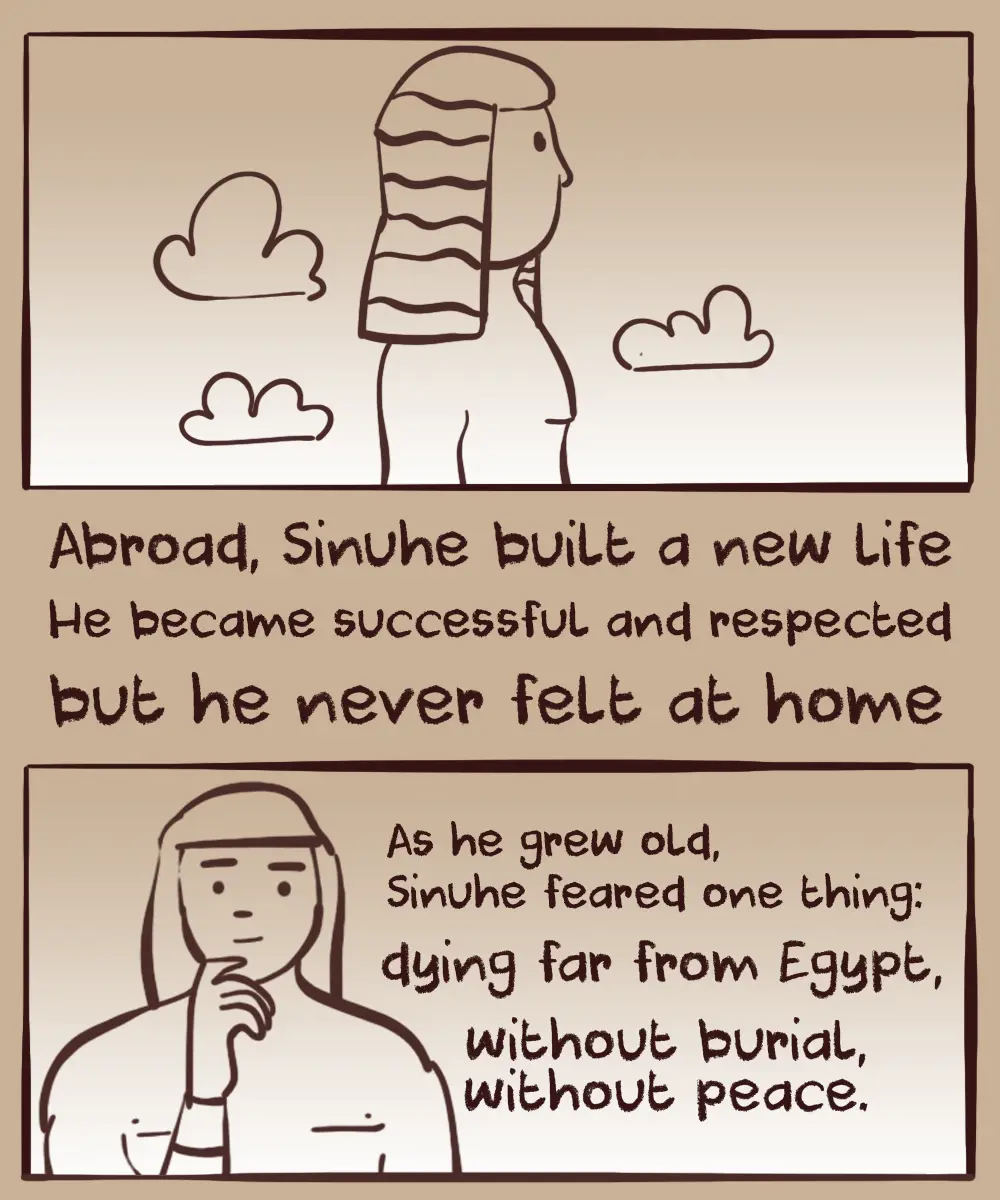
As he grew old, Sinuhe feared one thing:
Dying far from Egypt, without burial, without peace.
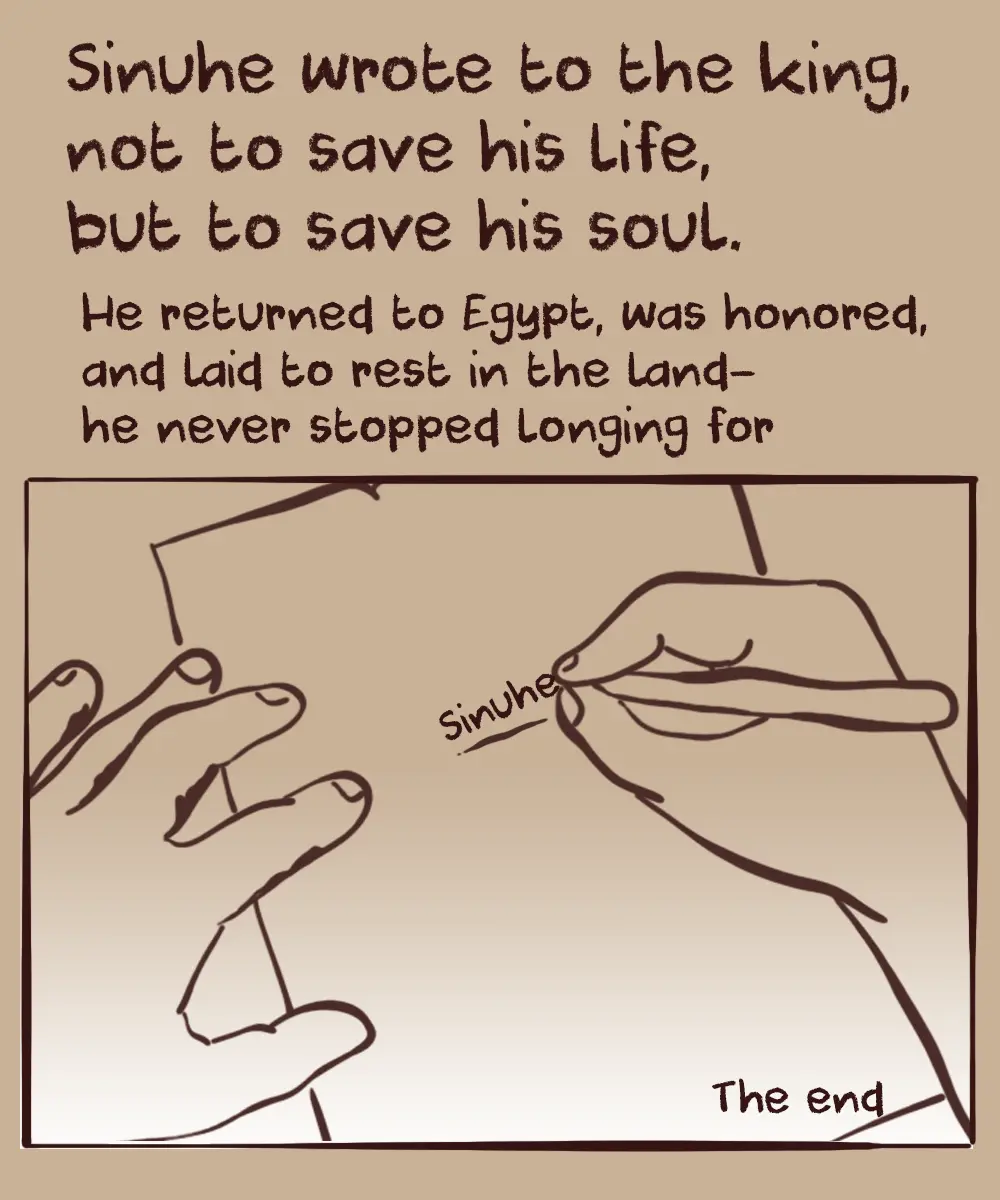
So he wrote to the king — not to save his life, but to save his soul.
He returned to Egypt, was honored, and finally laid to rest where his soul belonged.
Sinuhe learned that survival is possible anywhere.
So is success, and even respect, but peace is different.
In Ancient Egypt, peace belonged only to those who returned home.
That is why, after a lifetime shaped by fear and distance, Sinuhe chose to go back.
Not to reclaim what he lost, but to finally let his soul rest.