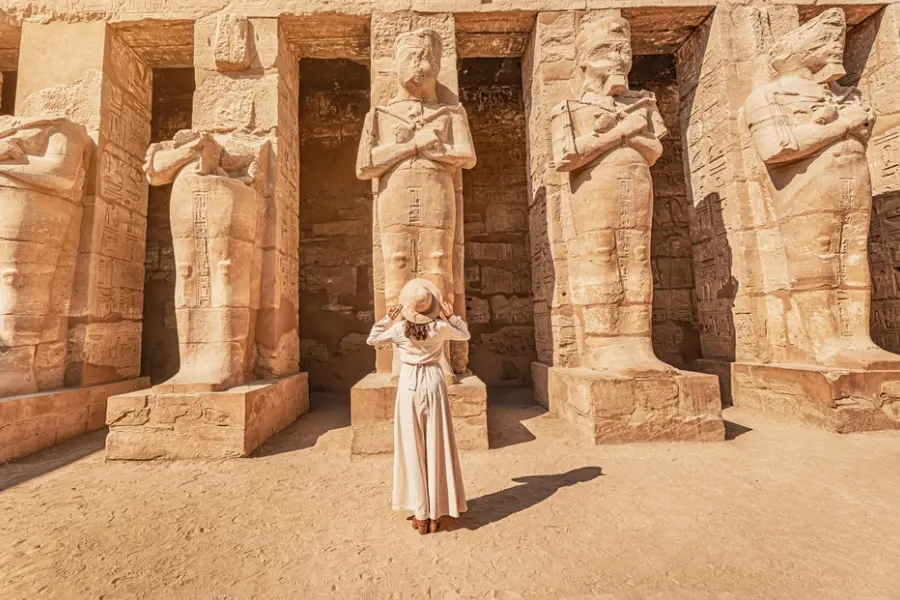
Tell El Amarna in Egypt – Akhenaten’s City
Amarna. This remote location holds the fascinating remnants of Akhetaton, the once-vibrant, revolutionary capital built by the controversial Pharaoh Akhenaten. Explore the relics of this magical city where archaeology offers us unparalleled insight into a mysterious, brief, but transformative era of ancient Egypt.
Tell El-Amarna is an exceptional archaeological spot, located in Upper Egypt, approximately 44 miles northeast of Asyut and 36 miles southwest of Al Minya. It contains unique tombs and ruins from Akhetaton—a city established by Akhenaten, who was formerly known as Amenhotep IV, around 1348 BC.
This city was the culmination of Akhenaten’s religious revolution: he abandoned the traditional worship of Amun (centered in Thebes) in favor of the sole worship of the sun disk Aten (monotheism) and built his new capital here, dedicated to his new god. Tragically, just four years after Akhenaten‘s death, his throne returned to Thebes, and Tell El-Amarna was dramatically abandoned, leaving its secrets preserved for modern discovery.

Tell El Amarna-Egypt Tours Group.
Notable Tombs in Tell El-Amarna
The historical site of Tell El-Amarna is primarily characterized by its two major sections of cliff tombs, hewn into the eastern cliffs at either end of the ancient city of Akhetaton. These monumental rock-cut tombs are reckoned to be the main source for studying the religion and distinctive art of the revolutionary Amarna Period (New Kingdom). The walls feature intricate reliefs and carvings that offer visitors an unparalleled view of the unique artistic style of the era.
List of unique tombs located within Tell-El-Amarna:
Huya Tomb
Located within the North Tombs cluster, the Tomb of Huya is one of the most fascinating to explore. Huya served as the Overseer of the Royal Harem and Steward to Queen Tiye, Akhenaten’s mother. His tomb is remarkable for its detailed, candid wall paintings that depict royal banquet scenes, including the tomb owner providing services and King Akhenaten dining with his mother. This tomb provides an invaluable snapshot of the royal family’s life and the highest social standing of this crucial serviceman.
Mery Re I Tomb
Renowned for its vibrant, well-preserved colors and striking artistic creativity, the Tomb of Mery Re I is among the most attractive tombs in the complex. Mery Re I held the prestigious title of High Priest for Aten, the Sun God, and the reliefs inside his tomb are critical for understanding the Amarna religion. They uniquely display Pharaoh Akhenaten himself performing religious rituals and worshipping Aten, the Sun God, providing a rare visualization of the open-air Great Temple of Aten, which is now largely ruined.
Aye Tomb
Situated among the less accessible Southern Tombs, the Tomb of Ay (Southern Tomb 25) offers an exceptional viewing experience. Ay served as Egypt’s Vizier—Akhenaten’s highest-ranking royal official and preferred confidant (Ay later became Pharaoh after Tutankhamun). This tomb is widely considered one of Tell El-Amarna’s most beautifully designed features, containing the longest and most complete version of the Great Hymn to the Aten. Its glamorous, highly detailed paintings include an iconic scene depicting Ay and his wife receiving the high honor of a ceremonial golden collar directly from King Akhenaten and Queen Nefertiti.

A drawing inside Tell Al Amarna – Egypt Tours Group.
Tell El Amarna Letters
One of the most profound discoveries at the site of Tell El-Amarna is the archive of clay tablets known as the Amarna Letters. These documents represent one of the oldest known examples of sophisticated international diplomacy, dating back to the pivotal 14th Century BC (the Late Bronze Age). The archive documents extensive correspondence between the rulers of Ancient Egypt (including Akhenaten) and the major powers of the Near East, illuminating the international relations of the period.
These diplomatic communications covered a wide array of crucial subjects, including declarations of friendship, strategic diplomatic marriage proposals, and detailed negotiations over the exchange of precious materials and tribute. The Amarna Letters are rightly celebrated as the foundation of the first known international diplomatic system. They not only provide conventions and rules for inter-nation communication and negotiation but also showcase the sophisticated forms of written communication used by the great powers of the Near East to establish an atmosphere of peaceful international co-operation that profoundly influenced foreign policy for centuries. The insights they offer into this high level of ancient governance are unparalleled.

Tell El Amarna-Egypt Tours Group.
The Amarna Letters are unique in that they provide invaluable insight into the reigns immediately preceding and following the Amarna Period. These records specifically mention Pharaoh Amenhotep III and Akhenaten as reigning figures, and include correspondence that spans the time of later rulers such as Smenkhkare and Tutankhamun.
Crucially, the letters vividly document the extensive geopolitical reach of the New Kingdom. They reveal Egyptian expansion and influence into critical Near Eastern regions such as Amurru, Damascus, Byblos, and Qadesh. The correspondence confirms the fealty of local vassals loyal to Egypt, tangibly demonstrating the Pharaoh’s authority and devotion across this vast, strategic territory.
The Archive and its Diplomatic Revelations
Comprising 382 fragile clay tablets, the meticulously preserved Amarna Letters are geographically and chronologically arranged, offering historians a structured, comprehensive view of ancient Egyptian foreign policy. Their contents shed unparalleled light on how ancient Egyptian civilization evolved over time, expanding our knowledge of distant events and challenging historical assumptions of isolationism during antiquity.
More than mere records, these letters offer an insightful look into the remarkable language and communication skills available during that era. The documents detail how great powers and independent kingdoms—including Babylon, Mitanni, Hatti, and Assyria—maintained equal diplomatic relationships through sophisticated communication patterns that established enduring international conventions. This crucial archive of correspondence is now a cornerstone of ancient history, with tablets proudly showcased in major museums across Egypt, the United States, and Europe.

A stunned face inside Tell El Amarna- Egypt Tours Group.
Excavations At Tell El-Amarna
The archaeological history of Tell El-Amarna, the forgotten capital of Pharaoh Akhenaten, spans nearly three centuries. Initial exploration and documentation of the site’s stunning remains began as early as 1714 AD, with subsequent, organized documentation occurring during and immediately following Napoleon’s famed Egyptian expedition between 1798 and 1799, when many early European scholars first studied the ruins.
The pace of discovery accelerated in the 19th century. An English team of archaeologists first successfully mapped the extensive city layout around 1824. Shortly thereafter, the important Southern Tombs in the cliff face were unearthed around 1833. A pivotal Prussian expedition, led by Karl Richard Lepsius from 1843–1845, further explored this region, collecting invaluable records and intricate drawings that remain crucial references for Egyptology today.
The site yielded its most significant find around 1887 when local women accidentally came upon more than 300 cuneiform tablets. Now globally famous as the Amarna Letters, these diplomatic records provided sudden, profound insight into Pharaoh Akhenaten’s foreign correspondence and diplomacy with Near Eastern powers, instantly establishing Amarna’s immense historical significance. Throughout the late 19th and 20th centuries, major independent excavations continued to yield great successes, uncovering more cuneiform tablets, priceless artifacts, various boundary stelae that delineated the city’s ancient limits, and numerous private tombs outside the city center.

Tell El Amarna-Egypt Tours Group.
Tell El Amarna Houses
Tell El-Amarna was home to a diverse urban population, reflected in a wide range of house types, from simple mudbrick houses for common people to complex, sprawling villas for the elite. Yet, all housing adhered to a unique architectural design that defined the Amarna Period.
The core of the Amarna house design—regardless of size—was typically organized around a central, high-ceilinged hall and featured numerous courtyards, rooms, and storage areas.
Key architectural and religious distinctions included:
-
Religious Integration: Houses often incorporated small, dedicated temples or shrines. These private sanctuaries were unique because they featured open, roofless areas directly exposed to sunlight, reflecting the new Aten cult’s emphasis on worshipping the sun disk in the open air. These areas also included numerous altars for offerings.
-
Elite Villas: The residences of the wealthy elite were elaborate architectural masterpieces. These large homes featured intricately decorated frescoes on the inner walls, large gardens, private chapels, and multiple storage sheds.
-
Architectural Simplicity: In line with the revolutionary style of the city, the small shrines did not utilize the heavy, fixed door designs common in earlier Theban temples, symbolizing a new accessibility in religious practice that was embraced by the city’s inhabitants after the shift from Amun to Aten worship.
The preservation of these domestic ruins provides archaeologists with a unique and invaluable collection of evidence for New Kingdom domestic architecture and the daily life of ancient Egyptian civilization.

Tell El Amarna-Egypt Tours Group.
Tell El Amarna Art
Tell El Amarna Art is one of the most defining and instantly recognizable features of the city’s brief existence during the rule of Pharaoh Akhenaten (c. 1351–1334 BC) in the 18th Dynasty of New Kingdom Egypt. This artistic style underwent a dramatic and immediate transformation, driven by Akhenaten’s radical religious reforms and the introduction of the monotheistic worship of Aten’s sun disc. Remnants of this unique art can still be found today across the Tell El-Amarna archaeological site.
Characteristics of the Amarna Style
This art style shattered centuries of artistic convention. Known for its active and dynamic scenes, Tell El Amarna Art featured:
-
Emotional Candor: Sculptures and reliefs depicted figures with raised, dynamic heads, intertwining bodies, crowded, busy scenes, and vibrant imagery that prioritized naturalism and emotion over static formality.
-
Exaggerated Features: Royal figures, particularly Akhenaten, were represented with a stunning set of unique physical characteristics, including slender and swaying postures, exaggerated extremities, and distinctive stylized traits that sometimes incorporated feminine qualities, such as great hips and breasts.
-
Detailed Realism: Details like hands, feet, and facial structures were depicted with an unprecedented level of elongation and expressive detail.
-
Religious Revolution in Art: Tomb art abandoned traditional funerary scenes and instead displayed incredible images focused solely on the radiant Aten sun disc and the royal family’s worship, providing powerful visual documentation of the religious reforms.
The Tell El Amarna Art style offers unparalleled insight into the unique artistic and ideological freedom that briefly flourished in ancient Egypt.

Tell El Amarna-Egypt Tours Group.
Tell El-Amarna Facts
Tell El Amarna is an exquisite city built by Pharaoh Akhenaten during the 14th century BCE as part of Amarna Period from 1346 BC-1330 BC and served only as capital administrative center during that timeframe. One major treasure from Tell el-Amarna Letters gives insight into ancient Near Eastern diplomatic relations.
FAQs
What is the significance of Tell el-Amarna?
Tell El-Amarna was established by Pharaoh Akhenaton as his capital dedicated to Aten in 1348 BC as his sun god was worshiped there. Situated in Upper Egypt, Tell El-Amarna boasts various monuments dedicated to Aten such as its unique Temple of Aten featuring exquisite architecture designed to emphasize his power.
Where is Tell el-Amarna in Egypt?
Akhenaten, as Pharaoh of Egypt, founded this city on the Nile in the 14th Century B.C., moving his subjects there to establish a new monotheistic religion.

A nile cruise in Tell El Amarna region- Egypt Tours Group.
What was the Amarna best known for?
The Amarna Period or Revolution was an era in ancient Egyptian history during the reign of Pharaoh Akhenaten. It is most notable for two things: realistic art and monotheism.
How old is Tell el-Amarna?
Akhenaten (Amenhotep IV), on abandoning Amon worship for Aton worship, constructed his city about 1348 BCE as its new capital on an isolated east bank of the Nile. This virgin site provided him with ample raw materials from which he constructed this masterpiece of human architectural achievement.
Who destroyed Amarna?
Amarna stands apart from traditional Egyptian “tells”, in that its destruction did not result from external invasion or earthquake; instead it was ordered destroyed by Horemheb (c. 29-41 BC).