Egyptian Arabic Words and Phrases Every Tourist Should Know
Before traveling to Egypt, learning a few words or phrases in Egyptian Arabic can be extremely helpful for tourists. While Modern Standard Arabic is the official language, Egyptians in daily life use a different dialect that is simpler and more commonly spoken in streets, restaurants, and public transportation.
Egyptian Arabic is the most widely spoken and understood dialect in the Arab world. Even using a few basic words during your trip can make communication easier and help you handle everyday situations more confidently, without needing to learn formal Arabic.
Why it matters for travelers:
- Makes communication easier and helps build friendly connections with locals.
- Useful when taking taxis, shopping in markets, or ordering in restaurants.
- Shows respect for local culture and makes the overall travel experience more enjoyable.
Essential Egyptian Arabic Words for Tourists
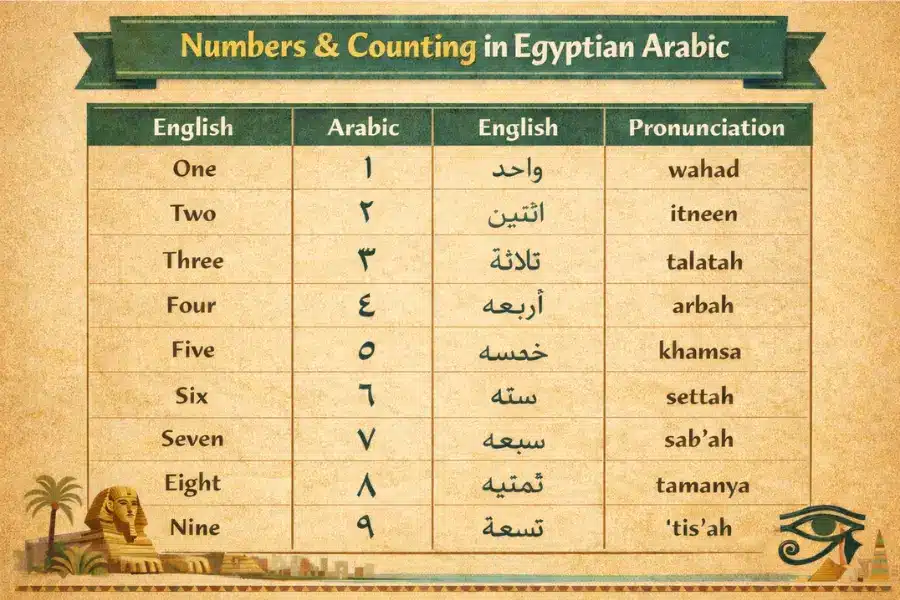
For tourists, it’s important to know a few essential Egyptian Arabic words that help with daily communication and understanding simple situations such as greetings, ordering, and basic responses. These words give you more confidence when interacting with locals and make moving between markets, restaurants, and transportation much easier.
Common Egyptian Phrases You’ll Hear Daily
Before starting your trip to Egypt, it’s helpful to know some common phrases used in everyday life. These phrases make it easier to communicate with locals when greeting people, shopping, moving around, or asking for simple assistance.
Greetings & Introductions
Greetings words and phrases are an important part of daily communication in Egypt. Egyptians often use “Ahlan” or “Salam” to say hello, and “Ezayak” to ask how someone is doing. Using these phrases leaves a friendly impression and opens an easy way to start a conversation, whether you’re at a market, in a restaurant, or getting around Egypt’s cities.
Small Talk in Egyptian Arabic
In everyday situations, short and simple phrases are often enough to communicate clearly. For example, “Tamam” is commonly used to mean “okay” or “all good,” while “Momken tsaedny?” is a polite way to ask for help. These expressions make conversations feel more natural and help you connect more easily with locals.
In Restaurants, Taxis & Markets
When shopping, taking taxis, or dining out, there are a few practical phrases that can be especially useful and make daily interactions smoother.
- “Fen el-hammam?” – used when asking for the bathroom.
- “Bekam da?” – used when asking for the price of something.
- “Mashi” – means “okay” or “fine” and is commonly used in everyday situations.
Egyptian Slang Words and Expressions (Fun & Useful)
Egyptian Arabic is full of light, easy words that are commonly used in everyday street conversations. Using a few Egyptian slang expressions during your trip can help you understand people around you more quickly and make your interactions with locals feel warmer and more friendly, even if your pronunciation isn’t perfect.
Common Egyptian Slang Words for Tourists
- Yalla (يلا): used to encourage movement or to say “let’s go.”
- Habibi (حبيبي): a friendly expression meaning “my friend” or “my dear,” used for both men and women.
- Tamam (تمام): means “okay” or “all good,” and is used in many daily situations.
- Khalas (خلاص): used to mean “enough” or “finished.”
- Meshy / Mashi (ماشي): means “okay” or “fine.”
- Sah (صح): means “right” or “correct.”
Note: Some slang words may sound funny or even rude if used in the wrong context. It’s always a good idea to listen to how locals use them first.
Ancient Egyptian Words You Still Hear in Modern Egypt
Over thousands of years, some words and terms from the ancient Egyptian language have continued to appear in modern Egypt, whether in public culture, symbols, or names. This strong connection between the past and the present adds a special atmosphere to the visitor’s experience and makes history feel like part of everyday life.
Sacred & Symbolic Words
Certain pharaonic words are still well known today because of their deep symbolic and religious meanings, especially among historians and those interested in ancient Egyptian civilization. The word “Ra,” referring to the sun god, and “Ankh,” meaning life, are among the most recognized symbols. The concepts of “Ka” and “Ba,” which represented the soul and human essence in ancient beliefs, are also frequently mentioned.
Modern Influence (Names, Brands & Souvenirs)
These ancient words are no longer limited to temples or history books. Today, they appear in shop names, brands, and souvenirs across Egypt. Visitors often notice places called “Ankh Jewelry,” “Ra Cafe,” or “Pharaoh Hotel,” reflecting how ancient Egyptian heritage continues to influence modern culture.
For practical real-life usage, check our guide to Egyptian Arabic for travel.
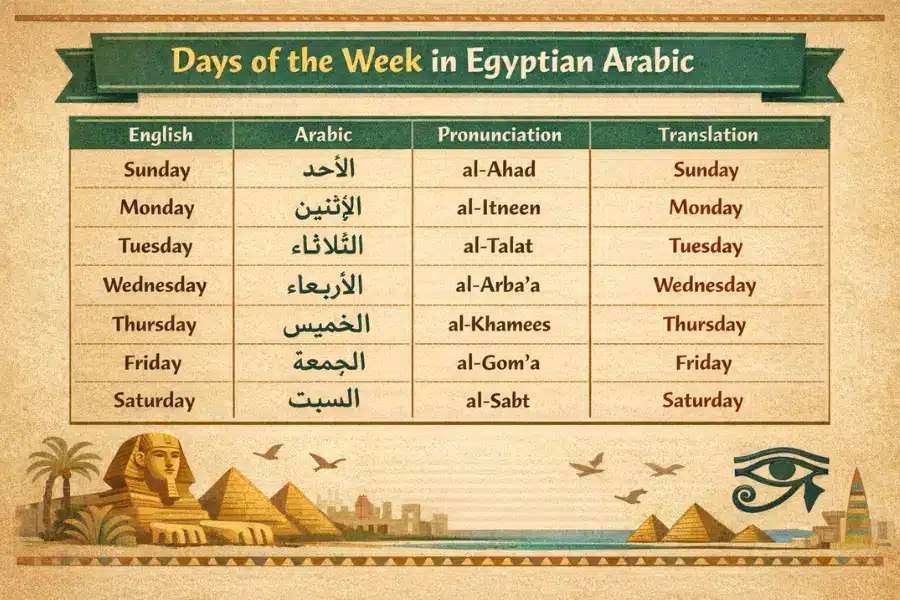
Quick English–Egyptian Arabic Word List
This quick list is designed to help tourists handle common daily situations in Egypt without confusion or complexity. Knowing a few simple Egyptian Arabic words makes it easier to be understood at airports, hotels, while using transportation, or when asking about everyday needs. This type of list is ideal for quick reference during your trip or even for review before traveling.
Tips to Learn & Practice Egyptian Arabic Words and Phrases Quickly
Learning Egyptian Arabic doesn’t require a lot of time or complicated study. It mainly depends on simple interaction and daily repetition. Whether you’re preparing before your trip or already in Egypt, these easy tips can help you pick up useful words and use them confidently in everyday situations.
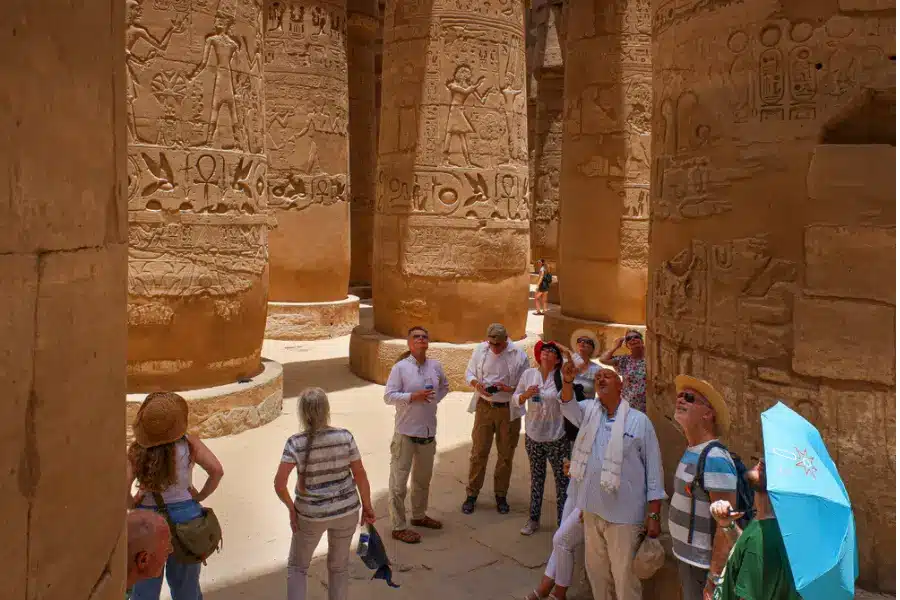
Listen to Locals & Watch Egyptian Movies
- Pay attention to how people speak in streets, cafés, and public transportation.
- Watching Egyptian movies and TV series helps you understand pronunciation and how words are naturally used in conversation.
Practice Daily Phrases
- Focus on short, commonly repeated words such as Yalla, Shokran, Salam, and Tamam.
- Using these phrases regularly helps you remember them automatically and overcome shyness when speaking.
Use Free Arabic Learning Apps (Duolingo, Memrise)
- Free apps like Duolingo and Memrise can help you learn basic words quickly and easily.
- Use these apps for daily practice or a quick review before traveling to help the words stick.
Experience Egypt beyond sightseeing with our private tour packages and Nile cruises, and start using your new Arabic phrases with locals along the way.
Final Thoughts – Speak Like a Local in Egypt
Learning a few words and phrases in Egyptian Arabic before traveling, or even during your trip, can truly transform your experience in Egypt. Simple greetings, everyday expressions, and common words make it easier to communicate with locals and open the door to understanding their culture in a direct and friendly way.
Using these phrases shows respect for local customs and makes moving through markets, restaurants, and daily transportation feel more natural and comfortable. Making the effort to speak Egyptian Arabic, even in small ways, adds warmth to your interactions and turns simple moments into meaningful memories.
Don’t worry about making mistakes. Locals appreciate the effort and often respond with smiles and kindness, making your journey through Egypt more personal, enjoyable, and full of genuine human connection.
Frequently Asked Questions
Why should I learn Egyptian Arabic words before visiting Egypt?
Learning a few Egyptian Arabic words makes it easier to communicate with locals in everyday situations such as greetings, shopping, or asking for directions. It also shows respect for local culture and helps create friendlier, more positive interactions. Even basic phrases can make your travel experience smoother and more enjoyable.
What are the most essential Egyptian Arabic words for tourists?
Some of the most useful words include greetings like “Ahlan” or “Salam,” polite expressions such as “Shokran” (thank you) and “Min Fadlak” (please), and simple responses like “Aywa” (yes) and “Laa” (no). These words cover many daily situations in markets, restaurants, and transportation.
Can I use Egyptian slang during my trip?
Yes, common slang words like “Yalla” (let’s go), “Habibi” (my friend or dear), and “Tamam” (okay or good) can make conversations feel more relaxed and friendly. However, some slang may not suit every situation, so it’s best to listen to locals first and use these expressions politely.
How do ancient Egyptian words appear in modern Egypt?
Ancient words such as “Ra” (the sun god) and “Ankh” (life) still appear today in shop names, brands, and souvenirs. Recognizing these terms helps tourists connect Egypt’s rich history with modern culture and adds depth to visits to museums, temples, and markets.
What are the best ways to practice Egyptian Arabic quickly?
Listening to locals in streets, cafés, and public transportation is one of the best ways to learn. Watching Egyptian movies or TV series also helps with pronunciation and natural usage. Repeating simple phrases daily and using free apps like Duolingo or Memrise can further support quick and effective learning.