

The Red Pyramid of Dahshur: A Complete Visitor Guide
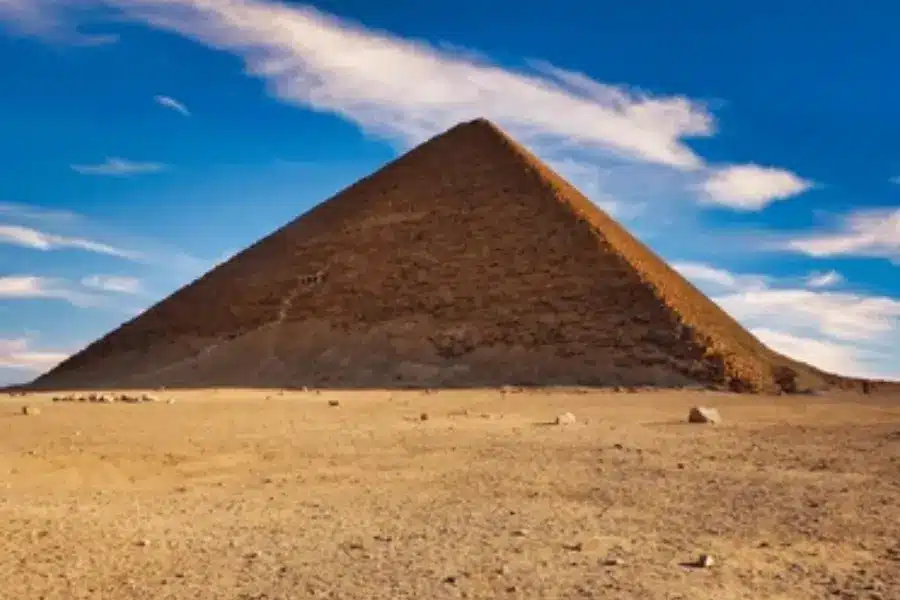
The Red Pyramid of Dahshur is considered one of the most important ancient attractions in Egypt. It is widely known as Egypt’s first successful true, smooth-sided pyramid and one of the greatest architectural achievements of the Old Kingdom. With the second-largest base among the pyramids of ancient Egypt, the Red Pyramid stands as a remarkable symbol of the skill, ambition, and engineering brilliance of the ancient Egyptians. In this article, we will take a closer look at the history, importance, and unique design of the Red Pyramid.
History of the Red Pyramid
The Red Pyramid was built by Pharaoh Sneferu during the Old Kingdom of Egypt (around 2575–2551 BCE). It is widely considered the third pyramid constructed during his reign and is believed to date to around 2590 BCE. Estimates of the construction period vary, with some scholars suggesting it took about 17 years, while others propose a shorter period of around 10 to 11 years based on quarry marks discovered at the site.
The design of the Red Pyramid likely developed from the engineering and architectural challenges faced during the construction of Sneferu’s earlier pyramids, especially the Meidum Pyramid and the Bent Pyramid. Learning from those earlier attempts, the builders chose a safer and more stable angle for the Red Pyramid, helping it become Egypt’s first successful true smooth-sided pyramid.
Where Is the Red Pyramid Located?
Who Built the Red Pyramid and Why?
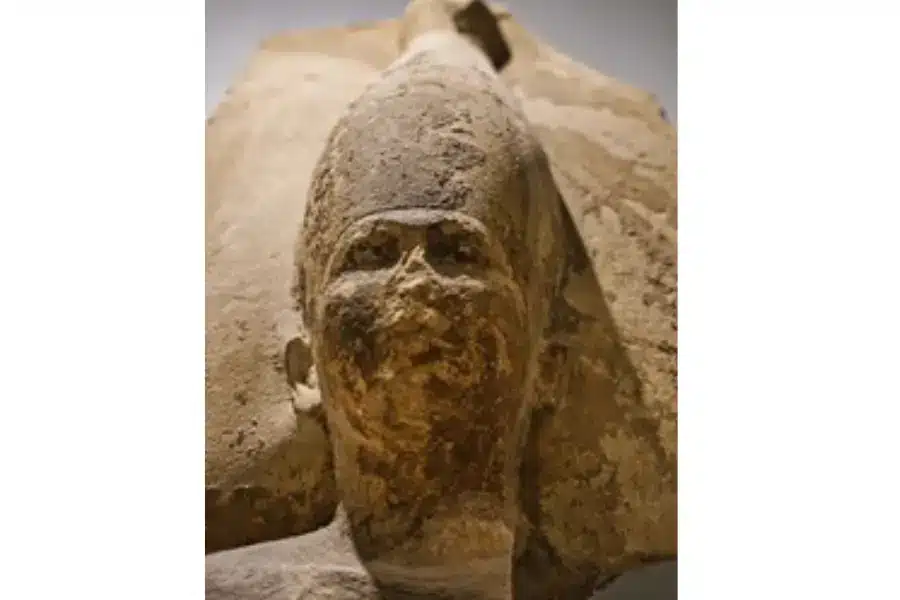
The Red Pyramid of Dahshur was built by King Sneferu, the founder of Egypt’s 4th Dynasty. It was built as his royal tomb in the Dahshur necropolis and to support his journey to the afterlife, according to ancient Egyptian beliefs.
Then you can continue with:
The pyramid, also known as the North Pyramid and sometimes referred to as the Shining Pyramid, was designed to protect the king’s body and stand as a lasting symbol of his power and legacy. It also marked an important step in pyramid construction, as its smooth-sided design influenced later pyramids in Egypt.
Structure of the Red Pyramid of Dahshur
The Red Pyramid, built during the reign of King Sneferu in the Old Kingdom, is especially notable for its massive base, stable proportions, and distinctive internal layout. Its design reflects the valuable lessons learned from Sneferu’s earlier pyramid-building experiments, particularly the Bent Pyramid, and marks an important step in the evolution of true pyramid construction in ancient Egypt.
The internal structure of the Red Pyramid – The Red Pyramid of Dahshur
Here is a closer look at its main architectural features:
Base and Size
Each side of the base measures approximately 722 feet (220 metres). The pyramid rises to a height of about 105 metres and was built with an inclination angle of around 43°22′. This gentler angle gave the structure greater stability and helped avoid the structural issues seen in some earlier pyramid designs.
Entrance
The only known entrance is located on the north side of the pyramid. It leads to a descending passage that extends for about 206 feet (roughly 63 metres) into the interior.
Interior Rooms
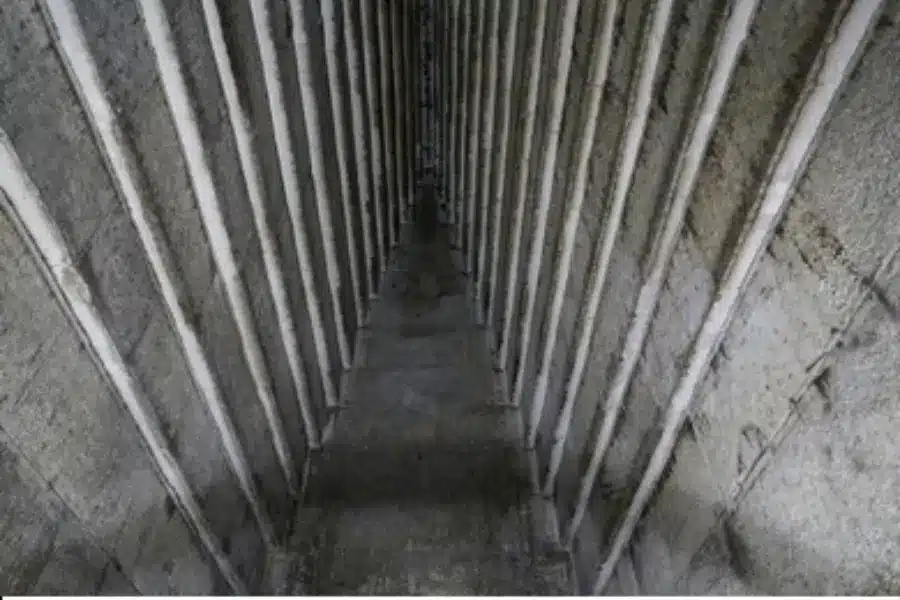
The Red Pyramid contains a remarkable internal system of chambers, all designed with high corbelled ceilings that help reduce pressure and improve structural support.
Red Pyramid Chambers
First Chamber: The first chamber is reached through a narrow corridor and rises to a height of about 12 metres. Its tall corbelled ceiling is one of the most striking architectural features inside the pyramid.
Second Chamber: The second chamber is accessed by a short sloping passage. Like the first, it features a high corbelled roof and shows the builders’ advanced understanding of internal weight distribution.
Third Chamber: The third chamber, often identified as the main burial chamber, is reached through another passage and is positioned higher within the pyramid. It is larger and more elevated than the earlier chambers, adding to the uniqueness of the pyramid’s internal design.
Construction
The pyramid was built from millions of limestone blocks arranged in horizontal layers. Its reddish core stones, which are now visible, are the reason it became known as the Red Pyramid.
Burial Chamber
Although no intact royal burial was found inside, the upper chamber is widely believed to have served as the burial chamber of King Sneferu. Like many ancient tombs, it was likely robbed in antiquity.
Why Was It Called the Red Pyramid?
The Red Pyramid gets its name from the reddish color of the local limestone used in its construction, giving it a very distinctive appearance. Originally, it was covered with smooth white Tura limestone, which would have made it shine brilliantly in the sunlight. Over the centuries, much of this outer casing was removed, particularly during the Fatimid and Mamluk periods, exposing the red core stones underneath. As a result, the pyramid became known for the striking color that still sets it apart from other pyramids in Egypt.
Red Pyramid and Ancient Pyramid Texts
Later pyramids, especially those from the late Fifth and Sixth Dynasties, included what are known as the Pyramid Texts. These were collections of spells, prayers, and rituals intended to guide and protect the pharaoh in the afterlife. They often referred to deities such as Osiris, Anubis, and Atum, who were believed to help safeguard the king’s soul on its journey after death. Although the Red Pyramid itself does not contain Pyramid Texts, it was still an important part of the early development of pyramid construction that later led to the inclusion of these sacred inscriptions.
Facts About the Red Pyramid
- Location: Dahshur, south of Cairo, on the west bank of the Nile.
- Also known as: The North Pyramid and sometimes the Shining Pyramid.
- Builder: Pharaoh Sneferu of the Fourth Dynasty, around 2600 BC.
- Structure: Built in horizontal layers of limestone blocks, with an estimated 160 stone layers.
- Size: The third-largest pyramid in Egypt, standing about 105 metres high, with a base measuring around 220 metres on each side.
- Material: Originally covered with smooth white Tura limestone, while its reddish core stones are what gave it the name “Red Pyramid.”
- Significance: Widely regarded as Egypt’s first successful true smooth-sided pyramid.
- Entrance: Its main entrance is located on the north side.
- Interior: The pyramid contains three main interior chambers with high corbelled ceilings.
- Comparison: It is larger than the Pyramid of Menkaure and represents a major step in the development of pyramid construction in ancient Egypt.
- Interesting Note: Some aspects of its internal design still raise questions for researchers today.
Opening Times of the Red Pyramid
The Red Pyramid was closed for many years, but it is now open to visitors. A ventilation system has been installed inside to provide better airflow in the interior rooms, making the visit more comfortable. It is safe to visit the Red Pyramid individually, with families, or in larger groups. According to the current official visitor information for Dahshur
Opening hours are usually
- Daily (regular year): 8:00 AM – last entry 4:00 PM
- During Ramadan: 9:00 AM – last entry 3:00 PM
Because visiting hours can sometimes change, it is always recommended to double-check before your visit.
The Red Pyramid vs Bent Pyramid
The Red Pyramid and the Bent Pyramid are two of the most remarkable monuments in Dahshur, and both were built during the reign of Pharaoh Sneferu. Together, they show an important stage in the development of pyramid construction in ancient Egypt. While the Bent Pyramid reflects an earlier engineering experiment, the Red Pyramid represents the successful outcome of that process.
Although both pyramids stand close to each other in Dahshur, the Red Pyramid is slightly larger and is widely regarded as the first successful true pyramid in Egypt. Visiting both monuments gives travelers a unique chance to understand how ancient Egyptian architecture developed through trial, improvement, and innovation.
Planning to explore the Red Pyramid of Dahshur? Enjoy a smooth and comfortable visit with one of our guided tours from Cairo. Discover this remarkable ancient monument at your own pace while enjoying a well-organized experience designed to make your day easy and memorable.
Final Thoughts
The Red Pyramid of Dahshur is more than just an ancient monument. It stands as a powerful reminder of Egypt’s early architectural brilliance and the ambition of Pharaoh Sneferu’s reign. A visit here offers more than history alone; it gives you the chance to step inside one of the world’s earliest true pyramids, admire its unique design, and enjoy a truly memorable experience in Dahshur.
Whether you are passionate about ancient Egypt or simply want to explore beyond the usual sites in Cairo, the Red Pyramid is well worth the journey.
FAQ – Red Pyramid of Dahshur
Can you go inside the Red Pyramid?
Yes, visitors can enter the Red Pyramid and explore its interior rooms safely. The main entrance is on the north side.
Where is the Red Pyramid located?
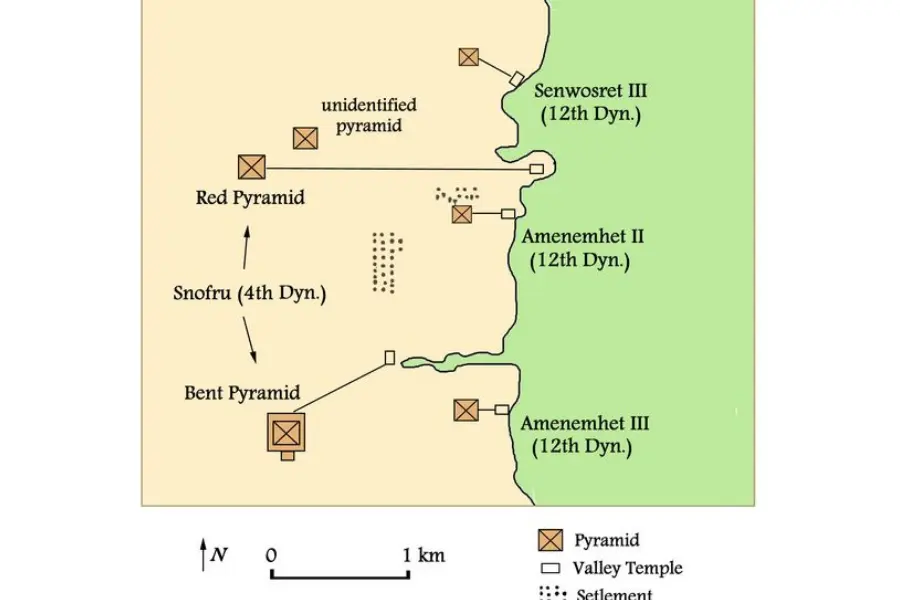
The Red Pyramid is located in Dahshur, about 25 km south of Cairo, near the Bent Pyramid.
How long does a visit take?
A typical visit can take between 1–2 hours depending on how thoroughly you explore the interior and surrounding area.
What’s the difference between the Red Pyramid and the Bent Pyramid?
The Red Pyramid has a uniform slope of 43°22’ for stability, while the Bent Pyramid has a noticeable change in angle halfway up.
What are the opening hours of Dahshur pyramids?
Daily: 8:00 AM (last entry 4:00 PM)
During Ramadan: 9:00 AM (last entry 3:00 PM)
Hours may vary seasonally, so it’s recommended to double-check before visiting.
Is Dahshur worth it as a day trip from Cairo?
Absolutely. Dahshur offers a quieter, less crowded experience than Giza, with historic pyramids like the Red Pyramid and the Bent Pyramid, making it an excellent day trip.