
Ancient Egyptian Warriors: History, Weapons, Gods & Leaders
Ancient Egyptian warriors included infantry soldiers, archers, chariot crews, and commanders who defended Egypt and fought campaigns beyond its borders. They fought with bows, spears, axes, and daggers, using shields for protection. Chariots became prominent in the New Kingdom. Thutmose III and Ramesses II are among the best-known campaigning pharaohs.
Equipment and organization changed over time. Royal monuments often present the pharaoh as a victorious defender of Ma’at, or order; soldiers’ inscriptions and surviving weapons offer other perspectives on military life.
The sections below cover named warriors, weapons, army organization, religious imagery, and soldiers’ daily lives.
Key Takeaways – Ancient Egyptian Warriors
- Egypt’s soldiers defended borders, supported royal authority, and fought campaigns abroad; their duties and organization varied by period.
- Thutmose III and Ramesses II led campaigns, but their royal accounts should not be read as neutral records of victory.
- Bows, spears, and axes were important weapons; shields provided protection. Chariots and composite bows became prominent in New Kingdom warfare.
- War gods and goddesses like Sekhmet influenced military ideology and battlefield symbolism.
- Inscriptions and surviving weapons reveal different aspects of military life; no single source represents every soldier.
Egyptian Warrior Names
Readers looking for Egyptian warrior names will encounter both pharaohs and soldiers known from inscriptions. Thutmose III, Ramesses II, and the soldier Ahmose, son of Ebana, are useful starting points. Amenhotep III and Tutankhamun belong in the discussion too, but for different reasons. The dates below are approximate; Egyptian chronologies vary between reference works.
Amenhotep III (R. 1388–1351 BC)
Amenhotep III ruled during a period of immense prosperity and diplomatic strength. His reign combined diplomacy with military power: a stela of his official Merymose records a campaign in Nubia. Diplomatic alliances should not be attributed solely to other kingdoms fearing Egypt.
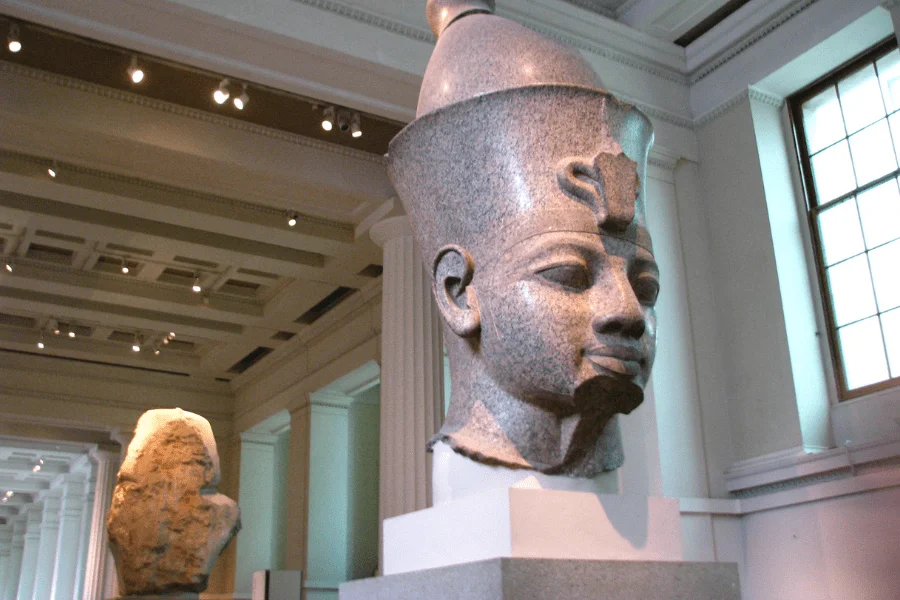
Amenhotep III – Egypt Tours Group
Tutankhamun (R. 1332–1323 BC)
Ascending the throne at a very young age, Tutankhamun is often remembered more for his tomb than for warfare. However, military imagery found in his burial objects suggests that even young pharaohs were symbolically portrayed as warriors, expressing the royal ideal of the king as Egypt’s defender.
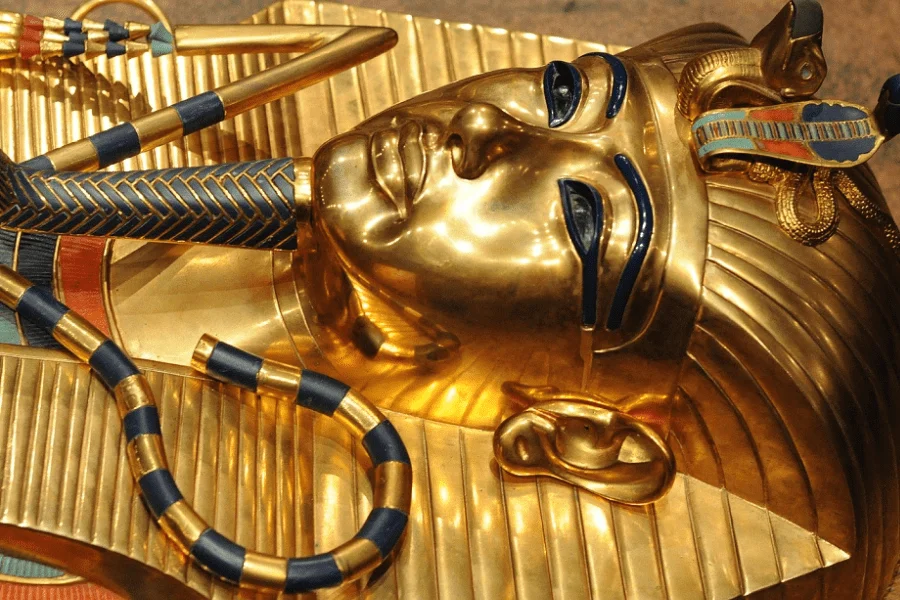
Tutankhamun – Egypt Tours Group
Ramesses II (R. 1279–1213 BC)
Ramesses II is one of Egypt’s best-known warrior kings. His battle against the Hittites at Kadesh became a major subject of royal reliefs and inscriptions. These celebrate his courage and divine support, but the campaign did not deliver the decisive conquest the imagery might suggest. His reputation therefore illustrates both military leadership and the power of royal storytelling.
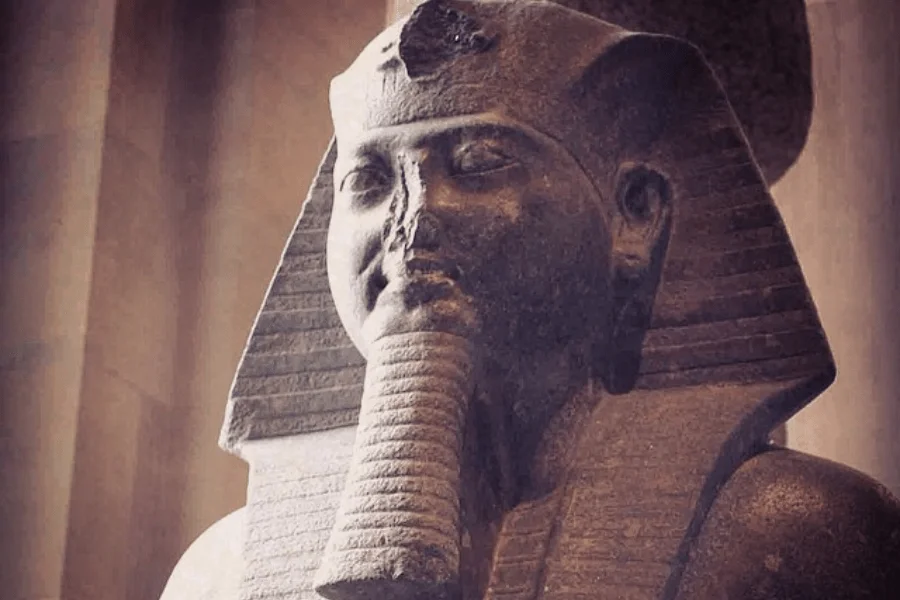
Ramesses II – Egypt Tours Group
Famous Egyptian Warriors
Thutmose III led campaigns in western Asia and Nubia and is closely associated with the Battle of Megiddo. His annals at Karnak describe the campaign from the king’s perspective. The later nickname “Napoleon of Ancient Egypt” conveys his military reputation, but it is a modern comparison, not an ancient title.
Ahmose, son of Ebana, offers a different perspective: he was a soldier, not a pharaoh. His tomb autobiography at El-Kab records service under Ahmose I, Amenhotep I, and Thutmose I, including fighting against the Hyksos and campaigns beyond Egypt. The Egypt Exploration Society’s account of the inscription helps distinguish this named serviceman from the king Ahmose I. For personal names more broadly, see our guide to ancient Egyptian names.
Role of Ancient Egyptian Warriors in Society
In ancient Egypt, military service supported the state through defence, campaigns, and the enforcement of royal authority. Soldiers’ social positions were not identical throughout Egyptian history. Recruitment, professional service, and the use of troops from outside Egypt changed as rulers faced different demands.
Herodotus described Egyptian warriors, often discussed under the Greek term machimoi, as a distinct group with land privileges. His account in Book II is evidence for a much later period than the New Kingdom kings above. It should not be projected backwards onto all Egyptian armies. Modern scholarship also debates how his account relates to military groups under the Ptolemies.
Military activity also depended on work away from the battlefield: guarding forts, escorting expeditions, moving supplies, and maintaining communications. This helps explain why the army mattered during periods without a major campaign. Garrison and expedition duties connected military activity with the movement of people, goods, and resources.
Service could bring rewards and advancement, but a successful officer’s career cannot establish how common advancement was. In his autobiography, Ahmose, son of Ebana, records royal rewards, including gold and land. His father had also been a soldier, giving us a specific example of service across generations. Such accounts show what success could bring while also reminding us that the best-preserved voices often belong to people who had prospered.
Egyptian Warrior Goddess
Egyptian royal imagery linked warfare with divine power. One important Egyptian warrior goddess was Sekhmet, a deity of war, destruction, and divine vengeance.
Sekhmet was believed to unleash devastation upon Egypt’s enemies, acting as the fiery protector of the sun god Ra. Her ferocity symbolized the uncontrollable force of battle, yet she also embodied healing and medicine—reflecting the belief that destruction and restoration were two sides of divine power.
Religious images and royal texts linked military success with divine favour. They do not establish a single pre-battle ritual followed by every soldier. For a traveller, the useful question is which deity appears in a particular scene and what that scene says about the king’s relationship with the gods.
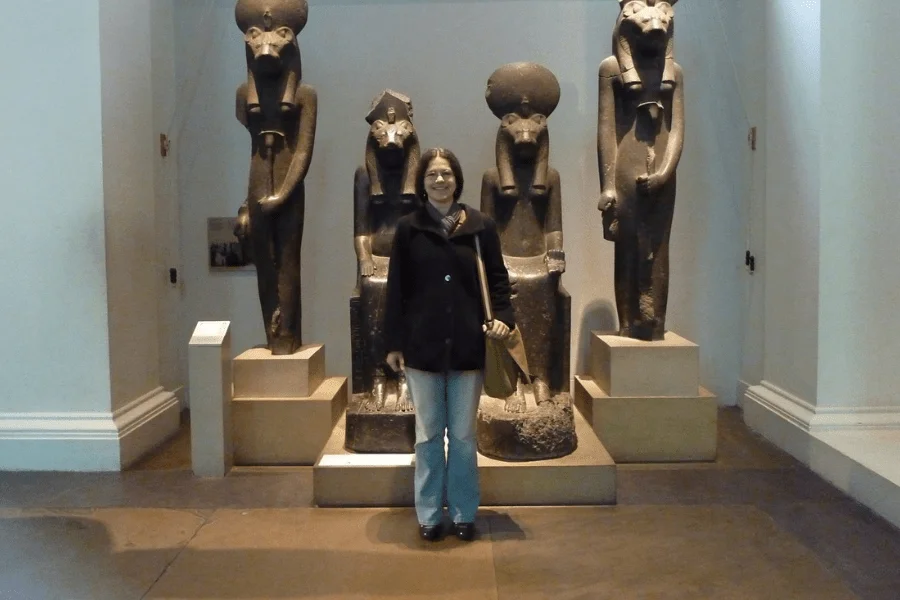
Sekhmet, the ancient Egyptian warrior goddess of war, destruction, and divine protection.
Weapons of the Egyptian Warriors
The strength of ancient Egyptian warriors depended not only on bravery and discipline, but also on a carefully selected range of weapons designed for Egypt’s climate, terrain, and battle tactics. Over time, Egyptian military equipment evolved—especially after contact with foreign powers.
Bow & Arrow
Bows allowed archers to attack at a distance. Simple wooden bows and composite bows should be distinguished: the latter combined materials such as wood and horn. The Met preserves composite-bow sections dated to the late Second Intermediate Period or early New Kingdom. Range and accuracy depended on the bow, the arrow, the archer, and the conditions.
Spears & Battle Axes
Used by infantry in close combat. Spears kept enemies at a distance, while bronze-bladed axes delivered powerful blows during hand-to-hand fighting.
Daggers & Short Sword
Daggers and short blades were used for close combat. The curved khopesh, or sickle-sword, is another weapon associated with New Kingdom warfare; not every Egyptian sword had this shape.
War Chariots
Horse-drawn chariots became a major part of New Kingdom warfare after their appearance in Egypt during the Second Intermediate Period. A typical Egyptian war chariot carried a driver and an archer and was drawn by two horses. Its speed offered mobility and a shooting platform, but chariots worked alongside infantry rather than replacing foot soldiers.
Shields & Armor
Shields included wooden frames or boards covered with hide. Scale armour is also attested; UCL’s armour overview notes evidence from the New Kingdom. The surviving equipment is more varied than the lightly dressed figures in some reliefs suggest.
Together, these weapons allowed Egyptian warriors to adapt to different forms of conflict—from desert skirmishes to full-scale imperial campaigns; they did not guarantee victory.
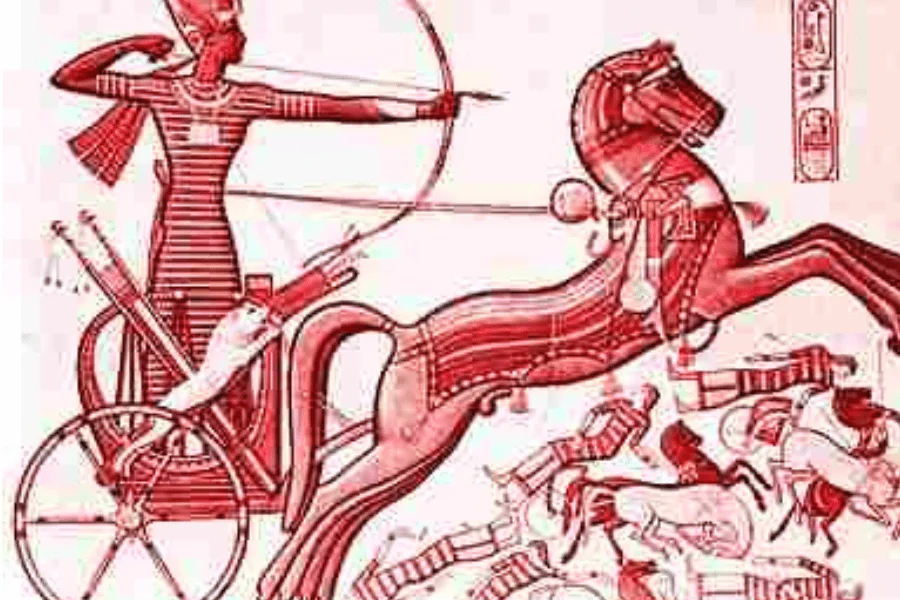
Ancient Egyptian war chariots, one of the most powerful weapons used by Egyptian warriors.
Egyptian Warrior Symbols
Military scenes used symbols to express royal power and divine protection. Standards, gods, captive enemies, and the king striking an opponent appear in different contexts. These images communicate claims about authority; they are not a universal badge system worn by every Egyptian warrior.
The was scepter signified dominion and was carried by deities in Egyptian art. The Met’s record of a was-scepter head explains this association. Its meaning belongs to divine and royal authority rather than a documented badge shared by all soldiers. Sacred animals likewise need to be interpreted in relation to the deity and scene concerned.
In royal imagery, military victory could express the king’s duty to uphold order. Such scenes communicate political and religious ideals rather than documenting the personal beliefs of every soldier.
The Daily Life of an Egyptian Soldier
A soldier’s experience depended on his period, rank, and assignment. Archers needed skill with a bow; chariot crews needed coordination and control of horses; infantry had different equipment and tasks. Marching, preparing for service, and handling weapons belonged to military life, but surviving evidence does not give us one timetable for every Egyptian soldier.
Ancient texts offer contrasting views. Papyrus Lansing, a school text praising the scribal profession, portrays soldiering as exhausting and dangerous. Its purpose was persuasive, so it cannot be treated as a neutral service manual. Even so, it is a useful counterweight to royal monuments that emphasize victory and honour.
Away from battle, troops could be stationed at forts, guard routes, and support expeditions. Ships and supply arrangements were essential to moving people and equipment. These practical responsibilities explain more about military life than an assumption that peacetime meant inactivity.
Food, water, equipment, and places to stay were basic needs on campaign and in garrison. Arrangements varied; the surviving sources do not justify promising every recruit a uniform package of housing, privileges, and retirement land. Land rewards recorded for particular men show opportunity, not an entitlement shared unchanged across all periods.
Military service could bring rewards and status to individuals such as Ahmose, son of Ebana. His account documents one successful career; it does not tell us how often recruits gained comparable rewards.
Organization of Egyptian Armies
The pharaoh stood at the head of Egypt’s military authority, but army organization changed over time. For the New Kingdom, the evidence shows commanders, officers, infantry, chariotry, and troops operating with ships. That structure should not be applied without qualification to every earlier dynasty.
Senior officers directed forces beneath the king, while other personnel handled records, supplies, and communication. The exact command structure depended on the period and campaign. Campaign inscriptions offer snapshots of those arrangements, rather than one organization chart valid for every dynasty.
In the New Kingdom, the army was divided into specialized units, including infantry, chariotry, and naval forces. Infantry formed the backbone of the army, while chariot units provided speed and tactical advantage on open terrain. Naval forces protected the Nile and supported military campaigns along Egypt’s waterways.
At Kadesh, the Egyptian divisions were named for Amun, Ra, Ptah, and Seth. This is a specific example of divine names attached to army formations, rather than a rule that every division in every reign used the same names. The names linked the formations with divine power while identifying distinct units in the campaign account.
Command, supplies, and coordination helped armies operate, but did not guarantee success. Royal accounts of campaigns need to be read with their claims of victory in mind.
Fun Facts About Ancient Egypt’s Army
- A named soldier’s autobiography survives at El-Kab: Ahmose, son of Ebana, described his service under three kings.
- Land and gold could be military rewards, but they should not be presented as automatic retirement benefits for everyone.
- At Kadesh, the Egyptian divisions were named for Amun, Ra, Ptah, and Seth.
- Foreign mercenaries sometimes served in Egyptian campaigns.
- Some soldiers recorded rewards and advancement; these accounts do not establish the experience of every recruit.
The Controversial Reign of Akhenaten
Akhenaten changed royal religious practice and founded a capital at Amarna. His relevance to military history also lies in diplomacy: the Amarna letters show relations between Egypt and rulers abroad. In one letter from Abi-milku of Tyre, a ruler expects Egyptian protection in return for loyalty. The letter shows the practical expectations that accompanied Egyptian influence abroad. It does not establish that Akhenaten’s religious reforms, by themselves, caused military decline.
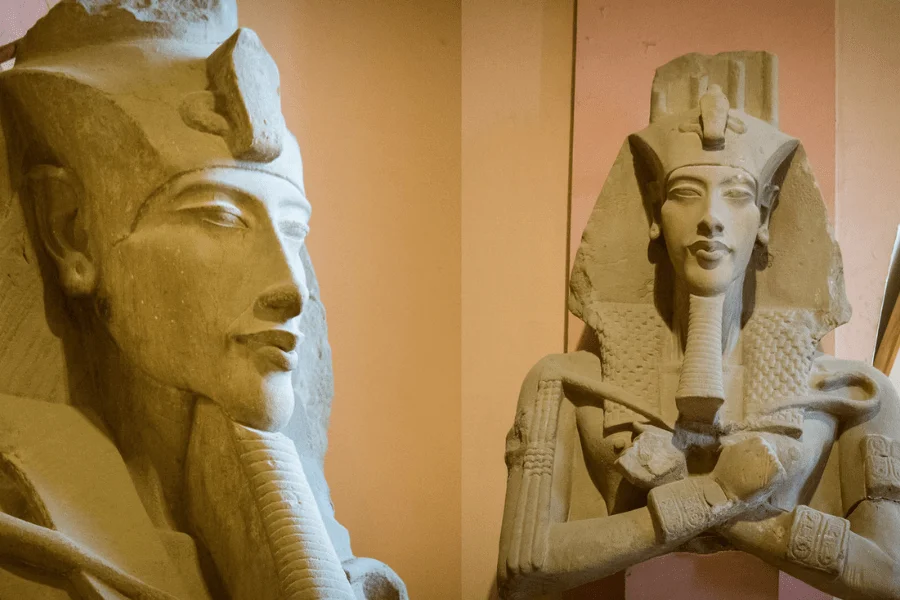
Akhenaten, the ancient Egyptian pharaoh whose radical religious reforms transformed Egypt’s beliefs and history.
Who Was Egypt’s Wealthiest Pharaoh?
Amenhotep III ruled during exceptional prosperity, but the surviving evidence does not provide a reliable wealth ranking for every pharaoh. Egypt’s imperial resources, including gold from Nubia, helped support major building projects and royal display. The reign of Amenhotep III and Queen Tiye belongs in this wider setting. For this article, the useful connection is between resources, royal authority, and international influence—not an unprovable “richest pharaoh” title.
Conclusion: The Legacy of Ancient Egyptian Warriors
Egypt’s military history includes campaigning kings, named soldiers, and many people whose stories have not survived. Their duties, equipment, and prospects changed across periods and ranks.
A royal battle relief shows how a king wanted to be remembered. A soldier’s inscription records a personal claim to service and reward. Reading both alongside surviving equipment helps distinguish royal ideals from evidence of military practice.
When viewing a military scene in a temple or museum, ask who commissioned it, when it was made, and what it claims about the king or soldier depicted.
The world of ancient Egyptian warriors is not just history—it’s an experience waiting to be explored. From battle temples and royal capitals to military fortresses along the Nile, Egypt still preserves the landscapes where these warriors once marched.
Explore Egypt with expertly guided tour packages, immersive day tours, unforgettable Nile cruises, and exclusive shore excursions. Or create a fully tailor-made Egypt trip designed around history, culture, and adventure.
FAQs – Ancient Egyptian Warriors
Who were the most famous ancient Egyptian warriors?
Thutmose III and Ramesses II are prominent campaigning kings. Ahmose, son of Ebana, is a named soldier whose career survives in his tomb inscription. Amenhotep III represents imperial power and diplomacy, while Tutankhamun’s battle imagery does not prove personal combat. Narmer is associated with early kingship and Egypt’s unification, though his palette is not a complete battle record.
What weapons did ancient Egyptian warriors use?
Their equipment included bows and arrows, spears, axes, daggers, swords, and shields. Chariots became prominent in the New Kingdom. Equipment varied by period and role; scale armour is attested, so protection should not be explained solely by Egypt’s climate.
Did ancient Egyptian warriors worship war gods?
Egyptian royal and military imagery connected protection and victory with deities including Sekhmet, Amun, Ra, and Horus. This does not establish that every soldier followed the same ritual or worshipped the same gods in the same way.
What was daily life like for an Egyptian soldier?
Service could involve marching, handling weapons, guarding routes or forts, and supporting campaigns. Duties and rewards varied by period and rank. Soldiers’ inscriptions and literary texts give different perspectives on the opportunities and hardships of army life.
Why were ancient Egyptian warriors important?
They defended Egypt’s borders, fought campaigns abroad, and supported royal authority. Royal ideology presented military victory as upholding Ma’at, or order; this does not establish a universal religious duty shared by every soldier.