Ancient Egyptian Religion: Gods, Beliefs, Afterlife & Sacred Symbols
Ancient Egyptian religion was one of the most influential belief systems in human history, shaping life in ancient Egypt for more than 3,000 years. It guided the Pharaoh’s rule, daily rituals, temple worship, funerary traditions, and the powerful Egyptian belief in the afterlife.
But what was the ancient Egyptian religion called? In ancient times, it did not have one single official name like modern religions do. Today, it is commonly known as ancient Egyptian religion, while modern revival movements often use the term Kemetic religion or Kemetism, inspired by Kemet, the ancient name of Egypt.
In this guide, you’ll discover what ancient Egyptians believed in, why they worshipped many gods and goddesses, how Maat shaped their view of truth and balance, and why temples, tombs, pyramids, symbols, and afterlife rituals were so central to their spiritual world.
Quick Answer: What Was Ancient Egyptian Religion Called?
Ancient Egyptian religion did not have one single official name in ancient times. Today, it is usually called ancient Egyptian religion. Some modern spiritual revival groups call it Kemetic religion or Kemetism, based on the ancient Egyptian name for Egypt, Kemet.
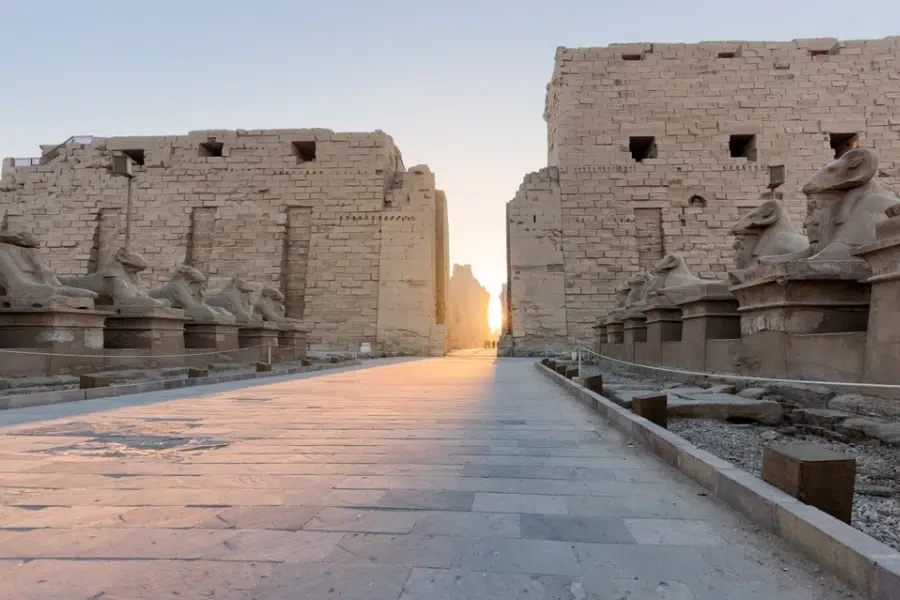
The Avenue of Sphinxes at Karnak — a sacred path linking temples in ancient Egyptian religion.
What Was the Ancient Egyptian Religion?
Ancient Egyptian religion was a complex belief system centered around gods, magic, nature, morality, and the afterlife. It was not one single organized religion in the modern sense, but a rich collection of local traditions, myths, temple rituals, and sacred beliefs that developed over thousands of years along the Nile Valley.
At the heart of ancient Egyptian religion was Maat, the divine principle of truth, balance, order, and justice. Egyptians believed that the universe depended on this balance, and that humans, priests, and the Pharaoh all had a role in protecting it.
Through prayers, offerings, festivals, temple rituals, funerary practices, and moral behavior, ancient Egyptians tried to maintain harmony between people, nature, the gods, and the world beyond death.
What Was the Ancient Egyptian Religion Called?
Ancient Egyptian religion did not have one single official name in ancient times. Unlike many modern religions, it was not usually described by one fixed title. It was simply the sacred belief system, rituals, and traditions that shaped Egyptian life, kingship, temples, and the afterlife.
Today, scholars usually refer to it as ancient Egyptian religion. It is also sometimes connected with the term Kemetic religion, which comes from Kemet, the ancient Egyptian name for Egypt.
In modern times, some people who revive or follow beliefs inspired by ancient Egypt call their faith Kemetism. However, this is a modern spiritual movement, not the exact same religious system practiced in ancient Egypt thousands of years ago.
Origins & Development of Ancient Egyptian Religion
The origins of ancient Egyptian religion go back to the Predynastic period, before the unification of Egypt around 3100 BC. Early Egyptians connected spiritual power with nature, animals, the Nile, the sun, fertility, death, and the unseen forces that controlled daily life.
As Egypt became a unified kingdom, these early beliefs developed into a more organized religious system. Local gods became linked with powerful cities, Pharaohs were seen as divine rulers, and temples became centers of worship, wealth, and political authority.
Although Egyptian religion changed from one dynasty to another, its core purpose remained the same: maintaining balance between humans, nature, the gods, and the afterlife through Maat.
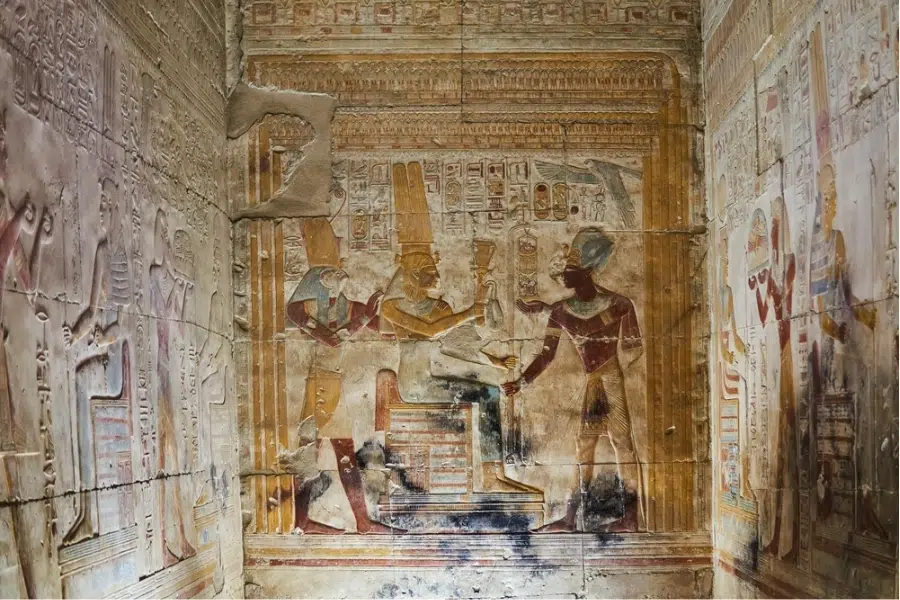
How ancient Egyptian religion developed through mythology, cults, and temple worship.
Key Milestones in Ancient Egyptian Religion
| Historical Period | Key Religious Developments |
|---|---|
| The Predynastic Period | Early worship of nature, animals, fertility, and protective spirits. |
| The Old Kingdom | The rise of the sun god Ra, pyramid building, divine kingship, and early funerary beliefs. |
| The Middle Kingdom | Stronger afterlife beliefs, wider access to religious texts, and the growing importance of Osiris. |
| The New Kingdom | The expansion of major cults such as Amun, Amun-Ra, Osiris, Isis, and powerful temple worship across Egypt. |
| The Late Period | The merging of gods, foreign influence, and the continued importance of temples, priests, and traditional rituals. |
Core Beliefs of Ancient Egyptian Religion
Ancient Egyptian religion centered around the idea that life, death, and nature followed a divine order. This order had to be protected through rituals, prayers, and moral behavior. The Egyptians believed that every action, small or large, affected the harmony of the cosmos.
Maat — The Divine Principle of Balance
Maat was the foundation of ancient Egyptian beliefs, representing truth, justice, harmony, and cosmic balance. Egyptians believed that chaos, known as Isfet, constantly threatened the world, and only by living according to Maat could the universe remain stable.
Maat encouraged Egyptians to follow moral behavior and honesty, respect the gods and natural order, and support justice in community and politics. Even the Pharaoh’s main duty was to uphold Maat for Egypt and for the world.
Magic (Heka) — A Gift from the Gods
Magic, known as Heka, was not seen as superstition in ancient Egypt. It was considered a divine force given by the creator god to help protect life and maintain order.
Heka played an important role in healing, protection, funerary rituals, and everyday challenges. Priests, doctors, and ordinary people used spells, prayers, and amulets to protect themselves from danger and stay connected to the divine world.
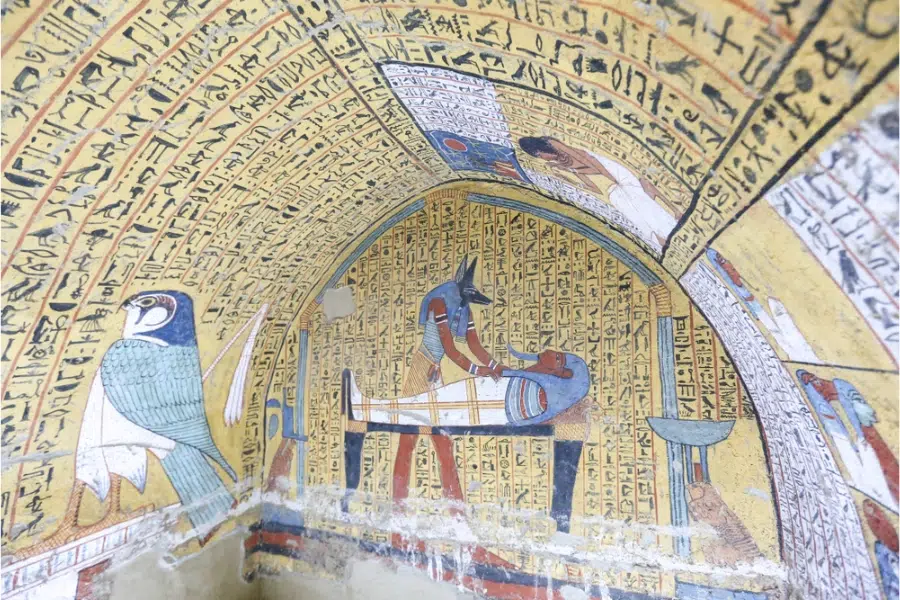
Maat represents balance, order, and justice — the heart of ancient Egyptian religion.
How Religion Shaped Daily Life in Ancient Egypt
Religion was not separate from daily life in ancient Egypt. It influenced how people worked, celebrated, raised families, treated illness, prepared for death, and understood the natural world around them.
Ancient Egyptians used prayers, offerings, amulets, and protective symbols to feel closer to the gods and stay safe from danger. Items such as the Ankh, Eye of Horus, scarab, and Djed pillar appeared in homes, tombs, temples, and jewelry because people believed they carried spiritual power.
Religion also shaped many everyday practices, including:
- Asking the gods for protection, healing, and good fortune.
- Honoring ancestors and caring for the dead through offerings and burial rituals.
- Connecting the Nile flood, farming seasons, and fertility with divine blessing.
- Using sacred images and symbols in homes, personal items, and funerary objects.
For ancient Egyptians, faith was part of the home, the marketplace, the Nile River, the tomb, and the royal palace. This is why ancient Egyptian religion remained so powerful for thousands of years and left such a lasting mark on Egyptian civilization.
The Afterlife — Ka, Ba & Judgment of the Dead
Life on earth was only one part of existence in ancient Egyptian religion. To continue the eternal journey after death, Egyptians believed that the body and soul had to be preserved through proper rituals, burial practices, and offerings.
The Ka and Ba were important spiritual elements of the human soul. The Ka was the life force that continued to exist after death and needed food and drink offerings. The Ba represented a person’s personality and individuality, and it was believed to move freely between the world of the living and the afterlife.
Another important concept was the Akh, or Akhu, which referred to the transformed and blessed spirit that could live among the gods. Reaching this state depended on living a righteous life and passing the final judgment after death.
The soul’s fate was decided in the Weighing of the Heart before Osiris. In this judgment scene, the heart of the deceased was weighed against the feather of Maat, the symbol of truth and divine balance.
If the heart was light and pure, the soul was accepted into the afterlife and could become an Akh. But if the heart was heavy with wrongdoing, it was devoured by Ammit, ending the person’s existence forever.
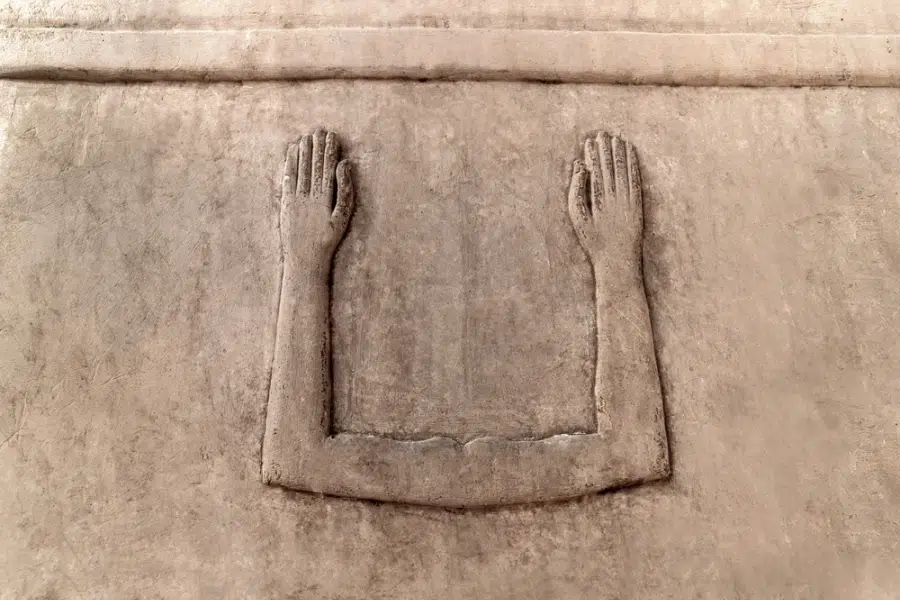
Ka and Ba — two spiritual forces guiding Egyptians into the eternal afterlife.
Ancient Egyptian Gods and Goddesses
Egyptians worshipped hundreds of gods and goddesses, each connected to specific powers, sacred animals, symbols, and holy cities. Many ancient Egyptian gods combined human and animal features to express divine strength, protection, wisdom, or cosmic power.
Some of the most important ancient Egyptian gods and goddesses included:
- Ra — the sun god and ruler of creation.
- Osiris — the god of death, rebirth, and the afterlife.
- Isis — the goddess of magic, motherhood, and protection.
- Horus — the protector of kingship and royal power.
- Anubis — the god of mummification and funerary rituals.
- Amun — the king of the gods during the New Kingdom.
Every region in Egypt had its own patron deity, and some gods became more important as certain cities or dynasties rose in power. Over time, many gods also merged, such as Amun-Ra, combining the hidden power of Amun with the solar power of Ra.
The Pharaoh also had a sacred religious role. During life, he was seen as the living Horus on earth, and after death, he was united with Osiris. This divine cycle helped reinforce kingship, order, and the stability of Egypt.
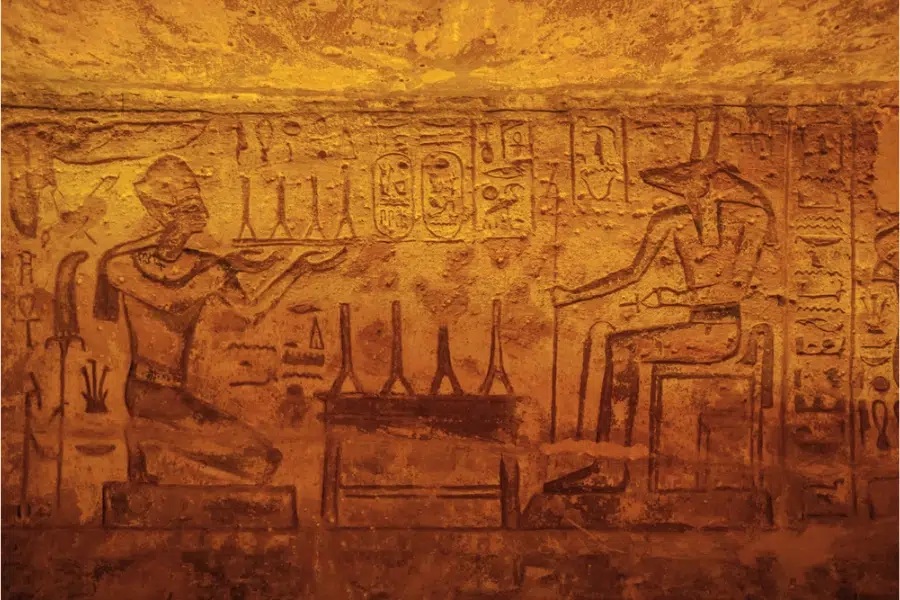
A sacred relief showing Ramesses II making offerings to Anubis in the Great Temple at Abu Simbel.
Ancient Egyptian Religious Symbols & Meanings
Symbols played a vital role in ancient Egyptian religion. They were used to protect life, guide the soul in the afterlife, and maintain divine harmony. These sacred emblems appeared in temples, tombs, jewelry, amulets, and papyrus rolls such as the Book of the Dead.
| Ancient Egyptian Symbol | Meaning |
|---|---|
| Ankh | Symbol of life, eternal existence, and divine protection. |
| Djed Pillar | Symbol of strength, stability, and resurrection, closely linked to Osiris. |
| Eye of Horus (Wedjat) | Symbol of healing, protection, restoration, and safety. |
| Scarab Beetle | Symbol of rebirth, transformation, and the rising sun. |
| Feather of Maat | Symbol of truth, morality, justice, and cosmic order. |
| Uraeus Cobra | Symbol of royal power, divine authority, and protection. |
These symbols were often worn as amulets or placed in tombs to protect both the living and the deceased. For ancient Egyptians, religious symbols were not just decoration; they carried spiritual power and helped support the soul’s journey through life, death, and the afterlife.
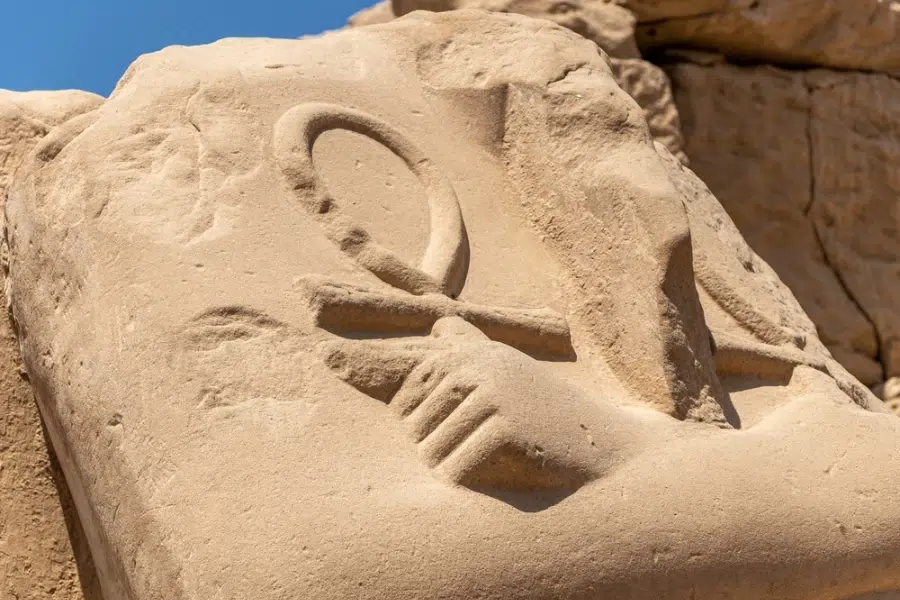
The Ankh — a sacred symbol of eternal life in ancient Egyptian religion.
Temples in Ancient Egyptian Religion
Temples played a central role in ancient Egyptian religion. They were not mainly public places of worship in the modern sense; instead, they were considered sacred homes for the gods. The most sacred inner chambers were restricted to priests and pharaohs, who performed daily rituals to honor the deity and renew the divine presence inside the temple.
Ancient Egyptian temples also had religious, political, and economic importance. They were symbols of royal power, centers of ritual activity, and major institutions that owned land, livestock, wealth, and employed thousands of workers across Egypt.
| Main Type of Temple | Religious Role |
|---|---|
| State Temples | Dedicated to major national gods such as Amun, Ra, or Ptah. These temples supported royal authority and the divine order of Egypt. |
| Mortuary Temples | Built to honor deceased pharaohs and preserve their connection with the gods, such as the Mortuary Temple of Hatshepsut. |
| Sun Temples | Open temple complexes connected to solar worship and the power of the sun god Ra. |
Through offerings, prayers, processions, and daily rituals, temples helped maintain the relationship between humans, kings, and the divine world. They were among the most powerful religious institutions in ancient Egypt.
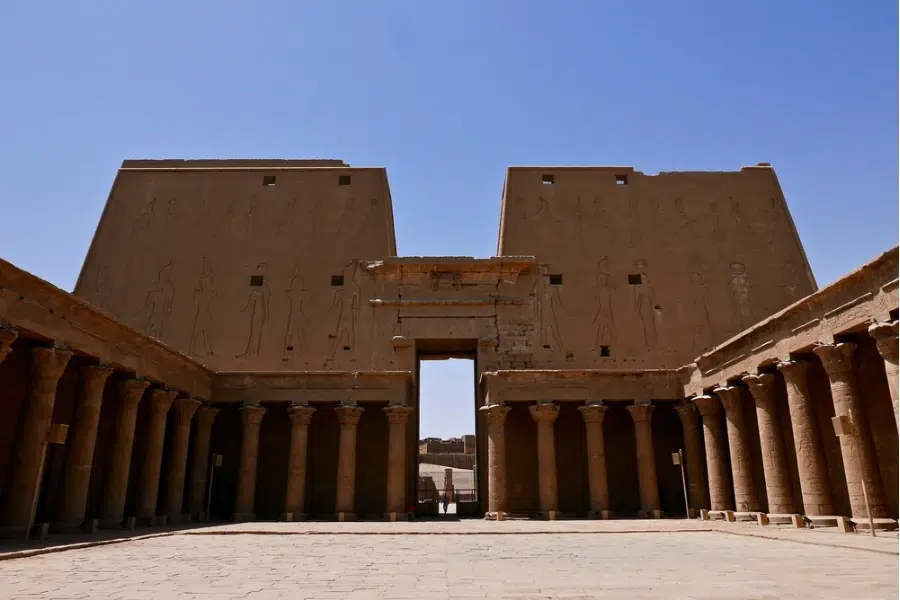
The sacred sanctuary of Horus — a powerful center of worship in ancient Egypt.
Priests & the Pharaoh — Guardians of Divine Order
In ancient Egyptian religion, the Pharaoh was both a king and a divine representative. He was seen as the living Horus on earth, responsible for protecting Egypt, honoring the gods, and maintaining Maat — the sacred order of truth, balance, and justice.
Although the Pharaoh held the highest religious authority, priests carried out most daily temple duties on his behalf. They performed rituals, interpreted omens, preserved sacred scrolls, cared for divine statues, and ensured that every temple operated according to religious tradition.
Statues of the falcon god Horus stood as powerful symbols of kingship, protection, and divine order, reflecting the sacred connection between the Pharaoh and the gods.
| Religious Role | Main Responsibility |
|---|---|
| High Priests | Held major political and spiritual authority inside important temples. |
| Daily Ritual Priests | Washed, clothed, perfumed, and presented offerings to the god’s statue. |
| Funerary Priests | Performed mummification rituals, burial rites, and prayers for the dead. |
| Scribes | Recorded rituals, copied sacred texts, and preserved religious knowledge. |
| Chantresses & Musicians | Sang hymns and performed sacred music to honor the gods during rituals and festivals. |
Priestly roles were often hereditary, meaning temple service could pass from one generation to another. Over time, some priestly families became very powerful, forming influential religious dynasties that shaped temple life, politics, and sacred traditions across Egypt.
Religious Festivals in Ancient Egypt
Religious festivals were joyful occasions that connected the gods with the people in ancient Egypt. Music, offerings, sacred boats, public processions, and feasting turned religion into a living social celebration, not only a temple ritual.
These festivals also carried deeper religious and political meanings. They renewed divine power, strengthened the Pharaoh’s authority, honored the dead, and celebrated the natural cycle of the Nile, fertility, and rebirth.
Some of the most important religious festivals in ancient Egypt included:
- Opet Festival — a major celebration of Amun that helped renew the Pharaoh’s divine power and kingship.
- Wepet-Renpet — the Egyptian New Year, closely linked to the Nile flood, renewal, and the beginning of a new cycle.
- Beautiful Feast of the Valley — a festival honoring the dead and celebrating the connection between the living and the afterlife.
- Hathor Festivals — joyful ceremonies connected with music, love, healing, happiness, and divine protection.
- Khoiak Festival — a sacred festival focused on Osiris’s rebirth and the triumph of life over death.
During many of these festivals, hidden statues of the gods were carried outside temples in public processions. This allowed ordinary people to feel closer to the divine presence, seek blessings, and take part in the religious life of ancient Egypt.
What Happened to Ancient Egyptian Religion?
Ancient Egyptian religion lasted for more than three millennia, shaping temples, kingship, daily life, and beliefs about the afterlife. However, by the Greco-Roman period, Egypt’s spiritual world began to change as new rulers, foreign traditions, and new religious ideas entered the country.
Several factors contributed to the decline of traditional ancient Egyptian religion:
- Greek influence introduced new gods, blended cults, and philosophical ideas, especially after the arrival of the Ptolemies.
- Roman rule gradually weakened the power of the traditional priesthood and reduced the political role of Egyptian temples.
- The spread of Christianity reshaped religious life in Egypt, and many ancient temples were closed, abandoned, or transformed over time.
One of the most symbolic moments came at Philae Temple, where the last known hieroglyphic inscription was carved in 394 AD. This date is often seen as a symbolic end to the written and temple-based tradition of ancient Egyptian religion.
Even so, ancient Egyptian religion did not disappear completely. Many symbols, customs, and cultural ideas survived in different forms through Coptic Christianity, local traditions, art, language, and Egyptian cultural memory that continues today.
Is Ancient Egyptian Religion Still Practiced Today?
The original ancient Egyptian religious system is no longer practiced in the same way it was in pharaonic times. Temples, priesthoods, and official rituals disappeared centuries ago as Egypt’s religious life changed through the Greco-Roman and Christian periods.
However, many ancient Egyptian ideas and symbols still influence modern culture today. Some spiritual groups have revived parts of the old faith under the name Kemetism, honoring deities such as Osiris, Isis, Ra, and Anubis through modern, adapted rituals.
This revival is limited compared to major world religions, but it reflects a continued fascination with ancient Egyptian wisdom, afterlife beliefs, divine balance, and the concept of Maat.
Fun Fact: Symbols like the Ankh and the Eye of Horus are still used today in jewelry, art, and spiritual items as signs of life, protection, and good luck — much like they were in ancient Egypt.
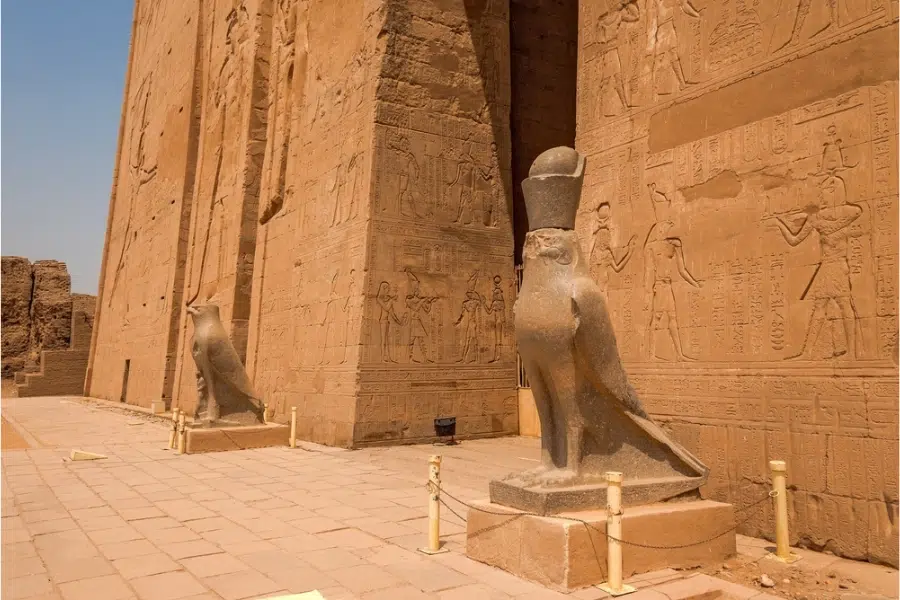
Entrance of Edfu Temple guarded by falcon god Horus statues — symbols of divine authority.
Conclusion — The Eternal Spirit of Ancient Egyptian Religion
Ancient Egyptian religion shaped art, architecture, kingship, morality, and everyday life for more than 3,000 years. Its powerful gods, sacred rituals, moral principles like Maat, and deep belief in the afterlife gave ancient Egyptians a strong sense of purpose and a meaningful connection with the universe.
Although temples eventually closed and new faiths emerged, the spiritual legacy of ancient Egypt did not disappear. Many ideas survived through culture, language, symbolism, and artistic traditions that continue to inspire people today.
From the Ankh and the Eye of Horus to stories of Osiris, Isis, Ra, and the judgment of the dead, ancient Egyptian religion still captures the imagination of the modern world.
Exploring this religion is more than studying the past. It is a journey into how one of history’s greatest civilizations understood life, death, divine order, and the eternal relationship between humanity and the cosmos.
If this guide sparked your curiosity, keep exploring our articles about ancient Egyptian gods, sacred symbols, temples, afterlife beliefs, and daily life. Each story reveals another layer of how faith shaped one of history’s greatest civilizations.
And if you truly want to feel this spiritual world come alive, nothing compares to walking between ancient temple columns, seeing sacred reliefs carved into stone, and standing in the same places where Egyptians once prayed to their gods.
Turn your fascination with ancient Egyptian religion into a real journey through Egypt.
FAQs – Ancient Egyptian Religion & Beliefs
What was the ancient Egyptian religion called?
Ancient Egyptian religion did not have one single official name used by the Egyptians themselves. Today, it is usually called Ancient Egyptian religion, while some modern spiritual groups use the term Kemetic religion. It was a polytheistic belief system centered on many gods, the afterlife, sacred rituals, and the principle of Maat.
Why did ancient Egyptians believe in so many gods?
Ancient Egyptians believed that different gods represented different forces of nature, parts of life, and spiritual powers. Gods were connected with the sun, the Nile, fertility, protection, death, magic, kingship, and the afterlife. Worshipping many gods helped Egyptians understand the world and maintain harmony, stability, and divine order.
What did ancient Egyptians believe happens after death?
Ancient Egyptians believed that death was not the end of existence. The soul continued its journey into the afterlife, but the body had to be preserved through mummification and proper burial rituals. They believed the Ka and Ba were important parts of the soul, and if the deceased passed the judgment of Osiris, they could live forever in the Field of Reeds.
Who was the most important god in ancient Egypt?
The most important god in ancient Egypt changed over time and from one region to another. Ra was one of the most powerful creator and sun gods, while Amun became highly important during the New Kingdom and was later combined with Ra as Amun-Ra. In afterlife beliefs, Osiris was one of the most important gods as the ruler of the dead.
Did ancient Egyptians have a holy book?
Ancient Egyptians did not have one single holy book like many modern religions. Instead, they had several sacred and funerary texts, including the Pyramid Texts, Coffin Texts, and the Book of the Dead. These texts contained spells, prayers, rituals, and guidance to help the soul travel safely through the afterlife.
Is ancient Egyptian religion still practiced today?
The original temple-based religion faded between the 4th and 6th centuries AD as Christianity spread across Egypt. However, many symbols, ideas, and traditions survived in Egyptian culture. Today, a small modern revival known as Kemetism is practiced by communities inspired by ancient Egyptian gods, rituals, and the concept of Maat.