Who Was Apophis (Apep)? The Ancient Egyptian Serpent of Chaos
Introduction
If you spend enough time looking at the walls of ancient Egyptian tombs, you’ll eventually watch a massive, coiled snake that looks like something out of a nightmare.
That’s Apophis (or Apep), and he wasn’t exactly the kind of “god” people prayed to for help or worship. In fact, he was totally the opposite. To the Egyptians, this ancient Egyptian serpent was the ultimate bad guy; the literal embodiment of chaos and darkness.
His aim wasn’t to get temples or followers, his only real purpose in the mythology was to destroy and swallow the sun, hoping to pull the entire universe back into a void of nothingness and darkness.
The whole story of the Apophis god revolves around a struggle that never actually ends. Every single night, while the world was asleep, the Egyptians believed a massive battle was happening in the underworld.
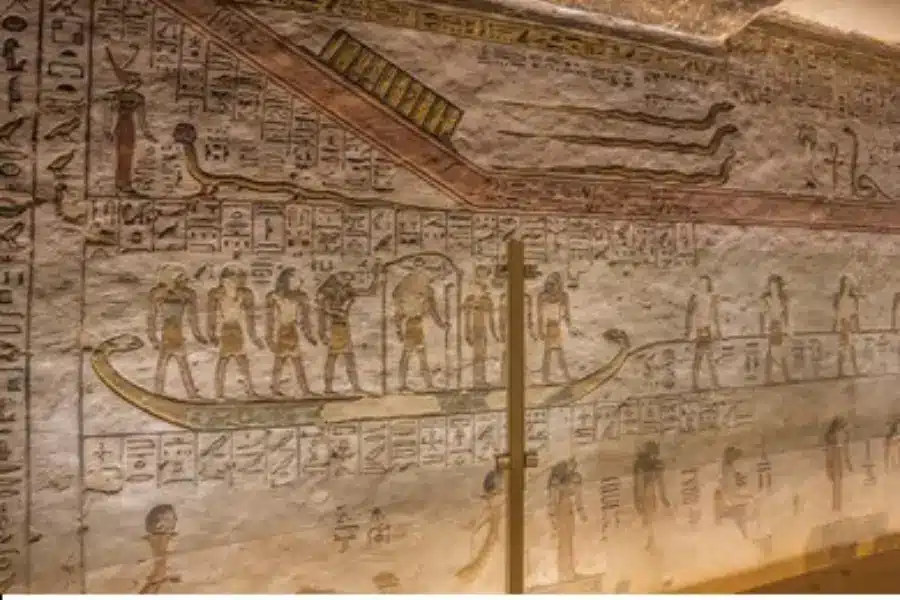
As the sun god Ra moved through the darkness in his boat, this Apep Egyptian god, was there waiting to attack. It’s a legendary struggle that explains so much about how the Egyptians saw the world, as a constant fight to keep order winning over chaos.
We’re going to dig into who this serpent really was, why he was so terrifying, and where you can actually see these battle scenes carved into stone if you’re planning a trip to Egypt.
Who Was Apophis in Ancient Egyptian Belief? Who is Apophis?
Apophis was the ancient Egyptian embodiment of pure chaos. He wasn’t a god that people prayed to; he was more like a cosmic monster or a giant snake that lived in the dark, constantly trying to destroy the sun and bring the world to an end.
When you try to know “what is Apophis the god?”, it can be a bit confusing because he doesn’t fit the usual mold.
Most Egyptian gods had their own temples and priests, but Apophis was a figure or something that everyone wanted to stay away from.
He represented the total opposite of “Maat,” which was the Egyptian concept of truth and order.
Key ideas about Apophis
the embodiment of chaos and darkness
- not a god people worshipped
- the enemy of cosmic order (Maat)
- a permanent threat rather than a traditional deity
To the ancient Egyptians, Apophis was less of a traditional deity and more of a permanent, lurking threat.
The Egyptians saw him as a “non-being,” a creature that existed even before the world was made and never really went away. He was the shadow that never stopped trying to swallow the sun and its light.
This made him the ultimate enemy in their mythology; a monster so dangerous that even the most powerful gods had to team up every single night just to keep him away from winning and plunging everything back in to avoid nothingness and darkness.
Apophis and the Eternal Battle with Ra
God Ra vs Apophis: In Egyptian mythology, the sun god Ra and the serpent Apophis were locked in a nightly struggle. As Ra traveled through the underworld in his solar boat, Apophis would attack, attempting to swallow the sun. Ra’s victory each night ensured the sun would rise again the following morning.
The ancient Egyptians knew Apophis, the enemy of Ra, and their relationship was essentially a perpetual grudge battle of the ancient world.
Every evening, as the sun dipped below the horizon, the Egyptians believed Ra wasn’t just resting; he was entering a dangerous war zone called the Duat. This wasn’t a one-time fight, either.
It happened every single night. While the rest of the world was sleeping, Ra and his crew of protector gods were fighting for their lives against this massive, coiled serpent.
In the heat of the Ra vs Apophis battle, the snake would use his hypnotic gaze to try and paralyze Ra and his defenders. But there’s a catch: Apophis can never be truly killed.
He’s a cosmic force, so no matter how many times he’s defeated, he just retreats into the shadows to lick his wounds and wait for the next sunset to try all over again.
| Feature | Detail |
|---|---|
| Ra | Apophis |
| the sun god Ra | the serpent Apophis |
| traveled through the underworld in his solar boat | would attack |
| moved through the darkness in his boat | attempting to swallow the sun |
| Ra’s victory each night ensured the sun would rise again the following morning | If Apophis ever succeeded in swallowing the boat, the world would end, simple as that |
| Ra and his crew of protector gods were fighting for their lives | this massive, coiled serpent |
| when the sun finally peeked over the horizon at dawn, it was a celebration that the “good guys” had won again | Apophis can never be truly killed |
The Solar Boat and the Journey Through the Underworld
Think of the night not as a quiet time for sleep, but as a high-stakes rescue mission. For the Egyptians, the sun was actually a boat carrying the god Ra through a terrifying place called the Duat.
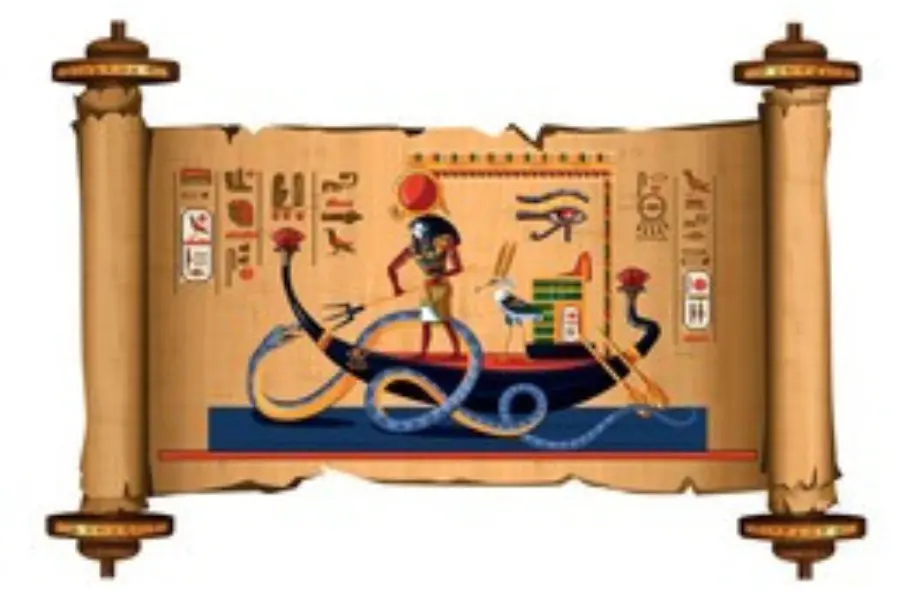
This wasn't just a dark room; it was a world full of:
- fire
- monsters
- traps
The scariest part always happened right before dawn, in the deepest part of the night.
That’s when Apophis would show up, trying to stop the boat or even drink all the water in the celestial river just to leave Ra stranded in the mud. When you see the sun come up in the morning, it’s easy to take it for granted.
But for someone living in Ancient Egypt, that first bit of light was proof that the “good guys” had made it through another night of combat.
Ra wasn’t alone on that boat, though. He had a whole crew of gods with him, each one doing something different to keep the serpent away; some used magic, others used weapons. Every single sunrise was basically a miracle, a sign that the team had won and the world wasn’t going to end just yet.
The Role of Set and Other Gods in Defeating Apophis
It’s actually pretty funny when you look at who was on Ra’s security team. The most important guy was Set. Now, Set is usually the villain in Egyptian stories because he killed his brother, but in the Set vs Apophis fight, he was the MVP.
While the other gods were sometimes too scared to even look at the snake, Set would stand right at the front of the boat and spear the monster. It’s a weird twist; the god of chaos being the only one tough enough to stop the ultimate chaos from winning.
Set wasn't the only one of the gods who fought apophis, though. It was a total team effort. You had:
- Isis using her magic to cast spells that would basically “dizzy” the snake so it couldn’t attack properly
- goddesses like Neith and Serket standing guard, making sure no other underworld monsters jumped into the fray
It shows that the Egyptians didn’t see things in just black and white. Even a “difficult” god like Set was someone they absolutely needed if they wanted the sun to rise the next day.
Was Apophis a God, a Demon, or a Symbol?
Is Apophis a god? Not really. Even though he’s often called a “god” in modern movies or games, the Ancient Egyptians never actually worshipped him. He was more of a “non-being” or a cosmic demon, a force of pure destruction that represented everything they feared.
It’s funny how modern pop culture has turned him into this “dark god” with followers and rituals, but back in the day, that would have been unthinkable. If you’re asking “Is Apophis a demon?” You’re getting closer to the truth, but even that doesn’t quite cover it.
He was more like a symbol of the void. Think about it: every other god in Egypt had a temple, a priest, or at least a small statue somewhere.
Apophis had nothing. No one wanted to be near him, let alone pray to him.
The Egyptians didn’t see him as a character with a personality; they saw him as a threat that just existed. He was the personification of what happens when things fall apart.
So, while we might see him as a “villain” in a story today, to them, he was just the ultimate “No.” He was the darkness that light had to push back every day. He wasn’t a god to be honored, he was a disaster to be avoided at all costs.
Apophis and Natural Disasters in Ancient Egypt
It’s hard for us to imagine today, but the Ancient Egyptians didn’t see a solar eclipse as a cool photo op.
To them, it was a literal emergency. When the sky went dark in the middle of the day, they were convinced the ancient Egypt eclipse myth was playing out in real-time.
They didn’t just see a shadow in the sky; they saw the end of the world. In their minds, Apophis had finally caught up to the sun and was in the middle of swallowing it.
That same panic from the apophis eclipse would kick in whenever a huge storm hit or the ground started shaking.
They didn’t think of these as just “weather”, they thought the serpent was actually breaking through and winning the fight. The only reason people could finally relax when the sun came back out was because they believed the gods had just barely won a desperate battle.
A clear sky wasn’t just a nice day to them; it was proof that the world wasn’t going to be destroyed just yet.
Rituals Performed to Overthrow Apophis
Rituals against Apophis: Priests used to perform a ceremony called “Overthrowing Apophis.” They made wax snakes, cursed them, and burned them to help the sun god Ra win his nightly battle against the monster.
The Egyptians didn’t just pray and hope for the best; they actually tried to help the gods fight. They had this specific book, the Book of Overthrowing Apophis, which was basically a guide on how to take down the serpent.
Every day in the temples, priests would do these rituals against Apophis that were pretty intense.
They’d:
- make small snakes out of wax
- write the name “Apep” on them in red ink
- spit on the figures
- stab them with knives
- throw them into a fire until they melted into nothing
It wasn’t just something for the priests to do in private, either. During big festivals, everyone would get involved in overthrowing apophis.
People would shout, curse, and make as much noise as possible.They genuinely believed that all that energy and noise gave Ra and his defenders a “boost” while they were fighting in the dark.
It’s a wild way to look at the world, they felt like they were part of the team keeping the universe from falling apart.
Apophis in Ancient Egyptian Texts and Art
If you look through the famous funerary texts like the Book of the Dead or the Amduat, you’ll see that Apophis is everywhere.
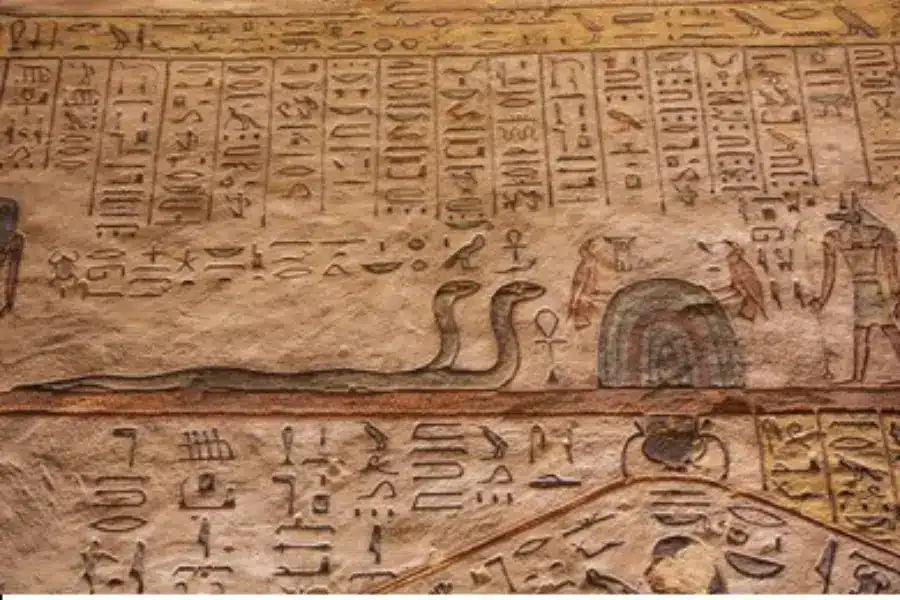
He’s usually shown as a massive, winding serpent with dozens of coils, often being restrained or sliced into pieces.
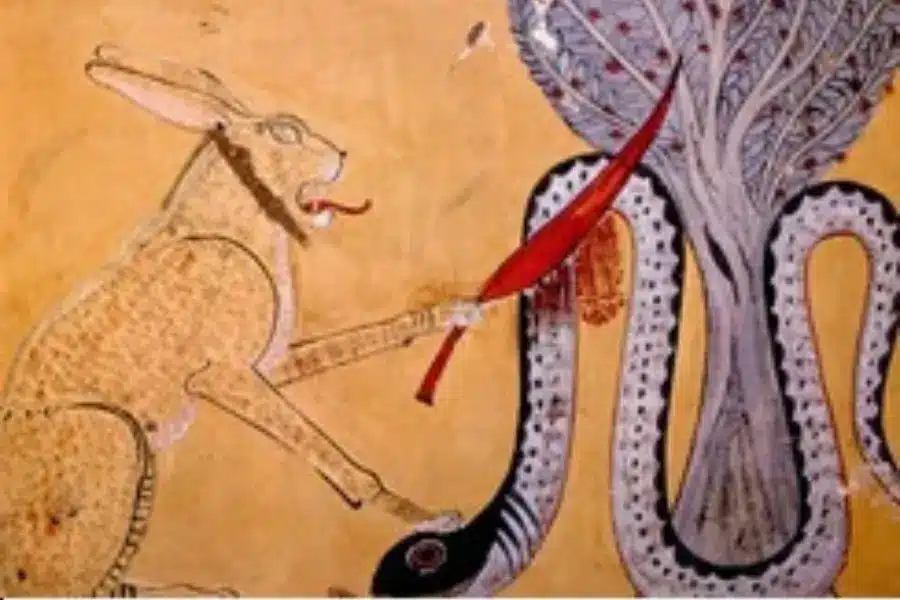
One of the most famous (and slightly weird) images you’ll find is the “Great Cat of Heliopolis” (Mau) taking a knife to the serpent’s neck under a sacred tree. It’s a vivid, almost violent bit of art, but it was meant to show that even a cat, a symbol of Ra, could take down the ultimate force of chaos.
In the Coffin Texts, the descriptions get even more intense, focusing on the magical spells needed to “spellbind” the snake so the deceased could pass by safely.
The art wasn’t just there to look cool; it was functional. By painting Apophis being defeated on a tomb wall or a coffin, the Egyptians believed they were making that victory a reality in the afterlife.
You’ll often see him covered in knives or tied up in ropes, which was their way of saying that in the end, order always finds a way to win, even if the fight is never truly over.
Where Can You See Apophis in Egypt Today?
If you’re planning a trip, you don’t have to look very hard to find Apophis tomb art. Some of the best examples are hidden away in the Valley of the Kings in Luxor.
If you head into the tomb of Ramesses VI or Ramesses III, look closely at the walls, and you’ll see the long, coiled body of the serpent being fought off by the gods as Ra’s boat passes through the hours of the night.
Seeing it in the actual place where it was meant to protect the Pharaoh really brings the whole myth to life. You can also find plenty of pieces in the apophis egypt museum collections, both in the Egyptian Museum in Tahrir and the newer ones.
They have papyrus scrolls and decorated coffins that show the battle in incredible detail. For a tourist, spotting Apophis is like finding a “villain” in a giant stone comic book.
Once you know what to look for, that massive snake being speared or sliced, you’ll start seeing it everywhere, from the deep burial chambers to the ancient scrolls, giving you a much better sense of just how much the Egyptians feared the dark.
Apophis Explained for First-Time Visitors to Egypt
When you’re walking through a temple or a tomb for the first time, the sheer amount of carvings on the walls can feel overwhelming. But here’s a tip: keep an eye out for a giant snake.
That’s Apophis. Understanding his story is like having a “cheat code” for Egyptian art. Most of what you see in those tombs isn’t just decoration; it’s a survival guide for the afterlife.
When you spot that serpent being speared or tied up, you’re looking at the ancient version of a “good vs. evil” battle that the Egyptians believed was happening every single night.
Knowing about Apophis actually changes how you experience the sites. Instead of just seeing “another snake carving,” you’ll realize you’re looking at the ultimate villain of their world.
It explains why the gods are often depicted carrying weapons and why the sun was so revered by them. So, when you’re standing in the Valley of the Kings, remember that these scenes were meant to be “active” magic. They were there to make sure the sun kept rising, and the world kept turning.
It’s a cool way to connect with the people who built these places, realizing that they were just as worried about the “darkness” as we sometimes are today.
Frequently Asked Questions About Apophis
Was Apophis worshipped in ancient Egypt?
Not at all. In fact, it was the exact opposite. While other gods had temples and people bringing them gifts, Apophis was the one figure everyone wanted to stay away from. There were no priests for him, only rituals meant to curse him and keep him as far away as possible.
Did Apophis ever defeat Ra?
In the stories, he never actually won. The Egyptians believed that if he ever did, the world would just stop existing and everything would go dark forever. They did see things like solar eclipses as moments where he almost won, but the gods always managed to push him back just in time.
Why does Apophis return every night?
The Egyptians saw chaos as something you can’t ever truly kill. It’s just always there, lurking in the background. So, no matter how many times the gods speared the snake or burned him, he’d always “reset” and come back the next night. It was a never-ending cycle of keeping the bad guy at bay.
Is Apophis mentioned in the Book of the Dead?
Yes, he shows up quite a bit. The Book of the Dead was basically a survival guide for the afterlife, and since the dead had to travel through the same dark places as Ra, they needed spells to protect themselves. There are specific parts of the text just for “binding” or defeating the serpent so he wouldn’t swallow the soul of the person who died.
Conclusion
When you get down to it, Apophis isn’t just a monster from a scary story. He’s a symbol of that feeling we all have that things could fall apart at any moment.
For the Egyptians, the world wasn’t just “fine” on its own; it was something they had to actively protect. By telling stories about the giant serpent, they reminded themselves that order and balance — what they called Maat — were things you had to fight for every single day.
It’s also interesting that they believed humans had a role to play in this struggle. They didn’t leave everything to the gods; they felt their prayers and rituals actually helped keep the sun rising. It’s a powerful idea when you stop and think about it.
Even today, when you’re standing in a tomb in Luxor or looking at a museum display, you can still sense that ancient fear of the dark. The story of Apophis reminds us that while chaos never truly disappears, the struggle to keep the light winning is what keeps the world turning.
Walking through tombs and temples in Egypt becomes far more powerful once you understand stories like Apophis and the nightly battle with Ra. Seeing these carvings in person transforms mythology into a real, unforgettable experience.