
Dahabiya vs Nile Cruise: Which Nile River Experience Is Right for You?
Choosing between a Dahabiya and a traditional Nile cruise depends on the kind of journey you want along the river. In this Dahabiya vs Nile Cruise comparison, the main differences are vessel size, passenger capacity, propulsion, onboard facilities, and travel pace. A Dahabiya is a smaller sailing vessel that carries around 12 to 20 guests, while traditional Nile cruise ships accommodate larger groups and offer more shared facilities. Both can follow routes between Luxor and Aswan, with trips ranging from shorter journeys to longer itineraries. The right choice depends on the time you have, the services you want, and how you prefer to experience the Nile.
Dahabiya vs Nile Cruise: Quick Comparison
The clearest differences between the two options are their size, passenger capacity, propulsion, and onboard setup. This comparison gives you a practical starting point before you look at individual vessels and itineraries.
| Feature | Dahabiya | Traditional Nile Cruise Ship |
|---|---|---|
Vessel scale | Small traditional sailing vessel | Larger, multi-deck river vessel |
Cabins and capacity | A smaller number of cabins and guests; capacity varies by boat. | More cabins and a larger passenger group; capacity varies by ship. |
Propulsion | Uses sails when conditions allow, with towing or auxiliary power when needed. | Motor-powered |
Onboard setting | Smaller shared spaces, including a lounge and an upper dining deck | Larger shared spaces, including dining areas and facilities such as pools, bars, and lounges |
Dining arrangements | Often includes meals prepared by an onboard chef | Usually serves meals in a dedicated onboard dining area |
Typical journey length | Options include 3, 4, 5 or 7 nights, depending on the boat and itinerary. | 3, 4, or up to 7 nights, depending on the route and package |
A Dahabiya gives you a smaller passenger setting and a sailing-focused journey, while a traditional cruise ship offers more capacity and a broader range of shared facilities. The number of nights alone does not determine which experience is better, so compare the route and daily program as well.
What Is a Dahabiya?
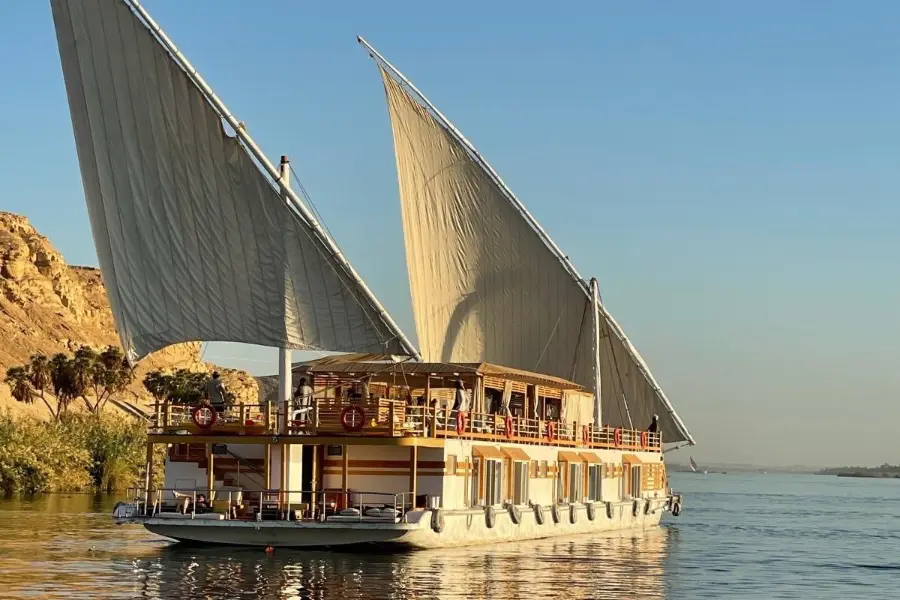
A Dahabiya is a smaller, traditional-style Nile sailing vessel designed for river journeys between destinations such as Luxor and Aswan. Some Dahabiya trips start in Esna rather than Luxor itself, so check the boarding point and whether a transfer from Luxor is included. Its defining feature is its traditional use of sails, although the way it moves depends on the vessel and sailing conditions. When the wind is not strong enough or does not suit the route, some Dahabiyas are accompanied by a tugboat to help maintain the journey schedule. Others may have different forms of auxiliary propulsion, so it is worth asking the operator how the specific Dahabiya boat operates.
A Dahabiya cruise usually offers a smaller shared setting than a conventional Nile cruise ship, but that does not automatically mean the boat is privately booked. Travelers may reserve a cabin on a departure shared with other guests, while a full private charter means hiring the entire vessel for a group. These are different arrangements, and the booking details should make clear which one is included. Dahabiyas also vary in design, cabin standards, and onboard services. Some are positioned as luxury vessels, while others offer a simpler experience focused on sailing and time along the river.
What Is a Traditional Nile Cruise Ship?
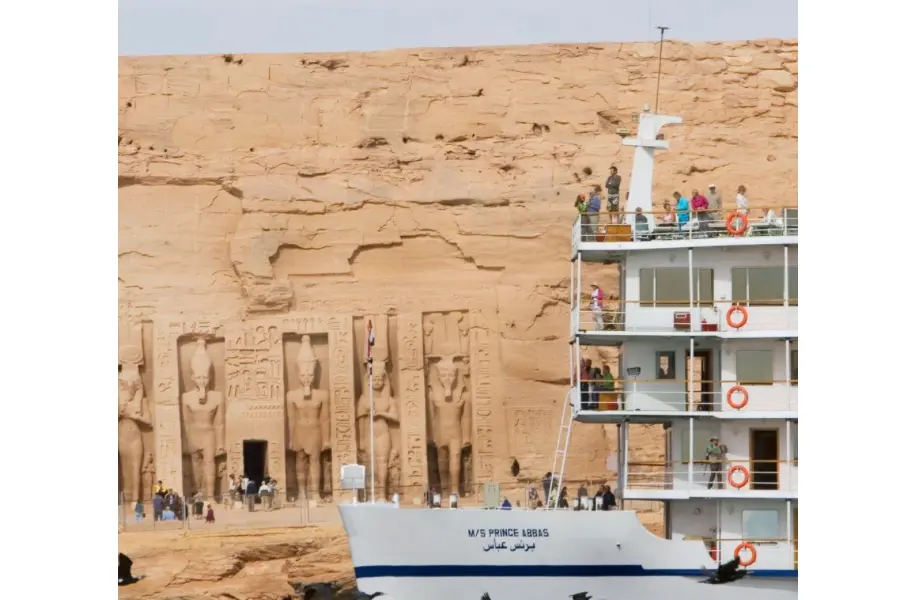
A traditional Nile cruise ship is generally a larger, motor-powered river vessel that carries passengers between destinations along the Nile. Many cruises operate on planned routes between Luxor and Aswan, with scheduled stops for sightseeing at major historical sites. A Luxor to Aswan Nile cruise, for example, usually follows an organized itinerary, although the exact sailing schedule and visits depend on the operator and departure.
These ships can offer a range of shared facilities, such as restaurants, lounges, swimming pools, bars, or entertainment areas. However, not every vessel has the same facilities, and the number and standard of onboard services depend on its brand, category, and individual design. Cabin layouts, dining arrangements, and excursion programs can also differ. Some packages include guided visits and transfers, while others may list certain services or entrance fees separately. For this reason, the term traditional Nile cruise describes a general type of journey rather than one fixed level of comfort or service. Checking the specific ship and package is more useful than relying on the cruise category alone.
Main Differences Between a Dahabiya and a Nile Cruise
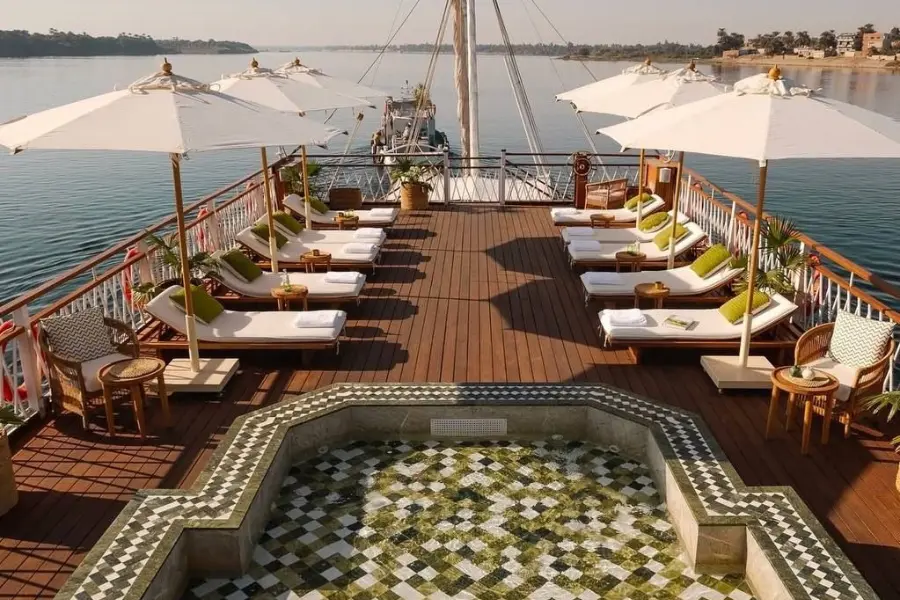
The difference between these two Nile journeys becomes clearer when you consider how much time you spend on board, how you reach sightseeing stops, and what you can do between visits. The vessel’s size affects the atmosphere, while its design and operating arrangements shape your daily experience.
Vessel Size, Guests & Privacy
On a Dahabiya, you share the boat with a smaller group, typically around 12 to 20 passengers. With fewer guests on board, you have fewer people sharing the lounge and dining areas. The smaller setting can make it easier to spend time with fellow travelers, although booking a cabin does not mean you have hired the entire boat.
A traditional Nile cruise ship carries a larger passenger group, commonly around 50 to 150 guests on smaller cruise ships. You share the main facilities with more travelers, and the larger passenger capacity creates a more social setting. If you want complete privacy on a Dahabiya, you need to confirm a full private charter rather than assume that a small group departure is exclusive.
Sailing Style & Actual Propulsion
A Dahabiya relies on sails and wind for its traditional sailing experience. This means the weather can influence how the boat moves during your trip. When wind conditions are unsuitable, the operator may arrange towing or another form of assistance to keep the journey on schedule. If sailing under wind power is important to you, ask how the specific vessel handles calm or unfavorable conditions.
On a traditional Nile cruise, you travel aboard a motor-powered ship. You do not depend on suitable sailing winds in the same way, and the vessel follows its planned route and schedule. This distinction matters if you are choosing the Dahabiya specifically for the experience of traveling under sail.
Itinerary, Pace & Flexibility
Dahabiya trips can last 3, 4, 5 or 7 nights, depending on the boat and itinerary. The smaller passenger group creates a different onboard rhythm, but it does not mean you can change the schedule whenever you want. Your sightseeing stops and departure times still depend on the agreed program.
Traditional Nile cruises also offer 3-night, 4-night, and longer 7-night journeys. You follow a planned sightseeing schedule that connects major stops along the Luxor and Aswan route. Before choosing, check how much time you have at each destination and whether the itinerary includes the sites you most want to visit.
Stops, Docking & Sightseeing Crowds
Your sightseeing experience depends more on the actual route and excursion plan than on the boat’s size alone. Dahabiya itineraries focus on the Nile journey in a smaller vessel, while traditional cruise programs commonly organize visits to major attractions such as Edfu and Kom Ombo, alongside the main sites in Luxor and Aswan.
Do not assume that a Dahabiya always docks in secluded places or gives you private access to archaeological sites. You may arrive at popular attractions alongside other visitors, regardless of the vessel you choose. Check the named stops in your itinerary and ask whether the visits are guided, shared, or privately arranged.
Cabins, Amenities & Accessibility
A Dahabiya usually has a small number of cabins with private bathrooms, a shared lounge and an upper deck for dining. The exact layout and facilities vary from boat to boat. You have a smaller selection of cabin and shared-space options than on a larger ship. Traditional Nile cruise vessels offer more cabins and a wider range of shared facilities, which can include restaurants, pools, bars, and lounges.
If you have mobility needs, compare the actual vessel before booking. Ask about the gangway, stairs or elevators, cabin location, bathroom access, and the route from the boat to the shore. You should also check how you will reach sightseeing sites after leaving the vessel, since access arrangements can affect how comfortable each excursion will be.
Food, Service & Onboard Atmosphere
On a Dahabiya, you share meals in a smaller dining setting, often on the upper deck, and an onboard chef prepares the food. The smaller group means you spend meal times with fewer fellow passengers. Ask the operator about the menu, meal schedule, and whether special dietary requirements can be accommodated.
A traditional cruise ship has a dedicated dining area and serves a larger group of passengers. You may also have access to organized evening entertainment and other shared activities, depending on the ship. If you prefer a quieter experience, consider how much time you want to spend around other guests. If you enjoy social activities and more onboard options, check the facilities and entertainment program of the specific ship.
Dahabiya vs Nile Cruise Cost: What Affects the Price?
A Dahabiya can cost more per guest than a standard Nile cruise, with starting prices from $1,200 for Dahabiya experiences. The difference comes partly from capacity: a Dahabiya carries a much smaller group, so its operating costs are shared among fewer passengers. A traditional cruise ship accommodates more guests and offers a wider range of categories, which creates more price options.
The final price also depends on the season, cabin category, route, trip length, included excursions, and service level. A longer itinerary or a premium cabin can increase the cost of either experience.
What Is Usually Included?
Dahabiya arrangements can include accommodation, meals prepared on board, and guided sightseeing, while traditional cruise packages commonly include accommodation, full-board meals, and guided visits. Drinks, tips, entrance fees, transfers, and optional excursions are not necessarily included in every package. Check the exact inclusions before comparing offers.
Which Offers Better Value?
A Dahabiya may offer better value for money if you prioritize a smaller group and a sailing-focused experience. A traditional cruise may suit you better if you want more onboard facilities and a wider choice of price categories. Compare the same route, number of nights, cabin standard, and included services before deciding.
Booking, Availability & Sailing Conditions
A Dahabiya has fewer cabins than a traditional Nile cruise ship, so you have fewer places to choose from on each departure. Both types can fill during peak season, especially when you want a particular cabin category or travel date. Check availability for your exact dates rather than relying on a general booking timeframe.
Before confirming a Dahabiya cruise, ask the operator how the vessel will travel during your departure. Wind and weather conditions can affect sailing, and towing or auxiliary propulsion may be used when needed. Confirm these arrangements, along with the route and planned stops, before you book.
Which Nile Cruise Is Right for Your Travel Style?
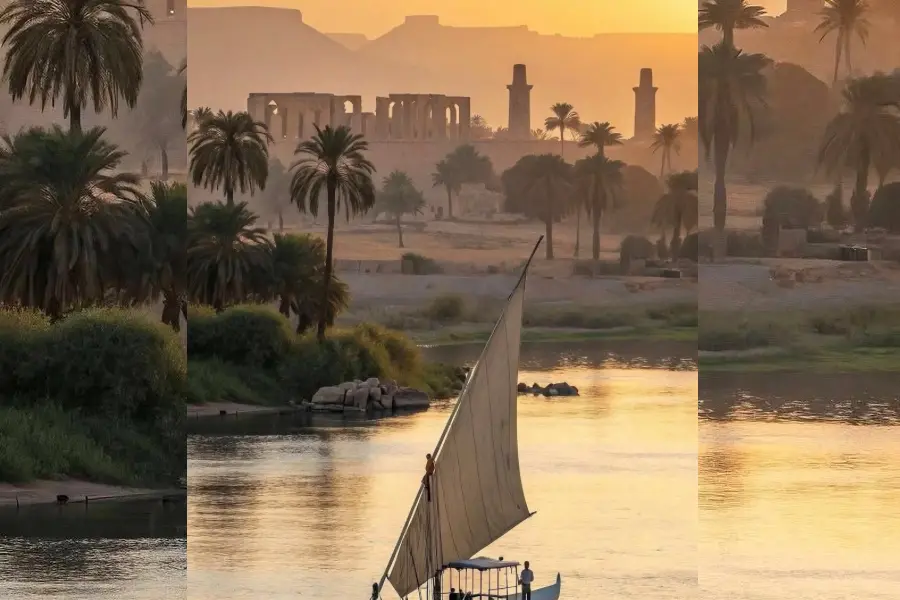
Your first Nile journey should match the time you have, the places you want to visit, and the way you prefer to travel. Neither a Dahabiya nor a traditional cruise ship is automatically the better choice for a first-time visitor.
Choose a Dahabiya if you want to:
- Share the boat with a smaller group of around 12 to 20 guests.
- Spend your time on a traditional sailing vessel with a quieter onboard setting.
- Enjoy meals and shared spaces designed for a smaller passenger group.
- Focus on the sailing experience rather than having a wide choice of onboard facilities.
Choose a traditional Nile cruise ship if you want to:
- Have access to more shared facilities, such as pools, restaurants, bars, and lounges.
- Join a planned sightseeing program covering major attractions along the Luxor and Aswan route.
- Choose from a wider range of ship and cabin categories.
- Travel with a larger group and enjoy organized onboard activities.
If you are traveling with children, check the cabin arrangements, meal options, and daily sightseeing schedule before booking. If you have limited mobility, ask about gangways, stairs, elevators, and shore transfers on the actual vessel. You should also compare the total price and inclusions if your budget is a priority. The right option is the one that fits your family’s needs, available time, and preferred atmosphere.
Pros and Cons of Each Option
Both options offer different advantages, but each also has limitations that may affect your decision.
Dahabiya
| Advantages | Limitations |
|---|---|
Smaller scale and a more intimate shared setting | Usually fewer onboard facilities and venues |
Often suited to travelers who prefer a quieter atmosphere | Fewer cabins may mean less availability on some departures |
Traditional sailing is part of the experience | Actual sailing can depend on wind, conditions, and operational arrangements |
Traditional Nile Cruise Ship
| Advantages | Limitations |
|---|---|
A wider range of onboard facilities and shared spaces | A larger passenger setting may feel busier |
Structured itineraries can make daily sightseeing easier to follow | Less flexibility may be available on fixed schedules |
More cabin and vessel options across different categories | The experience can involve more shared areas and organized activities |
What Should You Check Before Booking?
Before you book, check the details of the actual vessel and package. Use this checklist to make sure you know what your fare covers and what arrangements you need to confirm:
- The vessel and cabin: Confirm the boat’s name, your exact cabin category, and the facilities available on board.
- Guest setting: Check the vessel’s capacity and whether you are booking a cabin on a shared departure or arranging a private charter.
- How the boat travels: Ask how the vessel is propelled and, for a Dahabiya, whether towing or auxiliary propulsion may be used.
- The sightseeing program: Confirm the exact sites included and whether entrance fees and guided excursions are part of the price.
- Nile cruise inclusions: Check what the fare covers, including meals, drinks, transfers, and tips.
- Mobility and shore access: Ask about gangways, stairs, cabin access, and transport during shore visits.
- Booking terms: Review departure dates, cancellation rules, and the operator’s policy on itinerary changes or vessel substitutions.
Before you make your choice, compare trips with the same dates, routes, cabin standards, and inclusions. This helps you see whether a lower price reflects fewer services or a genuinely different offer.
Frequently Asked Questions
1. What are the disadvantages of a Dahabiya?
The main disadvantages of a Dahabiya are its smaller selection of onboard facilities and limited cabin capacity compared with a traditional Nile cruise ship. You also have fewer shared venues and may need to plan around wind conditions when sailing. If you prefer pools, multiple lounges, and a wider choice of onboard activities, a larger cruise ship may suit you better.
2. How much does a Dahabiya Nile cruise cost?
From $1,200, depending on the vessel, travel season, trip length, cabin category, and included services. This is a starting price rather than a fixed fare for every departure. Check the current offer for your dates and compare the meals, guided visits, entrance fees, and other inclusions before booking.
3. Is a Dahabiya more expensive than a Nile cruise?
Yes, a Dahabiya can cost more per guest than a standard Nile cruise. Its smaller passenger capacity means operating costs are shared among fewer travelers, while traditional ships accommodate larger groups and offer more price categories. The final difference depends on the route, season, cabin, and services included.
4. Is a Dahabiya worth it?
Yes, a Dahabiya can be worth it if you want a smaller group setting, traditional sailing, and a quieter onboard experience. It may not suit you as well if you prefer extensive facilities or more organized entertainment. Compare the actual vessel and itinerary with what you want from your Nile trip.
5. Is a Dahabiya better than a regular Nile cruise?
Neither is better for every traveler. A Dahabiya suits you if you prefer a smaller boat and fewer passengers, while a regular Nile cruise offers more shared facilities and accommodates a larger group. Your choice should depend on your preferred atmosphere, sightseeing schedule, and budget.
6. How many passengers can a Dahabiya carry?
Around 12 to 20 passengers is the typical capacity described for a Dahabiya. The exact number depends on the vessel and its cabin arrangement. Before booking, confirm the passenger capacity and whether you are reserving a cabin on a shared departure or hiring the entire boat privately.
7. How long does a Dahabiya cruise last?
Options include 3, 4, 5 or 7 nights, depending on the boat and itinerary. Shorter journeys give you less time on the river, while a longer departure allows more time for sightseeing and the onboard experience. Check the exact departure and arrival points, number of nights, and included visits before booking.
8. Which is better for a first-time visitor to Egypt?
Neither option is automatically better for a first-time visitor to Egypt. Choose a Dahabiya if you prefer a smaller sailing experience, or a traditional cruise ship if you want more onboard facilities and a structured sightseeing program. Your available time, budget, family needs, and mobility requirements should guide the decision.
Plan Your Nile Cruise
Before you book, take time to compare the vessel, route, departure dates, and services included in your trip. Speaking with a Nile cruise specialist can help you understand the differences between the available ships, review the sightseeing schedule, and confirm what your package covers. This gives you a clearer picture of the journey before making a decision and helps you choose an itinerary that matches your time and travel preferences.
For practical preparation, read our guide to what to pack for a Nile cruise.
Final Verdict: Dahabiya or Nile Cruise?
The choice between a Dahabiya and a traditional Nile cruise comes down to the experience you want. Choose a Dahabiya for a smaller passenger group and a sailing-focused journey, or a traditional ship for more onboard facilities and a larger shared setting. Compare the actual itineraries, cabins, and inclusions before booking. Explore our Nile River Cruise Egypt guide to review traditional cruise options.