Pyramids of Giza: History, Facts, Visiting Guide & Secrets
Standing on the edge of the Sahara Desert for more than 4,500 years, the Pyramids of Giza are the last surviving Wonder of the Ancient World and one of Egypt’s most unforgettable travel experiences. Whether you’re planning your first visit or looking for practical tips before you go, this guide covers everything you need to know, from tickets and opening hours to the best viewpoints, activities, and insider advice for making the most of your day at the Giza Plateau.

The Majestic Pyramids of Giza: Ancient Marvels of Egypt
Quick Answer
How do you visit the Pyramids of Giza?
You can explore the Giza Plateau with a general entrance ticket, while access inside individual pyramids requires a separate ticket. Popular activities include visiting the Great Sphinx, riding a camel or horse, exploring Panorama Point, and attending the Sound and Light Show in the evening.
You can explore the Giza Plateau with a general entrance ticket, while access inside individual pyramids requires a separate ticket. Popular activities include visiting the Great Sphinx, riding a camel or horse, exploring Panorama Point, and attending the Sound and Light Show in the evening.
Key Takeaway
- The Pyramids of Giza are located just outside Cairo on the Giza Plateau and are easy to visit as a day trip.
- General admission tickets provide access to the archaeological site, while entering one of the pyramids requires a separate interior ticket.
- You can visit the Great Sphinx, Panorama Point, and enjoy activities such as camel rides, horse rides, quad bike experiences in the surrounding desert, and the evening Sound and Light Show.
- The best time to visit is early in the morning or later in the afternoon, when temperatures are cooler and the site is generally less crowded.
- Guided tours help you understand the history of the pyramids while making it easier to navigate one of Egypt’s most famous archaeological sites.
Where Are the Pyramids of Giza?
The Pyramids of Giza are located on the Giza Plateau, about 15–20 km southwest of central Cairo, on the west bank of the Nile River at the northeastern edge of the Sahara Desert.
The Giza Plateau is Egypt’s most famous archaeological site, home to the three pyramids of Khufu, Khafre, and Menkaure, as well as the Great Sphinx and several ancient temples and tombs. Its elevated position overlooking the Nile Valley made it an ideal location for the royal necropolis during the Old Kingdom.
If you’re wondering, are the Pyramids in the Sahara Desert? The answer is yes. They stand on the northeastern edge of the Western Desert, where the fertile Nile Valley meets the desert landscape, creating one of the world’s most iconic historical settings.

Giza Pyramid Complex Location
How to Visit the Pyramids of Giza
Wondering how to visit the Pyramids of Giza? The easiest way is by taxi, Uber, or a guided tour from Cairo. Plan to arrive early in the morning, allow at least half a day to explore, wear comfortable clothing, and consider combining your visit with the nearby Grand Egyptian Museum for a full day of sightseeing.
Visiting the Pyramids of Giza is surprisingly straightforward, but a little planning can make a huge difference. From choosing the right time of day to deciding whether to visit independently or with a guide, these practical tips will help you make the most of your experience.
How to Get There from Cairo
The Pyramids of Giza are located about 15–20 kilometers (9–12 miles) southwest of downtown Cairo, making them one of the easiest ancient sites to reach in Egypt.
Your main transportation options include:
| Option | Approximate Travel Time | Best For |
|---|---|---|
Uber or Taxi | 30–60 minutes (depending on traffic) | Independent travelers |
Private Guided Tour | Hotel pickup included | First-time visitors |
Public Bus | Around 60–90 minutes | Budget Travelers |
Uber is widely available in Cairo and is often the simplest option if you’re visiting on your own. For a smoother experience with historical context and fewer logistical concerns, many visitors prefer booking a guided day tour that includes transportation, entrance assistance, and an Egyptologist guide.
Best Time to Visit
The best time to visit the Pyramids depends on both the season and the time of day.
Early morning is usually the most comfortable option. Temperatures are cooler, crowds are lighter, and the soft sunlight creates excellent conditions for photography.
Late afternoon is another good choice, especially if you’d like warmer golden-hour lighting before sunset.
If you’re visiting Egypt during the cooler months between October and April, you’ll generally enjoy the most pleasant sightseeing weather. Summer visits are still possible, but the midday heat can become intense, particularly on the exposed desert plateau.
Pro Tip: If possible, avoid arriving around midday. Even in winter, the plateau offers very little shade, making early morning or late afternoon much more enjoyable.
How Long Do You Need?
The amount of time you should spend at the Pyramids depends on how much you want to see.
| Visit Style | Recommended Time |
|---|---|
Highlights only | 2-3 hours |
Complete Giza Plateau | 4-5 hours |
Including the Grand Egyptian Museum | Full day |
A half-day is enough to visit the Great Pyramid, the Sphinx, Panorama Point, and perhaps explore the interior of one pyramid. If you also want to enjoy a camel ride, visit the Grand Egyptian Museum, or take your time photographing the plateau, plan for a full day.
Can You Visit the Pyramids and the Grand Egyptian Museum in One Day?
Yes. In fact, combining the Pyramids of Giza with the Grand Egyptian Museum (GEM) is one of the most popular itineraries for first-time visitors.
The museum is located only a short drive from the Giza Plateau, making it easy to explore both attractions in a single day. A common itinerary is to spend the cooler morning hours at the pyramids before heading to the museum in the afternoon to discover thousands of ancient artifacts, including many treasures connected to the pyramid builders themselves.
Many private Cairo tours are designed around this combination, allowing you to experience both ancient monuments and world-class museum collections without rushing.
What to Wear and Bring
The Giza Plateau is an open desert environment, so dressing comfortably will make your visit much more enjoyable.
We recommend bringing:
- Lightweight, breathable clothing
- Comfortable walking shoes with good grip
- A hat and sunglasses
- Sunscreen
- Plenty of drinking water
- A camera or fully charged phone for photos
- Cash for optional activities or small purchases
You’ll spend much of your time walking on sand, stone paths, and uneven ground, so comfortable footwear is much more important than formal clothing. If you plan to enter one of the pyramids, keep in mind that the passages can be warm and narrow, so travel light whenever possible.
There is no strict dress code, but lightweight and modest clothing is recommended for comfort under the desert sun.
Things to Do at the Pyramids of Giza
Wondering about the best things to do at the Pyramids of Giza? Beyond admiring the ancient monuments, you can enjoy panoramic viewpoints, camel rides, desert adventures, the Great Sphinx, and unique experiences that turn a simple visit into an unforgettable day.
The Giza Plateau offers far more than just standing in front of the pyramids. Whether you’re visiting for a few hours or spending the entire day, you’ll find a variety of activities that combine history, adventure, and spectacular desert scenery.
Panorama Point (Best Photo Spot)
If you’re looking for the classic postcard view, Panorama Point is the place to go. Located on higher ground behind the pyramids, it offers the best angle to see the Great Pyramid of Khufu, the Pyramid of Khafre, and the Pyramid of Menkaure lined up together against the desert backdrop.
This viewpoint is especially popular during the early morning and late afternoon when the softer light creates ideal photography conditions. On a clear day, you can even capture the contrast between the ancient monuments and Cairo’s modern skyline in the distance.
Best for:
- Wide-angle photos of all three pyramids
- Sunrise and sunset photography
- Short panoramic stops during guided tours
It is the only viewpoint where you can photograph all three pyramids together in a single frame.
Camel, Horse & Carriage Rides
A camel or horse ride across the desert remains one of the most iconic ways to experience the Giza Plateau. Short rides are available near the main entrance, while longer routes take you farther into the desert for quieter viewpoints and memorable photos.
Horse-drawn carriages are another option if you prefer a more relaxed experience without riding.
Important tip: Always agree on the full price, duration, and what’s included before your ride begins. Confirm the total cost in advance to avoid misunderstandings with independent vendors.
If you prefer a hassle-free experience, booking a guided tour that includes transportation and activities is usually the easiest option.
Quad Bike & Desert Safari (ATV)
For travelers looking for adventure, quad biking around the desert surrounding the Giza Plateau offers a completely different perspective of the pyramids.
Most ATV tours operate outside the protected archaeological area, allowing you to ride through open desert while enjoying spectacular views of the pyramids from a distance. Depending on the tour, rides typically last from one to several hours and are often scheduled around sunrise or sunset for the best scenery.
This experience is especially popular with photographers and travelers who want something beyond the traditional sightseeing itinerary.
Powered Paragliding Near the Pyramids
For an unforgettable aerial perspective, powered paragliding (paramotor) near the Pyramids of Giza may be arranged upon request, subject to availability, weather conditions, and official aviation permissions.
Unlike standard sightseeing, this activity offers a unique opportunity to admire the Giza Plateau from the surrounding desert while enjoying panoramic views of the pyramids and the Cairo skyline.
Availability varies throughout the year, so advance planning is recommended if this experience is part of your itinerary.
Visit the Great Sphinx & Valley Temple
No visit to Giza is complete without seeing the Great Sphinx, one of Egypt’s most recognizable monuments. Carved from a single limestone outcrop, the Sphinx has guarded the plateau for thousands of years and continues to inspire visitors from around the world.
Just beside it stands the Valley Temple of Khafre, one of the best-preserved temples from the Old Kingdom. Built with enormous limestone and granite blocks, it played a central role in the king’s mummification and funeral rituals.
Because these monuments are located close to the pyramids, they’re easy to include in the same visit without requiring additional travel time.
Whether you’re interested in history, photography, or adventure, the variety of things to do at the Pyramids of Giza makes it easy to tailor your visit to your interests.
The Three Pyramids of Giza
The Giza Plateau is home to three main pyramids, built as royal tombs for the pharaohs Khufu, Khafre, and Menkaure during Egypt’s Fourth Dynasty. Together, these remarkable monuments represent the peak of pyramid construction in ancient Egypt and remain the most famous pyramids in the world.
| Pyramid | Pharaoh | Original Height | What Makes It Special |
|---|---|---|---|
Great Pyramid of Khufu | King Khufu (Cheops) | 146.6 metres (481 feet) | The largest and oldest pyramid, home to the King’s Chamber, Queen’s Chamber, and the impressive Grand Gallery. It is also the only surviving Wonder of the Ancient World. |
Pyramid of Khafre | King Khafre (Chephren) | 143.5 metres (471 feet) | Often appears taller because it stands on higher ground and still preserves some of its original smooth limestone casing at the summit. It is closely associated with the Great Sphinx. |
Pyramid of Menkaure | King Menkaure (Mykerinos) | 65.5 metres (215 feet) | The smallest of the three, distinguished by its granite lower casing and more refined burial chambers, reflecting changes in royal architecture during the late Fourth Dynasty. |
Although these are the three principal pyramids, the complex also includes several smaller queen’s pyramids, royal tombs, mortuary temples, causeways, and the Great Sphinx, creating one of the world’s most extraordinary archaeological landscapes.
Who Built the Pyramids of Giza & Why?
The Pyramids of Giza were built by skilled Egyptian workers as royal tombs for the pharaohs, reflecting both religious beliefs and royal authority.
The three pyramids were commissioned by the Fourth Dynasty pharaohs Khufu, Khafre, and Menkaure between approximately 2580 and 2500 BCE. For many years, people believed the pyramids were built by slaves, but archaeological discoveries tell a different story. Excavations of workers’ villages, bakeries, tools, and burial sites show that the monuments were constructed by well-organized teams of skilled craftsmen, engineers, and seasonal laborers who were fed, housed, and respected for their work.
The pyramids were built primarily as royal tombs, designed to protect the pharaoh’s body and prepare him for the journey into the afterlife. Ancient Egyptians believed their rulers became one with the gods after death, so each pyramid formed part of a larger funerary complex that included mortuary temples, causeways, offering chapels, and burial sites for members of the royal family.
Beyond their religious purpose, the pyramids also demonstrated the pharaoh’s wealth, authority, and ability to organize thousands of workers for one of the greatest engineering projects in history. More than 4,500 years later, they remain powerful symbols of ancient Egypt’s architectural brilliance, spiritual beliefs, and political strength.
How Were the Pyramids Built?
How were the Pyramids of Giza built? While the exact construction methods are still debated, most Egyptologists agree that the ancient Egyptians combined skilled labor, careful planning, and remarkable engineering to complete these monumental structures.
The massive limestone and granite blocks were likely transported on wooden sledges across wetted sand, then moved into position using a system of straight, zigzagging, or circular ramps. Surveyors aligned the pyramids almost perfectly with the cardinal directions, while expert stonemasons cut and fitted the blocks with astonishing precision.
Although researchers continue to refine the details through new archaeological discoveries, the evidence clearly shows that the Pyramids of Giza were built by a highly organized workforce using advanced engineering techniques, not by slaves or lost technology.

Ancient Pyramids Building
What’s Inside the Pyramids of Giza?
What’s inside the Pyramids of Giza? The interiors are surprisingly simple, consisting of narrow passages, burial chambers, and carefully engineered spaces designed for the pharaoh’s journey into the afterlife rather than elaborate decoration.
The Great Pyramid of Khufu contains the famous King’s Chamber, the Queen’s Chamber, and the impressive Grand Gallery, a soaring corridor that leads toward the burial chamber. Unlike many Egyptian tombs, the walls are largely undecorated, with the focus placed on the pyramid’s architectural precision.
The Pyramid of Khafre features a simpler layout with a single burial chamber carved into the bedrock, while the Pyramid of Menkaure includes a granite-lined burial chamber that reflects the same remarkable craftsmanship on a smaller scale.
Although it is not located inside any pyramid, the Great Sphinx stands beside Khafre’s Pyramid as part of the Giza Plateau complex. Together with the nearby Valley Temple, it formed an important part of the royal funerary landscape and remains one of the site’s most iconic landmarks.

pyramids hidden chambers
Star Alignment & Orion’s Belt
Were the pyramids aligned with the stars? The Pyramids of Giza are aligned with remarkable precision to the four cardinal directions, and many researchers have suggested that their layout may also have been inspired by the stars, although some aspects remain the subject of ongoing debate.
The Great Pyramid is oriented almost perfectly to true north, demonstrating the ancient Egyptians’ advanced understanding of astronomy and surveying. One of the most well-known theories, known as the Orion Correlation Theory, suggests that the three main pyramids reflect the pattern of Orion’s Belt, which was associated with Osiris, the Egyptian god of the afterlife.
While the pyramids’ precise cardinal alignment is widely accepted, the proposed connection to Orion’s Belt remains a scholarly theory rather than a proven historical fact. Even so, it highlights the close relationship between astronomy, religion, and architecture in ancient Egypt.

Celestial Connection
Preservation & Modern Discoveries
The Pyramids of Giza continue to be carefully preserved through ongoing conservation efforts led by Egyptian authorities and international research teams. Restoration projects focus on protecting the monuments from weathering, urban development, and the impact of millions of visitors each year.
One of the most significant modern research initiatives is the ScanPyramids Project, which uses non-invasive technologies such as muon imaging and infrared thermography to study the pyramids. The project has revealed previously unknown voids inside the Great Pyramid, offering new insights while leaving the structure untouched.
Another remarkable discovery associated with the Giza Plateau is the Khufu Solar Boat, one of the oldest and best-preserved wooden boats ever discovered. After extensive restoration, it is now displayed at the Grand Egyptian Museum (GEM), where visitors can view one of ancient Egypt’s most extraordinary archaeological treasures.

Pyramid Boat Pits
Interesting Facts about the Pyramids of Giza
The Pyramids of Giza continue to amaze visitors with their scale, precision, and enduring mysteries. Here are a few fascinating facts:
- The Great Pyramid of Khufu was built using an estimated 2.3 million limestone and granite blocks, with many weighing several tons.
- At 146.6 metres (481 feet) tall when completed, the Great Pyramid remained the tallest man-made structure in the world for nearly 3,800 years, until the completion of Lincoln Cathedral in England.
- The pyramids were originally covered with highly polished white Tura limestone casing stones, which reflected sunlight and made them shine brilliantly across the desert.
- The Great Pyramid is aligned with the cardinal directions with extraordinary accuracy, deviating by only a tiny fraction of a degree from true north.
- Although the Giza Pyramids are the most famous, Egypt is home to more than 100 pyramids, built over several centuries by different pharaohs.
- The Pyramids of Giza are the only surviving Wonder of the Ancient World, attracting millions of visitors every year more than 4,500 years after they were built.
Top Pyramids of Giza Tours You Can Book
Looking for the best pyramids tours? Whether you have just a few hours or several days, you can explore the Pyramids of Giza through private day tours, short Cairo breaks, or multi day Egypt itineraries that combine Giza with Luxor, Aswan, and a Nile cruise.
Day Trip to the Pyramids of Giza
Perfect if you’re staying in Cairo and want to see Egypt’s most famous landmarks in one day. Visit the Great Pyramid, the Great Sphinx, and the Valley Temple with a licensed Egyptologist guide, while private transportation makes the experience smooth and hassle free.
Best for: First time visitors with limited time.
Explore our Day Trip to the Pyramids of Giza.
Half Day Pyramids Tour
Short on time? A half day tour covers the highlights of the Giza Plateau while leaving the rest of your day free to visit the Grand Egyptian Museum, explore Old Cairo, or relax at your hotel.
Best for: Layovers, business travelers, and short city breaks.
View our Half Day Pyramids Tour.
Pyramids Sound & Light Show Tour
Experience the pyramids after dark with the famous Sound and Light Show, where dramatic lighting and narration bring ancient Egyptian history to life. It’s an excellent evening activity after a full day of sightseeing.
Best for: Travelers looking for a unique nighttime experience.
Book the Pyramids Sound & Light Show Tour.
Cairo Short Break Packages
Want more than a single day? Our Cairo short break packages combine the Pyramids of Giza with other top attractions, including the Grand Egyptian Museum, the Egyptian Museum, Khan El Khalili Bazaar, and Old Cairo.
Best for: Weekend getaways and travelers with two or three days in Cairo.
Browse our Cairo Short Break Packages.
Continue Your Journey Beyond Giza
Many travelers choose to start with the Pyramids of Giza before continuing to Luxor, Aswan, Abu Simbel, or a Nile cruise. Combining Cairo with Upper Egypt gives you a more complete picture of ancient Egyptian civilization and is often the most rewarding way to experience the country.
Explore our Egypt Tour Packages and Nile Cruise Packages to build a complete Egypt itinerary.

Pyramids at Giza Plateau
Final Thoughts
The Pyramids of Giza remain one of the world’s most extraordinary destinations, offering a unique blend of history, architecture, and unforgettable experiences. Whether you want to explore the ancient chambers, admire the Great Sphinx, or enjoy the panoramic views of the Giza Plateau, a well-planned visit will help you make the most of your time.
Ready to experience the Pyramids of Giza? Plan your visit with one of our expertly guided Giza tours and discover Egypt’s greatest wonder with ease.
FAQ — Pyramids of Giza
Why were the Pyramids of Giza built?
The Pyramids of Giza were built as royal tombs for the pharaohs of Egypt’s Fourth Dynasty. They were designed to protect the king’s burial and help his journey to the afterlife, while also demonstrating the pharaoh’s divine authority and power.
How old are the Pyramids of Giza?
The Pyramids of Giza are more than 4,500 years old. They were constructed between approximately 2580 and 2500 BCE during Egypt’s Old Kingdom.
Who built the Pyramids of Giza?
The Pyramids of Giza were built by skilled Egyptian workers, craftsmen, and engineers, not slaves. They were commissioned by the pharaohs Khufu, Khafre, and Menkaure during the Fourth Dynasty.
Can you go inside the Great Pyramid?
Yes, you can go inside the Great Pyramid by purchasing a separate entrance ticket. Visitors can explore the Grand Gallery and the King’s Chamber, although the passageways are narrow, steep, and can become warm inside.
How much are Pyramids of Giza tickets?
Pyramids of Giza ticket prices vary depending on the areas you want to visit, such as the Giza Plateau or the interiors of the pyramids. Since prices may change, it’s best to check the official Ministry of Tourism and Antiquities website before your visit.
What are the opening hours?
The Pyramids of Giza are generally open daily from around 7:00 AM to 4:00 PM, although opening hours may vary by season, Ramadan, or official holidays. Always verify the latest schedule before visiting.
Where are the Pyramids of Giza located?
The Pyramids of Giza are located on the Giza Plateau, about 15–20 kilometers southwest of downtown Cairo, on the western bank of the Nile at the edge of the Sahara Desert.
What is the best time to visit the Pyramids?
The best time to visit the Pyramids of Giza is between October and April, when temperatures are cooler. Early morning is ideal for fewer crowds and comfortable sightseeing, while late afternoon offers beautiful golden-hour views.
Can you see the Pyramids at night?
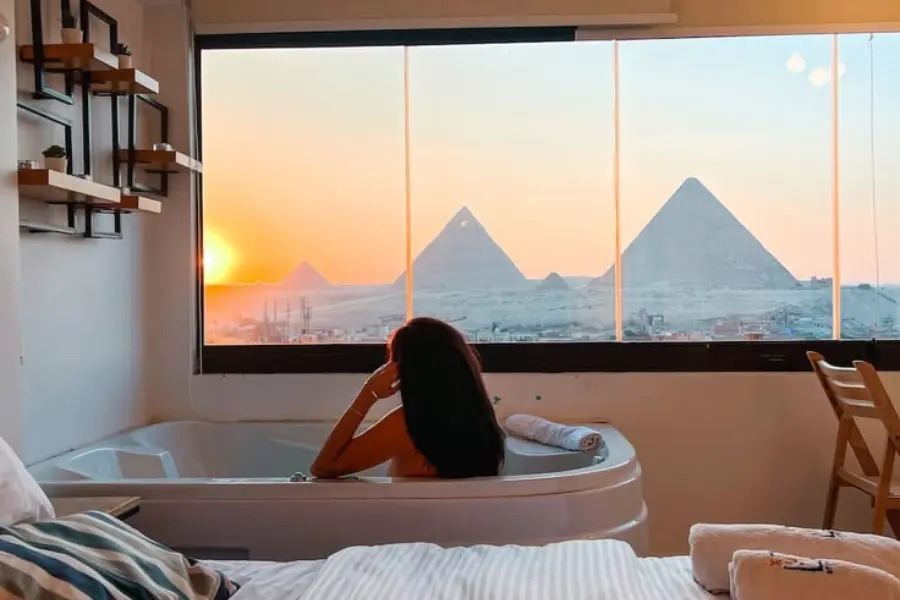
Yes, you can see the Pyramids at night from nearby restaurants, rooftop venues, and hotels. The Giza Plateau itself closes after visiting hours, but you can attend the Sound and Light Show in the evening.
Can you visit the Pyramids and the Grand Egyptian Museum together?
Yes, it’s easy to visit both the Pyramids of Giza and the Grand Egyptian Museum in one day. Their close proximity makes them a popular combination for visitors who want to experience both Egypt’s ancient monuments and its world-class archaeological collections.