

Luxor City Egypt: Best Things to Do, History, Map & Travel Guide
Luxor City Egypt is one of the most fascinating places to visit in Egypt, known for its ancient temples, royal tombs, and remarkable Nile-side setting. Whether you are planning a trip, looking for the best things to do, or simply want to understand why Luxor is often called the world’s greatest open-air museum, this historic city offers an unforgettable journey into the heart of ancient Egypt.

Luxor’s Timeless Allure
What Is Luxor and What Does Its Name Mean?
What Does Luxor Mean?
The name comes from the Arabic word al-Uqsur, which translates to “the palaces.” This meaning reflects the grandeur of the city, once filled with monumental temples, royal complexes, and sacred spaces that shaped the heart of ancient Egyptian civilization.
What Is Luxor?
Today, Luxor functions as a living museum where modern streets exist alongside some of Egypt’s most famous archaeological sites. Landmarks such as Karnak Temple, Luxor Temple, and the Valley of the Kings reveal what is in Luxor, offering travelers a blend of history, culture, and everyday local life.
Luxor Meaning in History
Historians often use the definition of Luxor to highlight how the city’s identity became closely connected to monumental architecture and ceremonial structures that once formed the heart of ancient Thebes. The meaning of the name still reflects the character of the city today, where visitors can walk among vast temple columns, royal tombs, and historic avenues that illustrate why Luxor remains one of Egypt’s most significant cultural destinations.
Where Is Luxor Located?
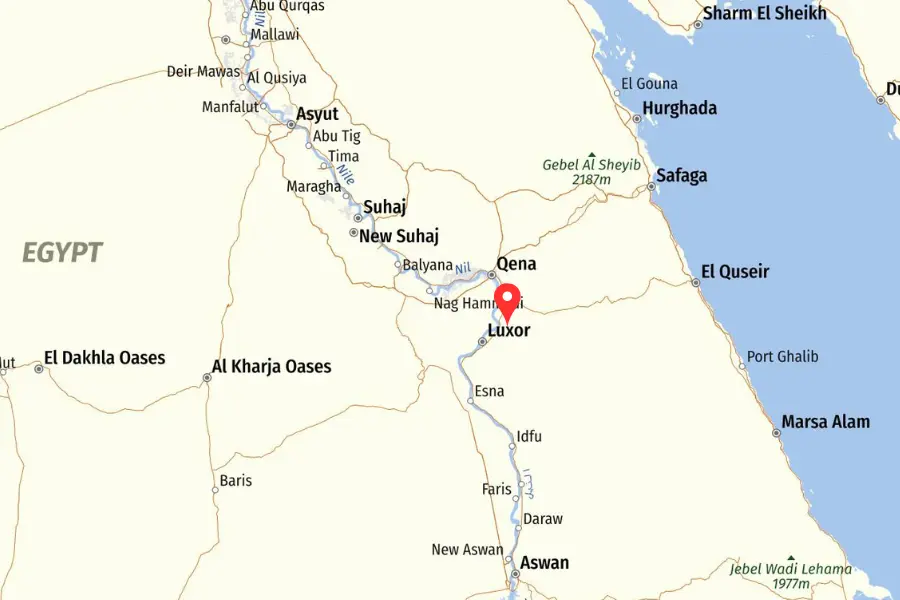
Luxor City lies in Upper Egypt along the Nile River, about 500 kilometers south of Cairo, on the historic site of ancient Thebes. This location gives the city a unique importance as both a modern destination and one of Egypt’s richest archaeological centers.
Luxor on Map of Egypt:
Looking at Luxor on the map of Egypt helps travelers understand how the Nile shapes the city’s layout. The river naturally divides Luxor City into two main areas, making it easier to plan visits and understand where the most important landmarks are located.
East Bank and West Bank:
The East Bank forms the modern center of the city and hosts major landmarks such as Karnak Temple, Luxor Temple, and the Luxor Museum, close to hotels, restaurants, and local markets. Across the Nile, the West Bank presents a very different landscape, where desert cliffs and archaeological sites dominate the scenery. Visitors will find some of Egypt’s most famous burial sites there, including the Valley of the Kings, the Temple of Hatshepsut, and the temple complex of Medinet Habu. This natural division helps travelers organize their itinerary more efficiently while exploring the most important places to see in Luxor Egypt.
Luxor Attractions (Places to See in Luxor Egypt)
Luxor city in Egypt is widely known for its remarkable concentration of temples, tombs, and museums. For travelers planning what to see first, the main places to see in Luxor Egypt are naturally divided between the East Bank and the West Bank of the Nile.
This layout makes exploring the city easier, allowing visitors to group nearby attractions and move efficiently between historical sites.
Luxor East Bank Attractions (Temples, Museums & City Core)
The East Bank of Luxor is the city’s cultural and historical heart. It offers a concentration of temples, museums, and vibrant city life.
Temple of Karnak
The most visited site is the Temple of Karnak. The Karnak Temple Complex is the largest religious site in Egypt and one of the most impressive temple complexes ever built. Massive columns, statues, and ceremonial halls reflect centuries of construction by different pharaohs. Visiting early in the morning helps avoid crowds and intense heat.

Karnak Temple Complex: An ancient masterpiece.
Luxor Temple
Next is Luxor Temple, located along the Nile Corniche. It is famous for its grand entrance statues and illuminated evening atmosphere. The temple was an important ceremonial center connected to Karnak by the ancient Avenue of Sphinxes.
Many visitors prefer to explore Luxor Temple after sunset when the lighting creates a dramatic setting.
Luxor Museum
Luxor Museum displays carefully curated artifacts discovered in the region, including statues, royal objects, and temple reliefs. Its modern presentation makes it one of Egypt’s most informative archaeological museums. Allow about one hour to explore the exhibits at a relaxed pace.

Luxor Museum: A cultural showcase.
The Mummification Museum
The Mummification Museum offers a closer look at ancient Egyptian burial practices and the rituals surrounding the preparation of the dead. It adds useful historical context for visitors interested in the religious beliefs behind Luxor’s tombs and temples.
Luxor Souk
For a taste of local life, the Luxor Souk offers colorful markets filled with crafts, spices, and souvenirs, completing the East Bank experience.
Now Lets move to Luxor West Bank.
Luxor West Bank Attractions (Tombs & Mortuary Temples)
The West Bank of Luxor reveals the city’s ancient funerary landscape, where pharaohs and nobles built tombs along the desert cliffs.
Valley of the Kings
The Valley of the Kings served as the royal burial ground for many New Kingdom pharaohs. Decorated tombs carved deep into the desert hills contain vivid wall paintings that illustrate ancient Egyptian beliefs about the afterlife. Start your visit early in the morning when temperatures are cooler.

Unraveling the secrets of Valley of the Kings.
Temple of Hatshepsut
The Temple of Hatshepsut is a striking mortuary temple that honors Queen Hatshepsut, one of Egypt’s most powerful female rulers. Built against dramatic limestone cliffs, the temple’s terraces and colonnades create one of Luxor’s most recognizable architectural landmarks.

Hatshepsut Temple: A testament to ancient craftsmanship.
Valley of the Queens
The Valley of the Queens is another important burial area on the West Bank, where royal wives and children were laid to rest. Some of its tombs are known for their richly colored wall paintings and detailed decoration.
Medinet Habu
Medinet Habu is a vast temple complex built by Ramses III and known for its well-preserved relief carvings. The detailed wall scenes provide valuable insight into ancient battles, rituals, and royal ceremonies.
Colossi of Memnon
The Colossi of Memnon are two massive stone statues that once guarded the mortuary temple of Amenhotep III. Although the original temple is largely gone, these towering statues remain an iconic landmark of Luxor’s West Bank.
Best Things to Do in Luxor City
Beyond visiting temples and tombs, Luxor offers several memorable activities that allow travelers to experience the atmosphere of the Nile and local life. From sunrise adventures to relaxing evenings by the river, these experiences add depth to any visit.
1. Hot Air Balloon Ride in Luxor
A sunrise hot air balloon flight over the West Bank offers panoramic views of Luxor’s desert, temples, and farmland. The early morning light creates spectacular scenery, making it one of the most memorable experiences in the city.
Book a sunrise flight in advance, as early departures offer the best visibility and calmer winds.

Soaring above Luxor’s wonders.
2. Nile River Cruises from Luxor to Aswan
One of the most relaxing ways to experience Upper Egypt is through a Nile River cruise from Luxor to Aswan, usually available as a 3-night or 4-night journey. These cruises combine comfort, scenic views, and easy access to some of Egypt’s most famous temples along the Nile. For a lighter and more traditional experience, a felucca ride in Luxor offers a peaceful way to enjoy the river, especially at sunset when the views become even more memorable.

Sailing the serene Nile in Luxor.
3. Karnak Temple Sound and Light Show
The Sound and Light Show is an evening multimedia experience at Karnak Temple that combines narration, music, and dramatic lighting. The storytelling brings the temple’s ancient history to life while visitors walk through illuminated ruins at night.
Arrive a little early to secure a good viewing spot before the show begins.

Illuminating history at Karnak Temple.
4. Shop in the Local Souqs (Market)
Luxor’s traditional markets offer stalls selling spices, perfumes, textiles, and handmade crafts. Exploring the souqs gives visitors a closer look at everyday local culture beyond the archaeological sites.
Friendly bargaining is expected, but always keep negotiations polite and relaxed.
5. Deir el-Medina (Valley of the Artisans)
Deir el-Medina was the village of the craftsmen who built the royal tombs in the Valley of the Kings. The tombs here contain remarkably detailed paintings that provide insight into the daily lives of ancient artisans.
Start your visit early in the day to avoid the strongest afternoon heat.
6. Sunset at Luxor Temple / Corniche Walk
A stroll along the Nile Corniche near Luxor Temple during sunset is a peaceful evening activity. The golden light reflecting on the river creates a calm atmosphere and excellent photo opportunities.
Arrive slightly before sunset to enjoy the changing colors over the Nile.
7. Traditional Egyptian Lunch with Local View
A relaxed meal at a small local café on Luxor’s West Bank serves simple Egyptian dishes. It offers a quiet break between archaeological sites and a chance to experience local flavors away from crowds.
Try grilled meats, fresh bread, and traditional Egyptian salads.

Exploring the flavors of Egypt in Luxor.
Suggested Luxor Itinerary (1 Day / 2 Days)
Exploring the City of Luxor becomes easier when you plan your visit around the East and West Banks of the Nile. This approach reduces travel time and allows you to experience the city’s most important landmarks efficiently.

A leisurely ride through Luxor’s charm.
Luxor in 1 Day
Morning – West Bank Exploration
Start early with the Valley of the Kings, where several pharaohs were buried in richly decorated tombs. Continue to the Temple of Hatshepsut and stop briefly at the Colossi of Memnon.
Afternoon – East Bank Temples
After lunch, cross the Nile and explore the Karnak Temple Complex. The vast halls and towering columns make it one of Egypt’s most impressive archaeological sites.
Evening – Luxor Temple & Corniche
End the day at Luxor Temple, which becomes especially atmospheric when illuminated at night. A short walk along the Nile Corniche offers a relaxing conclusion to the day.
Luxor in 2 Days
Day 1 – East Bank
Spend the morning at Karnak Temple Complex, exploring its vast courtyards, obelisks, and sacred lake. After lunch, visit the Luxor Museum to see important artifacts discovered in the region.
In the evening, explore Luxor Temple and nearby markets before enjoying dinner along the Nile.
Day 2 – West Bank
Begin the morning in the Valley of the Kings to explore royal tombs before temperatures rise. Continue to the Temple of Hatshepsut and visit Medinet Habu or Deir el-Medina if time allows.
In the late afternoon, consider a sunset felucca ride on the Nile to unwind after a day of sightseeing.
History of Luxor City in Egypt (Ancient Thebes & the New Kingdom)
Luxor stands on the ancient site of Thebes, one of the most important cities of ancient Egypt. Over centuries, it served as a political, religious, and cultural center, leaving behind an extraordinary concentration of temples and tombs.

Unveiling Luxor’s storied past.
Key Historical Periods:
| Historical Period | Details |
|---|---|
| Early History & Middle Kingdom | The Theban region began gaining influence during the Middle Kingdom, when rulers invested in temples and local administration. These early developments laid the foundation for Luxor’s future importance. |
| New Kingdom (Golden Age) | Luxor reached its peak during the New Kingdom, when Thebes became Egypt’s religious and political capital. Pharaohs constructed massive temples such as Karnak and Luxor Temple, while royal tombs were carved into the nearby desert valleys. |
| Religious Center of Amun | The city became the primary center for the worship of the god Amun-Ra. Powerful priesthoods and grand temple rituals played a central role in both spiritual and political life. |
| Later Periods | Even after the New Kingdom ended, Luxor retained its sacred character. Ptolemaic and Roman rulers continued to build and adapt temples, preserving the city’s religious significance. |
| Islamic Era and Modern Luxor | During the Islamic period, settlements gradually developed around the ancient ruins. Today, tourism remains one of the city’s main economic drivers, supporting the local Luxor population while preserving its archaeological heritage. |
| Modern Luxor | Modern Luxor blends daily life with historic landscapes, where markets, cafés, and residential neighborhoods exist alongside some of the world’s most famous monuments. Understanding this historical background also helps explain why Luxor remains one of Egypt’s most important cultural destinations today. |
Luxor Weather: Best Time to Visit Luxor City
The best time to explore Luxor is during the cooler months, when sightseeing is comfortable and outdoor sites are easier to enjoy. Planning around weather Luxor Egypt helps visitors fully experience the temples, tombs, and Nile activities without being slowed by extreme heat.
Best Time to Visit (Nov–Feb)
From November to February, temperatures are mild and pleasant for walking between sites. This season is ideal for visiting open-air monuments, enjoying Nile cruises, and capturing memorable photos without the discomfort of intense sun.
Summer in Luxor (Heat & Planning)
Summer brings intense heat, often reaching the high 30s–40s °C. Start activities early in the morning or late afternoon to avoid peak sun. Lightweight, breathable clothing and staying hydrated make sightseeing safer and more enjoyable. Checking the Luxor temperature before your visit can help plan each day comfortably.
Spring & Autumn (Good Alternatives)
Spring and autumn offer moderate temperatures and fewer crowds, making them excellent alternatives to winter. These shoulder seasons are perfect for outdoor activities, leisurely walks along the Nile, and exploring the city at a relaxed pace.

Planning under Luxor’s skies.
What to Pack for Luxor
- Light, breathable clothing for hot days
- Comfortable walking shoes
- Sunhat or cap
- Sunglasses and sunscreen
- Light jacket or sweater for cooler evenings
- Reusable water bottle
Planning your visit according to the season helps you make the most of Luxor’s monuments and experiences. Next, understanding safety measures ensures your trip is both secure and enjoyable.
Is Luxor City in Egypt Safe to Visit?
Luxor is generally considered a safe destination for travelers, particularly in the main tourist areas around temples, museums, and hotels. Like any travel destination, staying aware of your surroundings and following basic precautions helps ensure a smooth and comfortable visit.
Is Luxor Safe for Tourists? Most visitors experience Luxor without problems, especially when using trusted transportation and staying near popular attractions. Helpful precautions include using reliable taxis or hotel-arranged transportation, staying aware in crowded areas such as markets, and politely declining offers from unofficial guides. These simple steps help avoid minor inconveniences and keep your trip running smoothly.
Is Luxor Safe for Solo Travelers? Solo travelers can comfortably explore Luxor by planning routes in advance and staying in central, well-reviewed hotels. Practical steps include sharing your itinerary with a friend or family member, choosing accommodation in busy areas, and avoiding walking alone in isolated streets late at night.
Is Luxor Safe for Solo Female Travelers? Women traveling alone can also enjoy Luxor safely by following a few additional precautions. Dressing modestly in line with local customs, using verified transportation at night, and ignoring unwanted attention while maintaining clear personal boundaries can help create a more comfortable travel experience.
Is Luxor Safe for Kids? Families visiting Luxor should mainly prepare for heat and long walking distances between sites. Bringing sun protection and water, planning rest breaks during the day, and supervising children in crowded areas can make the visit easier and more enjoyable.
Quick Safety Checklist
- Use trusted transportation
- Keep valuables secure
- Avoid unofficial guides
- Stay hydrated in hot weather
- Keep important travel documents safe

Ensuring your security in Luxor.
What Are the Best Hotels in Luxor City?
Luxor offers a wide variety of accommodations ranging from luxury Nile-side resorts to comfortable boutique hotels. Many hotels in Luxor Egypt provide easy access to historical sites while offering scenic views of the Nile.
Choosing where to stay depends on your travel style, preferred location, and budget.
Luxury & 5-Star Hotels
Sofitel Winter Palace Luxor
A historic luxury hotel known for its colonial architecture, lush gardens, and elegant atmosphere.
Features: Pool • Restaurants • Spa • Fitness center • Wi-Fi
Enjoy the Nile-view rooms for a memorable stay.
Hilton Luxor Resort & Spa
A modern riverside resort with panoramic Nile views and relaxing spa facilities.
Features: Infinity pools • Spa • Restaurants • Gardens • Fitness center
Terrace views are particularly stunning at sunset.
Steigenberger Nile Palace Luxor
An upscale hotel located close to many major attractions, making sightseeing easy.
Features: Rooftop terrace • Pool • Restaurants • Conference facilities • Wi-Fi
The central location makes sightseeing convenient.
Jolie Ville Luxor
A peaceful riverside property ideal for travelers seeking a quiet atmosphere and scenic surroundings.
Features: Gardens • Pool • Restaurants • Nile-view rooms
Peaceful environment with scenic Nile surroundings.
Several five star hotels in Luxor Egypt combine elegant design, river views, and convenient access to major landmarks.
Mid-Range & Boutique Hotels
Nefertiti Hotel Luxor (Al Sahaby Lane)
A popular mid-range option located in the city center near markets and temples.
Features: Rooftop terrace • Restaurant • Wi-Fi • Air-conditioning • Central location
Located in the city center, close to markets and temples.
Booking Tips
When choosing accommodation in Luxor, consider the following:
- East Bank hotels offer easier access to Luxor Temple and Karnak Temple.
- West Bank hotels provide a quieter environment near archaeological sites.
- Rooms with Nile views often provide the most memorable experience.
- Checking recent guest reviews helps ensure reliable service and comfort.
With many options available, travelers can easily find the best hotels in Luxor Egypt that match their budget.
Explore Luxor with Guided Egypt Tours
Exploring Luxor City as part of our Egypt Day Tours with a knowledgeable guide can make the experience more informative and easier to navigate. A local guide helps visitors understand the historical context of temples, tombs, and inscriptions while organizing visits efficiently.
For many travelers, a private guide offers flexibility when planning daily activities. Guides can help adjust schedules, recommend less crowded times to visit major sites, and provide insights that may not be immediately visible to independent travelers.
In addition to historical explanations, guides often assist with transportation between attractions and help coordinate visits across the East and West Banks of the Nile.
Some tour companies may assist with logistics, such as transportation or hotel bookings, while still allowing travelers to choose accommodations that fit their preferences.
This type of guided support can be especially helpful for travelers visiting Luxor for the first time.
Inspired to visit Luxor in person? Turn this guide into a real journey with our carefully selected Luxor day tours, Egypt tour packages, and Nile cruise holidays. Whether you want a short cultural visit or a longer trip through Upper Egypt, explore the options below and find the experience that suits you best.
Conclusion
Luxor offers a remarkable journey through thousands of years of Egyptian history. From the monumental temples of Karnak and Luxor to the royal tombs hidden in the desert valleys, the city presents one of the richest archaeological landscapes in the world.
By planning your visit around the weather, organizing your itinerary between the East and West Banks, and choosing comfortable accommodation, exploring the city becomes both enjoyable and manageable.
Whether you spend one day discovering its most famous landmarks or several days exploring its temples, museums, and Nile experiences, Luxor leaves visitors with a deeper appreciation of Egypt’s extraordinary past and enduring cultural heritage.


