Major Cities on the Nile River: Cairo, Luxor, Aswan & Beyond
Major cities on the Nile River have shaped the history of Africa for thousands of years. The Nile River, the longest river in the world, has always been a source of life and civilization for the nations along its banks — connecting ancient cultures with the modern world.
In Egypt, cities on the Nile River such as Cairo, Luxor, and Aswan flourished thanks to fertile land and steady water flow. Further south, Khartoum in Sudan and Juba in South Sudan continue to rely on the Nile for trade, identity, and daily life.
Whether it’s ancient Thebes rising beside the water or bustling Cairo spreading along its banks, every city on the Nile has its own rhythm — and all of them owe their story to the same powerful river. Let’s explore the most fascinating major cities on the Nile River, starting with Egypt’s treasure: Cairo.
Key Takeaways – Major Cities on the Nile River
- The Nile River passes through 11 African countries, linking cities from Central to North Africa.
- Cairo—Egypt’s capital—is the largest and most famous city on the Nile River.
- Luxor and Aswan are iconic for ancient temples and stunning Nile scenery.
- Khartoum is where the White Nile and Blue Nile meet.
- Juba in South Sudan is one of the youngest capitals along the river.
- The Nile has always been the main lifeline of civilization, agriculture, and trade.
- Millions still depend on the Nile for water, work, and regional connection.
Cairo – Capital City on the Nile River

Cairo sits right on the banks of the Nile River, making it the heart of Egypt in every possible way. The river cuts through the city and gives it a rhythm that never stops — from the boats passing under the famous Qasr El Nil Bridge to the vibrant cafés overlooking the water and the calm breeze that softens even the busiest Cairo nights.
Being the capital city on the Nile, Cairo grew around this lifeline. It is where ancient meets modern — with the Pyramids of Giza just a short drive away and the Egyptian Museum downtown preserving stories from thousands of years ago.
The Cairo Nile River has shaped how people live, trade, commute, celebrate, and even relax. It’s not just a geographical feature — it’s Egypt’s beating heart, the reason Cairo became one of the most influential cities in the Middle East and Africa.
Walking along the Corniche, taking a night cruise, or simply watching the sun reflect on the water reminds you why Cairo has been the capital of civilization for centuries.
Luxor – Ancient City of Thebes
Luxor, a major city on the Nile River in southern Egypt, stands on the land once called Thebes — the mighty capital of ancient Egypt for centuries. The river here divides daily life: farmers, boats, and travelers still rely on the Nile just like the ancient Egyptians did in their Theban days.
On the east bank of the Nile, you’ll find two of the most iconic temples in the world: Karnak Temple and Luxor Temple — both filled with detailed statues and carvings reflecting the power of ancient Thebes. Across the water, the west bank hides royal secrets, including the legendary Valley of the Kings, the grand resting place of the pharaohs.
Small motorboats and traditional feluccas still glide visitors between both sides — the same movement that connected priests, workers, and kings thousands of years ago.
Luxor is often called the world’s greatest open-air museum — not only for its monuments, but also for the peaceful Luxor Nile River views at sunset, the green islands, and the life that continues to bloom around this ancient river.
Aswan – Gateway to Nubia
If you travel down to Egypt’s far south, you’ll reach Aswan — a warm and welcoming city that rests right on the Nile River. The water feels different here: slower, calmer, and brighter. Locals often say that the river smiles in Aswan, thanks to its peaceful flow and stunning natural scenery.
You could spend hours watching feluccas sail smoothly across the glittering water of the Aswan Nile River, especially at sunset when the sky turns pink and gold. One of the most famous landmarks is Philae Island, where the beautiful Temple of Isis rises proudly above the river.
Just a few kilometres away lies the Aswan High Dam, a modern engineering achievement that reshaped Egypt’s history by controlling the Nile floods and generating electricity for millions.
Aswan is also the cultural homeland of the Nubian people, famous for their colourful homes, music, and rich heritage. A walk through Nubian villages reveals stories painted on walls and told through warm hospitality that visitors never forget.
In Aswan, you feel peace, rhythm, and history all around you. Whether sailing the Nile, exploring temples, or enjoying the breeze by the water, the city connects you with the ancient heart of the Nile River.
Khartoum – Where the White and Blue Nile Meet

One of the Major Cities on the Nile River. If you’ve heard about Khartoum before, you probably know that it’s not just the capital of Sudan — it is the city where two great rivers finally meet. The White Nile travels a long journey from the Great Lakes of Central Africa, while the Blue Nile flows down from the Ethiopian Highlands.
They merge dramatically at a point known as the Confluence, creating one powerful waterway that continues its long path north, passing through Egypt before reaching the Mediterranean Sea as the Main Nile River.
Because of this strategic location, Khartoum Nile River has always powered trade, travel, and culture. Its riverbanks host bustling markets, universities, and historic neighborhoods that show how the city grew around the Nile’s blessings.
Modern bridges now connect the city’s three main districts — Khartoum, Omdurman, and Bahri — while old ferries still cross the water, keeping the traditional river life alive. The Nile gives Khartoum a calm soul, even though everything around it moves fast.
Juba – Nile’s Path through South Sudan

Juba, the capital of South Sudan and one of the most famous Cities on the Nile River, Located directly along the White Nile, which provides fresh water, fertile soil, and a way for communities to stay connected. As one of Africa’s youngest capitals, Juba is still growing and changing every year — and the river remains the heart of this transformation.
Life in Juba reflects the nature of the Nile itself: steady, slow, and full of hope. Farmers, fishermen, and local traders rely daily on the calm White Nile River, just as their ancestors did for thousands of years.
Since independence, the city has been rebuilding its infrastructure, and the Juba Nile River plays a central role in helping connect towns across the region — from food supplies and river transport to tourism and business opportunities.
For locals, the Nile is more than a source of water — it’s a symbol of strength, new beginnings, and unity for the world’s newest country.
Other Cities along the Nile
Following the Nile’s path reveals smaller but lively towns that don’t always make the headlines. In northern Uganda, Jinja stands proudly as the place where the river actually begins its journey. In Ethiopia, cities like Gondar sit among hills and castles, holding stories from old kingdoms and proud cultures.
In Egypt, the Nile passes through important regional capitals such as Asyut, Minya, Beni Suef, and Qena, where agriculture thrives thanks to fertile land. These cities are home to millions whose daily life depends on the river’s steady flow and endless blessings.
From fishing villages and farming communities to deep-rooted cultures and unique landscapes, the Nile connects 11 African countries and brings together people with different languages, traditions, and dreams — all united by one river.
Why Cities on the Nile River Flourished
If you look at a map, it becomes clear why so many Nile River cities appeared here — the river simply made life possible. While most surrounding areas were desert, the banks of the Nile offered fertile soil that allowed people to grow crops, raise animals, and finally settle down instead of constantly searching for food.
Trade was another major reason for the growth of these cities. The Nile acted as a natural highway, transporting people, grains, gold, spices, and even papyrus between regions. It boosted economic connections from Central Africa all the way to the Mediterranean.
Culture and religion also flourished along the river. To ancient Egyptians, the Nile was a sacred gift from the gods, celebrated through festivals and traditions that continue today. Even now, millions still depend on the river’s water, work, and wisdom — a lifeline shaping civilization for more than 7,000 years.
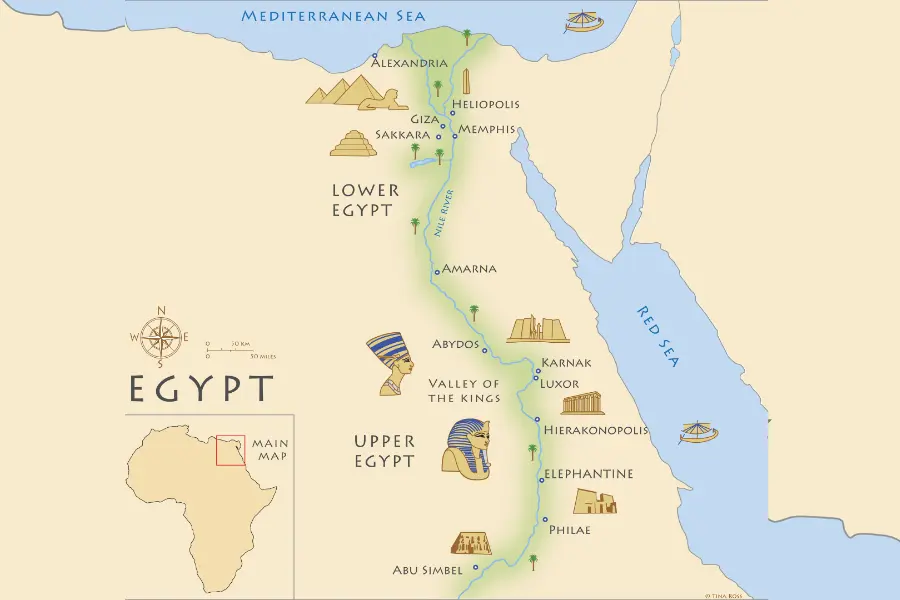
Major Nile River Cities Summary
Here’s a quick look at the most important cities on the Nile River and what makes each of them unique — from Cairo to Juba.
| Country | Major Nile City | Highlight |
|---|---|---|
| Egypt | Cairo | Largest city on the Nile River |
| Egypt | Luxor | Ancient capital of Thebes — open-air museum |
| Egypt | Aswan | Gateway to Nubia + High Dam |
| Sudan | Khartoum | Confluence — where Blue & White Nile meet |
| South Sudan | Juba | Youngest capital on the Nile River |
Nile River Key Facts
-
- The Nile River is one of the longest rivers in the world, stretching over 6,650 km (4,130 miles).
- It flows through 11 countries, supporting millions of people along its route.
- The river has two main branches: the White Nile (from East Africa) and the Blue Nile (from Ethiopia).
- The Nile helped create some of the world’s earliest civilizations in Egypt and Sudan.
- Most major cities on the Nile River began as trade and agricultural centers.
- The Nile Delta in northern Egypt is one of the most fertile regions on Earth.
- Today, the Nile remains a vital source of water, transport, and energy for the region.
Major Cities on the Nile River – From Source to Egypt
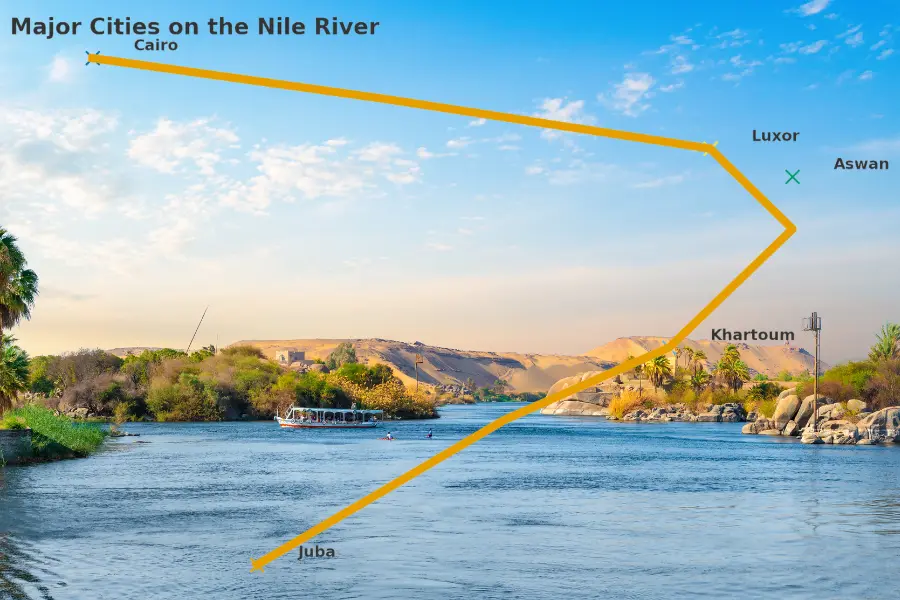
This Nile River map highlights its journey from the African Great Lakes region in East Africa, flowing through countries like Uganda and Sudan, before entering Egypt and reaching the Mediterranean Sea. Along its banks, major cities such as Juba, Khartoum, Aswan, Luxor, and Cairo have flourished because of the river’s life-giving water.
Conclusion: A River That Continues to Shape Nations
From its source in East Africa to its final embrace with the Mediterranean Sea, the Nile River has always been a lifeline for millions of people. Major cities on the Nile such as Juba, Khartoum, Aswan, Luxor, and Cairo didn’t just appear by chance — they grew because the Nile made life possible.
This legendary river helped build ancient civilizations, supported agriculture and trade, and continues to inspire culture and tourism today. Even as modern cities expand and change, the Nile still flows at the center of daily life, linking nations, shaping identities, and reminding us of how important water is to survival.
Whether you explore it from the sundeck of a Nile cruise, a small felucca boat, or simply by walking along its banks, the Nile River remains the greatest storyteller of Africa’s past and present — and its journey is far from over.
From Nile cruises between Luxor & Aswan to Cairo tours along the riverbanks, the Nile offers history, beauty, and unforgettable adventures. Discover ancient temples, sail past golden sunsets, and experience the cities that blossomed because of the Nile River.
Let Egypt Tours Group plan your perfect Nile journey — whether you want culture, relaxation, or a little bit of both.
FAQs – Cities Along the Nile River
What are the most famous cities along the Nile River?
Major Nile River cities include Cairo, Giza, Luxor, and Aswan in Egypt, plus Khartoum in Sudan and Jinja in Uganda near the river’s source.
Why did cities develop along the Nile River?
The Nile provided water, fertile land, and a trade route — making farming, settlement, and economic growth possible in desert regions.
How many countries does the Nile River flow through?
The Nile flows through 11 countries, including Uganda, South Sudan, Sudan, and Egypt before reaching the Mediterranean Sea.
What makes the Nile River important to Egypt today?
It remains Egypt’s main source of freshwater, supports agriculture, provides hydroelectric power, and drives tourism along cities like Luxor and Aswan.
Can you travel between Nile cities by cruise?
Yes — Nile cruises are a popular way to explore ancient temples and historic cities between Luxor and Aswan.
Which Nile city was the capital of Ancient Egypt?
Luxor (ancient Thebes) served as the capital during much of the New Kingdom and remains Egypt’s richest city in temples and royal tombs.