Seen Ramses in London? Visit the Real Ramses II Sites in Egypt
Ramses in London Inspired You? Here’s How to See Ramses II for Real in Egypt
If you’re planning to visit Ramses and the Pharaoh’s Gold in London or you’ve already walked through it you’ll probably leave with the same thought most people have: “This is incredible… but I want to see where it all actually came from.”
That’s the perfect next step.
The exhibition is a rare chance to see original treasures up close, but Egypt is where Ramses II becomes larger than a label on a wall. In Egypt, you don’t just “learn” about Ramses.
You stand in front of his colossal statues, walk through temples built to last forever, and follow the Nile the same way pharaohs and pilgrims once did.
In this guide, we’ll connect the London experience to the real places in Egypt, then give you a few ready-to-book options (including a Nile Cruise) so you can turn inspiration into a trip you’ll actually take.
Want a Ramses-focused itinerary?
Tailor your private trip here
What the London Ramses Exhibition Actually Shows (and Why It Leaves You Wanting Egypt)
The London exhibition is built around a simple idea: bring Ancient Egypt’s “golden age” into a modern immersive setting and let you come face-to-face with objects that rarely travel.
It features 180 original treasures on loan from Egypt, designed to give you a wide, vivid picture of royal power, belief, and daily symbolism—not just “museum labels.”
What you’ll see inside includes:
- The Coffin of Ramses II, promoted as a rare chance to see his original coffin
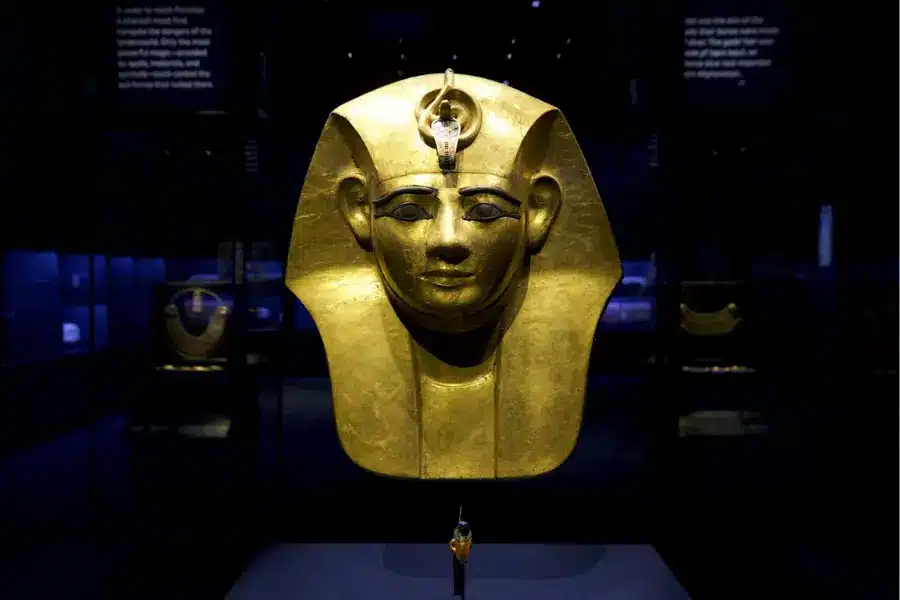
- Treasures from the royal tombs of Tanis, including the gold mask of King Amenemope and the solid silver coffin of Shoshenq II
- Beautifully preserved animal mummies and amulets that reflect ancient beliefs
- Dazzling jewellery, alongside colossal sculptures, carvings, and stone heads
There’s also an emotional hook built in: a virtual reality experience that takes you through Ramses’ world—from the Tomb of Queen Nefertari to the rock-cut temples of Abu Simbel. It’s optional, but it’s clever—because those places aren’t “virtual” in real life. They’re waiting in Egypt, and you can actually visit them.
And when the exhibition says it takes you “from Abu Simbel to the Valley of the Kings,” that isn’t just marketing language—it’s a real route you can follow in Egypt. After Cairo, you can head to Luxor, where the Valley of the Kings holds Ramses II’s own tomb (KV7), and nearby you’ll find KV5, the vast burial complex associated with many of his sons. That’s when the story stops feeling like a display and starts feeling like a place.
The show also hints at something many travelers miss at first: Ramses II is often less mythologised than Tutankhamun, yet his impact on Egypt is hard to match. He ruled for nearly 67 years, used strategy and diplomacy to strengthen Egypt’s power, and built monuments across the country with one clear goal—immortality. Add a dynasty commonly described as well over 100 children, and you understand why his presence appears everywhere once you step into Egypt.
Who Was Ramses II, Really? (A 60-Second Context That Makes the Trip Better)
Ramses II, often called Ramses the Great, wasn’t famous because he was quiet. He built boldly, ruled for decades, left inscriptions across the land, and shaped an image of kingship that still influences how people picture Ancient Egypt today.
He belongs to one of Egypt’s most powerful periods, when temple-building, royal art, and religious life reached a level that still defines the country’s most iconic ancient sights. And you don’t need a long history lesson to feel it—because Ramses is the pharaoh whose footprint is spread across Egypt. While Tutankhamun is more famous in pop culture,
Ramses II is the one you’ll keep encountering in real places: colossal statues, temple walls, and landmark sites from Cairo and Giza to Luxor and Abu Simbel.
If you want a deeper background before planning your route, here’s a full overview.
Where to See Ramses II in Egypt: Real Places After the London Exhibition
Below is the travel version of what the exhibition introduces. Think of it as a “Ramses route” you can actually do comfortably without turning your holiday into a history marathon.
1. Abu Simbel Temple: The Monument That Makes People Go Quiet
If you’ve seen Abu Simbel referenced in the exhibition’s VR journey, you already know it’s considered one of the grandest scenes in Egypt. But in real life, it hits differently.
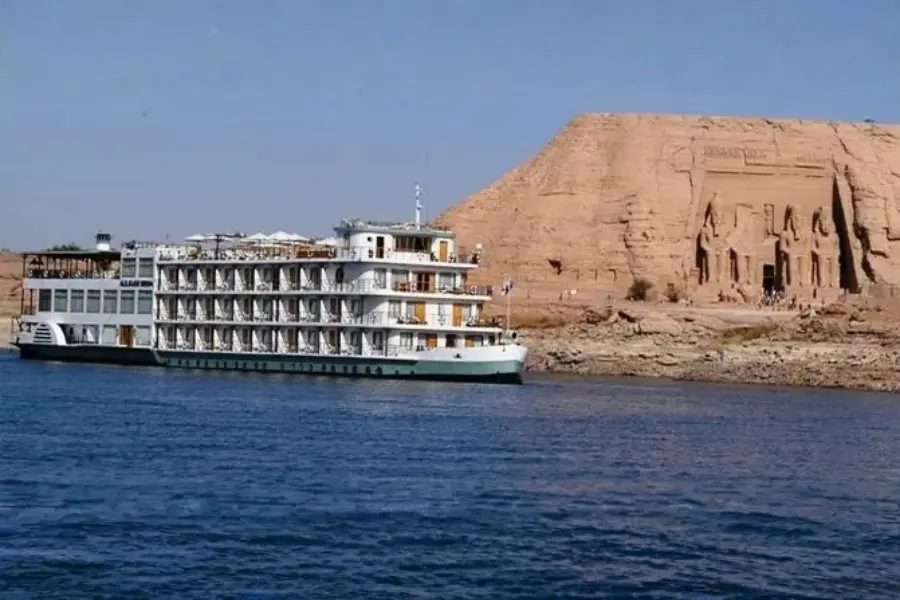
Four colossal seated statues of Ramses II watch over the entrance, carved into a cliff face in southern Egypt. It’s not just a temple—it’s a statement. Even travelers who “aren’t usually into temples” tend to remember Abu Simbel as the moment Ancient Egypt stopped feeling like the past and started feeling present.
Best way to visit: Most travelers visit Abu Simbel from Aswan (as a day trip or as part of an Upper Egypt route).
2. Luxor: Where Ramses’ Egypt Feels Infinite
Luxor is where the scale of Ancient Egypt becomes real. For Ramses II lovers, it’s not just “nice temples.” Luxor is where you experience the ambition of dynastic Egypt in stone, light, and shadow.
Two standout connections to Ramses II that fit perfectly with the exhibition themes:
- The Ramesseum: Ramses II’s mortuary temple on Luxor’s West Bank, built to keep his name alive.
- Karnak Temple: A vast sacred complex where royal building projects span generations—including major sections associated with Ramses II’s era and legacy.
Luxor is also where you can add the family-story layer—especially if the exhibition made you curious about queens, royal symbolism, and the “human” side of pharaohs.
3. Cairo: The Museum Moment That Feels Personal
Cairo is essential because it gives you context. It’s where you connect the monumental with the intimate: the art, the craft, the beliefs—and the lives behind the titles.
One of the most moving experiences for history lovers is visiting Egypt’s national mummy collection at the National Museum of Egyptian Civilization (NMEC), which features Ramses II within the Royal Mummies display. It’s quiet, respectful, and unforgettable—and it gives Ramses II a real human presence you can’t get from a statue.
And of course, Cairo lets you combine Ramses-focused history with the iconic sights every first-time traveler wants.
4. Giza: The Grand Egyptian Museum (GEM) — A Big Ramses Moment
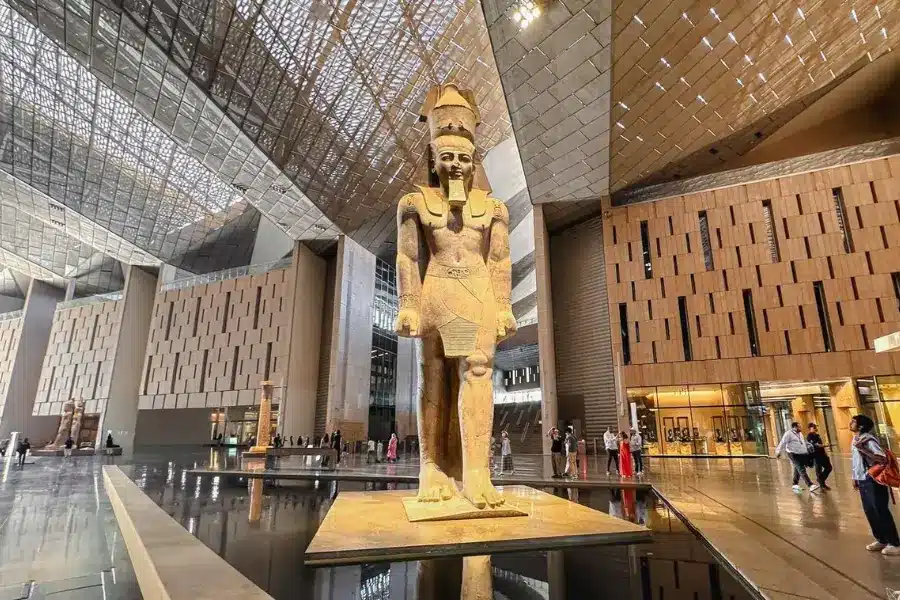
After the more intimate museum experience in Cairo, you can switch to something on a much larger scale at the Grand Egyptian Museum (GEM) in Giza. It’s modern, spacious, and located right next to the Giza Plateau, so it fits easily into a Cairo itinerary—often on the same day as the Pyramids.
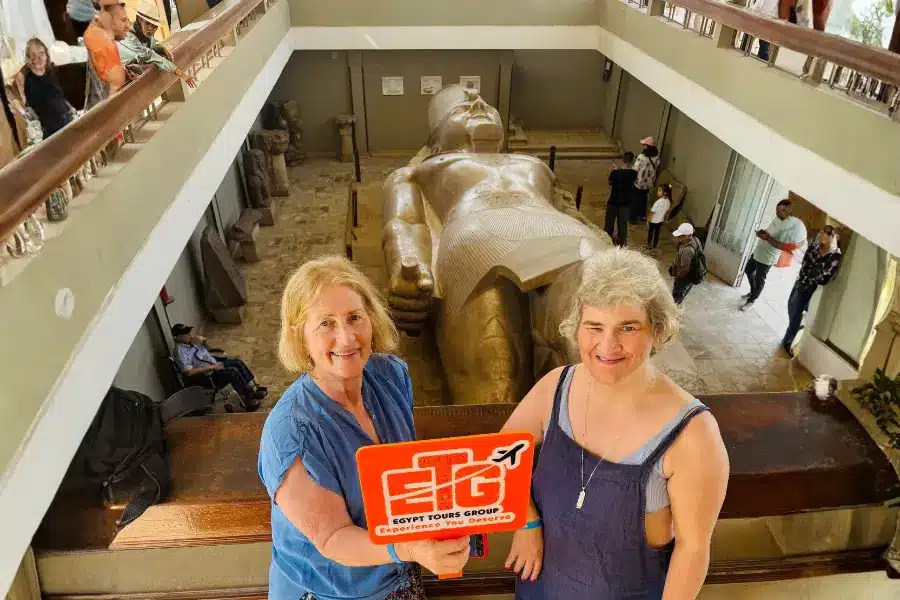
For Ramses II fans, the standout moment is the colossal statue of Ramesses II in the museum’s Grand Hall. Seeing it up close gives you a real sense of how Ramses wanted to be remembered: powerful, larger than life, and impossible to ignore. It’s a simple stop, but it’s one of those scenes that stays with you—and it connects beautifully with what you’ve just seen in London before you continue south to Luxor, Aswan, and Abu Simbel.
5. Ramses’ Family Story: Queens, Legacy, and Nefertari
Beyond the temples and colossal statues, Ramses II was also a deeply dynastic king, someone who shaped a royal family story that still echoes across Egypt’s monuments and tombs. He is often credited with fathering an extraordinary number of children, sometimes cited at around 160+, which helps explain why his legacy feels so widespread: it wasn’t only a long reign, it was a carefully built dynasty.
If the exhibition’s VR experience mentions Queen Nefertari, it’s because she represents the most personal, human side of Ramses II. She was his most famous wife, and her tomb in the Valley of the Queens is among the most celebrated royal tombs in Egypt for its artistry and atmosphere. The tomb was robbed in antiquity, but important finds were recovered after it was rediscovered—making it one of those places that feels both beautiful and unforgettable.
Some of Ramses II’s best-known children include Amun-her-khepeshef (often linked to Nefertari), Meritamen, Khaemweset, and Merneptah, who later became pharaoh. With this context, Egypt stops feeling like “a collection of sites” and starts to feel like a living narrative about legacy, succession, and identity.
If you’re the kind of traveler who likes meaning (not just photos), we can design a route that combines the headline Ramses sites Abu Simbel, Luxor, and Cairo with the strongest royal-family moments, so the trip feels complete, personal, and truly connected to the story you discovered in London.
Why a Nile Cruise Is the Best Way to Experience Ramses’ Egypt (Without Burning Out)
Here’s the honest part: Upper Egypt has a lot of magic, but it’s spread out. If you try to “do it all” by road with early starts every day, the trip can start feeling like logistics.
A Nile cruise solves that. You unpack once, the scenery becomes part of the experience, and you glide between the major temple regions in a way that feels natural and calm. For many travelers, especially couples, families, and first-timers, it’s the smartest way to turn a bucket list into a relaxing holiday.
Explore cruise options here
Ready to Book Options: Ramses Inspired Egypt Trips
If you’d rather start with a proven plan (and then tailor it), these options fit perfectly for UK/Europe/US travelers who want a smooth route with strong Ramses II highlights.
1. Classic Ramses Route in One Week (Cairo + Luxor + Aswan + Abu Simbel)
This is the most direct “Ramses lover” route—balanced, efficient, and packed with the sites people actually dream about after an exhibition visit.
Cairo, Luxor, Aswan & Abu Simbel Tour Package.
2. Nile Cruise-First Experience (Slow Travel + Big Temples)
If you want Egypt to feel like a journey—not a checklist—start with the cruise rhythm. It’s ideal if comfort matters, you love scenic travel, and you want history without rushing.
7 Nights Egypt Nile River Cruise
3. Full Egypt Holiday (History + Cruise + Red Sea + Alexandria)
This is for travelers who want the full picture: Cairo’s highlights, Upper Egypt with a Nile cruise, downtime by the Red Sea, and a cultural extension to Alexandria.
14 days Cairo, Hurghada, Nile Cruise & Alexandria
4. Want to browse more routes first?
Planning Tips That Make This Trip Feel Effortless
- Best overall season: For most travelers, the most comfortable weather is typically from October to April—especially if you plan full days outdoors.
- Don’t over-pack your days: The sites are powerful; leave room to enjoy them instead of racing through them.
- Private guide matters: Ramses II has layers—temples, symbolism, dynastic history. A good guide turns “beautiful stones” into a story you’ll remember.
- Mix big moments with calm moments: Cairo intensity + Luxor depth + Aswan calm is a great rhythm for first-timers.
The Exhibition Is the Preview. Egypt Is the Full-Scale Experience.
The London exhibition is an unforgettable preview—but Egypt is where Ramses II becomes real. The objects you saw behind glass suddenly make sense when you’re standing in front of colossal statues, walking through temples built to last forever, and following the Nile through the same landscapes that shaped his world.
If “Ramses and the Pharaoh’s Gold” sparked something in you, don’t let it stop at inspiration. Turn it into a journey—Cairo and Giza for the museum moments, Luxor for the depth, Abu Simbel for the awe, and a Nile cruise in between so the experience feels smooth, not rushed.
Ready to turn the London Ramses exhibition into a real Egypt journey? Choose your starting point below—either a ready-to-book tour package or a Nile cruise route we can tailor for you.
Is this trip suitable if I’m coming from the UK, Europe, or the US?
Yes. We regularly arrange private trips for travelers from the UK, Europe, and the US with airport pickups, clear pacing, and flexible hotel and cruise options.
Can I visit Abu Simbel without feeling rushed?
Absolutely. We can plan Abu Simbel as a comfortable day trip from Aswan or include it as part of a multi-day Upper Egypt route, depending on your schedule and travel pace.
Do I need a Nile cruise to follow Ramses II’s legacy?
No, but it often makes the experience easier and more relaxing. A cruise is the smoothest way to connect Luxor and Aswan while keeping the trip enjoyable.
What’s the best “Ramses-focused” itinerary length?
A well-paced plan is usually 8–12 days (Cairo + Luxor + Aswan + Abu Simbel, with an optional Nile cruise). If you have fewer days, we can prioritize the strongest highlights.
Can you tailor the trip around specific interests (family history, photography, temples, museums)?
Yes. Tell us what pulled you in temples, royal family stories, museums, photography, or a more relaxed pace—and we’ll build a private plan around it.