Things to Do in Alexandria, Egypt
Alexandria feels different from Egypt’s other major cities. Set along the Mediterranean, it brings together Greco-Roman archaeological sites, historic neighborhoods, museums, seafood, cafés, and long walks beside the sea.
If you are looking for the best things to do in Alexandria, Egypt, this guide covers the city’s main sights as well as local experiences, the best areas to explore, and practical ideas for spending one or two days in the city.
Known in Egypt as the Bride of the Mediterranean, Alexandria works just as well for travelers interested in ancient history as it does for anyone who wants a slower day by the coast.
Quick Answer – 10 Best Things to Do in Alexandria
If you have limited time, these are some of the best places and experiences to prioritize in Alexandria:
- Qaitbay Citadel
- Bibliotheca Alexandrina
- Catacombs of Kom El Shoqafa
- Graeco-Roman Museum
- Pompey’s Pillar & Serapeum
- Roman Amphitheater at Kom El-Dikka
- Montaza Palace Gardens
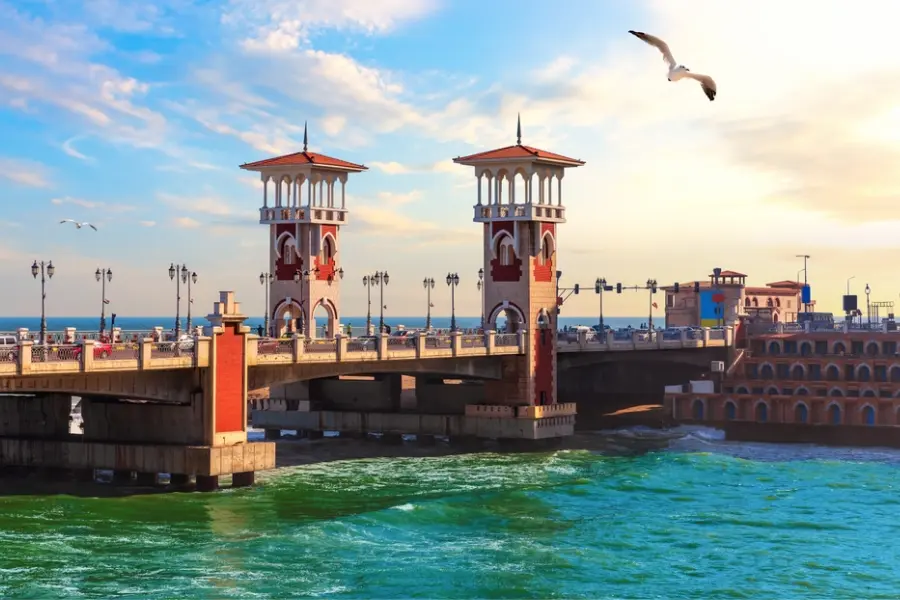
- Stanley Bridge & the Corniche
- Alexandria National Museum
- Seafood dinner in Anfushi or Bahary
Best Areas to Explore in Alexandria
Alexandria stretches along the Mediterranean coast, and its main sights are spread across several different areas. Knowing where each area is and what you can find there makes it easier to plan your sightseeing without spending too much time moving back and forth across the city.
| Area | What You’ll Find |
|---|---|
| Downtown & Eastern Harbor | A central area close to the Corniche, Eastern Harbor, traditional cafés, historic buildings, local markets, and the Bibliotheca Alexandrina. |
| Anfushi & Qaitbay | One of the most atmospheric parts of the old waterfront, with narrow streets, seafood restaurants, the harbor, and the Citadel of Qaitbay. |
| Stanley & Gleem | A popular seafront area for evening walks, cafés, Mediterranean views, and photography around Stanley Bridge. |
| Montaza | Located farther east from the historic center, Montaza is known for its gardens, open coastal views, and the former royal palace overlooking the Mediterranean. |
Best Things to Do in Alexandria: Top Attractions & Experiences
Alexandria’s main sights cover very different chapters of the city’s history, from Greco-Roman tombs and archaeological sites to royal palaces, museums, and the Mediterranean waterfront. You do not need to fit everything into one day, so choose the places that best match your interests and the time you have available.
Qaitbay Citadel
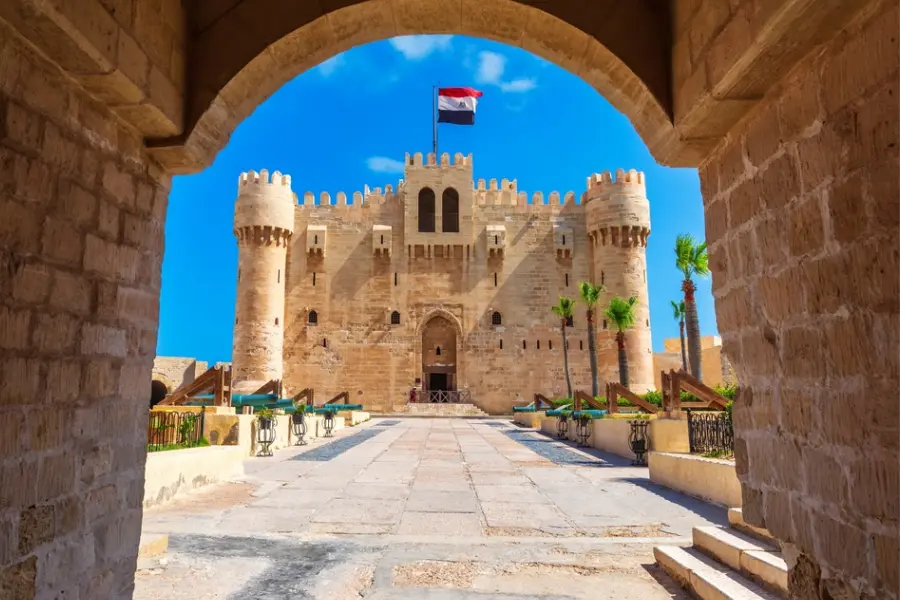
Why visit: Built in the late 15th century on the site of the ancient Lighthouse of Alexandria, Qaitbay Citadel combines Mamluk military architecture with wide views across the Mediterranean and the Eastern Harbor.
Time needed: Around 1–1.5 hours.
Best time: Morning or late afternoon, especially if you want time to walk around the harbor afterward.
Tip: Leave a little extra time to explore the waterfront around the citadel rather than visiting the fortress alone.
Bibliotheca Alexandrina
Why visit: The modern Bibliotheca Alexandrina is much more than a library. The complex includes museums, exhibitions, cultural spaces, and one of the city’s most recognizable examples of modern architecture.
Time needed: Around 1–2 hours, depending on which museums and exhibitions you want to see.
Best time: Earlier in the day if you plan to explore more than the main library space.
Tip: Check the current opening days and visiting hours before you go, especially if your Alexandria itinerary falls on a Friday.
Catacombs of Kom El Shoqafa
Why visit: This Roman-era burial complex is one of Alexandria’s most unusual archaeological sites, with underground chambers and decoration that reflects a mixture of Egyptian, Greek, and Roman influences.
Time needed: Around one hour.
Best time: Any time during opening hours. Because much of the visit is underground, it can also work well during the warmer part of the day.
Tip: Wear comfortable shoes for the stairs and underground passages, and check the current photography rules at the entrance.
Graeco-Roman Museum
Why visit: The Graeco-Roman Museum is one of the best places to understand Alexandria’s Greek and Roman past. It is the only museum in Egypt dedicated entirely to the country’s civilization during the Greek and Roman periods.
Time needed: Allow around 1–2 hours if you want to explore the collection without rushing.
Best time: Midday or afternoon works well, especially when you want a break from outdoor sightseeing.
Tip: If Greco-Roman history is one of your main reasons for visiting Alexandria, make this a priority rather than treating it as an optional museum stop.
Pompey’s Pillar & the Serapeum
Why visit: The towering column commonly known as Pompey’s Pillar is actually a Roman monument associated with Emperor Diocletian. It stands beside the remains of the Serapeum, once one of ancient Alexandria’s major temple complexes.
Time needed: Around 30–45 minutes.
Best time: Morning or late afternoon when the open archaeological site is more comfortable to explore.
Tip: It pairs easily with the nearby Catacombs of Kom El Shoqafa if you are planning an archaeology-focused half-day.
Roman Amphitheater at Kom El-Dikka
Why visit: Kom El-Dikka preserves much more than the well-known Roman theater, or odeon. The archaeological site also includes Roman baths, lecture halls, houses, and mosaics, giving a broader look at life in Alexandria during the Roman and Byzantine periods.
Time needed: Around one hour.
Best time: Morning or late afternoon.
Tip: Do not stop at the theater alone; take time to explore the surrounding remains, including the Villa of the Birds and the bath complex.
Montaza Palace Gardens
Why visit: The expansive gardens surrounding Montaza’s former royal palaces offer a change of pace from Alexandria’s archaeological sites, with greenery, coastal views, and traces of the city’s royal history.
Time needed: Around 1.5–2 hours.
Best time: Late afternoon, when the temperature is usually more comfortable for walking.
Tip: Montaza is farther east than most of Alexandria’s historic attractions, so allow enough travel time rather than trying to squeeze it into an already busy sightseeing day.
Stanley Bridge & the Corniche
Why visit: Not every stop in Alexandria needs to be a museum or archaeological site. Stanley and the Corniche are good places to slow down, walk beside the Mediterranean, stop for coffee, and see the city at a more relaxed pace.
Time needed: Around 30–60 minutes, or longer if you stop at a café.
Best time: Sunset and early evening.
Tip: This is an easy experience to add at the end of a sightseeing day rather than using valuable morning hours.
Alexandria National Museum
Why visit: This museum gives a broad overview of Egypt and Alexandria across different historical periods, with collections ranging from ancient artifacts to Islamic and modern-era material, as well as finds recovered from underwater excavations around Alexandria.
Time needed: Around 1–1.5 hours.
Best time: Midday or afternoon, especially if you want an indoor break between outdoor sites.
Tip: Choose this museum if you want a broad historical overview rather than focusing only on Alexandria’s Greek and Roman periods.
Royal Jewelry Museum
Why visit: Housed in a former royal palace, the museum displays jewelry and personal possessions from Egypt’s Muhammad Ali dynasty. The building itself is also part of the experience, with decorated ceilings, stained glass, mosaics, and richly finished interiors.
Time needed: Around 1–1.5 hours.
Best time: Midday or afternoon.
Tip: This is a particularly good choice if you are interested in royal history, decorative arts, and palace interiors rather than ancient archaeology.
Alexandria Itinerary – How to Spend 1 or 2 Days in Alexandria
You do not need to see every attraction to enjoy Alexandria. A good itinerary combines a few important historical sites with time around the Mediterranean waterfront, while two days give you more room for museums and areas farther from the historic center. For a broader introduction to the city, see our Alexandria city guide.
1 Day in Alexandria – A Practical First-Time Itinerary
Morning: Start with the Catacombs of Kom El Shoqafa, then continue to nearby Pompey’s Pillar and the Serapeum. Together, the two sites give you a good introduction to Alexandria’s Greco-Roman past without spending too much of the morning in transit.
Late Morning: Head toward the waterfront and visit the Bibliotheca Alexandrina. Allow extra time if you want to explore any of the museums or exhibitions inside the complex.
Lunch: Stop for seafood or another local meal around the Eastern Harbor or Anfushi before continuing toward Qaitbay.
Afternoon: Visit the Citadel of Qaitbay and spend some time walking around the harbor and nearby streets.
Evening: End the day with a walk along the Corniche or a café stop by the Mediterranean. If museums are more important to you than the Bibliotheca, you can replace that stop with the Graeco-Roman Museum.
2 Days in Alexandria – Add Museums, Kom El-Dikka & the Eastern Corniche
Day 1 – Archaeology & the Historic Waterfront
Morning: Visit the Catacombs of Kom El Shoqafa followed by Pompey’s Pillar and the Serapeum.
Late Morning: Continue to the Bibliotheca Alexandrina and explore the parts of the complex that interest you most.
Lunch: Have lunch near the Eastern Harbor or Anfushi, where seafood is an easy fit with a day by the coast.
Afternoon: Explore Qaitbay Citadel, then walk around the harbor and the surrounding waterfront.
Evening: Stay around the Corniche for coffee, dinner, or a relaxed walk beside the Mediterranean.
Day 2 – Museums, Roman Alexandria & the Seafront
Morning: Start at the Graeco-Roman Museum, especially if you want a deeper understanding of Alexandria during the Greek and Roman periods.
Late Morning: Continue to Kom El-Dikka to see the Roman theater, baths, lecture halls, and other remains of the ancient city.
Afternoon: Choose another stop based on your interests. The Alexandria National Museum is useful for a broad historical overview, while the Royal Jewelry Museum focuses more on Egypt’s former royal family and decorative arts.
Late Afternoon: If you still have time and want a change from museums and archaeological sites, continue east toward Montaza Palace Gardens.
Evening: Finish around Stanley Bridge or another stretch of the Corniche for sea views, dinner, or a café.
Planning tip: Alexandria traffic can make an overloaded itinerary frustrating. If you prefer a slower pace, choose fewer museums or skip Montaza rather than trying to fit every attraction into two days.
Best Day Trips from Alexandria
If you are spending more than a day or two in Alexandria, several places outside the city are worth considering. El Alamein is the strongest choice for World War II history, Rosetta offers a different look at the Nile Delta and Ottoman-era Egypt, while the North Coast works well for a seasonal beach day.
El Alamein – World War II Museum & Memorials
Why go: El Alamein was the site of two major battles during World War II and remains one of the most important places in Egypt for understanding the North African campaign.
What to see: Visit the El Alamein War Museum and, depending on your interests and available time, the Commonwealth War Cemetery and the German and Italian memorials.
Good to know: El Alamein is west of Alexandria along the Mediterranean coast and works well as a history-focused day trip. New Alamein and the surrounding coastline can also be combined with the visit if you have more time.
Rosetta (Rashid) – Ottoman Houses & Nile Delta History
Why go: Rosetta, known locally as Rashid, is a historic Nile Delta city east of Alexandria and the area where the Rosetta Stone was discovered in 1799.
What to see: Explore the city’s distinctive Ottoman-era houses, traditional streets, and historic architecture, then visit the Rashid National Museum for a closer look at the city’s history and heritage.
Good to know: Rosetta is roughly 60–70 km from Alexandria by road. Travel time can vary with traffic, so allow enough time for both the journey and walking through the historic center.
North Coast & New Alamein – Summer Beach Day
Why go: If you are visiting in summer and want a break from museums and archaeological sites, the Mediterranean coast west of Alexandria offers sandy beaches, resorts, restaurants, and beach activities around areas such as New Alamein and the wider North Coast.
Best time: The North Coast is primarily a summer destination, with June through September being the main season and July and August usually the busiest months.
Good to know: Many North Coast beaches are private or attached to resorts, hotels, and residential compounds, so check beach access before making the trip rather than assuming you can enter any stretch of coastline.
Where to Stay in Alexandria – Best Areas for Visitors
The best area to stay in Alexandria depends on how you plan to spend your time. Staying near Downtown and the Corniche makes sightseeing easier, while areas farther east offer more sea views and a quieter atmosphere but usually require more travel to the historic center.
Downtown & the Corniche
Best for: First-time visitors and travelers who want easy access to Alexandria’s main historic sights, cafés, restaurants, the Eastern Harbor, and the Bibliotheca Alexandrina.
Why stay here: You are closer to many of the attractions included in a one-day Alexandria itinerary, which can reduce the amount of time spent crossing the city.
Keep in mind: Downtown is busy and lively, so it may not suit travelers looking for a quiet seaside stay.
Stanley, Gleem & San Stefano
Best for: Couples and travelers who prefer sea views, Corniche walks, cafés, restaurants, and a livelier evening atmosphere.
Why stay here: These neighborhoods offer a more coastal feel while still keeping you within reasonable reach of central Alexandria.
Keep in mind: Most of Alexandria’s major archaeological sites are farther west, so sightseeing days may involve more driving.
Montaza
Best for: Travelers who prefer a quieter stay, more greenery, and easy access to the eastern side of Alexandria.
Why stay here: The area around Montaza offers a more relaxed setting away from the busiest parts of Downtown and is convenient if the gardens and eastern coastline are part of your plans.
Keep in mind: Montaza is farther from Qaitbay, the Catacombs, Pompey’s Pillar, and many of the city’s other major historical attractions.
For most first-time visitors: Downtown or the central Corniche is usually the most practical base if sightseeing is your main priority.
Getting Around Alexandria – Transportation Tips
Alexandria stretches for many kilometers along the Mediterranean coast, and its main attractions are spread across different parts of the city. Walking works well within individual areas, but you will usually need a car, taxi, or ride-hailing service when moving between major sights.
- Uber: Uber operates in Alexandria and is one of the simplest options for visitors who prefer to request a ride through an app and see the estimated fare before traveling.
- Taxis: Street taxis are widely available. Confirm the fare or how it will be calculated before starting the journey, especially if you are unfamiliar with the route.
- Tram: Alexandria’s tram system is an inexpensive way to experience local transport and can be useful for some journeys, although it is not always the quickest option when you have a full sightseeing schedule.
- Walking: Walking is best around areas such as the Eastern Harbor, Anfushi, Qaitbay, Stanley, and individual stretches of the Corniche. Many of Alexandria’s major attractions are too far apart to cover comfortably on foot in one day.
- Private transfer or guided tour: If you have only one day in Alexandria, arranging transportation between the main sites can save time and make it easier to follow a planned route.
Planning tip: Traffic can add time to journeys across the city, so group nearby attractions together rather than moving repeatedly between eastern and western Alexandria.
Best Time to Visit Alexandria, Egypt
Alexandria can be visited throughout the year, but the experience changes with the season. Its Mediterranean location gives the city milder temperatures than many destinations farther south in Egypt, although summer is more humid and the coastline becomes much busier.
- Spring (March to May): A comfortable time for sightseeing, museum visits, Corniche walks, and outdoor archaeological sites before the busiest summer period.
- Summer (June to August): The main season for beaches and coastal activities. Alexandria is cooler than much of inland Egypt, but summer can be humid and the city becomes especially busy during July and August.
- Autumn (September to November): Another good period for sightseeing, with fewer peak-summer crowds and generally comfortable conditions for walking around the city.
- Winter (December to February): Temperatures are cooler and Alexandria receives more winter rain than Cairo or Upper Egypt. It can still be a good season for museums, archaeological sites, and city sightseeing, but bring a light jacket and be prepared for occasional wet or windy weather.
For most sightseeing-focused trips: Spring and autumn offer a good balance of comfortable weather and manageable crowds, while summer is better suited to travelers who also want to spend time by the Mediterranean.
Things to Do in Alexandria, Egypt at Night
Alexandria becomes more relaxed in the evening, when the heat eases and the Corniche, cafés, and restaurants become busier. You do not need a packed nightlife plan to enjoy the city after sunset; some of the best evening experiences are simple and local.
Walk Along the Corniche
Take an evening walk beside the Mediterranean around the Eastern Harbor, Stanley, or another stretch of the Corniche. It is an easy way to enjoy Alexandria away from the daytime sightseeing schedule.
Have a Seafood Dinner
Seafood is one of Alexandria’s best-known local dining experiences. Areas around Bahary, Anfushi, and the waterfront have plenty of fish and seafood restaurants, making dinner a natural way to end a day of sightseeing.
Stop at a Seafront Café
Alexandria has a long café culture, and an evening coffee or tea with a sea view can be more memorable than trying to fit another attraction into the day.
See Stanley Bridge After Sunset
Stanley is especially pleasant around sunset and early evening, when you can combine views of the bridge with a Corniche walk, dinner, or a nearby café stop.
Tip: Opening hours vary between restaurants, cafés, museums, and other venues, so check current hours if you are planning a specific evening stop.
Practical Travel Tips for Visiting Alexandria
- Start sightseeing early: Beginning earlier gives you more time for archaeological sites and museums before moving toward the waterfront later in the day.
- Group nearby attractions together: Alexandria stretches along the coast, so planning sites by area can save a surprising amount of travel time. The Catacombs and Pompey’s Pillar, for example, work well in the same part of your itinerary.
- Check opening days and hours: Museum and attraction schedules can change, and some places have weekly closing days. Check current information before building your day around a specific site.
- Wear comfortable shoes: Archaeological sites, museum visits, historic streets, and Corniche walks can add up to a lot of time on your feet.
- Carry some small cash: Cards are useful in many places, but cash can still be convenient for small cafés, local purchases, tips, and some day-to-day expenses.
- Check photography rules: Rules vary between museums and archaeological sites, so look for signs or ask staff before taking photos, especially indoors.
- Save the Corniche for later in the day: Qaitbay, Stanley, and other waterfront areas are easy to combine with an evening walk, café stop, or dinner after your main sightseeing is finished.
- Bring an extra layer in cooler months: Winter evenings can feel cool and windy by the Mediterranean, so a light jacket is useful from late autumn through early spring.
The easiest way to enjoy Alexandria is to avoid overloading your schedule. A few well-grouped sights, some time by the sea, and room for a meal or coffee usually make for a better day than trying to cross the city repeatedly.
Is Alexandria Worth Visiting?
Yes, especially if you want to see a different side of Egypt. Alexandria combines Greco-Roman history, museums, old neighborhoods, seafood, cafés, and Mediterranean views in a city that feels very different from Cairo, Luxor, or Aswan.
One day is enough to see several of the main attractions, but two days gives you more time for museums, archaeological sites, the Corniche, and areas farther east such as Montaza.
The best way to experience Alexandria is not to rush through every landmark. Choose the places that interest you most, group nearby sights together, and leave some time to enjoy the waterfront and the city itself.
Plan Your Visit to Alexandria
If you are staying in Cairo and want to explore Alexandria with private transportation and a guide, you can visit the city on our private Alexandria day tour. If Alexandria is part of a longer trip around Egypt, we can also build it into a tailor-made itinerary based on your dates and interests.