
Al Muizz Street in Cairo – Egypt’s Islamic Heritage
Al Muizz Street in Cairo: Egypt’s Islamic Heritage & Visitor Guide
Al Muizz Street is a historic route through Islamic Cairo, extending from Bab al-Futuh in the north to Bab Zuwayla in the south. Often written as Al Moez Street, it passes mosques, historic houses, medieval gates, and other monuments that reflect Cairo’s development from the Fatimid period through later Islamic dynasties.
You can walk along the street, explore selected monuments, and combine your visit with nearby Khan El Khalili. Allow around 45 to 60 minutes for a short walk, or approximately 3 to 4 hours if you plan to enter selected monuments. Allow extra time if you also want to explore Khan El Khalili. Before visiting, check current ticket arrangements and opening hours, as access to individual monuments may differ from access to the surrounding streets.
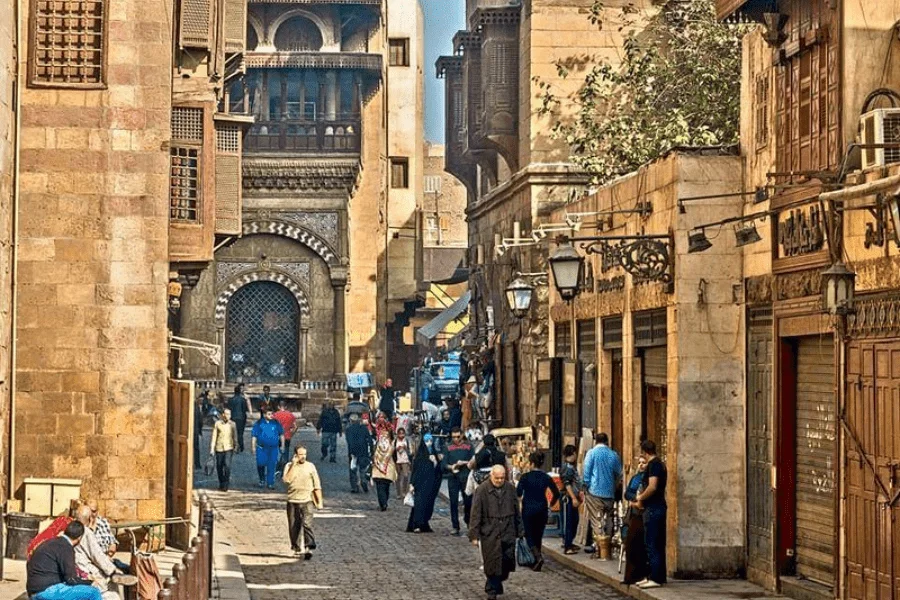
El Muizz Street. Egypt Tours Group.
Al Muizz Street at a Glance
Al Muizz Street is a historic walking route in Islamic Cairo, with medieval gates, mosques, historic houses, and markets nearby. You can explore the street independently or visit selected monuments with a guide.
| Visitor information | Details |
|---|---|
Location | Historic Cairo, Cairo, Egypt |
Northern entrance | Bab al-Futuh |
Southern entrance | Bab Zuwayla |
Main sights | Al-Aqmar Mosque, Qalawun Complex, Sultan al-Ghuri Complex, and historic city gates |
Approximate visit duration | 1 to 2 hours for a short walk; around half a day if entering several monuments |
Ticket information | The official area ticket covers selected monuments. Some attractions require separate tickets. |
Official opening hours | 9:00 AM to 5:00 PM |
Best time to visit | Morning for monument visits, or later in the day for a walk before the listed closing time |
For foreign visitors, the official area ticket is currently EGP 220 for adults and EGP 110 for students. It does not include Wekalet Bazaraa or Bayt Al-Suhaymi, which require separate admission.
Prices and opening hours can change. Check the latest official information before your visit.
Al Muizz Street Location & Route
The Al Muizz Street location is in Historic Cairo, in the heart of the city’s historic Islamic district. The street runs between two important gates in Cairo’s old city walls: Bab al-Futuh at the northern end and Bab Zuwayla at the southern end. Along the route, you can explore historic mosques, medieval gates, traditional houses, and markets.
Bab al-Futuh marks the northern end of the street, making it a useful starting point if you want to walk south through the historic district. At the opposite end, Bab Zuwayla provides a natural finish to the route, with the Mosque of Sultan al-Mu’ayyad Shaykh standing beside the gate.
Khan El Khalili is a nearby historic market district, so you can combine it with Al Muizz Street during the same outing. Depending on your plans, you can start near Bab al-Futuh, begin around the Al-Azhar area, or approach the street from the southern end near Bab Zuwayla.
Before setting out, check the route on a current map and choose the entrance that best matches the monuments you want to visit. The area has several historic lanes and nearby attractions, so planning your starting point can help you avoid unnecessary backtracking.
How to Get to Al Muizz Street
You can reach Al Muizz Street by taxi or ride-hailing service from other parts of Cairo. Tell the driver whether you want to start at Bab al-Futuh, near the Al-Azhar area, or at Bab Zuwayla, as these are different points along the historic route.
Where to Start Your Walk
- Bab al-Futuh: A useful starting point if you want to explore the northern monuments and continue south.
- Al-Azhar area: Convenient if you plan to combine the walk with Khan El Khalili.
- Bab Zuwayla: Suitable if you want to begin at the southern end and walk in the opposite direction.
If you are travelling from central Cairo, check the route and traffic before setting out. For a visit combining Al Muizz Street and Khan El Khalili, choose a drop-off point that allows you to explore both areas on foot.
Getting There by Metro, Taxi or Ride-Hailing
By metro: Bab El Shaaria is a metro station near the northern side of Islamic Cairo and may be useful if you are heading toward Bab al-Futuh. Check the current metro map and walking route before travelling. Depending on your exact destination, you may prefer a taxi or ride-hailing service for the final part of the journey.
By taxi or ride-hailing: Ask your driver to take you to Bab al-Futuh, Bab Zuwayla, or another agreed starting point near the street. Naming the entrance is more helpful than simply asking for Al Muizz Street, especially if you want to begin at a particular end.
From central Cairo: A taxi or ride-hailing service is often the simplest option if you want to reach a specific entrance without navigating the surrounding streets on foot. Travel time depends on your starting point and traffic, so check your route before leaving.
If you are visiting Al Muizz Street with Khan El Khalili, choose a drop-off point that makes it easy to explore both areas on foot. You can then arrange your return journey from whichever end of the route you finish at.
Who Was Al-Muizz li-Din Allah? The Founding of Cairo
Al-Muizz li-Din Allah was the fourth Fatimid caliph and the ruler under whom the Fatimid state extended its rule to Egypt in 969 AD. He sent his commander, Jawhar al-Siqilli, to conquer Egypt and establish a new capital, which became Cairo. Al-Muizz arrived in Egypt later, in 973 AD, and made the new city the center of Fatimid rule.
The name of Al Muizz Street honors this caliph and his connection to the foundation of Fatimid Cairo. The street is named after this Fatimid caliph, while its surviving monuments reflect the many periods of Cairo’s development after the city’s foundation.
As Cairo developed, the route became an important axis through the historic city. Its mosques, madrasas, gates, palaces, and traditional houses reflect successive periods of Islamic history, from the Fatimids to the Mamluks and later dynasties. Today, walking along the street offers a close look at how Cairo grew around its religious, commercial, and civic landmarks.
Walking Al Muizz Street: Monument by Monument
The route passes through monuments from the Fatimid and Mamluk periods, with later buildings reflecting Cairo’s continued development. These are some of the main stops along the walk, arranged approximately from north to south.
Northern Section: Bab al-Futuh to Al-Azhar Street
1. Bab al-Futuh
Bab al-Futuh is one of the historic gates built during Cairo’s Fatimid period. Completed in 1087 under the vizier Badr al-Jamali, it features massive stone towers and a recessed entrance that reflect the city’s medieval defensive architecture.
2. Mosque of al-Hakim bi-Amr Allah
Construction of this mosque began in 990 and was completed in 1013. Its large courtyard, monumental entrance, and distinctive minarets make it one of the major Fatimid landmarks near Bab al-Futuh.
3. Al-Aqmar Mosque
Built in 1125, Al-Aqmar Mosque is known for its detailed stone façade and geometric decoration. Its street-facing design makes it an important example of Fatimid architecture in Cairo.
Khan El Khalili is a historic market district close to Al Muizz Street. Its lanes contain shops selling souvenirs, jewelry, lanterns, and traditional handicrafts. You can include it before or after the monument walk.
Southern Section: Al-Azhar Street to Bab Zuwayla
Established in 1283–1284 under Sultan al-Mansur Qalawun, this complex brought together a religious school, mausoleum, and hospital. Its scale and decorative details reflect the architectural ambitions of the Mamluk period.
6. Sultan Barquq Mosque and Madrasa
Built between 1384 and 1386, this complex served as a place of worship and religious education. It is one of the prominent Mamluk monuments along the historic route.
7. Sultan al-Ghuri Complex
Dating to 1503–1504, the complex includes buildings on both sides of the street. Its surviving architectural elements show the decorative style of the late Mamluk period.
8. Bab Zuwayla
Bab Zuwayla is the southern gate of Fatimid Cairo, built in 1092. The twin minarets above it were added to the nearby Mosque of Sultan al-Mu’ayyad Shaykh in the early 15th century. The gate remains one of the most recognizable landmarks at the southern end of the route.
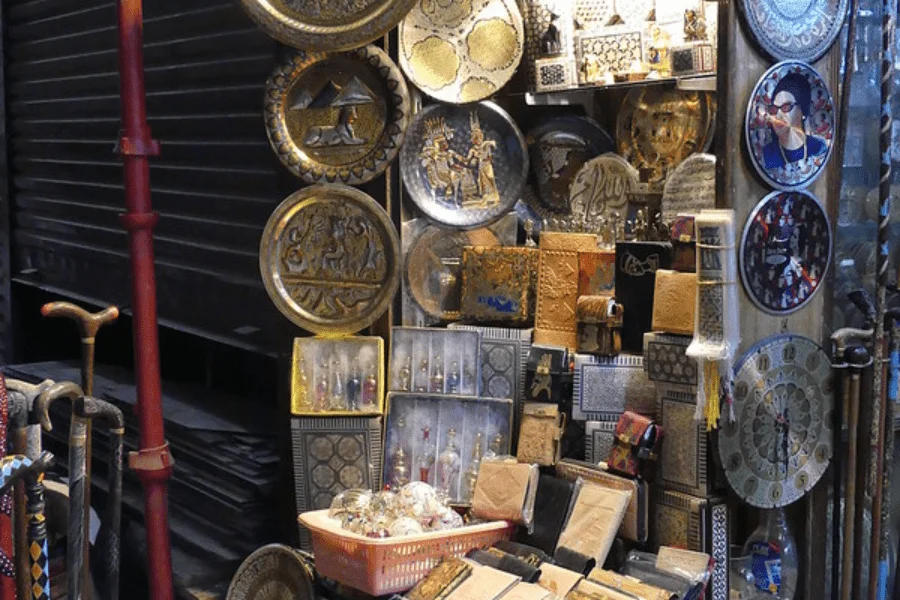
El Muizz Street. Egypt Tours Group.
Suggested Walking Routes
Short Walk: 45 to 60 Minutes
Walk from Bab al-Futuh toward the central section of Al Muizz Street, taking time to see the historic façades and main landmarks from outside. This option suits visitors who want a brief introduction without entering several monuments.
Half-Day Visit: 3 to 4 Hours
Start at Bab al-Futuh and continue south, stopping at selected mosques and Mamluk complexes. You can include a visit to Bayt Al-Suhaymi if you have extra time, as it lies on a nearby lane rather than directly on the main route.
Al Muizz Street and Khan El Khalili
Combine the monument walk with time in Khan El Khalili to browse its shops and traditional crafts. Allow around 3 to 4 hours for both areas, depending on how many monuments you enter and how long you spend shopping.
Al Muizz Street at Night
Al Muizz Street offers a different atmosphere in the evening, when the historic façades and surrounding streets can be enjoyed without the same focus on entering monuments. Nearby cafés, shops, and the Khan El Khalili area may extend your visit into the evening, depending on their individual opening times.
If you want to explore the interiors of historic mosques and other archaeological sites, plan that part of your visit during their official opening hours. The street, nearby businesses, and individual monuments do not necessarily follow the same schedule, so check the hours of any specific site you want to enter.
El Muizz Street. Egypt Tours Group.
Al Muizz Street Tickets and Opening Hours
Al Muizz Street is a public historic route, but entering the archaeological monuments along it may require a ticket. The area ticket covers selected historic sites, while some nearby attractions have separate admission fees.
Al Muizz Street Area Ticket
The official ticket prices are:
| Visitor Category | Ticket Price |
|---|---|
Foreign adult | EGP 220 |
Foreign Student | EGP 110 |
Egyptian adult | EGP 20 |
Egyptian Student | EGP 10 |
The area ticket covers selected monuments along the route, including the Qalawun Complex and Sultan Barquq Mosque. It does not cover every nearby attraction. Bayt Al-Suhaymi and the Sultan al-Ghuri Complex require separate tickets, so check the admission arrangements for each site you plan to enter.
Opening Hours
The listed opening hours for the archaeological sites in the area are generally:
- Regular hours: 9:00 AM to 5:00 PM.
- During Ramadan: 9:00 AM to 4:00 PM.
- Last entry: Usually one hour before closing.
Opening hours may vary by monument or change during public holidays and special occasions. Confirm the current schedule before your visit, especially if you plan to enter a specific building.
Separate Tickets for Nearby Monuments
Bayt Al-Suhaymi, the Sultan al-Ghuri Complex, and Bab Zuwayla have separate admission arrangements. If any of these are priorities for your visit, check their current ticket prices and opening hours individually rather than assuming they are included in the Al Muizz Street area ticket.
Tips for Visiting Al Muizz Street
- Wear comfortable shoes: The route involves walking over historic streets and between monuments.
- Dress respectfully: Choose clothing suitable for entering mosques and religious sites.
- Check monument access: Some buildings may have different opening hours or separate admission tickets.
- Plan your stops: Choose the monuments you most want to enter before setting out, especially if you have only a few hours.
- Keep time for nearby areas: If you want to visit Khan El Khalili or Bayt Al-Suhaymi as well, include them in your route rather than treating them as stops directly on the main street.
- Ask before photographing interiors: Photography rules can differ between sites, particularly inside religious buildings.
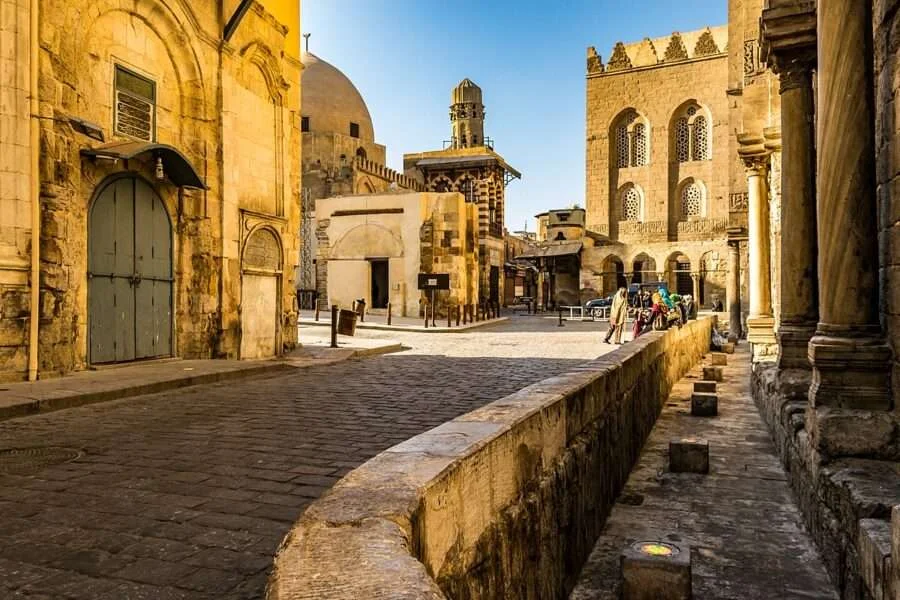
El Muizz Street
Al Muizz Street Tour Itineraries: Fitting It Into Your Cairo Trip
You can explore Al Muizz Street independently or include it in a guided Cairo itinerary. A private tour can help you understand the history of the monuments and combine the street with other landmarks without spending time planning each stop yourself.
Islamic Cairo Day Tour
The Islamic Cairo Day Tour focuses on the city’s Islamic heritage. The itinerary includes Al Muizz Street, the Citadel, Sultan Hassan Mosque, Al Rifa’i Mosque, Ibn Tulun Mosque, and Gayer-Anderson Museum. It also includes time at Khan El Khalili Bazaar, making it a suitable option if you want to explore several historic areas in one day.
Cairo Day Tour from Hurghada by Plane
If you are staying in Hurghada, the Cairo Day Tour from Hurghada by Plane lets you visit Cairo’s major attractions on a day trip. The itinerary includes the Giza Pyramids, the Egyptian Museum, Al Muizz Street, and Khan El Khalili Bazaar. Since the day covers several major sights, your time at each stop will be limited compared with a longer stay in Cairo.
10 Days Cairo, Abu Simbel, Aswan, Luxor & Hurghada Tour
For a longer trip around Egypt, the 10 Days Cairo, Abu Simbel, Aswan, Luxor & Hurghada Tour includes Al Muizz Street during the Cairo sightseeing portion. The itinerary also combines it with Old Cairo, El Balad, and Khan El Khalili Bazaar, alongside visits to major attractions in Cairo, Aswan, Abu Simbel, Luxor, and Hurghada.
Choose the itinerary that matches the time you have available and the other places you want to visit. If you prefer to explore the monuments along Al Muizz Street at a slower pace, consider allowing more time for Historic Cairo rather than fitting it into a packed sightseeing day.
Plan Your Visit to Al Muizz Street
Al Muizz Street offers a chance to explore Cairo’s Fatimid and Mamluk heritage along one historic route. Whether you focus on the main monuments or combine your walk with Khan El Khalili, choosing your stops in advance will help you make the most of your visit.
For more than 20 years, Egypt Tours Group has helped travelers explore Egypt with licensed Egyptologists, carefully arranged accommodation, professional guides, and private transfers. A guided tour can also help you combine Al Muizz Street with other highlights of Historic Cairo.
FAQs About Al Muizz Street
Where is Al Muizz Street located?
Al Muizz Street is in Historic Cairo, Egypt, within the city’s historic Islamic district. It runs from Bab al-Futuh in the north to Bab Zuwayla in the south, passing mosques, historic houses, and other monuments. Khan El Khalili is nearby, so you can visit both areas on the same outing.
What Does Al-Muizz Mean?
Al-Muizz Street is named after Al-Muizz li-Din Allah, the fourth Fatimid caliph. His rule was closely connected with the founding of Fatimid Cairo in the 10th century.
Do I need a ticket to walk along Al Muizz Street?
You generally do not need an archaeological ticket simply to walk through accessible parts of the historic district. However, entering selected monuments requires admission. The official area ticket covers certain sites, while places such as Bayt Al-Suhaymi require a separate ticket. Check current access arrangements before visiting.
How long should I spend on Al Muizz Street?
Allow around 45 to 60 minutes for a short walk and a look at the main historic facades. If you want to enter several monuments, plan for approximately three to four hours, depending on opening times and how long you spend at each stop. You may need longer if you also want to explore Khan El Khalili.
Can I visit Al Muizz Street at night?
You can enjoy an evening walk through accessible parts of the historic district, but do not assume that the monuments will be open. Many archaeological sites close in the late afternoon, and individual businesses have their own hours. Visit earlier in the day if you want to explore monument interiors.
Is Al Muizz Street safe for tourists?
Al Muizz Street is a well-known visitor area in Historic Cairo, but it is sensible to take the usual precautions. Keep your belongings secure, watch for uneven surfaces and busy pedestrian areas, and plan your transport in advance if you are unfamiliar with the neighborhood.
Is Al Muizz Street the same as Khan El Khalili?
No. Al Muizz Street is a historic route lined with mosques, traditional houses, and architectural monuments. Khan El Khalili is a nearby market district known for its shops and narrow lanes. The two areas are close enough to combine in one visit.
Is Al Muizz Street the most famous street in Cairo?
Al Muizz Street is one of Cairo’s best-known historic streets, especially for its concentration of Islamic architecture and medieval monuments. Whether it is the city’s most famous street depends on your interests, but it is a major highlight for visitors exploring Islamic Cairo.
Do I need a guide to visit Al Muizz Street? Do I need a guide to visit Al Muizz Street?
No. You can walk along the street and admire its architecture independently. A guide can be helpful if you want to learn more about the history of individual monuments, understand the differences between architectural periods, or combine the street with other historic sites in a planned itinerary.
What should I wear on Al Muizz Street?
Wear comfortable walking shoes and clothing suitable for visiting historic buildings and religious sites. Modest clothing is a practical choice, particularly if you plan to enter mosques. Follow any specific entry requirements posted at individual sites. In hot weather, carry water and use sun protection.