
Coptic Christmas in Egypt: Traditions, the Christmas Liturgy & How to Experience It
Coptic Christmas in Egypt falls on January 7 in the current calendar alignment. The Coptic Orthodox Church uses its own liturgical calendar, aligned with the Julian tradition; the current difference from the Gregorian calendar is 13 days. January 7 is a public holiday in Egypt. The Nativity is observed on 29 Kiahk in the Coptic calendar, with calendar adjustments in some years.
December 25 is widely recognized and celebrated in Egypt, but it is not a national public holiday. January 7 is the official Christmas holiday.
Visitors may be able to attend the Christmas Eve liturgy on the night of January 6, subject to the chosen church’s programme and entry arrangements. This guide explains where to go, what to expect at the Christmas Eve liturgy, what to wear, and when to arrive. For wider holiday dates and general travel planning, see our guide to Christmas in Egypt.
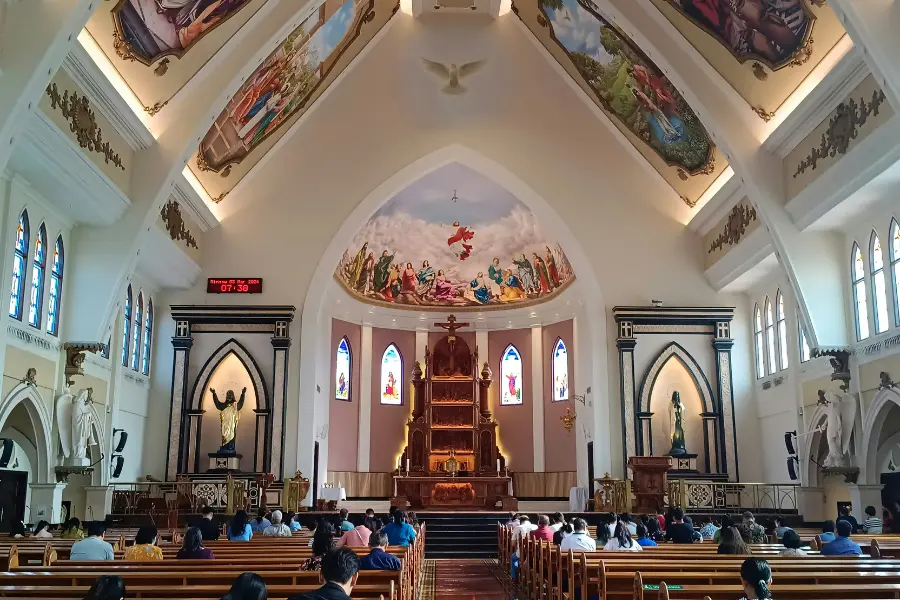
Illustrative church interior with pews and a painted ceiling.
Key Takeaways
- Coptic Christmas in Egypt is celebrated on January 7 in the current calendar alignment.
- The Coptic Orthodox Church uses the Coptic liturgical calendar, aligned with the Julian tradition; the current difference from the Gregorian calendar is 13 days.
- January 7 was designated an official public holiday in Egypt in December 2002; this does not mean every business or service closes.
- Celebrations include faith, fasting, prayer, and family unity.
- Both Christians and Muslims share greetings and joy during the festive Christmas season.
- Coptic Christmas 2027 falls on Thursday, 7 January.
- Visitors should confirm the Christmas Eve liturgy programme, capacity and entry arrangements with the chosen church before attending on 6 January.
- Cairo, Alexandria and Upper Egypt offer church and Christian heritage options around 6–7 January; confirm each site’s visiting and service arrangements.
Why Is Coptic Christmas Celebrated on January 7?
People often ask why Egypt marks the Nativity on January 7 instead of December 25. The Coptic Orthodox Church uses the Coptic liturgical calendar, a calendar of 13 months aligned with the Julian tradition. It is distinct from the Julian calendar. The Nativity is observed on 29 Kiahk, with calendar adjustments in some years; January 7 is the familiar Gregorian date in the current alignment.
The difference isn’t random; it comes from how calendars calculate the solar year. The Julian calendar is slightly longer than the Gregorian calendar that most Western churches use today. Over centuries, that gap became 13 days apart.
Here’s a quick way to understand it:
- The Gregorian calendar was adopted in 1582 by Western churches.
- The current 13-day difference explains why Coptic Orthodox Christians in Egypt celebrate Christmas on January 7 instead of December 25.
- For Egyptian Christians, this isn’t just a date, it’s a symbol of keeping their ancient faith and tradition alive.
The Coptic Orthodox Church’s explanation of its rites gives the liturgical context for the Nativity date and fast.
The 43-Day Fasting Period Before Christmas
In the weeks leading up to Coptic Christmas, many believers take part in a long spiritual practice called the Coptic Advent Fast in Egypt. The Nativity Fast lasts 43 days. For the 2026–2027 season, it begins on November 25 and continues through January 6; the Coptic calendar includes adjustments in some years. During this sacred time, fasting commonly excludes meat, milk, and eggs, with plant-based meals forming much of the diet. Fish is permitted on some days under church fasting rules, with exceptions; individual observance follows church guidance. The purpose is not just physical restraint but also spiritual renewal and self-discipline before celebrating the birth of Christ.
Food has a comforting but central role during the period of Egyptian Christmas fasting, as it brings families together through traditional dishes passed down for generations:
- Lentil soup – a warm, nourishing favorite throughout the fast.
- Beans & falafel – a flavorful and protein-rich meal.
- Bread & tahini – a light, simple, and satisfying dish.
- Vegetables & fruits – fresh and wholesome choices that support the spirit of cleansing.
The Advent Fast in Egypt symbolizes humility and spiritual preparation for the birth of Jesus Christ.
The Coptic Diocese of the Southern United States’ fasting lecture explains the fish allowances and exceptions.
The Holy Christmas Eve Mass (January 6 Night)
On the evening of January 6, Coptic Orthodox Christians go to church to attend the Coptic Christmas Mass in Egypt. It is one of the most special nights of the year for Coptic Christians. Families put on clean and simple new clothes and gather together in peace. The Christmas Eve church in Egypt is full of candles, soft lights, and the smell of incense. People sing hymns in both Coptic and Arabic, and the sound fills the church with a warm and peaceful feeling.
The Christmas Eve liturgy takes place on the evening of January 6 and may continue into January 7. Start and finish times vary by church and programme; midnight is not a universal start or end time. Smiles, greetings, and joy fill the place as people say “Merry Christmas” to each other.
At Saint Mark’s Cathedral in Abbassia, one of the major Coptic churches in Cairo, the celebration is also significant. Confirm the chosen church’s programme and entry arrangements for your visit. The location and access arrangements for the papal liturgy should be checked against the announcement for that year, rather than assumed from a previous celebration.
Attending the Christmas Eve Mass as a Visitor
If you are visiting Egypt during Coptic Christmas, ask the chosen church whether visitors can attend its Christmas Eve liturgy. Entry may depend on the service, capacity and security arrangements; do not assume that an invitation or other entry requirements are unnecessary. The Mass is a meaningful cultural and religious experience, and visitors who are admitted can observe it respectfully.
Where to Go
Several churches may be worth asking about, each with a different character:
- The Hanging Church is a historic Coptic church in Old Cairo. Confirm its Christmas Eve programme and visitor arrangements separately from daytime heritage visiting hours.
- Saint Mark’s Cathedral in Abbassia is the historic headquarters of the Coptic Pope and an important church in Cairo. Check the programme and entry arrangements for the particular service.
- The Cathedral of the Nativity of Christ in the New Administrative Capital has hosted the papal Christmas Eve liturgy. The venue and access arrangements for your travel year must be confirmed from that year’s announcement.
What Time Does the Mass Start?
The Christmas Eve liturgy takes place on the evening of January 6 and may continue into January 7. The exact timing can vary, so confirm both the start and expected finish with the chosen church before visiting.
What Should You Wear?
Dress modestly when attending a Coptic church. Clothing that covers shoulders and knees is a sensible starting point. Ask the chosen church about its dress and head-covering requirements; do not assume one rule applies everywhere.
Arrive Early
Popular churches can become very crowded long before the Mass begins. Follow the church’s recommended arrival time and allow time for any entrance procedures. Arriving early does not guarantee entry or a place to sit or stand.
What Will You See and Hear?
The Mass includes hymns in both Coptic and Arabic, incense, candles, and prayers celebrating the Nativity. Part of the service is performed in an ancient language, so visitors are not expected to understand every word. You can simply observe the ceremony and appreciate the atmosphere.
A Few Etiquette Rules
Visitors should keep a respectful distance during the religious parts of the service. Holy Communion is for eligible members under the Church’s rules; it is not a visitor activity. Follow the clergy’s instructions. Avoid walking in front of the altar, and follow the congregation’s cues about standing. Ask permission before taking photographs, respect any prohibition, and protect worshippers’ privacy.
Security at the Entrance
Security procedures can vary by church and event. Follow the chosen church’s instructions and allow extra time for any checks. Before attending, confirm the particular service, capacity, visitor access, arrival time and any invitation, identification or other requirements the church specifies. Arrange your return to the hotel for the expected finish time.
Festivities After the Mass
After the Christmas Mass, many families in Egypt go home to eat together. A common festive dish is Fatta, a very famous Egyptian Christmas meal made from rice, fried bread, meat, garlic, and vinegar. For those who have observed the fast, this meal marks the return to meat after the fasting days.
It’s also a time for family visits. People go to see their parents, relatives, and friends, bringing food or sweets with them. One of the most loved Coptic Christmas traditions in Egypt is offering kahk cookies to guests. Some children receive small gifts or chocolates.
After dinner, families may sit together, drink tea, and talk for hours. Some people stay near the church, sharing food and sweets with others before going home.
If you ask what Christmas is called in Egypt, you may hear “Eid al-Milad,” which means “the Feast of the Nativity.”
| Dish | Description | Custom / context |
|---|---|---|
Fatta | Rice, bread, meat & garlic sauce | A common festive meal for many families after the fast; not an obligatory Christmas dish. |
Kahk | Traditional cookies that may have different fillings. | Sweets that may be offered at family gatherings; fillings and customs vary. |
In Egypt, Coptic Christmas is simple but full of love. It’s more about being together, sharing food, and feeling thankful after weeks of fasting.
For decorations, Baba Noel and the wider social traditions, read how Egyptians celebrate Christmas.
National Holiday and Modern Celebrations
January 7 was designated a public holiday in Egypt in December 2002, as described by the State Information Service. The holiday does not mean every business or service closes; confirm arrangements for your church visit and transport separately.
Festive decorations can also appear in shops and public places around the season, but they do not identify a particular church service or religious tradition.
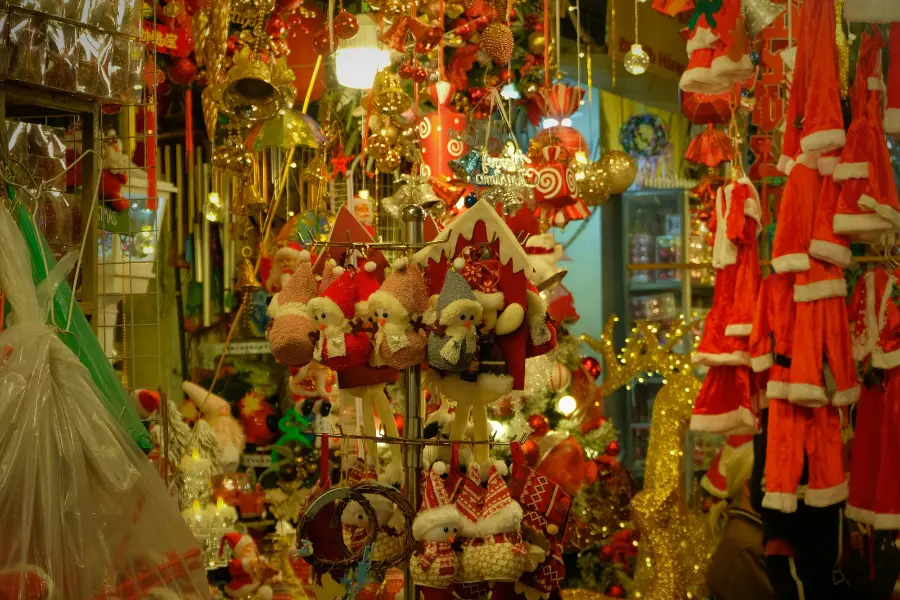
Christmas decorations and Santa figures in a shop.
Where Is the Best Place to Spend Coptic Christmas in Egypt?
The place you choose for Coptic Christmas can shape the kind of celebration you experience. Cairo, Alexandria and Upper Egypt offer churches and historic Christian sites. Choose a particular church or heritage site and confirm its arrangements, rather than assuming one city always has quieter or smaller services.
Christmas in Cairo
For a Christmas in Cairo experience, Old Cairo is one of the most important places to visit. This small historic district in the old part of Cairo is home to some of Egypt’s oldest Christian landmarks.
The Hanging Church is one of the highlights. It gets its name because it was built above the gatehouse of the old Roman Fortress of Babylon, giving the church the appearance of being suspended above the ground. Nearby, the Church of St. Sergius and Bacchus, also known as Abu Serga, is traditionally associated with the Holy Family’s journey through Egypt.
A daytime heritage visit does not guarantee admission to the Christmas Eve liturgy on January 6. Confirm the site’s visiting hours and the church’s service programme and visitor access separately.
Christmas in Alexandria
Alexandria also has an important place in the history of Christianity in Egypt. According to Christian tradition, St. Mark brought Christianity to Egypt through Alexandria in the first century. The city’s Coptic cathedral still carries his name, reflecting this long connection with the Coptic Church.
For a visit around January 7, confirm the chosen church’s programme and visitor arrangements locally. The city’s historic Christian connection does not establish the size of a service or guarantee entry.
Upper Egypt: Luxor and Asyut
In some communities in Upper Egypt, families prepare traditional meals, visit relatives, and share sweets during the holiday. In cities such as Luxor and Asyut and in smaller villages, families may gather around their local churches for prayers.
The monasteries of Upper Egypt offer another side of Christian heritage and worship. Confirm visiting arrangements and any Christmas services with the particular monastery; do not assume that a religious community receives visitors for the feast or that services are quieter than those in Cairo.
Weather in Egypt in January - and What to Pack
January is one of the cooler months in Egypt, but temperatures vary between cities and can change noticeably from day to night. Prepare for a cooler evening if you plan to attend the Christmas Eve liturgy.
What to Pack for Egypt in January
- Layers: The difference between daytime and nighttime temperatures can be significant, and temperatures drop quickly after sunset.
- A proper jacket: Especially useful for the nighttime Christmas Eve liturgy and your journey back.
- Comfortable closed walking shoes: Useful for walking through historic areas and standing at church.
- Modest clothing: Recommended when visiting churches; confirm the chosen church’s rules.
- Rain protection: Winter rain is possible in northern Egypt. Check the forecast near your travel date.
Coptic Christmas vs Western Christmas
Many people notice clear differences between Coptic vs Western Christmas traditions. While both celebrate the birth of Jesus Christ, the way people prepare and celebrate is quite different. In Egypt, this reflects faith, culture, and daily life.
Main Differences
| Aspect | Coptic Christmas | Western Christmas |
|---|---|---|
Date | January 7 | December 25 |
Calendar | Coptic liturgical calendar (aligned with the Julian tradition) | Gregorian |
Church | Coptic Orthodox | Catholic / Protestant |
Both celebrations commemorate the birth of Jesus Christ. The date and calendar differ between church traditions; customs also vary among congregations and families.
Should You Come for January 7?
Coptic Christmas is not a festival created for tourists or a show arranged for visitors. It is a real holiday night for Egyptian families, and that is exactly what makes it worth experiencing. If you attend, you are seeing a tradition as it is actually lived, rather than something prepared especially for you.
If the liturgy is a reason for your visit, plan to be in the chosen location for the evening of January 6 as well as January 7. Confirm the church’s programme and entry arrangements before finalizing the visit.
The Practical Challenge of January 6
You need to know which church to choose, when to arrive, how to get back to your hotel after the service, and how to follow any crowd-management and security instructions at the entrance.
Having the arrangements confirmed in advance makes the experience easier. Entry and seating remain subject to the church’s rules and capacity, even when a guide or transfer has been arranged.
What to Confirm in Your Travel Offer
Ask for written confirmation of:
- The chosen church, service date, start and expected finish time, and visitor-entry arrangements.
- Whether a guide is included, and what assistance the guide can provide.
- Whether a night transfer back to the hotel is included, with pickup details and any extra cost.
- The itinerary for your travel dates and the current availability and price.
For package options, explore our Egypt Christmas tours and request an offer for your exact dates.
FAQs about Coptic Christmas in Egypt
When is Coptic Christmas in 2027, and is January 7 a public holiday in Egypt?
Coptic Christmas in 2027 falls on Thursday, January 7. January 7 is a public holiday in Egypt, but this does not mean every business or service closes. Confirm arrangements for the particular services you need.
Can visitors attend the Christmas Eve liturgy?
Ask the chosen church to confirm visitor access for the evening of January 6. Check its programme, capacity, start and expected finish time, and any entry requirements. Admission is not guaranteed, and service times vary; arrange your return to the hotel accordingly.
What should visitors wear, and may they take photographs?
Dress modestly and ask the chosen church about its dress and head-covering requirements. Ask permission before photographing, respect any prohibition, and protect worshippers’ privacy.