
Egypt Travel Guide 2026: How to Plan Your First Trip
If you’re thinking about visiting Egypt for the first time, you’re probably asking a few simple questions: Is it worth it? How much will it cost? Is Egypt safe? And where do you even start planning?
Egypt can feel overwhelming at first because there is so much to see and organize, from visas and travel costs to ancient sites, Nile cruises, transport, hotels, and the best time to visit.
The good news is that planning your trip becomes much easier once you understand the main routes, the key destinations, and the simple steps that help everything fit together.
Whether you want to stand beneath the Great Pyramid, sail between Luxor and Aswan, explore Abu Simbel, or relax by the Red Sea, this Egypt travel guide will help you plan your first trip with more confidence.
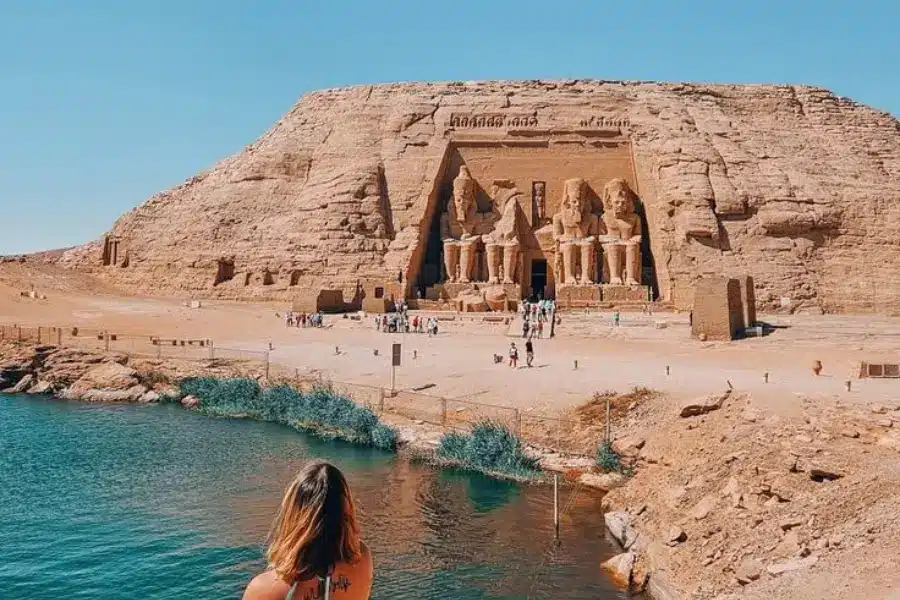
Abu Simbel temple and lake
Why Visit Egypt in 2026?
What no travel brochure explicitly tells you is that crossing the Egyptian border rarely feels like visiting a single country. Most global destinations lean heavily into one distinct identity—a collection of pristine beaches, a bustling metropolitan culinary scene, a dramatic mountain landscape, or a singular cluster of historic monuments.
Few countries let you combine ancient history, beach resorts, desert landscapes, and river travel in a single trip. Egypt does.
On a typical morning, you might find yourself navigating the golden sands of the Giza Plateau, standing within arm’s reach of the last remaining wonder of the ancient world.
Two days later, you might be sitting on the deck of a Nile cruise watching villages, palm trees, and fishing boats pass by, observing timeless palm groves and massive sandstone temple walls that have stood for millennia.
By the time your trip winds down, you are likely sunbathing along the edge of the Red Sea, peering through a snorkeling mask at world-class coral reefs teeming with bright marine life.
Egypt is also investing heavily in tourism infrastructure, with new hotels, improved transport links, and the Grand Egyptian Museum, which officially opened in November 2025. These additions are making many parts of the visitor experience easier to plan.
For first-time visitors, Egypt offers a rare mix of ancient history, local hospitality, and natural diversity. genuine local hospitality, and striking ecological diversity that few places on earth can legitimately match.
Quick Facts About Egypt
| Category | Practical Tourist Information |
|---|---|
Capital | Cairo |
Language | Arabic (English is widely spoken across tourist zones, hotels, and sites) |
Currency | Egyptian Pound (EGP) |
Time Zone | GMT+2 in winter / GMT+3 during daylight saving time, usually from the last Friday in April to the last Thursday in October. |
Electricity | “220V — Type C and Type F plugs” |
Country Code | +20 |
Emergency Numbers | Police: 122 • Ambulance: 123 • Fire: 180 • Tourist Police: 126 |
Visa Required | Yes for most international passport holders — e-Visas are available online |
Where to Start: Building Your Egypt Trip Step by Step
Converting your travel aspirations into a functional calendar becomes much easier when you approach the planning process sequentially rather than trying to figure out all the logistics at once.
Step 1: Decide How Many Days You Have
The baseline duration of your Egypt vacation dictates the entire scope of your geography. If you are constrained to a brief five-day window, you must strictly limit your itinerary to Cairo and a quick flight to Luxor to avoid burnout.
A timeframe of seven to ten days unlocks the traditional golden triangle by incorporating Aswan and a classic Nile River cruise. If you can stretch your journey to a full twelve or fourteen days, you can seamlessly blend intensive archaeological exploration with a relaxing finish along the coastal resorts.
Step 2: Choose Your Main Destinations
Most first-time travelers build their foundational route around four major hubs. Cairo and Giza serve as your urban anchor for the Pyramids, the historic Citadel, and major museum collections. Moving south into Upper Egypt, Luxor holds the jaw-dropping tombs of the Valley of the Kings and the sprawling pillars of Karnak.
Further upriver, Aswan provides a slower pace, vibrant Nubian cultural encounters, and the launch point for Abu Simbel. Finally, the Red Sea rivieras of Hurghada, Sharm El Sheikh, or El Gouna offer specialized diving, beaches, and aquatic leisure.
Step 3: Choose Between an Organized Tour and Independent Travel
Decide early on whether you want a pre-packaged tour or a self-guided Egypt journey. Opting for a comprehensive tour removes the friction of organizing internal drivers, securing certified Egyptologists, and booking local transport.
Traveling independently grants you total freedom over your daily pace and restaurant choices, though it requires dealing with frequent local negotiations. Many modern travelers choose a smart middle ground: booking domestic transit independently while hiring private day guides for the complex archaeological sites.
Step 4: Book Domestic Flights and Nile Cruises Early
Internal distances across Egypt are deceptively long. While overnight trains exist, an approximately 1–1.5-hour domestic flight saves you half a day of arduous overland travel. A quick flight from Cairo to Luxor takes about 1 to 1.5 hours, saving you over ten hours of overland driving or train travel.
Step 5: Sort Your Visa Before You Travel
Do not treat your entry documentation as an afterthought. Verify your country’s specific eligibility rules online, submit your electronic application at least two weeks before your flight, and print hard copies to complement your digital confirmations.
Pro Traveler Route: For the ultimate debut experience, structure your itinerary to follow the timeless geographic flow: Cairo – Luxor – Aswan – Red Sea.
This historic path allows you to absorb the grandest archaeological sights first, ending your trip with a well-deserved coastal retreat before flying home.
Do You Need a Visa to Visit Egypt?
The vast majority of international passport holders must secure an official tourist visa to cross the Egyptian border. Fortunately, the bureaucracy involved is relatively simple and optimized for global tourism, meaning you will not have to wade through endless paperwork to clear immigration.
The primary and most convenient method for modern travelers is the official Egyptian e-Visa portal. This digital application should be completed online prior to your departure date, allowing you to settle the standard processing fees and secure an electronic approval document directly in your inbox.
Arriving with a pre-printed e-Visa copy ensures you can walk straight to the passport control queues without stopping at airport bank windows.
Alternatively, citizens from a substantial number of nations, including the United States, Canada, the United Kingdom, the European Union, and Australia, remain eligible to purchase a physical Visa on Arrival directly at the airport terminal buildings upon landing. This requires waiting briefly at an official currency exchange kiosk inside the arrivals hall to buy the required visa sticker before joining the main immigration line.
As of August 1, 2026, Cairo International Airport has been piloting Egypt’s new digital Visa on Arrival system, which replaces the traditional paper visa sticker with a QR code. Travelers can obtain the QR code through the official online portal, a dedicated mobile application, or self-service kiosks inside the airport. The QR code is valid for 7 days from the date and time of issue, and the digital service costs US$30 for the visa plus a US$6 service fee. During this pilot phase, the digital system operates alongside the existing paper Visa on Arrival process and is expected to expand gradually to other Egyptian airports and entry points.
Regardless of whether you choose the electronic visa or the visa-on-arrival option, standard single-entry tourist visas usually allow visitors to stay in Egypt for up to 30 days. Visa fees can change, so travelers should always check the official Egyptian e-Visa portal or their nearest Egyptian consulate before departure. As of recent 2026 updates, the single-entry tourist visa fee is generally listed around $30 USD.
Note for South Sinai Travelers: If you arrive by air at Sharm El Sheikh and stay for less than 15 days in Sharm El Sheikh, Dahab, Nuweiba, or Taba, you may receive a free Sinai-only entry stamp. It does not permit travel to Cairo, Luxor, Aswan, or other parts of Egypt, and eligibility depends on your passport.
Is Egypt Safe to Visit in 2026?
Yes, Egypt’s main tourist destinations—including Cairo, Giza, Luxor, Aswan, and the major Red Sea resorts—continue to welcome millions of international visitors. However, as with any destination, travelers should check their government’s latest official travel advisory before departure, as recommendations can change.
Egypt is currently listed by the U.S. Department of State as a Level 2 destination, which means travelers are advised to exercise increased caution. Some remote desert, border, and parts of the Sinai region may carry higher warnings, so it is important to review the advice for the specific places you plan to visit.
For most travelers following the main tourist routes, practical precautions include using reliable transportation, booking remote excursions through licensed operators, and keeping an eye on personal belongings in crowded areas.
A Level 2 advisory does not mean that Egypt is generally unsafe for tourism. Cairo, Giza, Luxor, Aswan, and the main Red Sea resorts receive large numbers of visitors every year, and most travelers complete their trips without serious safety problems.
Egypt also has a dedicated Tourist Police presence at many archaeological sites, airports, hotels, and major tourist areas. Security checkpoints are common along certain roads and around important attractions.
For a smoother experience, stay within established tourist routes and arrange desert, border-area, or remote excursions through reputable licensed operators. Some destinations may require permits or organized travel arrangements.
Advice for Women Travelers
Women travelers should take sensible precautions in crowded areas, markets, and on public transport. Unwanted attention or verbal harassment can sometimes occur, particularly in busy urban areas. Dressing modestly, choosing reliable transportation, and using a licensed guide when needed can make the experience more comfortable.
Keep these practical safety tips in mind:
- Use licensed, well-reviewed guides when visiting archaeological sites or remote areas.
- Arrange intercity transfers and airport pickups through reputable providers.
- Keep secure digital copies of your passport, visa, travel insurance, and important bookings.
- Avoid displaying large amounts of cash and remain aware of your belongings in crowded places.
- Check the latest official travel advice shortly before your departure.
Most visitors return home with a positive impression of Egypt. By combining reliable travel arrangements with normal common-sense precautions, you can enjoy a comfortable and rewarding journey through the country.
Best Time to Visit Egypt: Month-by-Month Breakdown
The prime window for exploring Egypt stretches from October through April. During these cooler winter months, the intense desert heat recedes, making long afternoons of walking through unshaded open-air ruins, massive temple complexes, and the Giza Pyramids incredibly comfortable and pleasant.
Weather & Recommendation for you:
| Period | Weather Overview | Travel Recommendation |
|---|---|---|
October — November | Warm days, crisp evenings, highly manageable sunshine | Excellent — The ideal autumn window for comprehensive sightseeing. |
December — January | Cool, mild days; chilly desert nights requiring jackets | Great — Peak winter high season. Major crowds; book all options early. |
February — April | Pleasantly warm, clear skies, gorgeous river breezes | Best Overall — Ideal balance of excellent weather and lively atmosphere. |
May — June | Rising temperatures, intense midday sunshine | Possible — Highly recommended to schedule tours strictly for early mornings. |
July — August | Peak summer heat frequently soaring past 40°C (104°F) | Best for the Red Sea — Inland sightseeing is still possible, but schedule major outdoor sites at sunrise or early morning and allow extra rest and hydration. |
September | Hot, transitional humidity as summer breaks | Possible — Requires a slow pace, sun hats, and heavy hydration. |
Finding Your Perfect Seasonal Window
Target late October, November, or March. The mild temperatures mean children can easily handle outdoor walking tours without getting worn out by the heat.
The crisp months of December through February offer a wonderfully romantic atmosphere, particularly for cool evening dinners on the Nile or watching sunsets over Aswan.
If saving money is your priority, eye the shoulder months of May, June, and September. Hotels and tour operators often offer lower rates during these quieter months.
Stick firmly to the October-to-April corridor. Sailing down the river during these months treats you to refreshing breezes, making afternoons spent on the open observation decks absolutely perfect.
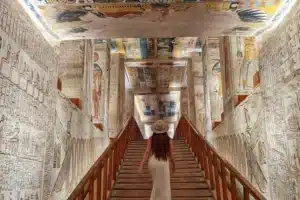
A tourist at Valley of the Kings
How Much Does a Trip to Egypt Cost?
Egypt can work for almost any budget, whether you’re traveling as a backpacker or staying in luxury hotels.
These are rough per-person daily estimates excluding international flights. Actual costs vary by season, hotel category, domestic flights, and the number of private guided tours included.
Estimated Daily Budgets (Per Person)
| Travel Style | Average Daily Cost | Typical Inclusions & Travel Standard |
|---|---|---|
Budget | $50 – $80 | Local authentic guesthouses, public transport, authentic street food, and independent entry. |
Mid-Range | $150 – $250 | 4-star comfortable hotels, private hired vehicles, domestic flights, and licensed guides. |
Luxury | $400+ | World-class 5-star historic properties, private Egyptologists, and high-end Nile cruises. |
Major Financial Factors to Keep in Mind
Your primary international flight will likely represent your single largest upfront expense, fluctuating heavily based on your home country and whether you fly during peak winter or summer. Beyond flights, your total cost will be driven by your choice of accommodation, such as charming local boutique properties versus high-end international resorts, and your preferred mode of travel between hubs.
Opting for domestic flights instead of long road trips saves precious hours but adds to your baseline expenses. Booking these internal flights several months ahead of time is a proven way to keep your mid-range budget under control.
Additionally, if you are traveling with kIds, keep in mind that many primary archaeological sites and national museums offer half-price entry tickets for younger visitors. This makes the country an exceptionally affordable option for families seeking a deep cultural getaway.
Planning your vacation budget? See our complete Egypt Travel Cost Guide for detailed budget, mid-range, and luxury breakdowns, including hidden costs and money-saving tips.
Top Attractions in Egypt: Pyramids, Temples, the Nile & More
Egypt’s legendary attractions are far more than static historical monuments; they are deeply immersive spaces that change dramatically in flavor, light, and rhythm depending on the region you are exploring.
Cairo & Giza
The Pyramids of Giza and the Sphinx:
As the sole surviving wonder of the ancient world, standing on this desert plateau offers an unforgettable, bucket-list encounter with human history.
The Grand Egyptian Museum (GEM):
Even if you’re not a museum person, the Grand Egyptian Museum is worth setting aside a few hours for.
The scale alone surprises most visitors.
A historic labyrinth of narrow alleyways packed with aromatic spices, handcrafted copper lanterns, and a lively local coffee house culture.
Luxor City
Hidden within deep desert hills, this ancient royal burial ground features brilliantly painted, rock-cut tombs of pharaohs, including Tutankhamun.
A dizzying architectural achievement famous for its massive Hypostyle Hall, where 134 towering stone columns stretch toward the sky.
Luxor Temple: Conveniently located right in the heart of the city, this beautifully preserved site is stunningly illuminated after dusk along the ancient Avenue of Sphinxes.
Aswan
Philae Temple: A stunningly romantic island complex dedicated to the goddess Isis, reached via a short, scenic boat ride across the calm waters of the Nile.
The Nubian Village: A vibrant, brightly colored cultural experience along the riverbank, showcasing traditional architecture, distinct local crafts, and warm hospitality.
Abu Simbel: Dominated by the colossal rock-cut statues of Ramesses II, this monumental temple complex makes for an epic and essential day trip from Aswan.
The Red Sea Riviera
Hurghada: A bustling, world-renowned resort hub celebrated for its extensive luxury sandy beaches, vibrant windsurfing scene, and accessible water sports.
Sharm El Sheikh: Positioned at the southern tip of the Sinai Peninsula, this pristine destination offers unparalleled access to legendary deep-sea coral diving reefs.
El Gouna: A modern, eco-conscious resort town built around a network of calm lagoons, fine-dining marinas, and boutique luxury villas.
Alternative Destinations
Siwa Oasis: Tucked deep within the Western Desert, this remote paradise is famous for its natural salt lakes, historic mud-brick fortresses, and palm groves.
Bahariya Oasis & The White Desert: A surreal, otherworldly landscape filled with unique, wind-carved chalk rock formations that look like natural abstract sculptures.
Alexandria: A historic Mediterranean city boasting a breezy coastal charm, fresh seafood dining, and rich Greco-Roman catacombs.
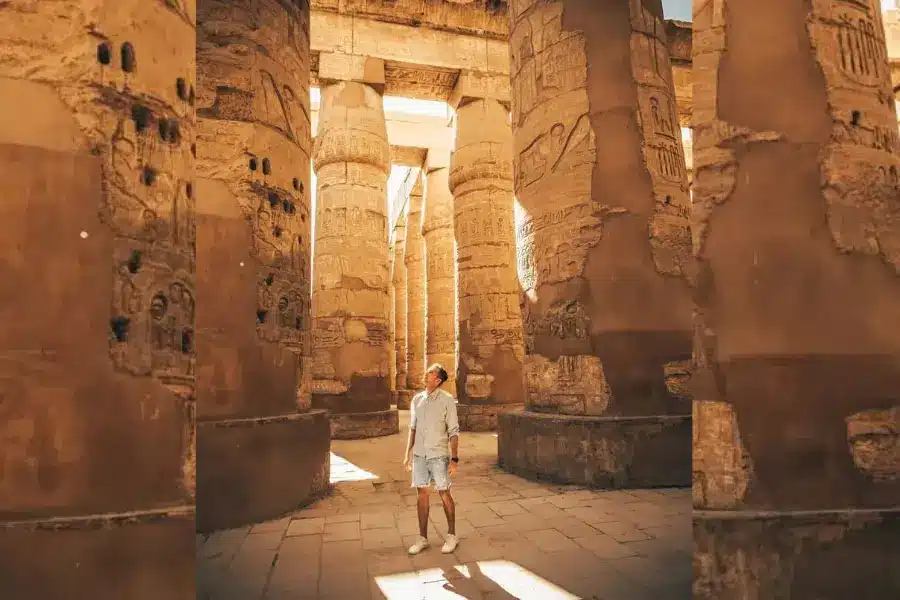
A tourist at Karnak Temple
A tourist at Karnak temple
Egypt Travel Itineraries: How Many Days Do You Need?
Choosing the right length for your trip is all about balancing the number of historical sites you want to see with the pace you enjoy traveling at. Because internal transit takes time, organizing your days strategically is key to a smooth journey.
| Trip Duration | Ideal Travel Style | Core Geographic Destinations Covered |
|---|---|---|
5 Days | Fast-paced, express highlights | Cairo + Luxor |
7 Days | Classic introductory loop | Cairo + Luxor + Aswan |
10 Days | Balanced discovery and relaxation | Cairo + Luxor + Aswan + Red Sea Coast |
12 Days | Classic river cruise pacing | Cairo + Full Nile Cruise + Red Sea Resort |
14 Days | Total country immersion | Cairo + Cruise + Red Sea + Western Desert |
5 Days in Egypt
An intensive, high-energy introduction focused entirely on the absolute essentials. Most travelers spend their first two days uncovering the pyramids and museums of Cairo, before taking a quick domestic flight south to spend two days exploring Luxor’s premier temples.
- Best for: Travelers with limited vacation days who want to make the most of their time.
- What to Expect: Full, rewarding days of sightseeing with very little downtime.
- Explore our detailed 5-Day Express Egypt Itineraries.
7 Days in Egypt
The most popular and balanced time-frame for a first visit. This route gives you a couple of days in Cairo before moving south into Upper Egypt to explore both Luxor and Aswan, offering a wonderful taste of life along the Nile.
- Best For: First-time visitors looking for a solid introduction to the country.
- What to Expect: A smooth mix of historic cities, grand temples, and classic river scenery.
- Read our step-by-step 7-Day Classic Egypt Itinerary.
10 Days in Egypt
A highly recommended route that effortlessly blends intensive historical exploration with beachside relaxation. After completing your tours through Cairo and the ancient ruins of Upper Egypt, you head to the coast for a few days of unwinding in Hurghada or Sharm El Sheikh.
- Best For: Travelers who want a deep dive into history followed by some seaside downtime.
- What to Expect: Excellent pacing with a built-in beach vacation at the finish.
- Check out the full 10-Day History & Red Sea Itineraries.
12 Days in Egypt
This timeline adopts a wonderfully relaxed rhythm by incorporating a classic multi-night Nile cruise.
Please note that the 12-day itinerary includes a multi-night Nile cruise as part of a larger Egypt tour, not a 12-day cruise. Instead of changing hotels overland, your river ship serves as a floating hotel that carries you smoothly between the archaeological treasures of Luxor and Aswan.
- Best for: Couples, families, and anyone who prefers an immersive, slower-paced experience.
- What to Expect: A low-stress journey with scenic river views right from your cabin.
- See our comprehensive 12-Day Nile Cruise & Egypt Package.
14 Days in Egypt
The ultimate, comprehensive travel experience. This grand loop gives you ample time to dive deep into Cairo, enjoy a multi-night Nile cruise, explore Luxor and Aswan thoroughly, take optional day trips to Abu Simbel, and unwind along the Red Sea.
- Best For: Travelers who want to experience everything Egypt has to offer without feeling rushed.
- What to Expect: A complete journey covering everything from ancient pyramids to vibrant coral reefs.
- Unlock our flagship 14-Day Full Immersion Egypt Tours.
Nile Cruise in Egypt: Is It Worth It?
For the vast majority of first-time travelers, booking a Nile cruise is one of the most rewarding and memorable highlights of their entire journey. Rather than looking at it as a basic transport option or an insulated resort experience, think of it as a timeless, slow-paced voyage through the heart of Upper Egypt, where ancient temples reveal themselves along the riverbanks as you sail.
What makes a Nile cruise so special is the seamless way it handles all your travel logistics. Instead of dealing with daily packing, unpacking, and hotel transfers, you unpack your bags just once in a comfortable cabin. Your ship sails smoothly between Luxor and Aswan, docking right alongside legendary riverside ruins like Edfu and Kom Ombo, letting you walk straight off the deck and into history.
Finding Your Cruise Style:
Budget Cruises: Feature simple, clean cabins and basic shared amenities, making them an excellent choice for cost-conscious, independent travelers.
Mid-Range Cruises: Offer spacious, air-conditioned rooms, great local buffet dining, and include small-group excursions led by professional English-speaking Egyptologists.
Luxury Cruises: Provide high-end boutique service, expansive suites with private balconies, fine à la carte dining, and private guides for all shore excursions.
Standard sailings typically run between 3 to 5 nights, depending on whether you choose to cruise upriver from Luxor or downriver from Aswan. It is an exceptionally easy and stress-free way for families, couples, and solo travelers alike to experience multiple ancient sites without any of the planning headaches. Because demand is incredibly high during the perfect winter weather months, booking your cruise cabin several months in advance is essential to locking in the best rates.
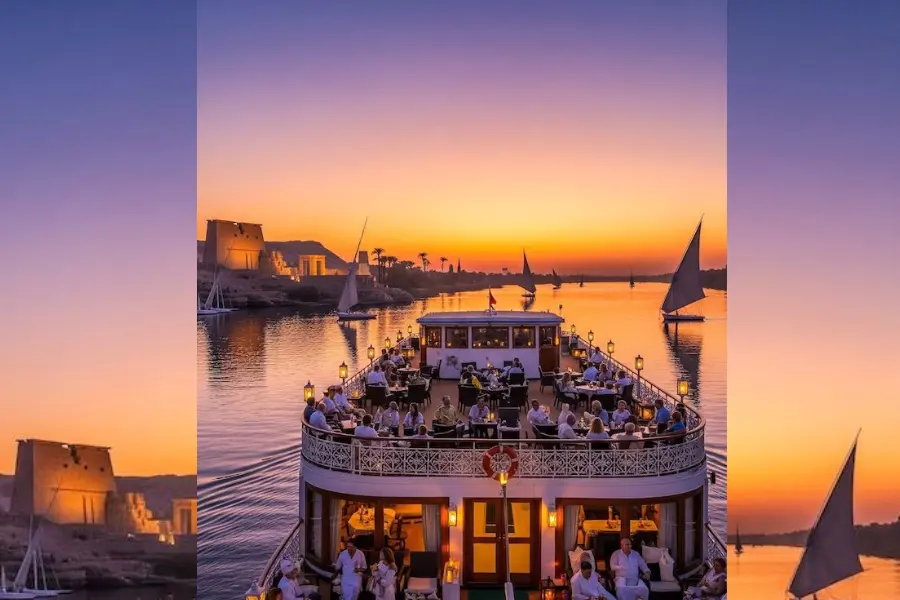
A luxurious Nile Cruise sailing the Nile
How to Get Around Egypt
Navigating internal transit across Egypt is all about being practical: choosing the right mode of transportation can save you days of long drives, keeping you fresh and energized for sightseeing.
Domestic Flights
Taking internal flights is easily the fastest and most reliable way to travel between major hubs like Cairo, Luxor, Aswan, and the Red Sea coast. A quick flight from Cairo to Luxor takes just about an hour, saving you over ten hours of overland driving or train travel.
This is the gold standard for travelers on shorter timelines who want to make the most of every day. Booking these internal legs early ensures the best prices and availability during the busy winter season.
Nile Cruise Ships
A Nile cruise serves as a brilliant combination of transport, accommodation, and sightseeing between Luxor and Aswan.
Instead of dealing with highway traffic, you glide smoothly down the river on a floating hotel, enjoying the scenic landscapes of rural Egypt between guided stops at ancient temples.
Private Transfers
Hiring a private vehicle with a professional driver is easily the most comfortable way to get around within a city or travel between nearby destinations. This option is perfect for families, small groups, or independent travelers who value flexibility.
Vehicles are modern, air-conditioned, and you can easily request child car seats ahead of time. Private transfers are the standard choice for smooth day trips, like heading out to the Giza Pyramids from downtown Cairo or exploring the expansive West Bank in Luxor.
Trains
Egypt’s rail network cleanly connects Cairo with the southern hubs of Luxor and Aswan. The most famous option among international tourists is the overnight sleeper train, which tucked-away passengers use to travel through the night in private twin-berth cabins.
While it is a classic and nostalgic rail adventure for adults, it can be slow and less predictable than a flight, making it less ideal for families with very young children or those on a tight schedule.
Uber and Taxis
In Cairo, Uber is widely available, highly reliable, and incredibly affordable. Using the app removes any need for price negotiations and provides clear, fixed digital pricing upfront.
While traditional street taxis are readily available in every major city, it is important to agree on the total fare with the driver before you step into the vehicle unless they are using a properly running meter.
Where to Stay in Egypt: Hotels, Nile Cruises & Red Sea Resorts
Aligning your hotel choices with your daily sightseeing plans makes a world of difference in Egypt. Each major hub offers a distinct vibe, ranging from historic, colonial-era luxury hotels along the river to modern, all-inclusive beach resorts.
Cairo and Giza
If your absolute top priority is being among the first in line at the Giza Plateau or capturing stunning photos in the morning light, booking a hotel in Giza is your best bet. It saves you from battling Cairo’s intense morning traffic, though it does put you further from the city’s evening restaurant scene.
- Marriott Mena House: A legendary luxury property that sits practically in the shadow of the pyramids, offering world-class views and beautiful historic gardens.
- Downtown Cairo Boutique Hotels: Perfect for travelers who want to be steps away from the Egyptian Museum, traditional markets, and vibrant local street life.
Luxor
Hotels in Luxor are beautifully positioned right along the banks of the Nile, providing incredibly peaceful, scenic views where you can unwind after a busy day exploring unshaded tombs and temples.
- Sofitel Winter Palace: A historic property rich in colonial-era elegance, famous as the spot where Agatha Christie penned parts of her mysteries.
- Hilton Luxor Resort & Spa: Offers excellent modern comfort, fantastic swimming pools, and beautiful views looking across the river toward the West Bank.
Aswan
Aswan has a distinctly slower, more laid-back rhythm compared to Cairo, making it the perfect place to slow down and enjoy the scenic natural beauty of the Nile.
- Sofitel Legend Old Cataract Hotel: A historic icon overlooking the river and Elephantine Island, offering legendary luxury and sunset views.
Red Sea Resorts
The coastal getaways of Hurghada, Sharm El Sheikh, and El Gouna are paradise for beach lovers and divers. Most properties here operate as expansive, all-inclusive resorts with massive pools and private beaches, making them incredibly convenient and relaxing for families.
Nile Cruise Ships
For a large portion of your journey through Upper Egypt, a multi-night cruise ship replaces traditional hotels entirely. It serves as your accommodation, transport, and dining hub all in one seamless experience between Luxor and Aswan.
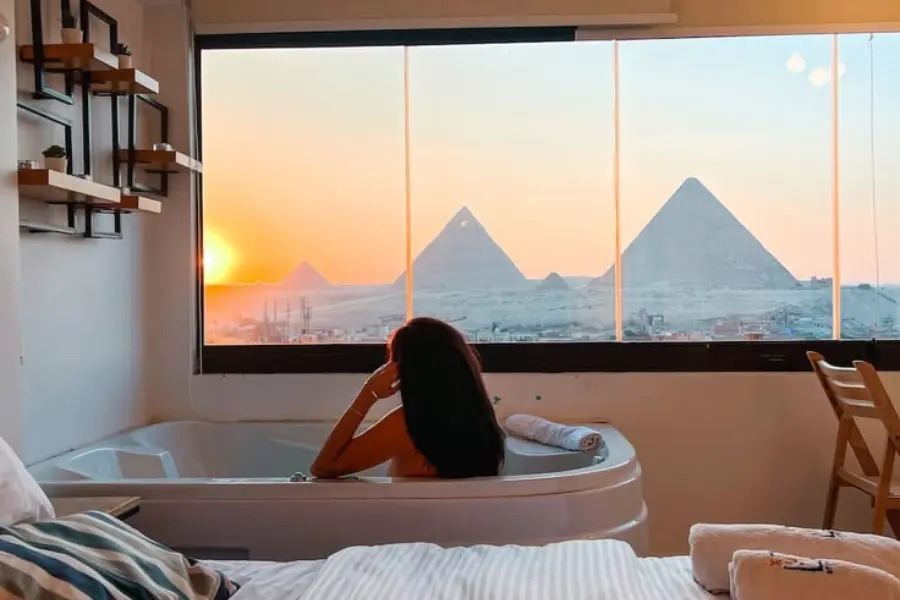
Accommodation by the Pyramids
Accommodation by the pyramids
Egyptian Food: What to Eat and What to Avoid
Discovering Egyptian cuisine is one of the best parts of the journey. The food is flavorful, hearty, and simple, relying heavily on fresh vegetables, legumes, and perfectly spiced meats that connect deeply with local everyday life.
Must-Try Local Specialties
- Koshari: Egypt’s ultimate national comfort food—a unique, delicious mix of rice, macaroni, lentils, and chickpeas, topped with garlic vinegar and a spicy tomato sauce.
- Ful Medames: Slow-cooked fava beans seasoned with olive oil and cumin, and one of Egypt’s classic breakfast staples.
- Hawawshi: Perfectly spiced minced meat baked inside a crispy, stone-oven loaf of local whole-wheat bread.
- Feteer Meshaltet: A flaky, multi-layered traditional pastry served either savory with cheese or sweet with honey and fresh cream.
- Om Ali: A comforting, warm bread pudding dessert made with flaky pastry layers, milk, sugar, raisins, and a blend of nuts.
- Mahshi: Tender vegetables like zucchini, eggplants, or grape leaves stuffed with a flavorful mix of spiced rice and fresh herbs.
- Ta’ameya: The Egyptian version of falafel, made entirely with crushed fava beans and fresh herbs, making it incredibly light, green, and crispy on the outside.
- Baladi Bread: The traditional, hollow whole-wheat flatbread baked daily and served hot with practically every single meal.
Must-Try Local Drinks
- Karkade: A deeply refreshing, vibrant red hibiscus tea that can be enjoyed iced during hot afternoons or warm on cool desert evenings.
- Sahlab: A thick, comforting winter drink made from orchid root powder, warm milk, coconut, and topped with chopped nuts and cinnamon.
- Fresh Sugarcane Juice (Asab): Naturally sweet, freshly pressed juice served ice-cold at colorful local street stalls all over the country.
- Tamarind Juice (Tamr Hindi): A delightfully sweet and tangy traditional drink that is incredibly refreshing during a long day of sightseeing.
Staying Healthy: What to Watch Out For
To reduce the risk of stomach problems during your trip, drink factory-sealed bottled water and use it for brushing your teeth if you are unsure about the local water supply. Be cautious with raw salads, unpeeled fruit, and ice when eating at small local cafés or places where food-handling standards are unclear.
Choose reputable restaurants and food that is freshly cooked and served hot. At buffets, avoid dishes that appear to have been sitting at room temperature for a long time. When trying street food, look for clean, busy vendors with a high turnover of freshly prepared food, while remembering that popularity alone does not guarantee safe food handling.

Egyptian local breakfast
Egyptian local food
What to Pack for Egypt
Packing smart for the Egyptian climate and long days of walking among ancient ruins ensures you stay perfectly comfortable throughout your entire vacation.
Clothing
Pack lightweight, breathable cotton or linen fabrics to help you stay cool in the daytime heat. A pair of broken-in, sturdy closed-toe walking shoes is absolutely essential for navigating the uneven, sandy, and rocky terrain at archaeological sites.
While lightweight shorts are fine for international beach resorts, modest clothing—like long skirts, maxi dresses, or lightweight trousers that cover your knees and shoulders—is highly recommended out of respect when visiting historic temples, neighborhoods, and mosques. Don’t forget to pack a light jacket or sweater for chilly desert nights or heavy hotel air conditioning.
Sun and Heat Protection
The Egyptian sun can be incredibly intense, especially at unshaded ruins like the Valley of the Kings. Be sure to pack high-quality sunscreen (SPF 50+), a pair of UV-blocking sunglasses, a wide-brimmed sun hat, and a cooling microfiber towel to help you stay refreshed during morning walking tours.
Health and Medications
It is incredibly smart to bring along a small personal health kit. Include oral rehydration salts to beat dehydration, basic over-the-counter stomach remedies, antihistamines for desert dust, antiseptic wipes, and a reliable insect repellent—which is especially helpful for evening strolls along the riverbanks in Aswan and Nubia.
Hydration and Snacks
Bring a reusable insulated water bottle to keep your drinks ice-cold during long excursions, along with a few electrolyte packets to maintain your energy levels. Packing a few familiar granola bars or snacks is also incredibly handy for long travel days between cities.
Important Documents
Always carry your physical passport, a couple of printed copies of your approved e-Visa, and your travel insurance documents detailing your medical evacuation coverage. Keep secure digital backups of all these documents stored safely on your phone or cloud drive.
Tech and Electronics
A reliable power bank is essential for keeping your phone charged through long days of taking photos. You will need a universal travel adapter that supports Type C two-pin plugs, offline maps downloaded to your device before you leave, and a good pair of headphones for internal flights and long drives.
Egypt Culture Tips and First-Time Visitor Advice
Getting a feel for the local customs and everyday etiquette is the best way to ensure your interactions are smooth, respectful, and genuinely rewarding.
Culture and Customs:
Egypt is a culturally conservative country, particularly once you step outside the international beach resorts. Wearing modest attire when visiting historical landmarks and religious sites is a wonderful sign of respect that local communities deeply appreciate. When it comes to photography, always ask for permission before taking portraits of residents.
If your trip happens to fall during the holy month of Ramadan, you will get to experience an incredibly festive evening atmosphere, though keep in mind that some smaller local restaurants may close during daylight hours.
Tipping, locally known as Baksheesh, is an integral part of everyday life rather than just a bonus for good service; it is a good habit to keep a small pouch of low-denominational Egyptian Pound banknotes handy for tour drivers, luggage porters, and restroom attendants.
When navigating busy local markets, remember that bargaining is expected—keep your exchanges lighthearted, friendly, and respectful, and know that a polite “La, Shukran” (No, thank you) is completely acceptable if you choose to walk away.
Practical Tips for First-Time Visitors
Locking in your domestic flights and Nile cruise reservations well in advance is essential for securing the best rates and avoiding sold-out options during the peak winter season. Whenever you are exploring massive sites like the Giza Plateau or the ruins of Luxor, hiring a licensed, vetted guide brings the incredible history to life in a way you simply can’t get from a book.
Keep your daily schedule a bit flexible—travel times can vary, and some of the best experiences come from unexpected local encounters. Learning just a few basic Arabic words and phrases for travelers goes an incredibly long way in making connections:
Shukran (Thank you)
La (No)
Min Fadlak (Please)
Bi Kam? (How much?)
Can I visit Egypt independently or do I need a tour?
You can absolutely travel through Egypt independently if you are an experienced, self-sufficient traveler who enjoys managing daily transport and local negotiations. Travelers planning to visit many archaeological sites may also save money by checking whether the Cairo Pass or Luxor Pass fits their itinerary.
However, for a first-time visitor, booking a guided tour or a semi-independent package is often far more efficient, as it removes all the stress of intercity logistics and lets you focus entirely on enjoying the history.
Conclusion
Planning a journey to Egypt is far more than simply checking off iconic landmarks from a list; it is about designing an adventure that moves at your own pace and reflects your personal interests.
Whether you are standing beneath the massive stones of the Giza Pyramids, drifting along the Nile as the sun sets, or diving into the clear waters of the Red Sea, the experiences you create here can stay with you for a lifetime.
The key to an unforgettable trip is straightforward planning, a realistic itinerary, and choosing the right time of year. Once those foundations are in place, Egypt opens up as a destination filled with history, natural beauty, and memorable cultural experiences.
Now that you know the basics of planning a trip to Egypt, the next step is choosing the route that fits your travel style, budget, and available time. Whether you want a short Cairo escape, a classic Nile cruise, a Red Sea holiday, or a complete Egypt tour package, our team can help you shape the right itinerary from start to finish.
Explore our curated Egypt tour packages or contact us to customize your trip with private guides, comfortable transport, trusted hotels, Nile cruise options, and smooth travel arrangements across Egypt.
FAQ
Is Egypt worth visiting in 2026?
Absolutely. Egypt remains an unparalleled global destination, offering an unforgettable mix of ancient wonders, rich river cruise heritage, and world-class diving along the Red Sea.
How many days do you need in Egypt?
For most first-time visitors, a window of 7 to 10 days is the sweet spot to comfortably explore the highlights of Cairo, Luxor, and Aswan without feeling rushed.
Is it safe to go to Egypt right now in 2026?
The main tourist areas continue to receive large numbers of visitors, but no destination is risk-free. Check your government’s latest travel advisory before departure and avoid restricted or higher-risk areas.
What is the best month to visit Egypt?
The ideal months run from October through April, treating visitors to beautifully mild and pleasant weather that is perfect for outdoor sightseeing.
How much does a trip to Egypt cost?
It scales beautifully based on your style: budget travelers can comfortably manage on $50–$80 a day, mid-range comfort averages $150–$250, while luxury experiences go upwards of $400 a day.
Is $100 a lot in Egypt?
Yes, within the local economy, $100 is a substantial amount that can easily cover a full day of excellent mid-range dining, private local transport, and monument entry fees.
Do I need a visa to travel to Egypt?
Yes, most international travelers need a visa. Fortunately, you can easily secure an electronic e-Visa online ahead of your departure date.
What is the nicest city in Egypt?
It depends on what you love: Cairo is unrivaled for its bustling energy and monument history, Luxor is the ultimate open-air archaeological treasure, and Aswan offers pure, scenic relaxation on the Nile.
What is the most underrated destination in Egypt?
Siwa Oasis and the surreal landscapes of the White Desert are incredible hidden gems for travelers looking to venture off the beaten path.
What should I avoid eating and drinking in Egypt?
Stick strictly to bottled water, avoid ice cubes at small local street stalls, and pass on raw, unpeeled fruits and vegetables when dining outside major tourist spots.
Do I need travel insurance for Egypt?
Yes, having a comprehensive travel insurance policy that covers medical care and emergency evacuation is highly recommended for peace of mind.
Is a Nile cruise worth it?
Without a doubt. It stands out as one of the most relaxing, deeply atmospheric, and stress-free ways to watch ancient history glide by.
Can I visit Egypt independently?
Yes, independent travel is entirely possible. However, partnering with licensed guides or booking organized transit transfers makes a first-time visit significantly smoother.