

The Great Sphinx of Giza – History, Facts & Mysterious Secrets
Near the Great Pyramids in Giza, Egypt, stands the legendary Great Sphinx of Giza — a limestone statue with a lion’s body and a human head, commonly associated with Pharaoh Khafre around 2500 BC, stretching 240 feet long and 66 feet high. This colossal figure is one of the most iconic monuments ever created by ancient Egyptians, and its origins remain one of history’s greatest mysteries.
The Egyptian Sphinx has fascinated travelers and archaeologists for centuries. More than just a statue, it symbolizes power, wisdom, and divine protection. In this comprehensive guide, you’ll uncover what the Great Sphinx represents, who built it, how old it is, and the enduring secrets behind Egypt’s timeless guardian.
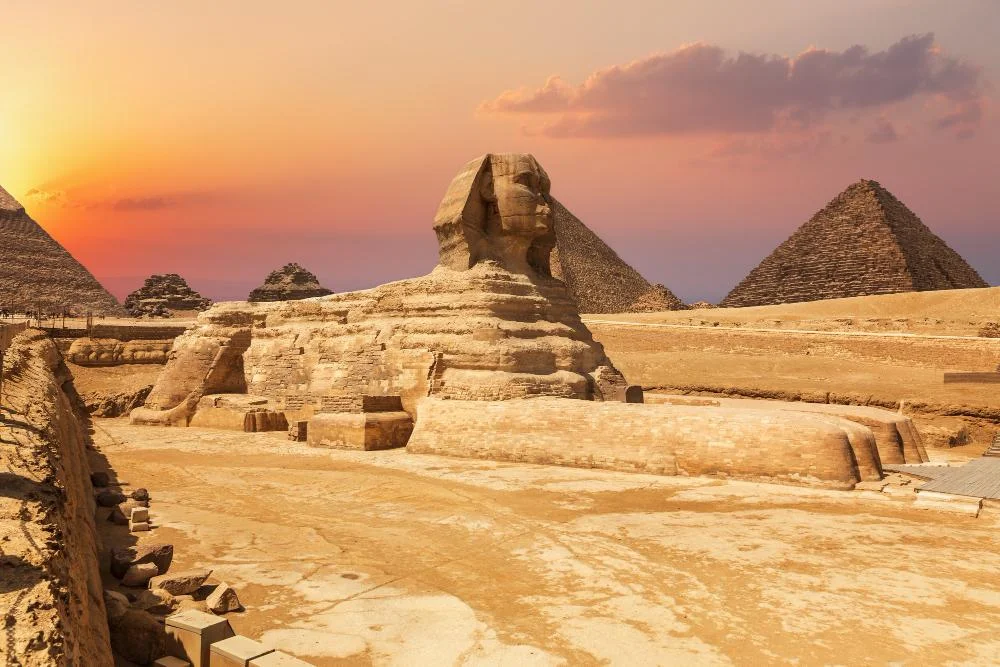
What is the Egyptian Sphinx?
In Egyptian mythology — and later in Asian and Greek traditions — the Sphinx (or Sphynx) is a magnificent creature with the body of a lion and the head of a human. This hybrid design represents the union of strength, intelligence, and divine wisdom.
In Ancient Egypt, the Sphinx was usually depicted as a male figure wearing the royal headdress of the pharaoh, symbolizing guardianship and divine protection. These statues often stood before temples and tombs as spiritual sentinels. One of the most famous examples is the Avenue of Sphinxes in Karnak Temple and Luxor — a roughly 2.7-kilometer (1.7-mile) path lined with hundreds of Sphinx statues.
Female pharaohs also adopted the symbol of the Sphinx. For instance, Queen Hatshepsut commissioned magnificent sphinx statues bearing her likeness, such as the granite sphinx at the Metropolitan Museum of Art in New York. The alabaster sphinx at Memphis represents an unidentified ruler and is sometimes attributed to Hatshepsut.
Symbolism and Meaning of the Sphinx
The Great Sphinx of Giza stands as one of the most powerful symbols in Ancient Egyptian culture. Its lion’s body represents unmatched strength and courage, while the human head symbolizes intelligence, leadership, and divine wisdom — a perfect reflection of the pharaoh’s dual nature as both a man and a god.
In religious terms, the Sphinx’s meaning was deeply connected with the sun god Ra and the concept of protection. Positioned on the Giza Plateau facing east, it greets the sunrise each morning — believed to guard the sacred necropolis and channel the power of the sun into rebirth and eternal life.
Many historians interpret the Great Sphinx as a divine guardian of the pyramids and temples. It served not just as a physical protector but also as a spiritual emblem of balance between human wisdom and animal strength — an idea that later inspired the Greek and Asian sphinx myths.
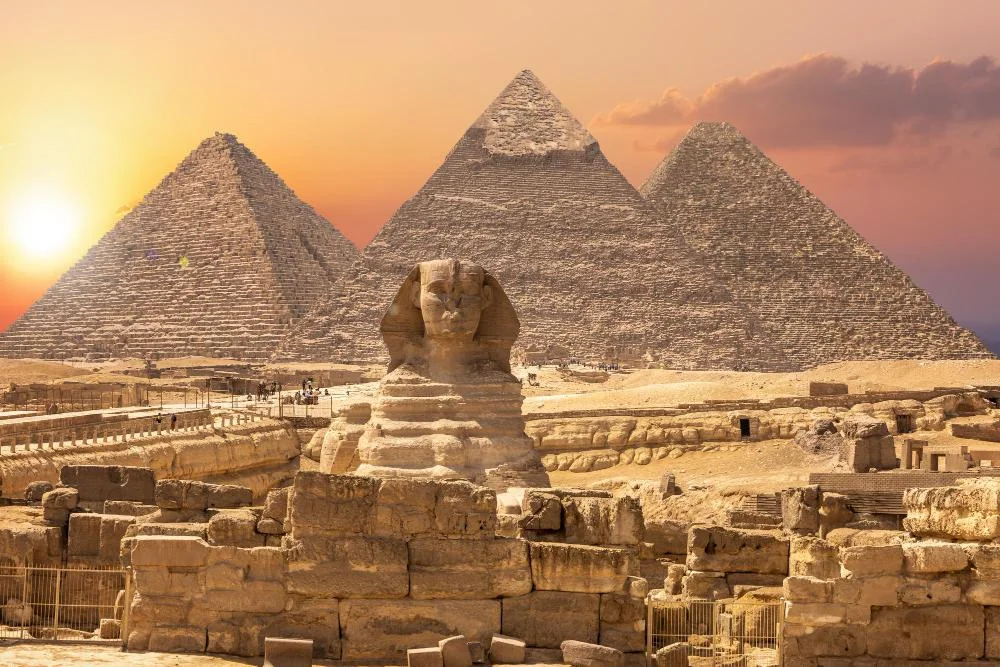
Who and When the Sphinx of Giza Was Built
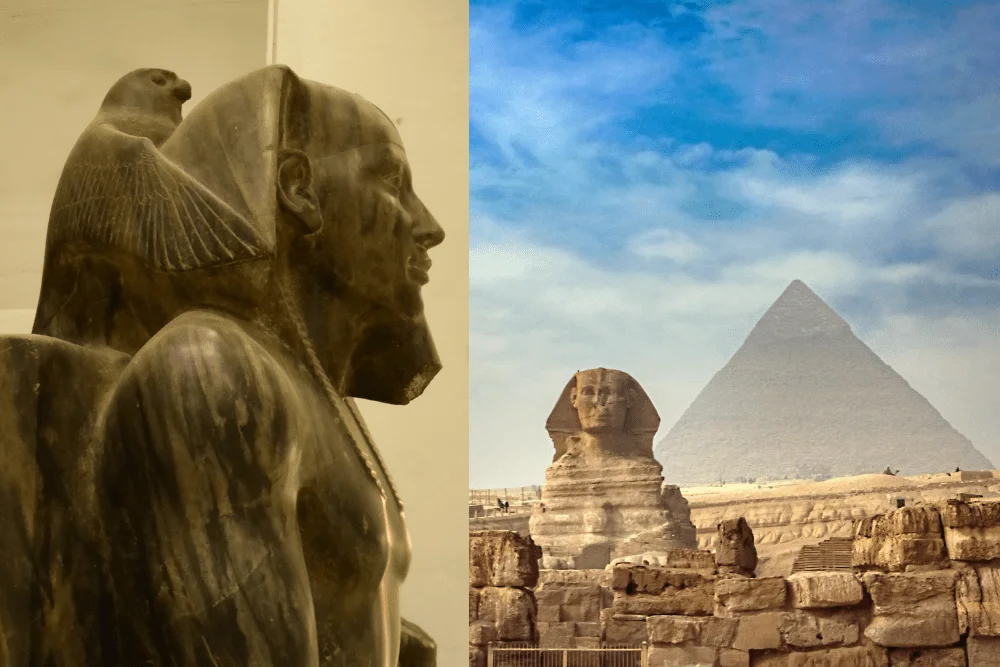
Scholars widely believe that the Great Sphinx of Giza was commissioned by King Khafre (reigned c. 2558–2532 BC), the pharaoh of Egypt’s 4th Dynasty. The colossal monument is commonly dated to the same period as his pyramid, located beside the Great Pyramid of Khufu, one of the Seven Wonders of the Ancient World.
The Sphinx was carved directly from the limestone bedrock of the Giza Plateau. Its alignment with Khafre’s pyramid complex suggests a deliberate symbolic and religious connection — possibly representing the sun god Ra or the living image of the pharaoh himself.
Archaeological evidence and red pigment traces on its face indicate that the statue was once painted in vivid colors. The careful layout of pyramids and statues has led researchers to believe that the entire Giza complex had a spiritual and astronomical purpose, guiding the soul of the pharaoh toward the afterlife.
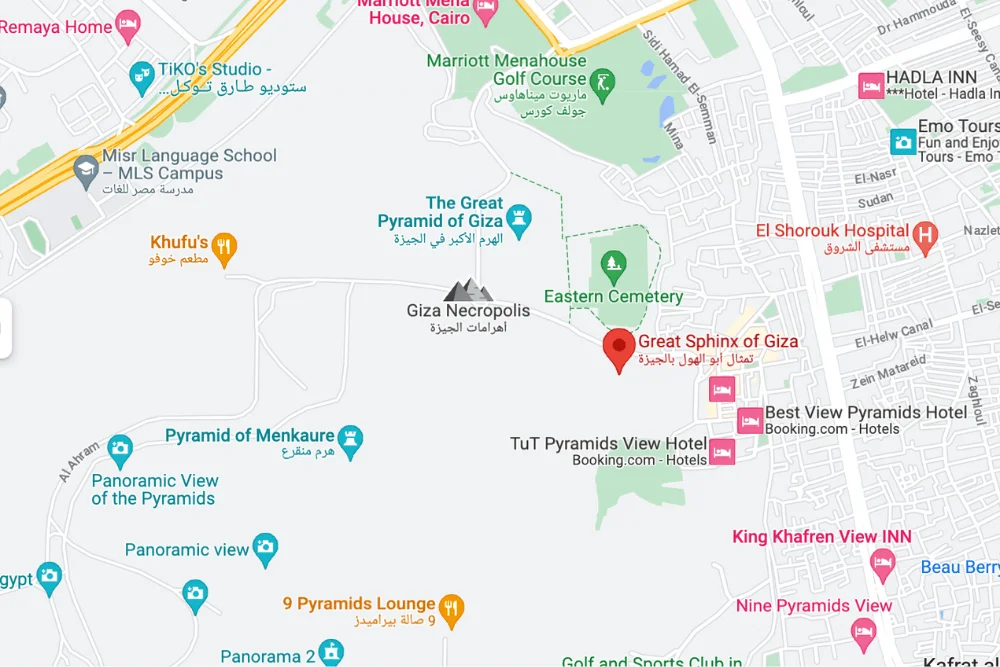
Where is the Great Sphinx Located?
The Great Sphinx of Giza is located on the Giza Plateau, just outside Cairo City, on the west bank of the Nile River. It stands beside Khafre’s Valley Temple, near the lower end of the causeway leading to his pyramid, within the Giza Necropolis — part of the UNESCO-listed Memphis and its Necropolis site.
This area is home to Egypt’s most celebrated monuments, including the Pyramids of Giza and several ancient temples and tombs. The Sphinx faces directly east toward the rising sun, symbolizing rebirth, vigilance, and divine connection with Ra, the Egyptian sun god.
Historical Significance of the Great Sphinx
The Great Sphinx of Giza holds deep historical and cultural significance in Ancient Egyptian civilization. It was more than just a monument — it represented divine kingship, celestial guardianship, and the pharaoh’s sacred connection with the gods.
In the ancient world, the Sphinx served as a powerful protector of temples and tombs. Its gaze toward the east was believed to guard the necropolis from evil forces and ensure the eternal journey of the pharaoh’s soul. The human head and lion’s body together symbolized the unity of wisdom and strength — the very foundation of pharaonic rule.
Over centuries, the Sphinx has inspired countless myths and legends across cultures. It remains a timeless emblem of mystery, spirituality, and architectural brilliance — standing as one of Egypt’s oldest surviving monumental sculptures.
The Mystery of the Great Sphinx
Despite centuries of study, the mystery of the Great Sphinx continues to puzzle historians and archaeologists. The origin of its name, purpose, and construction techniques remains partly speculative, making it one of the most enigmatic monuments in human history.
During the New Kingdom, the Sphinx was worshipped as Horemakhet, meaning Horus in the Horizon, long after Khafre’s reign. According to legend, Prince Thutmose IV dreamed that the Sphinx spoke to him, promising to make him Pharaoh if he cleared the sands from its body — a story immortalized on the famous Dream Stele between the Sphinx’s paws.
Many myths claim there are hidden chambers or passages beneath the Sphinx containing ancient knowledge or treasures. These claims do not establish the existence of a “Hall of Records” — a legendary library of ancient wisdom for which no verified archaeological evidence has been identified.
Dimensions and Hidden Secrets of the Great Sphinx
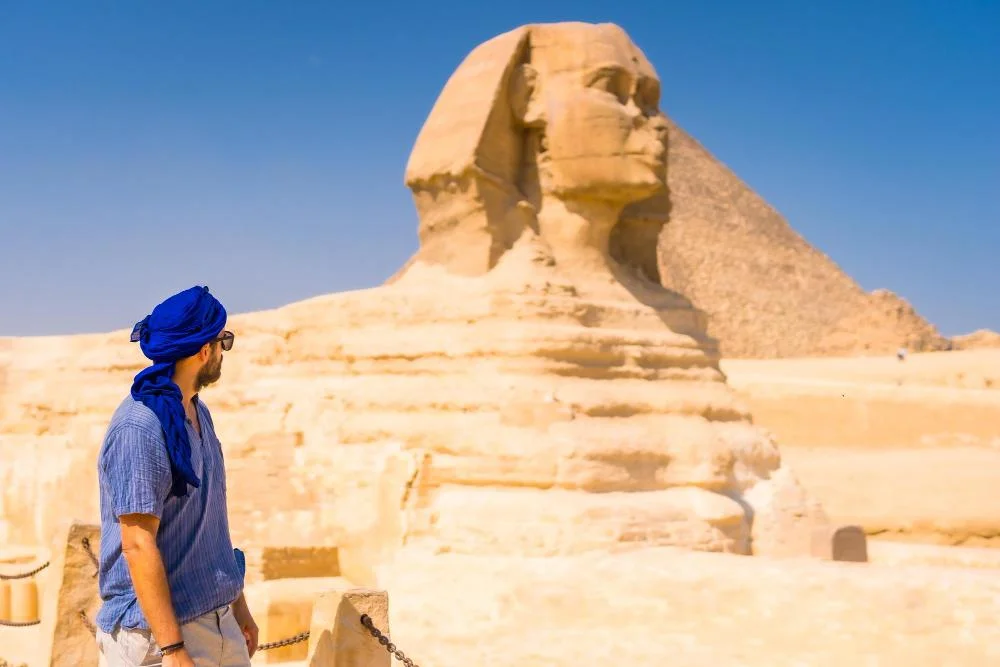
The Great Sphinx of Giza measures approximately 240 feet (73 meters) long, 66 feet (20 meters) high, and 63 feet (19 meters) wide — making it one of the largest monolithic statues in the world. It was carved directly from a single limestone outcrop rather than built piece by piece.
| Feature | Measurement |
|---|---|
| Total Length | 240 ft (73 m) |
| Height | 66 ft (20 m) |
| Width | 63 ft (19 m) |
| Material | Single limestone bedrock |
According to some theories, chambers and tunnels beneath the statue may contain hidden relics or ceremonial passages. However, no direct evidence has confirmed these claims, adding to the allure of the secrets of the Sphinx that continue to attract researchers from around the world.
Restoration and the Missing Nose of the Sphinx
Over thousands of years, the Great Sphinx of Giza has suffered from erosion, vandalism, and restoration attempts. One of the most famous mysteries surrounding it is the missing nose. Although popular legend blames Napoleon’s soldiers for shooting it off in 1798, sketches from the 18th century show that the nose was already missing long before his arrival.
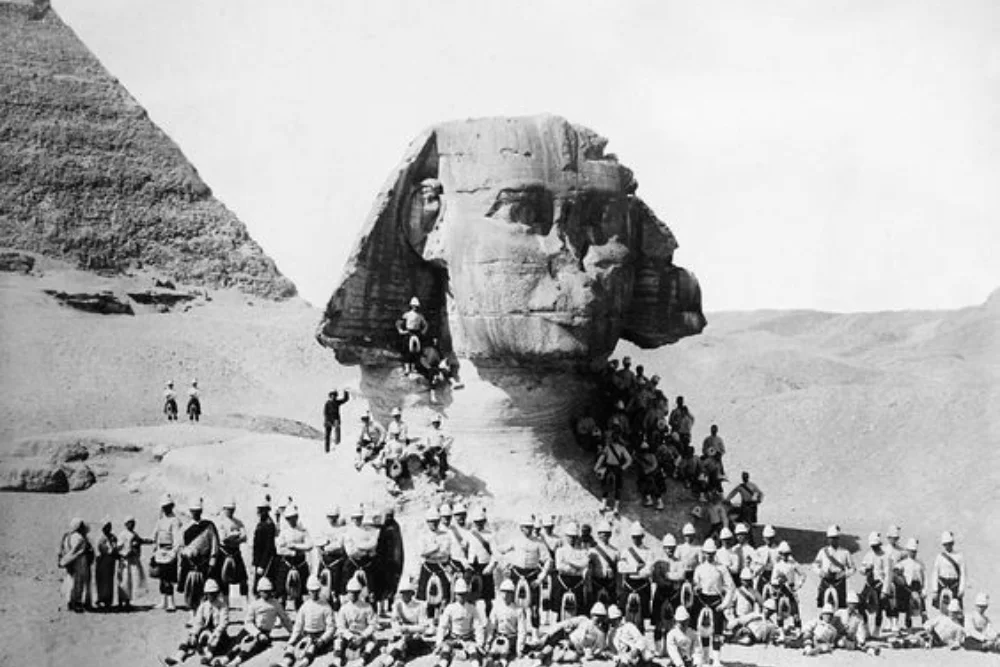
The medieval historian al-Maqrizi attributed the damage to a 14th-century Sufi named Muhammad Sa’im al-Dahr, although that account remains debated. By the early 1800s, the Sphinx was buried up to its shoulders in sand until explorers began excavating it — revealing the full monument for the first time in centuries.
Excavation and restoration efforts continued through the 19th and 20th centuries under the direction of Egyptologists like Auguste Mariette, Émile Baraize, and Selim Hassan. Modern conservation has included major stone repairs as well as measures to protect the monument from rising groundwater.
Exploration and Archaeological Discoveries
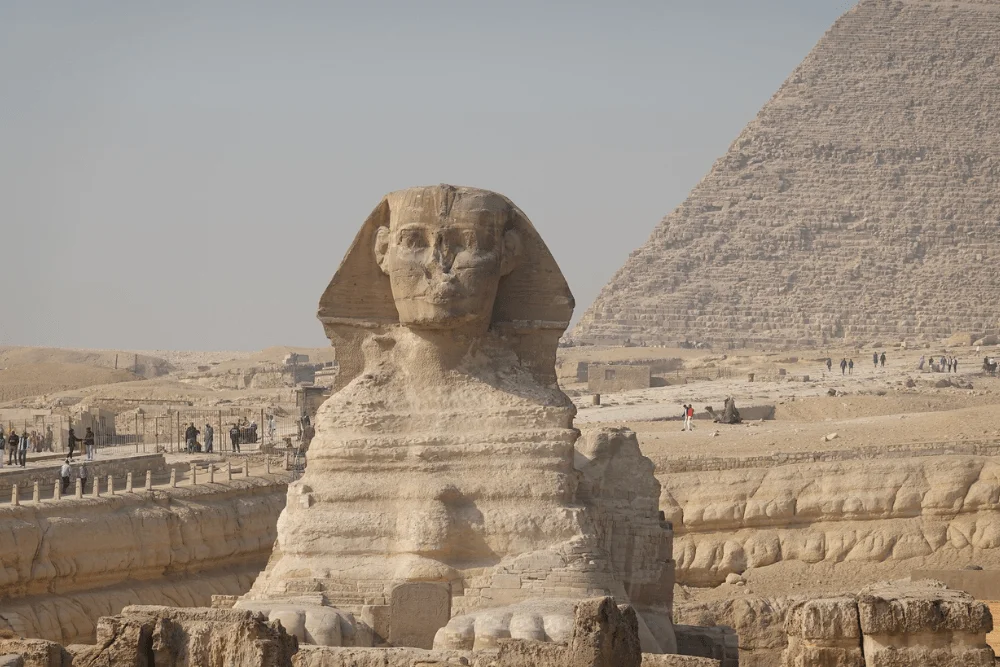
Giovanni Battista Caviglia attempted to excavate the Great Sphinx in 1817, before French archaeologist Auguste Mariette’s work in the mid-1800s. Mariette uncovered the nearby Valley Temple of Khafre, revealing strong artistic similarities between the statue’s face and known portraits of King Khafre.
Later studies discovered that the same limestone used for the Sphinx’s body was also employed in constructing surrounding temples, confirming that the statue and temples were carved from a single geological formation. This discovery reinforced the theory that the Sphinx was carved in situ — directly from bedrock, rather than built with blocks.
An experimental estimate by Mark Lehner and sculptor Rick Brown suggested that around 100 workers could have completed the carving in three years. However, signs of incomplete work suggest that the construction was abruptly halted.
Top Egypt Tours to Experience the Great Sphinx
- Half Day Pyramids Tour from Cairo – Discover the Sphinx and Pyramids with a private Egyptologist guide.
- Camel Ride at Giza Pyramids – Enjoy a desert camel ride with panoramic views of the pyramids; morning or sunset times are subject to availability.
- Sound & Light Show at Giza Pyramids – Witness the magical night show narrating the history of the Sphinx and Pharaohs.
- 4 Days Cairo Tour Package – Explore Cairo’s highlights including the Great Sphinx and Egyptian Museum.
- 7 Days Cairo & Hurghada Holiday – Combine ancient wonders with Red Sea relaxation.
- 10 Days Cairo, Aswan, Luxor & Hurghada Tour – A full journey across Egypt’s iconic temples and Sphinx.
- 14 Days Cairo, Luxor & Hurghada Oases Tour – Explore Egypt’s hidden oases and ancient landmarks.
- 16 Days Cairo, Nile Cruise & Siwa Tour – The ultimate Egypt adventure covering deserts, temples, and the Sphinx.
Conclusion: The Timeless Guardian of Egypt
The Great Sphinx of Giza remains a masterpiece of ancient engineering and spiritual symbolism. Commonly believed to represent King Khafre, it combines the might of a lion with the intelligence of a human — a perfect reflection of the pharaoh’s divine authority and earthly wisdom.
Despite centuries of erosion, restoration, and mystery, the Sphinx remains an eternal guardian, watching over the Pyramids of Giza. Whether you admire it in person or study its secrets, the Great Sphinx stands as one of the world’s most awe-inspiring symbols of human civilization.
FAQs about the Great Sphinx of Giza
Most historians associate it with Pharaoh Khafre around 2500 BC during Egypt’s 4th Dynasty.
The Great Sphinx is approximately 4,500 years old, making it one of the world’s oldest monumental sculptures.
It symbolizes strength, wisdom, and divine protection — combining a lion’s body with a human head to represent pharaonic power.
The nose was already missing before Napoleon’s campaign. Al-Maqrizi attributed the damage to a 14th-century Sufi, but that account remains debated.
Yes. Visitors can see the Sphinx as part of a visit to the Giza Plateau. Access inside its enclosure is distinct from ordinary viewing and may require special arrangements.
Passages and fissures have been investigated, but they do not prove the popular claim that a hidden Hall of Records exists.