Ancient Egyptian Symbols: Meanings, Secrets & Sacred History
Ancient Egyptian symbols are among the most powerful visual languages ever created. For thousands of years, these sacred signs have been used to convey concepts such as life, death, creation, protection, and the divine order of the universe. Long before written alphabets became common, the ancient Egyptians relied on symbols to communicate complex beliefs about existence and the afterlife.
From the famous Ankh, the ancient Egyptian symbol of life, to the Eye of Horus, the scarab, and royal insignia, each symbol carried layers of meaning rooted in religion, mythology, and daily life. These symbols were not merely decorative elements; they were deeply connected to gods, cosmic balance, and the human soul.
Understanding the meanings of ancient Egyptian symbols helps us decode how one of the world’s most advanced civilizations viewed the universe. Their symbols explained natural phenomena, justified royal authority, protected the living, and guided the dead on their journey to eternity.
In this guide, we explore the most important ancient Egyptian symbols, their meanings, their connection to gods and mythology, and why these sacred signs continue to fascinate historians, travelers, and culture lovers around the world.
Key Takeaways – Ancient Egyptian Symbols
- Ancient Egyptian symbols were used to explain life, death, creation, protection, and the relationship between humans and gods.
- Each symbol carried multiple meanings connected to mythology, religion, astronomy, and the afterlife.
- The Ankh represents life and eternity, while symbols like the Djed, Scarab, and Eye of Horus focus on stability, rebirth, and protection.
- Many symbols of ancient Egyptian gods were linked to animals, natural forces, and cosmic balance.
- Symbols were used everywhere in ancient Egypt—from temples and tombs to jewelry, amulets, and royal regalia.
- Understanding these symbols offers deep insight into how ancient Egyptians viewed the universe and human existence.
How Ancient Egyptian Symbols Were Used
In ancient Egypt, symbols were far more than decorative elements. They formed a complete visual language used to explain the unseen forces of the universe, communicate with the gods, and protect both the living and the dead.
Ancient Egyptian symbols appeared everywhere—on temple walls, tombs, coffins, amulets, jewelry, royal crowns, and everyday objects. Each symbol carried a specific meaning that could change depending on context, placement, and association with gods or rituals.
By understanding how these symbols were used, we can better appreciate the deeper meanings behind the most important ancient Egyptian symbols explained below.
Meanings of Ancient Egyptian Symbols
The meanings of ancient Egyptian symbols were deeply shaped by religion, mythology, and the Egyptians’ desire to understand life, death, and the unseen forces of the universe. These symbols formed a visual language that connected humans with gods, nature, and the afterlife.
Rather than being decorative elements, ancient Egyptian symbols carried layered meanings that evolved over time while remaining closely tied to divine power, cosmic balance, and eternal life.
The culture of ancient Egypt is full of Ancient Egyptian Symbols and myths. Much of their history is a mixture of verifiable facts, including those embedded in myths, through which the ancient Egyptians tried to explain difficult events, such as causes of death, disease, harvest results, etc. Everything we see is linked in one way or another to amazing stories, myths, and beliefs, which is exactly why the ancient Egyptians created countless symbols to explain everything.
The Egyptians used many ancient Egyptian symbols not only to express different ideas and concepts but also to decorate temples, represent their religion and gods, and sometimes create protective talismans to ward off danger and misfortune.
Why Ancient Egyptian Symbols Were Important
- They explained natural forces such as the sun, the Nile, and the cycle of life and death.
- They represented gods, goddesses, and divine protection.
- They were used in temples, tombs, jewelry, and funerary rituals.
- They served as spiritual tools for protection, rebirth, and eternal life.
Below are some of the most important ancient Egyptian symbols, each explained through its historical background, symbolic meaning, and role in religion and mythology.
Ankh – Key of Life (Ancient Egyptian Symbol)
The Ankh is one of the most famous ancient Egyptian symbols. Often called the “key of life,” it appears across Egyptian art, temples, tombs, and funerary objects as a powerful sign of life, protection, and eternity.
The Ankh Symbol, one of the most famous Ancient Egyptian Symbols – the key to life – is a cross with a rounded upper part, one side of which symbolizes the concept of immortal life, the morning sun, the principles of femininity and masculinity, and the earth and sky.
These concepts are embodied in its key-like form. In carrying the Ankh, one holds the key to the secrets of existence. The union of opposites – female and male, earth and sky – and the extension of earthly life into eternity and time into eternity are all represented in the shape of the round cross. This symbol was so powerful and long-lasting in Egyptian culture, since the early dynastic period in Egypt, 3150-2613 BC, that it is no wonder that the Christian faith later borrowed it in the fourth century as a symbol of its god.
The origin of the Ankh symbol remains unknown, but Egyptian civilization expert Wallis Budge claims that it was developed from the “Teget” or “Isis Knot,” a similar symbol with two arms on either side and associated with the gods. Female deities- such as Neith- were more popular and perhaps more powerful in ancient Egyptian history, and the Ankh may have evolved from Tejet, but this theory is not agreed upon.
Ankh Meaning in Ancient Egypt (Quick Takeaways)
- Core meaning: life, vitality, and eternal existence.
- Common contexts: gods holding the Ankh to “grant life” to kings or the deceased.
- Where you’ll see it: temple reliefs, tomb paintings, coffins, and amulets.
- Spiritual role: protection and a symbolic “passport” to the afterlife.
The Ankh Symbol was closely linked to the Isis cult, and when its popularity grew, the same thing happened with this symbol. Many Gods are depicted carrying the Ankh with the symbol of the Djed, and it appears in all types of Egyptian art, from coffins and tomb paintings to palace decorations, statues, and inscriptions. As for amulets, the Ankh was almost as common as the scarab and the Djed.

Isis carries the key of life and provides it to Osiris.
2) The Djed – Symbol of Stability
The Djed is one of the most recognizable ancient Egyptian symbols tied to stability, endurance, and resurrection. It frequently appears in funerary contexts and is strongly connected to Osiris and the afterlife.
The Djed is a column with a wide base that narrows as it rises to the column’s capital and is interrupted by four parallel lines. Its beginnings go back to the pre-dynastic era (6000-3150 BC), and it remains one of the foundations of Egyptian iconography during the Ptolemaic period (323-30 BC), the last rulers of Egypt before the arrival of the Romans.
Although the symbol is interpreted as a symbol of stability, it represents a reminder of the near presence of the gods or a reference to the god Osiris, who is associated with resurrection and eternal life. It is believed that the Djed represents the backbone of the deity and often appears at the bottom of the coffin to help the newly arrived soul stand and walk to the afterlife.
This symbol is four columns standing one behind the other, the “tamarisk” tree included in the most widespread myth of Osiris, or the fertility pillar raised in celebrations. In general, this shape symbolizes the stability of life and the hope that the gods provide in the afterlife.
This Ancient Egyptian Symbol includes four columns, which shows a number frequently used in Egyptian iconography: four. This number represents perfection and is seen in art, architecture, and funerary rituals, such as the four sons of Horus in canopic vessels, the four sides of the pyramid, and so on. Other interpretations also symbolize concepts related to the myth of Isis and Osiris.
Djed Meaning (Why It Mattered)
- Stability & strength: a visual promise that order will endure.
- Osiris connection: linked to resurrection and the renewal of life after death.
- Funerary role: placed on coffins or tomb imagery to support the deceased’s rebirth.
- Symbol pairing: often appears alongside other powerful Egyptian symbols (like the Was scepter).
As for the tamarisk tree, it refers to the resurrection of the dead, as in the myth, as the tree carries Osiris until he is liberated and Isis returns him to life. The fertility pillar is also associated with Osiris, who caused the waters of the Nile to rise, fertilizing the land and returning the flow to its natural course. In all cases, whatever the object it represents, the Djed is a very powerful symbol and is usually associated with another symbol: the Scepter.

Djed (symbol of stability).
3) The Was Scepter – Symbol of Royal Power
The Was Scepter is one of the most important ancient Egyptian symbols of authority, dominion, and divine control. It commonly appears in the hands of gods and kings, signaling their power over chaos and order.
The Scepter is a staff topped with the head of a dog. It may have been an “Anubis” from the time of the New Kingdom (1570–1069 BC), but previously it carried the head of a pagan animal such as a fox or a dog. From the early dynasties, the Scepter symbolized power and strength.
Each god had a scepter reflecting their own authority. The god Ptah carried a scepter combining the Ankh, Djed, and Was, representing life, stability, and power united as a single divine force.
- Meaning: royal authority, strength, divine rule.
- Who held it: gods, kings, and divine protectors.
- Symbolism: control over chaos and balance.

The Was Scepter – symbol of royal power.
4) The Scarab – Symbol of Transformation
The Scarab is one of the most recognizable ancient Egyptian symbols, representing rebirth, renewal, and transformation. It is closely linked to the movement of the sun and the cycle of life.
The scarab represents the god who rolled the sun across the sky, protecting it through the underworld until it rose again at dawn. When God Ra became the dominant sun god, the scarab deity Khepri became associated with rebirth and renewal.
- Core meaning: transformation and rebirth.
- Solar role: renewal of the sun each day.
- Usage: amulets, jewelry, funerary objects.

Scarab – symbol of transformation.
5) The Tyet (Knot of Isis) – Symbol of Protection
The Tyet, also known as the Knot of Isis, is a powerful ancient Egyptian symbol associated with protection, femininity, and divine security.
This symbol was often used in funerary contexts and temple decoration, symbolizing the protective power of the goddess Isis over the living and the dead.
- Associated goddess: Isis.
- Meaning: protection, life, feminine power.
- Usage: amulets, temples carvings.

The Tyet – symbol of protection.
6) The Shen Ring – Symbol of Infinity and Protection
The Shen Ring is one of the most powerful ancient Egyptian symbols, representing eternity, completeness, and divine protection. Its unbroken circular form reflects the Egyptian belief in eternal life.
The word “Shen” means “to encircle,” symbolizing protection without beginning or end. Gods such as Horus, Isis, and Nekhbet are often depicted holding the Shen Ring, emphasizing their role as protectors of cosmic order.
- Main meaning: eternity and infinity.
- Spiritual role: divine protection.
- Common use: amulets, coffins, temple reliefs.

The Shen Ring – symbol of infinity and protection.
7) The Lotus (Sesen) – Symbol of Rebirth and the Sun
The Lotus flower (Sesen) is one of the most poetic ancient Egyptian symbols, symbolizing rebirth, creation, and the daily journey of the sun.
Because the lotus closes at night and opens again at dawn, it became a natural symbol of resurrection and renewal. It was closely associated with Osiris and the eternal cycle of life and death.
- Symbolism: rebirth, creation, sunrise.
- Associated gods: Osiris and solar deities.
- Usage: temples, sarcophagus, amulets.

The Lotus – symbol of rebirth and the sun.
8) Eye of Horus (Udjat) – Symbol of Healing and Protection
The Eye of Horus, also known as the Udjat Eye, is one of the most recognizable ancient Egyptian symbols, representing healing, wholeness, and divine protection.
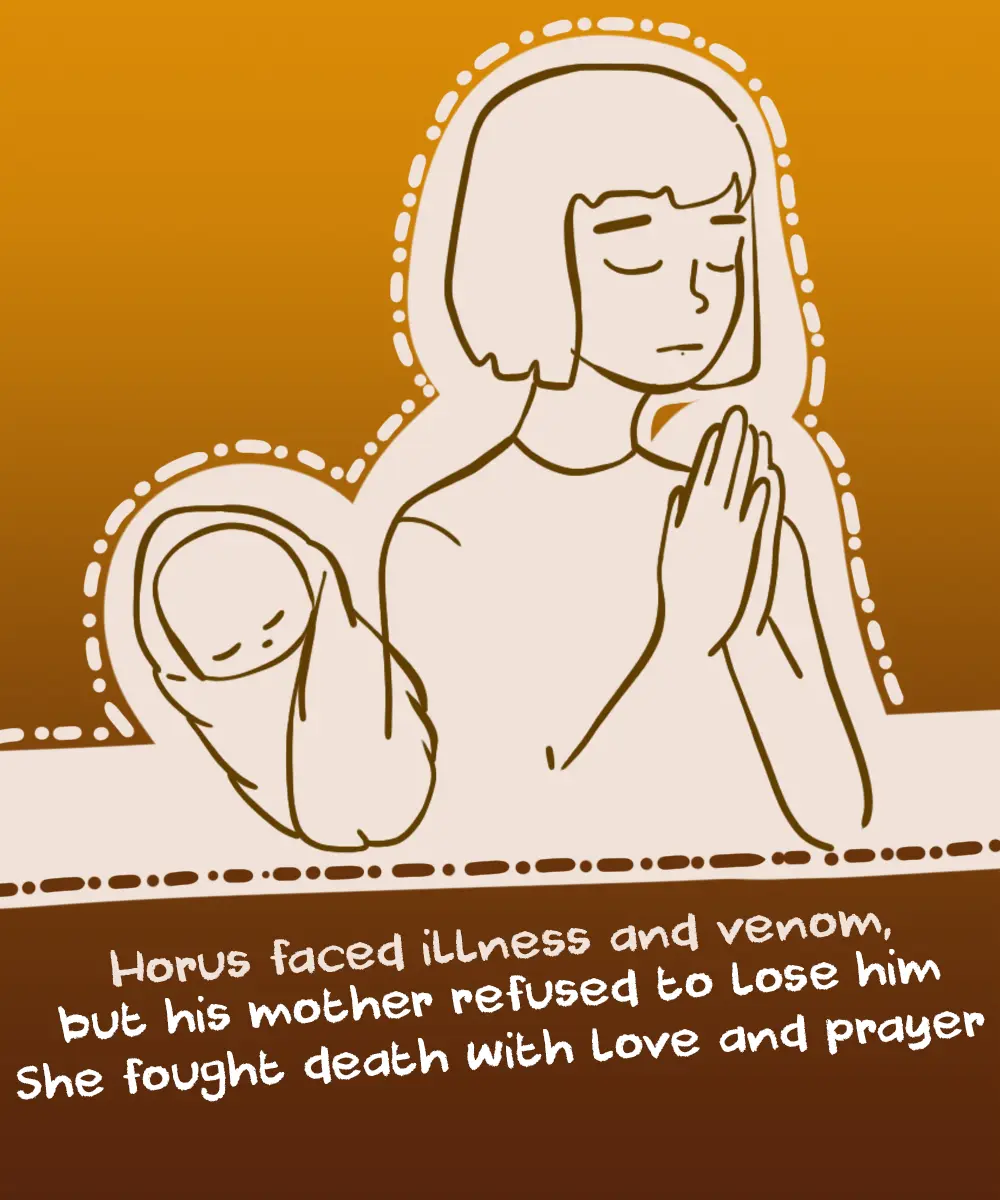
According to mythology, Horus lost his eye in battle and later regained it, making the symbol a powerful representation of restoration and balance. It was widely used as a protective amulet.
- Meaning: healing and well-being.
- Spiritual role: protection from harm.
- Usage: jewelry, tombs, coffins.

9) The Crook and Flail – Symbol of the King’s Power
The Crook and Flail are among the most authoritative ancient Egyptian symbols, representing royal legitimacy, leadership, and divine rule.
Originally linked to Osiris, these tools symbolized the king’s responsibility to guide and provide for his people. They later became standard symbols of pharaonic power.
- Crook: guidance and leadership.
- Flail: authority and provision.
- Royal meaning: legitimate kingship.

Crook and flail.
10) The Benben Stone – Symbol of Creation and Rising
The Benben Stone is one of the oldest ancient Egyptian symbols, representing creation, emergence, and the first mound of land rising from chaos.
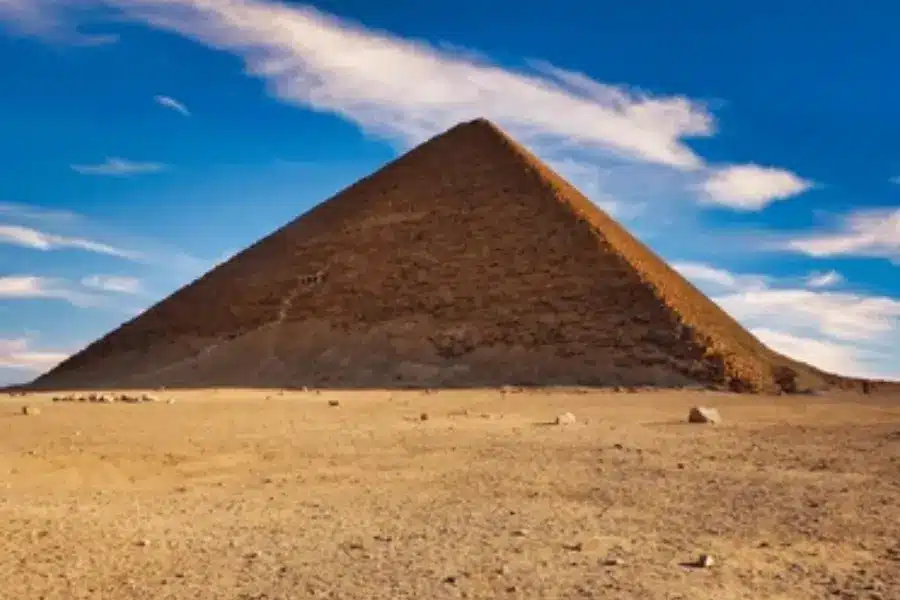
According to mythology, the god Atum stood upon the Benben to begin creation. This concept later influenced pyramid architecture, symbolizing eternal life and ascension.
- Meaning: creation and rebirth.
- Architectural role: inspiration for pyramids.
- Spiritual concept: rising from chaos to order.

The Benben stone.
Why Ancient Egyptian Symbols Still Matter Today
Although these ancient Egyptian symbols were created thousands of years ago, their meanings have never faded. In fact, many of these symbols remain deeply embedded in modern culture, art, and personal belief systems.
Today, symbols like the Ankh, Eye of Horus, and Scarab are commonly used in jewelry, tattoos, fashion design, spiritual practices, and even modern branding. Their appeal lies in their timeless messages—life, protection, renewal, balance, and eternity.
- In jewelry & fashion: Symbols like the Ankh and Lotus represent life, rebirth, and harmony.
- In tattoos: The Eye of Horus and Scarab are chosen for protection and personal transformation.
- In art & design: Ancient Egyptian symbols inspire architecture, graphic design, and visual storytelling.
The continued fascination with these symbols shows how ancient Egyptian beliefs still resonate with modern humanity, bridging the gap between ancient wisdom and contemporary life.
Common Misconceptions About Ancient Egyptian Symbols
Because of their popularity, many ancient Egyptian symbols are often misunderstood or oversimplified. Clearing up these misconceptions helps us better appreciate their original meanings.
- Eye of Horus ≠ Eye of Ra: While related, they represent different divine forces and myths.
- The Ankh is not just a cross: It symbolizes life, balance, and eternal existence.
- Symbols were not purely religious: Many had political, social, and protective roles.
- Meanings evolved over time: A symbol’s meaning could change depending on the era and context.
Understanding these nuances reveals the depth of ancient Egyptian symbolism beyond modern interpretations and pop culture representations.
Conclusion: The Timeless Power of Ancient Egyptian Symbols
Ancient Egyptian symbols were far more than artistic decorations—they were a language that expressed life, death, power, protection, and the eternal connection between humanity and the divine.
From the Ankh’s promise of eternal life to the Eye of Horus’ protection and the Scarab’s symbolism of rebirth, these symbols reveal how deeply the ancient Egyptians understood the cycles of existence.
Their lasting influence reminds us that ancient Egypt was not only a civilization of monuments but also one of profound ideas that continue to inspire the modern world.
Experience Ancient Egyptian Symbols in Real Life
Reading about ancient Egyptian symbols is only the beginning.
The true magic happens when you stand inside the temples, tombs, and sacred sites where these symbols were created—carved into stone, painted on walls, and woven into daily life for thousands of years.
🏛 Egypt Tour Packages
Explore Cairo, Luxor, Aswan, Alexandria, and ancient temples where these symbols come alive.
🗺 Day Day Tours
Perfect for travelers who want to focus on specific sites, museums, or temples.
🚢 Nile River Cruises
Sail between Luxor and Aswan, passing temples filled with ancient symbols and myths.
⚓ Shore Excursions
Discover Egypt’s highlights directly from your cruise port with our Egypt shore excursions.
Looking for something more personal? Our travel experts can design a journey inspired by your interests in ancient Egyptian history, symbols, and mythology.
FAQs – Ancient Egyptian Symbols
What are ancient Egyptian symbols?
Ancient Egyptian symbols are visual signs used to express religious beliefs, natural forces, and spiritual concepts. They appeared on temples, tombs, amulets, and everyday objects to communicate ideas about life, death, protection, and the gods.
What is the most important ancient Egyptian symbol?
The Ankh, known as the “Key of Life,” is considered the most important ancient Egyptian symbol. It represents eternal life, balance, and the connection between earthly existence and the afterlife.
Why did ancient Egyptians use symbols instead of writing?
Ancient Egyptians used symbols because they formed a universal visual language. Symbols could convey complex religious and spiritual meanings instantly and were believed to hold protective and magical power beyond written words.
Were ancient Egyptian symbols used as amulets?
Yes, many ancient Egyptian symbols were worn as amulets for protection, health, and good fortune. Popular examples include the Ankh, Scarab, Eye of Horus, and Shen ring, which were used by both the living and the dead.
Can you still see ancient Egyptian symbols today?
Yes, ancient Egyptian symbols can still be seen carved on temple walls, painted inside tombs, displayed in museums, and preserved on monuments across Egypt—especially in Cairo, Luxor, Aswan, and along the Nile.