Memphis Egypt – The First Capital of Ancient Egypt
Memphis Egypt was the first capital of the unified Egyptian state and a cradle of early civilization.
Founded around 3100 BC after the unification of Upper and Lower Egypt, the city stood near today’s village of Mit Rahina, about 24 km south of Cairo.
Known in ancient Egyptian as Inbu-ḥedj (“White Walls”) and Ḥut-ka-Ptah (“Temple of the Ka of Ptah”), Memphis gave the Greeks the word Aigyptos — the root of the modern name “Egypt.” As the ancient city of Memphis, Egypt, it became the seat of power, administration, and religion for centuries.
Strategically set at the head of the Delta, Memphis controlled trade routes across desert corridors and the Nile Valley. Its necropolis stretched from Giza to Dahshur and later formed part of a vast UNESCO World Heritage Site, preserving the city’s timeless legacy.
Key Takeaways – Memphis Egypt
- ✅ First capital of unified Egypt, traditionally founded by King Narmer (c. 3100 BC).
- ✅ Ancient names include Inbu-ḥedj (White Walls) and Ḥut-ka-Ptah (Temple of the Ka of Ptah).
- ✅ Located near today’s Mit Rahina, ~24 km south of Cairo; strategic control over Delta routes.
- ✅ Served as military and administrative hub across multiple dynasties.
- ✅ Its vast necropolis (Giza–Saqqara–Dahshur) forms a UNESCO World Heritage Site.
- ✅ Ideal stop on Cairo day trips for the open-air museum and colossal statues.
The Remarkable History of the Name of the City of Memphis
The city known today as Memphis, Egypt, has carried several names across history, each echoing its cultural depth and sacred role in ancient civilization. In the ancient Egyptian language, it was called Inbu-ḥedj, meaning “White Walls,” and later Ḥut-ka-Ptah, or “Temple of the Ka of Ptah,” referring to its chief deity, Ptah, the god of craftsmen and creation.
From this sacred name Ḥut-ka-Ptah came the Greek word Aigyptos, which later evolved into the modern term “Egypt.” This linguistic transformation makes Memphis not only the first capital of ancient Egypt but also the source of the country’s very name.
The city’s Greek name, “Memphis,” was derived from the ancient term Men-nefer, the name of King Pepi I’s pyramid located near the necropolis of Saqqara in Giza. This connection highlights how Memphis became the symbolic heart of Egypt’s royal power and spiritual heritage for more than three millennia.

Memphis as the First Capital Ever of Egypt
The foundation of Memphis City in Egypt dates back to around 3100 BC, during the unification of Upper and Lower Egypt. Ancient texts and archaeological records reveal that the legendary King Narmer—also known as Menes—founded the city to symbolize Egypt’s unity and establish the first central government in recorded history.
According to Egyptologists, King Menes built white mudbrick walls around the city, earning it the ancient name Inbu-ḥedj (“White Walls”). This stronghold stood as a political and spiritual beacon for thousands of years, marking Memphis as the birthplace of the Egyptian state and the cradle of its royal legacy.
Military Capital
Throughout its early history, Memphis was Egypt’s military capital. Its strategic location at the apex of the Nile Delta enabled the army to control routes leading to Nubia (Kush) in the south and to Palestine and Syria in the northeast. Major military expeditions of Pharaohs Thutmose III and Amenhotep II were launched from Memphis, underscoring its role as a command center for Egyptian expansion.
The city hosted extensive workshops for chariots and weapons, while its naval harbor—known as Per-Nefer—became one of the most powerful shipbuilding bases in the New Kingdom. This made Memphis both a defensive fortress and a center for innovation in ancient Egyptian warfare.
Administrative Capital
Even as Thebes rose to prominence during the 18th Dynasty, Memphis Egypt maintained its importance as the administrative heart of the nation. Numerous inscriptions and temple reliefs reveal that royal families and high officials continued to reside there, especially during the Ramesside period.
In the Late Period (1069–332 BC), Memphis once again became Egypt’s royal seat before facing invasions by the Kushites, Assyrians, and Persians. Despite these hardships, it preserved its religious influence, particularly through the Temple of Ptah, where Pharaohs sought divine guidance for rule and renewal.

The Distinguished Geographical Location of Memphis, Egypt
One of the key reasons Memphis Egypt flourished as the first capital of ancient Egypt was its exceptional geographical position. Standing at the entrance of the Nile Delta, the city commanded both Upper and Lower Egypt, securing control over trade routes from the Red Sea to the Western Desert.
This ideal location made Memphis the political, administrative, and commercial heart of the kingdom for nearly 1,000 years. It offered natural defense, proximity to fertile lands, and access to desert roads that linked Egypt to the Levant and North Africa. The city’s prosperity also encouraged the development of nearby necropolises such as Saqqara, Giza, and Dahshur.
Memphis Throughout the Ages
Over thousands of years, Memphis Egypt, witnessed shifting power, glory, and decline. Each era left its mark on the city’s cultural and architectural heritage, from its founding in the Early Dynastic Period to its transformation into a UNESCO heritage site.
- First Intermediate Period (2181–2055 BC): Political instability moved the royal capital to Heracleopolis, while other cities such as Ashmonin and Thebes grew in prominence.
- Middle Kingdom (2055–1650 BC): Memphis regained importance under King Amenemhat I, who established a royal cemetery at Lisht near the city.
- New Kingdom (1550–1069 BC): The city became a royal residence again, hosting temples and workshops for Pharaohs of the 18th and 19th Dynasties.
- Late Period (1069–332 BC): Despite invasions, Memphis remained a significant religious center devoted to Ptah until the rise of Alexandria.
| Era | Approx. Dates | Role of Memphis |
|---|---|---|
| Old Kingdom | 2686–2181 BC | Political and cultural capital, home to the great pyramids of Giza and Saqqara. |
| Middle Kingdom | 2055–1650 BC | Royal cemetery moved near Memphis; revival of administrative importance. |
| New Kingdom | 1550–1069 BC | Military center and royal workshop hub for Pharaohs of the 18th–19th Dynasties. |
Cemetery of Memphis – The Necropolis
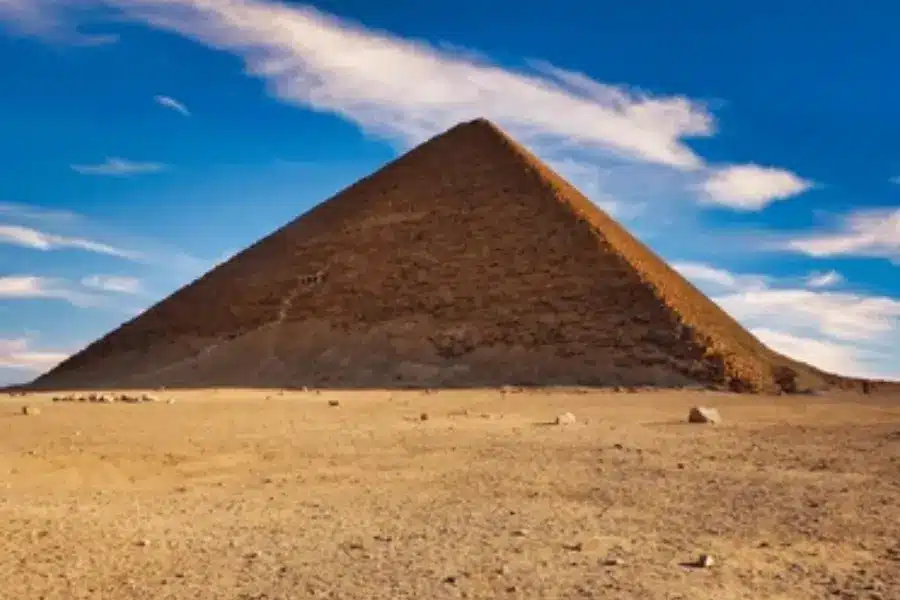
The vast necropolis of Memphis Egypt stretched across the western Nile River bank, embracing sites such as Abu Rawash, Giza, Abu Sir, Saqqara, and Dahshur. These sacred burial grounds housed royal pyramids, mastabas, and tombs of nobles that immortalized the craftsmanship of ancient Egypt.
This “City of the Dead” reflects more than 3,000 years of funerary evolution and artistic brilliance. In recognition of its cultural significance, the necropolis of Memphis was inscribed as a UNESCO World Heritage Site in 1979 under the name “Memphis and its Necropolis – the Pyramid Fields from Giza to Dahshur.”

Immortal Monuments in the City of Memphis City
Many of Memphis’s ancient wonders now lie buried beneath layers of fertile soil, but the remaining monuments around Mit Rahina still speak of its grandeur. Visitors can explore an open-air museum that exhibits colossal statues, sphinxes, and remnants of temples dedicated to Ptah and other deities.
Statue of Ramses II
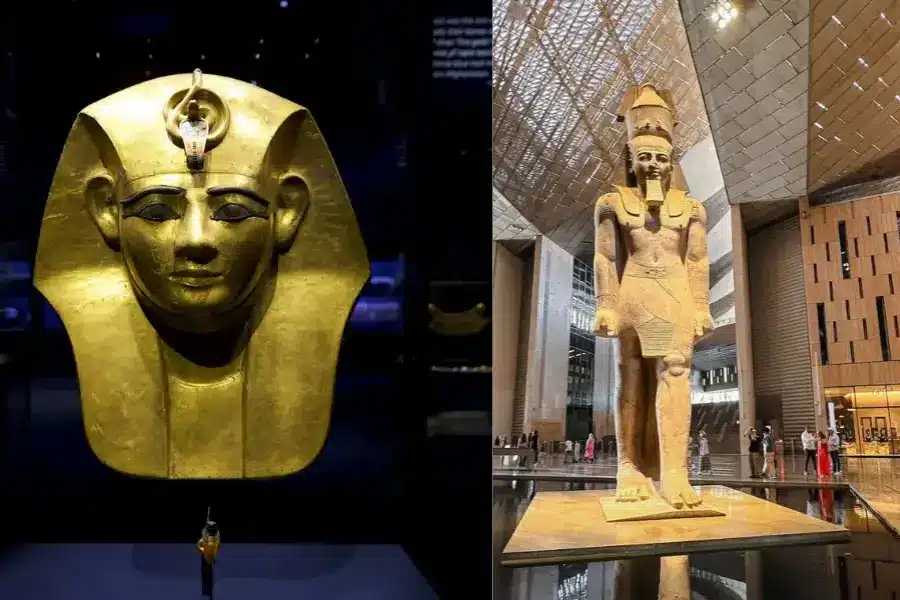
The most celebrated monument in Memphis Egypt is the enormous limestone statue of King Ramses II, lying on its back inside the Mit Rahina Museum. Its twin once stood in Ramses Square in Cairo and now welcomes visitors to the Grand Egyptian Museum.
The Sphinx of Memphis
A red-granite sphinx of Ramses II discovered in Memphis ranks among the largest ever found, after the famous Giza Sphinx and the alabaster sphinx also housed in Mit Rahina. The statue—now exhibited in Pennsylvania, USA—bears royal inscriptions carved on its chest and base.

The Open-Air Museum of Mit Rahina
The Mit Rahina Museum offers a unique window into the legacy of ancient Memphis Egypt. Among its treasures are statues of Ramses II, alabaster sphinxes, and temple ruins of Ptah—the city’s patron god. Together, they form one of the most accessible archaeological experiences near Cairo.

The Temple of Ptah Ruins
One of the most sacred and historically significant remains in Memphis Egypt is the Temple of Ptah, the patron god of craftsmen and creation. It once stood at the spiritual heart of the city and gave Memphis its ancient Egyptian name “Hut-ka-Ptah,” meaning “the Enclosure of the Ka of Ptah.”
Although only fragments of its colossal gateways, pillars, and statues survive today, the site still reveals how central the cult of Ptah was to the spiritual life of Memphis.
Visitors can view several of its remains around the Mit Rahina open-air museum.

Why Visit Memphis Egypt Today?
Visiting Memphis Egypt is like stepping into the origins of Egyptian civilization. Located just a short drive from Cairo, the site offers a peaceful open-air experience surrounded by ancient relics that tell the story of humanity’s first capital. Combined with nearby wonders like Saqqara and Dahshur, it’s an essential stop on any Cairo day tour.
Travelers can explore the ancient Temple of Ptah ruins, admire colossal statues of Ramses II, and wander through the open-air museum where Egyptian kings once worshipped their gods. The calm atmosphere and timeless beauty make Memphis a perfect destination for history lovers, photographers, and culture seekers alike.
Final Thoughts: The Eternal Legacy of Memphis Egypt
As one of the oldest and most influential cities in human history, Memphis Egypt remains a living symbol of the nation’s ancient power and creative genius. Once the thriving capital of the unified kingdom, its ruins in Mit Rahina still echo with the voices of pharaohs and the legacy of the god Ptah, the divine creator of crafts and arts.
Visitors today can marvel at the colossal Ramses II statue, the alabaster Sphinx, and the remnants of the Temple of Ptah — each piece preserving a chapter of Egypt’s architectural brilliance and spiritual devotion.
For those seeking a deeper journey through time, our expertly designed Egypt tour packages combine Cairo day tours, Nile cruises, shore excursions, and even oasis adventures to reveal every facet of Egypt’s timeless story.
Ancient Memphis is located about 24 km south of Cairo, near the modern village of Mit Rahina. It once stood at the junction of Upper and Lower Egypt, making it a strategic and symbolic capital for the unified kingdom.
Memphis was founded around 3100 BC by King Narmer (also known as Menes), the first ruler of unified Egypt. He established it as the nation’s first capital and named it “White Walls” or “Ineb Hedj.”
At the Mit Rahina Open-Air Museum, visitors can see the colossal statue of Ramses II, the alabaster Sphinx, and several artifacts from the Temple of Ptah, along with statues and inscriptions from the New Kingdom era.
Memphis served as Egypt’s first capital and a major religious, political, and commercial center for over 3,000 years. It was dedicated to Ptah, the god of creation and craftsmanship, and played a vital role in uniting the country’s two lands.
Yes, the ancient city of Memphis and its necropolis—including Saqqara, Dahshur, Abu Sir, and Giza—were inscribed as a UNESCO World Heritage Site in 1979 for their outstanding cultural and historical significance.
Memphis can be visited easily on a day trip from Cairo, often combined with tours to Saqqara, Dahshur, and Giza. You can book a private or group tour through Egypt Tours Group for a guided and comfortable experience.