Valley Temple of Khafre in Giza – History, Architecture & Facts
Is one of the most remarkable ancient sites in Egypt, located within the Giza Pyramids Complex. Built more than 4,500 years ago, this temple stands as a stunning testament to the architectural genius of ancient Egyptians and their deep spiritual beliefs surrounding death and resurrection.
The temple, often referred to as the Valley Temple of Chephren, served as the gateway for the king’s mummification and burial rituals. It’s a masterpiece of engineering and religious devotion — perfectly preserved through centuries, allowing visitors today to glimpse the artistry and precision of Egypt’s 4th Dynasty.
In this detailed guide, we’ll uncover the history, design, location, and symbolism of the Valley Temple of Khafre — and explore how this incredible structure continues to fascinate travelers, historians, and archaeologists worldwide.
Key Takeaways
- The Valley Temple of King Khafre is part of the Giza Pyramids Complex, located near the Great Sphinx.
- It was used for mummification and the “Opening of the Mouth” ritual before royal burial.
- The temple features massive limestone and granite blocks, showcasing ancient Egyptian precision.
- It remains one of the best-preserved structures from Egypt’s Old Kingdom (4th Dynasty).
- Visitors can explore its limestone corridors, polished granite walls, and ancient statue bases of King Khafre.
What Is the Valley Temple of King Khafre?
The Valley Temple of Khafre, also known as the Valley Temple of Chephren, was a crucial part of the royal funerary complex in ancient Giza. It served as both a sacred purification site and a ceremonial gateway between life and eternity for Pharaoh Khafre, builder of the second-largest pyramid on the Giza Plateau.
Unlike most temples of its era, the Valley Temple remains remarkably intact, featuring massive limestone foundations, polished Aswan granite interiors, and an extraordinary architectural layout. It stands as physical proof of the Old Kingdom’s unmatched skill in both construction and religious symbolism.
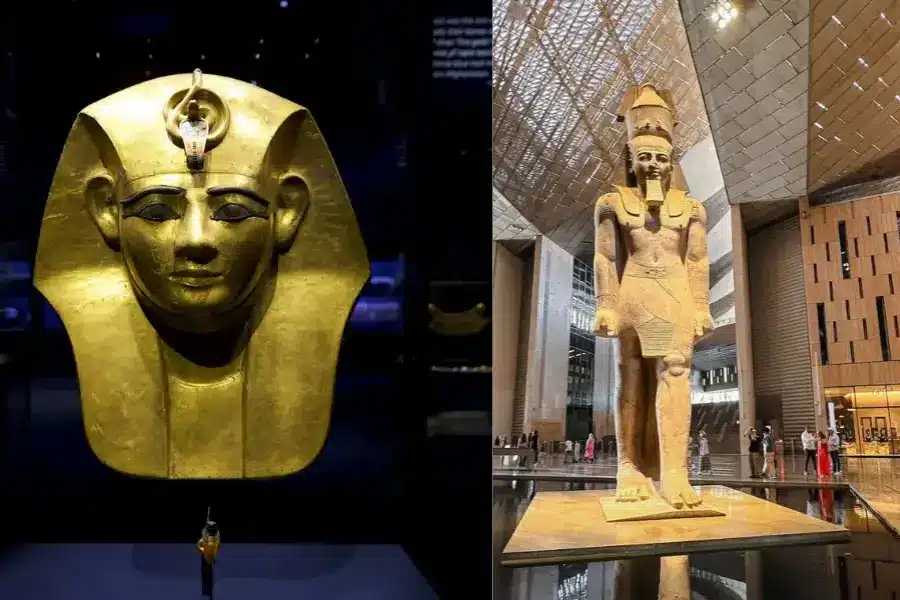
Archaeologists have uncovered evidence that the temple once housed several diorite statues of King Khafre, reflecting the Pharaoh’s divine connection to the gods & goddesses and his eternal rule over the afterlife. These discoveries continue to enrich our understanding of ancient Egyptian mortuary traditions.

Where Is the Valley Temple Khafre Located?
The Valley Temple of Khafre lies on the eastern edge of the Giza Plateau, only a few meters from the Great Sphinx and southeast of the Pyramid of Khafre. It’s about a 30-minute drive from Downtown Cairo City, making it one of the easiest historical landmarks to visit within the Giza complex.
This strategic location was not random — it connected the Nile River to the Pharaoh’s pyramid via a long causeway. Ancient priests would transport the royal mummy by boat to the valley temple, where purification rituals took place before burial in the pyramid’s mortuary temple.

Who Built the Valley Temple?
The Valley Temple of Giza was built by King Khafre (Chephren), son of Pharaoh Khufu, builder of the Great Pyramid. Khafre ruled during Egypt’s Fourth Dynasty (c. 2558–2532 BC), a golden era of pyramid construction and religious innovation.
The temple formed an essential part of Khafre’s grand funerary complex, which included his pyramid, a mortuary temple, and a causeway leading to the Nile. Inside the Valley Temple, archaeologists found diorite statues of Khafre that once stood in a perfect symmetrical layout, symbolizing eternal balance between life and death.

Architectural Design of the Valley Temple
The design of the Valley Temple reflects both the grandeur and the spiritual symbolism of the Old Kingdom. Built primarily from massive limestone blocks and clad with polished Aswan pink granite, it represents early examples of monumental stone architecture in Egypt.
The layout of the temple includes:
- An entrance hall that led to an open courtyard surrounded by 24 massive square pillars.
- Five sanctuaries likely dedicated to the Pharaoh’s statues, each with its own storage chamber behind.
- A T-shaped hall with towering granite architraves supported by strong square columns.
- Hidden passageways believed to have been used for purification and preparation rituals before burial.
Its unique precision in stone cutting and the near-perfect alignment of its walls demonstrate the ancient Egyptians’ advanced understanding of geometry, engineering, and cosmic harmony — centuries before modern tools existed.

History & Rituals Performed in the Valley Temple
The Valley Temple of King Khafre played a critical role in the royal funerary process. It was the site where priests carried out the “Opening of the Mouth” ceremony — a sacred ritual believed to restore the deceased Pharaoh’s senses so he could eat, speak, and rule in the afterlife.
Mummification and purification took place inside the temple using oils, resins, and incense imported from distant lands. Once prepared, the king’s body was carried along the causeway to the mortuary temple beside the pyramid, where final offerings were made to ensure eternal life.
This sequence of rituals connected the human world with the divine — a symbolic journey from earth to eternity, with the Valley Temple as the spiritual bridge.
Religious and Cultural Significance
Beyond its architectural brilliance, the Valley Temple holds deep spiritual meaning. It symbolized the king’s rebirth as a divine being, ensuring his transformation into an eternal god who would join the sun’s daily cycle — setting in the west and rising again in the east.
The temple’s design mirrors this belief, with corridors aligned to solar and cosmic directions, representing the Pharaoh’s journey with Ra, the Sun God. Every element — from the precision-cut granite walls to the serene statue halls — reflects the harmony between nature, divinity, and royal power.
Culturally, the temple connects the ancient and modern worlds. It continues to inspire historians, artists, and travelers who come to experience Egypt’s timeless spirituality through its enduring stones.
Visiting the Valley Temple of Khafre Today
Today, the Valley Temple of King Khafre welcomes thousands of visitors each year as part of the Giza Pyramids Day Tour. Its preserved structure allows you to walk through ancient corridors where priests once performed sacred rituals over 4,500 years ago.
The temple is open daily from 8:00 AM to 4:00 PM, and the best time to visit is early morning or late afternoon, when the lighting highlights the texture of its limestone and granite walls. A local Egyptologist guide can help you interpret carvings, layout, and religious symbolism — making the experience unforgettable.
For a more immersive experience, combine your temple visit with a stop at the Great Sphinx and Pyramid of Khafre — all within a few minutes’ walk.
Best Tours to Visit the Valley Temple
The Valley Temple of Khafre is included in almost all Cairo Day Tours and multi-day packages. Here are some of the best-rated options:
- Giza Pyramids, Sphinx & Valley Temple Tour – Ideal for first-time visitors.
- Full-Day Tour to Giza Pyramids, Memphis & Sakkara – Discover Egypt’s Old Kingdom heritage in one day.
- 5 Days Cairo, Luxor & Alexandria Tour – Combine the Valley Temple with major ancient wonders.
- 8 Days Cairo & Nile Cruise Christmas Tour – A festive holiday including the Giza Pyramids, Valley Temple & More.
All tours are customizable — you can add special experiences like a Camel Ride by the Pyramids, inside access to the Great Pyramid of Cheops, or even a sound and light show at night.
Key Facts about the Valley Temple of Khafre
| Attribute | Details |
|---|---|
| Location | Eastern side of the Giza Plateau, near the Great Sphinx. |
| Dynasty | Fourth Dynasty (Old Kingdom, around 2558–2532 BC) |
| Builder | Pharaoh King Khafre (Chephren), son of King Khufu |
| Main Materials | Limestone core, polished Aswan pink granite, and alabaster flooring |
| Function | Purification, embalming, and “Opening of the Mouth” rituals within Khafre’s funerary complex |
| Architectural Highlights | Symmetrical halls, 24 pillars, diorite statues, and granite-clad chambers aligned to solar directions |
| Preservation Status | One of the best-preserved temples of the Old Kingdom (4,500 years old) |
| Visiting Hours | Daily 08:00 AM – 04:00 PM |
| Ticket Info | Included with the Giza Pyramids Complex entry ticket |
Final Thoughts
The Valley Temple of Khafre is more than a historical site — it’s a timeless symbol of ancient Egyptian engineering, faith, and artistry. Walking through its corridors allows you to step back 4,500 years and experience the eternal power of Egypt’s pharaonic civilization.
Whether you’re joining a Cairo Day Tour, a multi-day Egypt tour, or a honeymoon package, this magnificent temple will leave you in awe of Egypt’s eternal legacy.
The Valley Temple of King Khafre is located on the eastern side of the Giza Plateau in Egypt, near the Great Sphinx and the Pyramid of Khafre. It’s only about 30 minutes from Downtown Cairo.
The temple was built by King Khafre — also known as Chephren — the builder of the second pyramid at Giza. It dates back to Egypt’s 4th Dynasty (around 2550–2490 BC).
The Valley Temple served as a key part of Khafre’s funerary complex. It was used for the mummification process, purification rituals, and the “Opening of the Mouth” ceremony to prepare the king for the afterlife.
It was constructed from massive limestone blocks and lined with Aswan pink granite. The precision and size of the stonework make it one of the most impressive architectural achievements of ancient Egypt.
Visitors can explore the preserved interior halls, granite pillars, and statue bases that once held over 20 statues of King Khafre. The temple’s symmetry and stone craftsmanship are still clearly visible today.
Yes. The Valley Temple is part of the Giza Pyramids Complex and open to the public daily. It’s best visited with a licensed Egyptologist guide to fully understand its structure and symbolism.