
Where to Go in Egypt in 2026
Wondering where to go in Egypt in 2026? Egypt is one of the world’s most rewarding travel destinations, but choosing the right route can feel confusing because every region offers a different experience. Some travelers come for ancient temples and museums, others want Nile scenery, Red Sea beaches, desert oases, local culture, or a relaxed family or honeymoon trip.
This guide helps you decide where to go in Egypt based on your travel time, interests, and preferred travel style. You can explore the Pyramids of Giza and the Grand Egyptian Museum, sail the Nile between Luxor and Aswan, visit the temples of Abu Simbel, relax in Hurghada or Sharm El Sheikh, or add a peaceful escape to Siwa Oasis, Fayoum, or the White Desert.
Instead of giving you only a simple list of places, this Egypt travel guide connects the country’s top destinations with practical itinerary ideas, including options for first-time visitors, history lovers, families, couples, beach travelers, adventure seekers, and those planning one-week or two-week trips. By the end, you will have a clearer idea of the best places to visit in Egypt and how each destination can fit naturally into your journey.
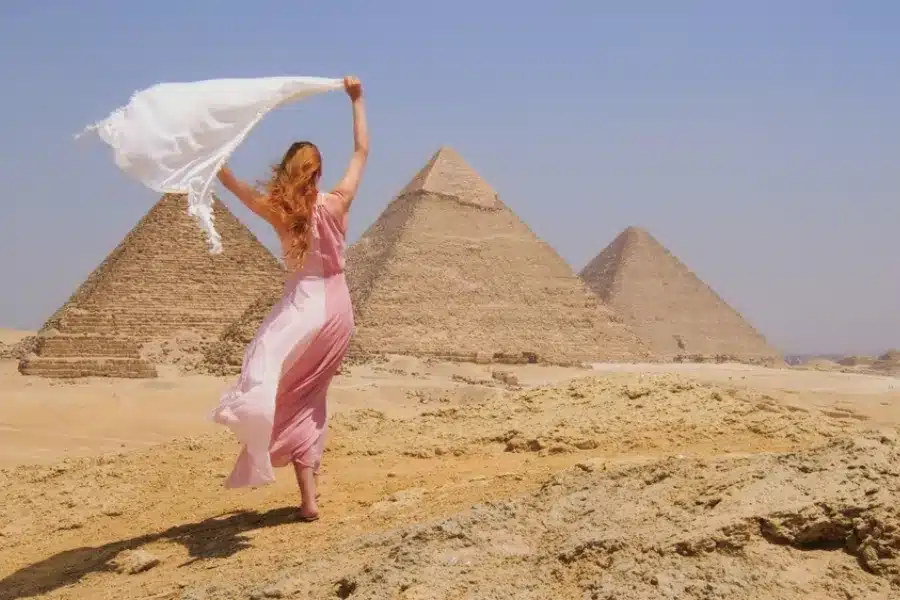
The Pyramids of Giza are one of Egypt’s most iconic landmarks and the best choice if you wondering Where to Go in Egypt in 2026
Quick Guide: Where to Go in Egypt
If you are planning your route and wondering where to go in Egypt, this quick guide shows the main destinations, what each place is best for, and how much time you may need in each area.
Best Places to Visit in Cairo and Giza
Cairo and Giza are the natural starting point for most Egypt trips. This area brings together the country’s most famous ancient wonders, major museums, Islamic architecture, lively markets, and unforgettable views of the Nile. For first-time visitors, Cairo and Giza are among the best places to visit in Egypt because they give you a powerful introduction to both ancient and modern Egyptian life.
The Pyramids of Giza
The Pyramids of Giza are the most iconic landmarks in Egypt and one of the greatest ancient sites in the world. Located on the Giza Plateau near Cairo, the complex includes the Great Pyramid of Khufu, the Pyramid of Khafre, the Pyramid of Menkaure, smaller queens’ pyramids, ancient tombs, and wide desert viewpoints.
For many travelers, this is the moment they truly feel they have arrived in Egypt. The size of the pyramids, the desert setting, and the history behind their construction make the Giza Plateau one of the best places to visit in Egypt for first-time travelers, families, photographers, and history lovers.
A visit to the Pyramids of Giza is usually best combined with the Great Sphinx and the Grand Egyptian Museum, especially if you want a full day focused on ancient Egyptian civilization.
The Great Sphinx of Giza
The Great Sphinx is one of Egypt’s most mysterious and recognizable monuments. Carved from limestone, it has the body of a lion and the head of a human, symbolizing strength, protection, and royal power. Standing close to the Sphinx with the pyramids rising behind it is one of the classic travel experiences in Egypt.
Although many visitors come mainly for the pyramids, the Sphinx adds another layer of fascination to the Giza Plateau. It is also one of the best photo stops in Cairo and Giza, especially in the morning when the light is softer and the area is usually more comfortable for sightseeing.
The Grand Egyptian Museum
The Grand Egyptian Museum, also known as GEM, is one of the most important cultural attractions in Egypt in 2026. Located near the Pyramids of Giza, it gives travelers a modern and impressive way to explore ancient Egyptian history before or after visiting the pyramid complex.
The museum is especially important because it brings together major collections connected to ancient Egypt, including the Tutankhamun galleries, large statues, ancient artifacts, and displays that connect the visitor experience with the nearby Giza Plateau. For travelers who want to understand Egypt beyond the monuments, the Grand Egyptian Museum is now one of Egypt’s must-see destinations in Egypt.
A good itinerary would place the Grand Egyptian Museum and the Pyramids of Giza on the same day, creating a complete ancient Egypt experience in one area.
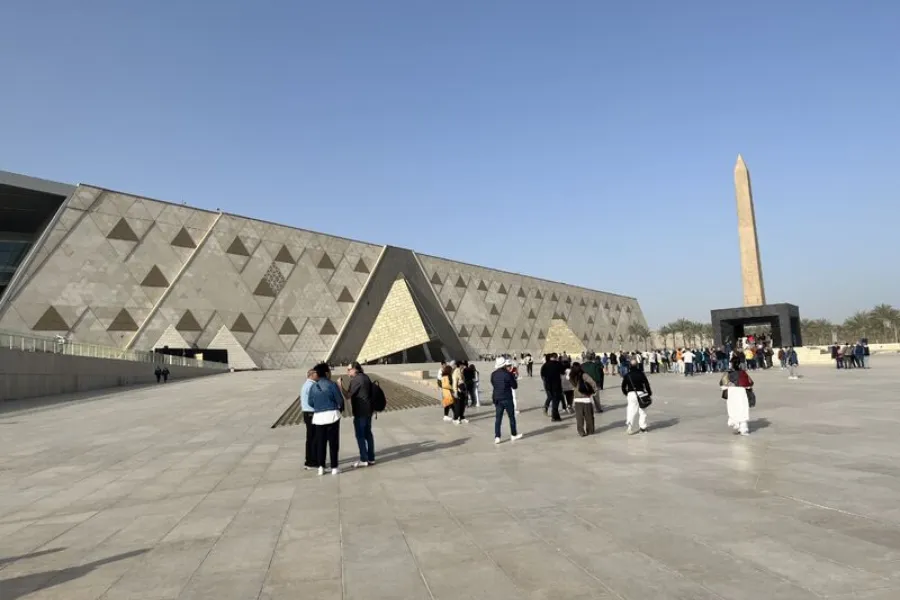
The Grand Egyptian Museum is one of the most important cultural attractions to visit in Egypt in 2026.
The Egyptian Museum in Tahrir
The Egyptian Museum in Tahrir remains one of Cairo’s classic cultural landmarks. For decades, it has been one of the most important museums for ancient Egyptian antiquities, with a large collection of statues, coffins, papyri, jewelry, and artifacts that show the depth of Egypt’s ancient civilization.
Even with the rise of the Grand Egyptian Museum, the Egyptian Museum in Tahrir is still worth visiting, especially for travelers who enjoy historic museum buildings and want to see one of Cairo’s most famous cultural institutions. It also fits well into a city tour that includes Downtown Cairo, the Nile Corniche, and Islamic Cairo.
The National Museum of Egyptian Civilization
The National Museum of Egyptian Civilization, often called NMEC, is one of the best museums in Cairo for travelers who want to see Egypt’s history as a continuous story. Instead of focusing only on the Pharaonic period, the museum presents Egyptian civilization across different eras, from ancient times to the modern age.
One of its most famous highlights is the Royal Mummies Hall, where visitors can see some of Egypt’s most important royal mummies in a calm and carefully designed setting. This makes NMEC one of the best places to visit in Egypt for travelers who want a deeper and more organized understanding of Egyptian history.
Islamic Cairo
Islamic Cairo is one of the richest historic areas in the city, filled with mosques, madrasas, gates, old streets, traditional architecture, and a lively local atmosphere. Walking through this part of Cairo gives you a very different experience from the pyramids and museums. Here, the beauty is in the streets, stone walls, minarets, markets, and everyday life.
Some of the most important places to explore in Islamic Cairo include Al-Muizz Street, Bab Zuweila, Al-Hakim Mosque, Sultan Hassan Mosque, Al-Rifa’i Mosque, and the Citadel of Saladin. This area is ideal for travelers interested in architecture, photography, culture, and historic walking tours.
Khan El Khalili Bazaar
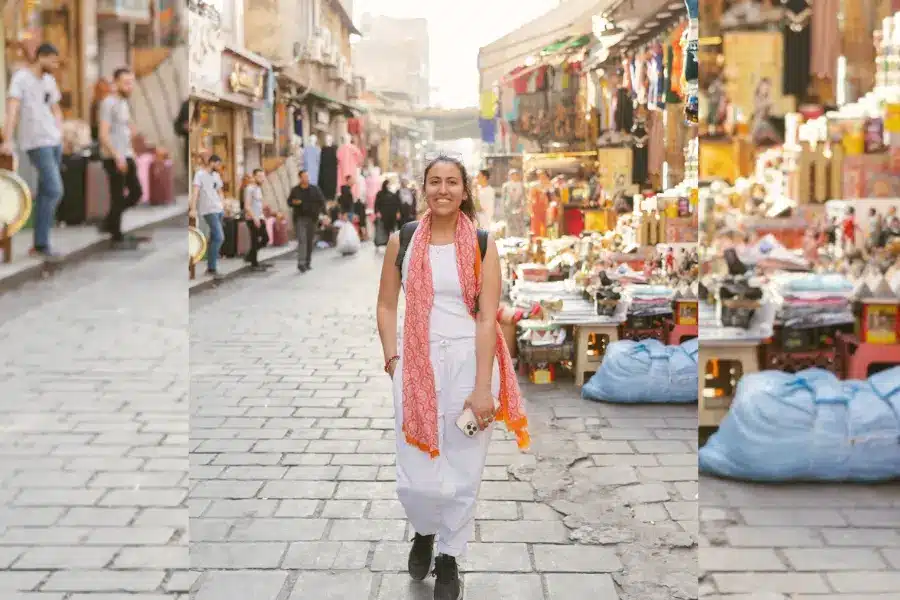
Khan El Khalili is Cairo’s most famous traditional market and one of the most atmospheric places to visit in Egypt. Located in the heart of Islamic Cairo, the bazaar is known for its narrow lanes, old shops, handmade souvenirs, spices, perfumes, lanterns, silver, scarves, cafés, and local energy.
It is a great place to experience Cairo beyond museums and monuments. Travelers often visit Khan El Khalili in the evening after exploring Islamic Cairo, enjoying mint tea at a traditional café or shopping for small gifts before returning to their hotel.
For first-time visitors, Khan El Khalili adds color and movement to a Cairo itinerary and shows a more social side of Egyptian culture, and it’s one of the best things to do in Cairo.
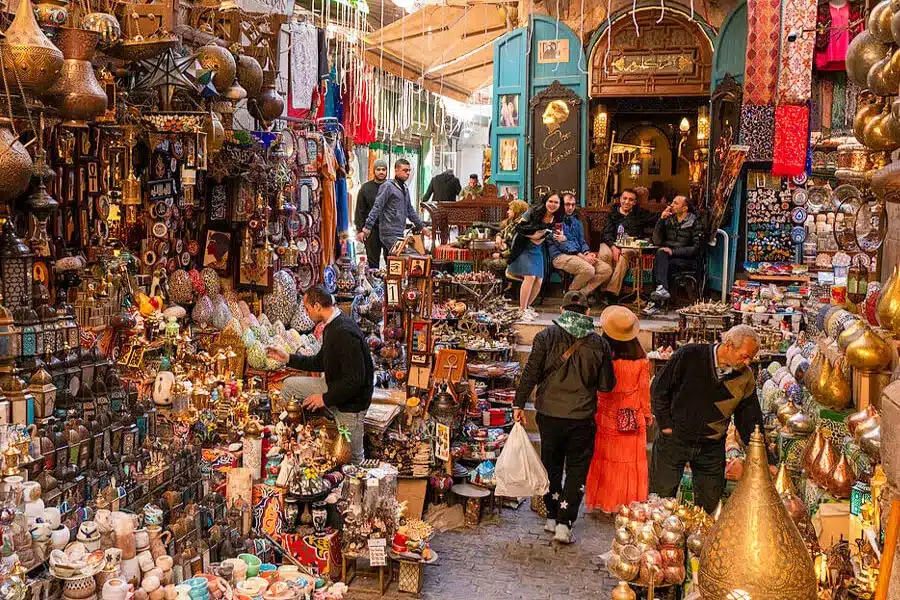
Khan El Khalili is one of Cairo’s most atmospheric markets, filled with souvenirs, lanterns, spices, and local charm.
Saqqara and Memphis
Saqqara and Memphis are among the most important ancient sites near Cairo, especially for travelers who want to go beyond the famous pyramids of Giza. Saqqara is home to the Step Pyramid of Djoser, one of the earliest major stone monuments in ancient Egypt, while Memphis was one of the great ancient capitals of Egypt.
Together, these sites help visitors understand how pyramid building and royal architecture developed before the construction of the Giza Pyramids. A half-day tour to Saqqara and Memphis is highly recommended for history lovers and repeat visitors, but it can also be added to a first Egypt itinerary if you have enough time in Cairo.
The Nile River in Cairo
The Nile River is part of Egypt’s identity, and Cairo gives travelers several ways to enjoy it. You can walk along the Corniche, take a private felucca ride, enjoy a dinner cruise, or stay in a hotel overlooking the river. While the Nile is often associated with Luxor and Aswan cruises, experiencing it in Cairo is also special because it shows the contrast between the city’s energy and the calm movement of the river.
A Nile dinner cruise in Cairo is a popular evening activity, especially for travelers who arrive after a long flight and want a relaxed introduction to the city before starting their sightseeing program the next day.
Local tip: Start with the Giza Plateau early in the morning when the desert light is softer and the area feels more comfortable for walking, then keep the Grand Egyptian Museum or the Egyptian Museum for the warmer part of the day.
Where to Go in Luxor
Luxor is one of the most important places to visit in Egypt for travelers who want to experience the heart of ancient Egyptian history. Known as the world’s greatest open-air museum, Luxor is filled with temples, tombs, monuments, Nile views, and archaeological treasures that make it a must-visit destination on almost every Egypt itinerary.
For first-time visitors, Luxor is usually combined with Aswan through a Nile Cruise, but it can also be visited as a separate city stay. If you love history, photography, culture, and ancient temples, Luxor should be one of the top places on your list.
Karnak Temple
Karnak Temple is one of the largest and most impressive temple complexes in Egypt. Located on the East Bank of Luxor, it was developed over many centuries by different pharaohs and dedicated mainly to the god Amun-Ra.
The most famous part of Karnak is the Great Hypostyle Hall, with its massive columns covered in ancient carvings. Walking through this hall is one of the most powerful experiences in Luxor because the scale, detail, and atmosphere show the greatness of ancient Egyptian architecture.
Karnak Temple is one of the best places to visit in Egypt for travelers who want to understand the religious and political power of ancient Thebes.
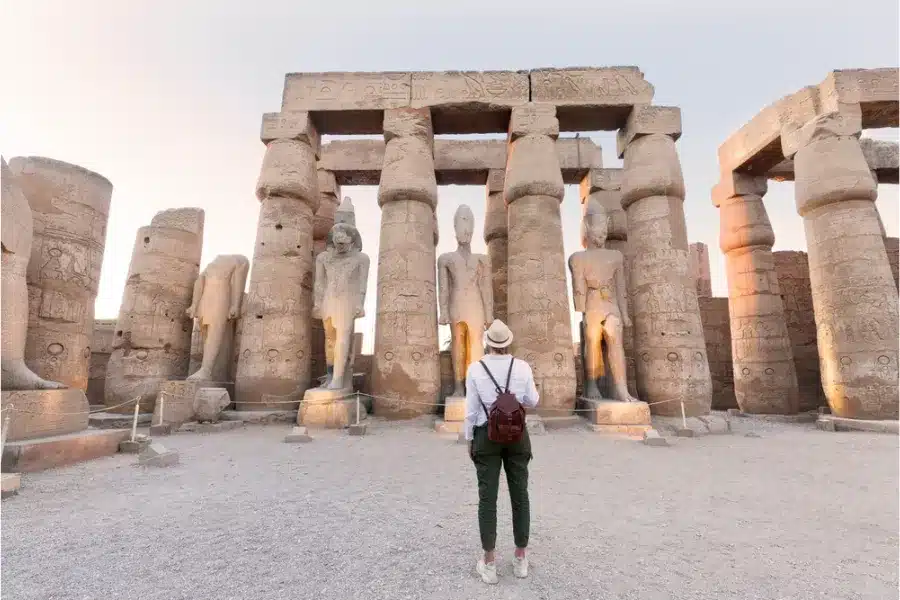
Luxor Temple is one of the most impressive ancient landmarks on the East Bank of Luxor.
Luxor Temple
Luxor Temple is another major highlight on the East Bank of Luxor. Unlike many temples that were built far from the city center, Luxor Temple stands close to modern life, making it especially beautiful in the evening when the lights give the columns and statues a golden glow.
The temple was connected to Karnak by the Avenue of Sphinxes, an ancient ceremonial road that adds even more historical value to the area. A visit to Luxor Temple is perfect after exploring Karnak, especially if you want to see the contrast between ancient architecture and modern Luxor city.
Valley of the Kings
The Valley of the Kings is one of the most famous archaeological sites in the world and a highlight for first-time travelers interested in royal tombs and ancient beliefs about the afterlife.
Located on the West Bank of Luxor, the valley contains the tombs of many New Kingdom pharaohs, including the famous tomb of Tutankhamun. The tombs are known for their colorful wall paintings, religious scenes, and detailed inscriptions that reveal how ancient Egyptians imagined the journey to the afterlife.
Most visitors explore several tombs during their visit, and each tomb offers a different atmosphere, style, and level of decoration.
Temple of Hatshepsut
The Temple of Hatshepsut is one of the most beautiful and unique monuments in Luxor. Built into the cliffs of Deir el-Bahari, the temple is known for its terraces, columns, and dramatic mountain background.
Queen Hatshepsut was one of the most powerful female rulers in ancient Egypt, and her temple reflects her ambition, strength, and connection to divine kingship. The site is also one of the most photogenic places in Luxor, especially in the morning when the sunlight touches the limestone cliffs behind the temple.
Colossi of Memnon
The Colossi of Memnon are two massive seated statues of Pharaoh Amenhotep III. They stand on the West Bank of Luxor and are often visited on the way to the Valley of the Kings or Hatshepsut Temple.
Although the original temple behind them has largely disappeared, the statues still create a powerful impression. They are a quick but worthwhile stop, especially for travelers who want to see how large and ambitious ancient Egyptian monuments could be.
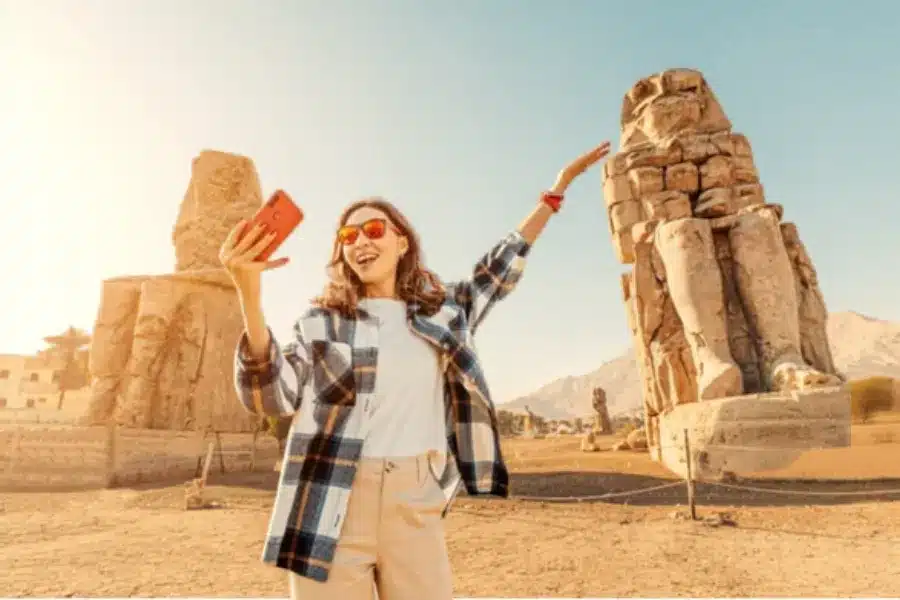
The Colossi of Memnon are a popular stop on Luxor’s West Bank before visiting the royal tombs and temples.
Hot Air Balloon Ride Over Luxor
A hot air balloon ride over Luxor is one of the most memorable travel experiences in Egypt. The flight usually takes place early in the morning, offering beautiful views over the Nile, green fields, desert cliffs, temples, and the West Bank monuments.
This experience is especially popular with couples, photographers, and travelers who want to see Luxor from a completely different perspective. It is not a historical site, but it is one of the best things to do in Luxor, Egypt, if you want a magical and peaceful start to the day.
Local tip: In Luxor, visit the West Bank early, especially the Valley of the Kings and Hatshepsut Temple, then save Luxor Temple for the evening when the atmosphere is calmer and the illuminated columns feel more impressive.
Best Places to Visit in Aswan City
Aswan is one of the most peaceful and beautiful cities in Egypt. Compared to Cairo and Luxor, it has a calmer rhythm, warmer colors, softer Nile views, and a strong Nubian cultural identity. It is one of the best places to visit in Egypt for travelers who want history, scenery, relaxation, and cultural depth in one destination.
Aswan is also the gateway to Abu Simbel, one of Egypt’s most impressive ancient temple sites. Many travelers visit Aswan as part of a Nile Cruise between Luxor and Aswan, while others stay for a couple of nights to enjoy the city at a slower pace.
Philae Temple
Philae Temple is one of the most beautiful temples in southern Egypt. Dedicated mainly to the goddess Isis, the temple stands on an island and is reached by a short boat ride, which makes the visit feel special before you even arrive.
The combination of water, stone, columns, and carvings gives Philae Temple a peaceful and memorable atmosphere. It is one of the best places to visit in Aswan and a must-see for travelers who enjoy temples with beautiful settings.
Philae is also important because it was rescued and relocated after the construction of the High Dam, making it not only an ancient wonder but also a major preservation success story.
Abu Simbel Temples
Abu Simbel is one of the most breathtaking places to visit in Egypt. Built by Ramses II, the site includes two massive rock-cut temples near Lake Nasser in southern Egypt. The Great Temple is famous for its four giant seated statues of Ramses II at the entrance, while the smaller temple was dedicated to Queen Nefertari.
Although Abu Simbel is located far from Aswan, the journey is absolutely worth it. The size of the statues, the precision of the carvings, and the dramatic location make it one of the most unforgettable ancient sites in Egypt.
Most travelers visit Abu Simbel on a day trip from Aswan, either by road or by flight, depending on their itinerary and travel style.
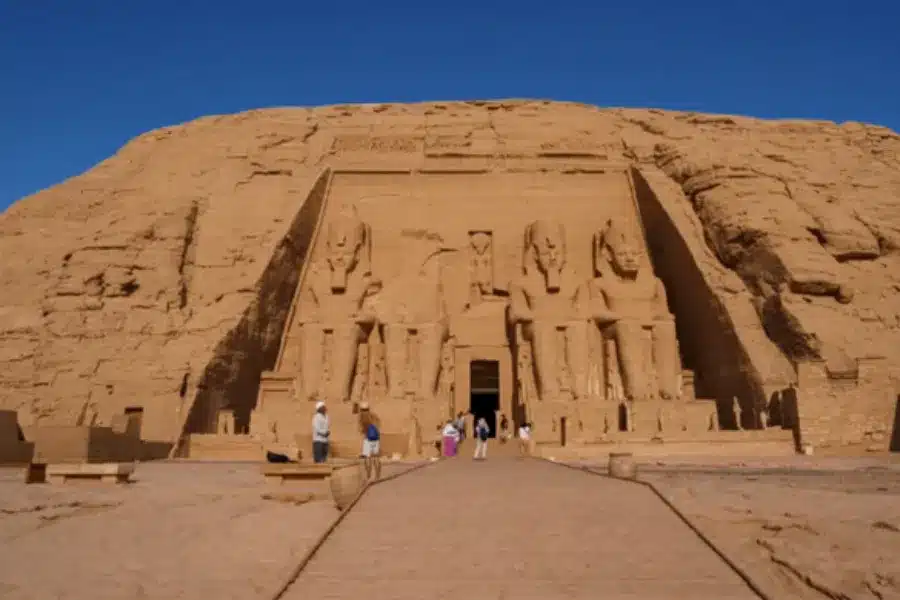
Abu Simbel is one of Egypt’s most breathtaking ancient temple sites and a must-see from Aswan.
Nubian Village
The Nubian Village is one of the best places to visit in Aswan for travelers who want to experience local culture beyond temples and monuments. Known for its colorful houses, friendly atmosphere, handmade crafts, and riverside views, the Nubian Village adds warmth and personality to any Aswan itinerary.
A visit often includes a boat ride on the Nile, walking through the village streets, seeing traditional homes, and learning about Nubian customs, language, food, and daily life. It is especially recommended for families and travelers who want a more human and cultural experience in Egypt.
The High Dam
The Aswan High Dam is one of the most important modern landmarks in Egypt. Built to control the Nile floods and generate electricity, it changed the agricultural and economic future of the country.
For travelers, the High Dam is not as visually dramatic as the ancient temples, but it is important for understanding modern Egypt. It is usually visited together with Philae Temple and the Unfinished Obelisk as part of a day tour in Aswan.
The Unfinished Obelisk
The Unfinished Obelisk is one of the most interesting archaeological sites in Aswan because it shows how ancient Egyptians worked with granite. Still attached to the bedrock, the obelisk gives visitors a rare look at the techniques used to carve massive stone monuments.
If it had been completed, it would have been one of the largest obelisks ever created. Today, it helps travelers understand the engineering skill behind Egypt’s temples, statues, and monuments.
Kom Ombo Temple
Kom Ombo Temple is often visited during a Nile Cruise between Aswan and Luxor. It is unique because it was dedicated to two gods: Sobek, the crocodile god, and Horus the Elder. This double dedication is reflected in the temple’s symmetrical design.
The site also features a small Crocodile Museum, where visitors can view mummified crocodiles and learn more about the religious significance of Sobek in ancient Egypt.
Visiting Kom Ombo is one of the best things to do in Aswan, particularly for those taking a Nile Cruise, as it offers smaller but highly distinctive temples along the river.
Edfu Temple
Edfu Temple is one of the best-preserved temples in Egypt and another major stop on many Nile Cruise itineraries. Dedicated to Horus, the falcon-headed god, the temple is impressive because of its large entrance, detailed carvings, inner halls, and strong sense of structure.
For many travelers, Edfu feels easier to understand than some larger temple complexes because so much of it remains intact. It is one of the best places to visit between Luxor and Aswan and a highlight of the Nile Cruise route.
Local tip: Abu Simbel usually works best as an early-morning trip from Aswan, while Philae Temple and a felucca ride feel more enjoyable when you leave enough time to enjoy the Nile scenery instead of rushing between stops.
Where to Go in Alexandria, Egypt
Alexandria is a great place to add to your Egypt itinerary if you want a different atmosphere from Cairo, Luxor, and Aswan. Located on the Mediterranean coast, the city combines Greco-Roman history, sea views, old neighborhoods, modern cafés, and a relaxed coastal mood.
Founded by Alexander the Great, Alexandria has always been connected to culture, trade, knowledge, and the Mediterranean world. It works well as a day trip from Cairo, but staying overnight gives you more time to enjoy its sea breeze, sunset views, and historical sites at a slower pace.
Qaitbay Citadel
Qaitbay Citadel is one of Alexandria’s most famous landmarks. Built on the Mediterranean coast, the citadel stands near the site of the ancient Lighthouse of Alexandria, one of the Seven Wonders of the Ancient World.
The location is one of the main reasons to visit. From the citadel, travelers can enjoy views of the sea, fishing boats, waves, and Alexandria’s coastal skyline. It is one of the best places in the city for photography and a strong introduction to Alexandria’s maritime history.
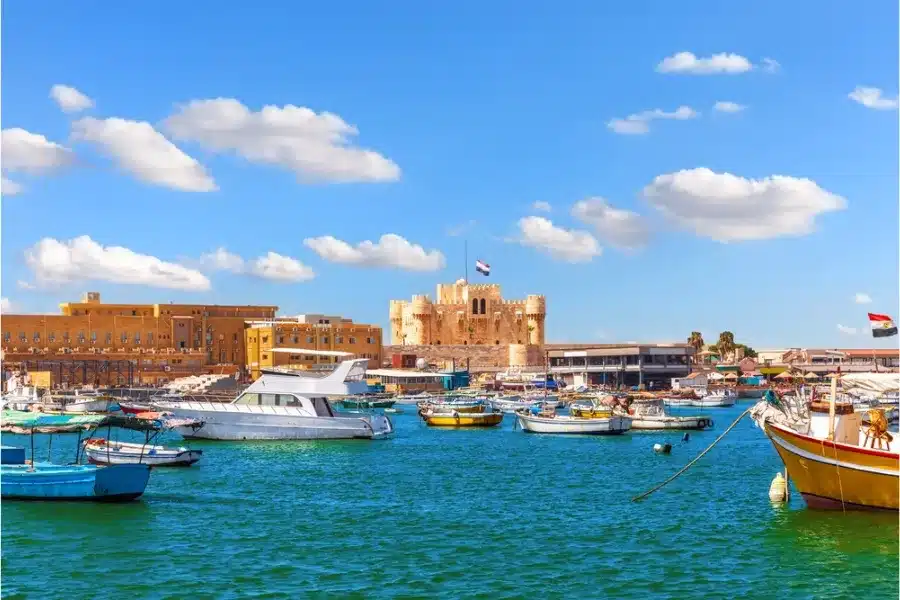
Qaitbay Citadel is one of Alexandria’s most famous landmarks, overlooking the Mediterranean Sea.
Bibliotheca Alexandrina
Bibliotheca Alexandrina is a modern cultural landmark inspired by the ancient Library of Alexandria. Today, it serves as a major library and cultural center, with museums, exhibitions, reading halls, and spaces dedicated to knowledge, art, and history.
The architecture itself is impressive, and the location near the Mediterranean gives it a special presence in the city. It is one of the best places to visit in Alexandria for travelers interested in culture, learning, and modern Egyptian landmarks.
Catacombs of Kom El Shoqafa
The Catacombs of Kom El Shoqafa are among the most important Greco-Roman sites in Alexandria. This underground burial complex combines Egyptian, Greek, and Roman artistic styles, making it a fascinating example of Alexandria’s mixed cultural identity.
The catacombs include chambers, carvings, tombs, and architectural details that show how different traditions blended in ancient Alexandria. It is a strong addition to any Egypt itinerary for travelers interested in the Greco-Roman period rather than only Pharaonic history.
Pompey’s Pillar
Pompey’s Pillar is a massive Roman column and one of Alexandria’s most recognizable ancient monuments. Standing on a historic site with surrounding ruins, it gives visitors a glimpse into the Roman side of Egypt’s past.
Although the visit is usually short, Pompey’s Pillar is often included with the Catacombs and other Alexandria landmarks as part of a city tour.
Montaza Palace Gardens
Montaza Palace Gardens are among the most relaxing Things to do in Alexandria. Located by the sea, the gardens offer green spaces, palm trees, royal architecture, and coastal views.
For travelers who want a break from museums and ruins, Montaza is a pleasant place to walk, take photos, and enjoy Alexandria’s Mediterranean character. It is especially nice in the afternoon or near sunset.
Alexandria Corniche
The Corniche is one of the best ways to feel the spirit of Alexandria. Stretching along the Mediterranean, it offers sea views, local cafés, fishing scenes, and a lively city atmosphere.
Even if you are visiting Alexandria for one day, spending time on the Corniche helps you experience the city beyond its historical sites. It is simple, local, and full of character.
Local tip: Alexandria is best enjoyed at a slower pace, so try to combine the historical sites in the morning with time by the Corniche or Qaitbay Citadel later in the day when the sea breeze makes the city feel more relaxed.
Where to Go on the Red Sea in Egypt
The Red Sea is one of the best regions to include in your Egypt itinerary if you want beaches, snorkeling, diving, resorts, and relaxation after visiting ancient sites. It is especially suitable for families, honeymooners, divers, and travelers who want to balance culture with leisure.
If your trip includes Cairo, Luxor, and Aswan, adding the Red Sea at the end can make the journey feel more complete and less rushed. Hurghada, Sharm El Sheikh, Dahab, Marsa Alam, and El Gouna each offer a different style of coastal escape.
1. Hurghada
Hurghada City is one of the most popular beach destinations in Egypt. Located on the Red Sea coast, it is known for its resorts, clear water, snorkeling trips, diving centers, desert safari experiences, and family-friendly atmosphere.
Hurghada is a great choice for travelers who want to relax after a busy cultural itinerary. It is also easy to combine with Luxor, making it a practical option for tours that include temples, tombs, and Red Sea relaxation in one trip.
Popular experiences in Hurghada include snorkeling boat trips, Orange Bay, Giftun Island, desert quad biking, Bedouin-style evenings, and Red Sea diving.
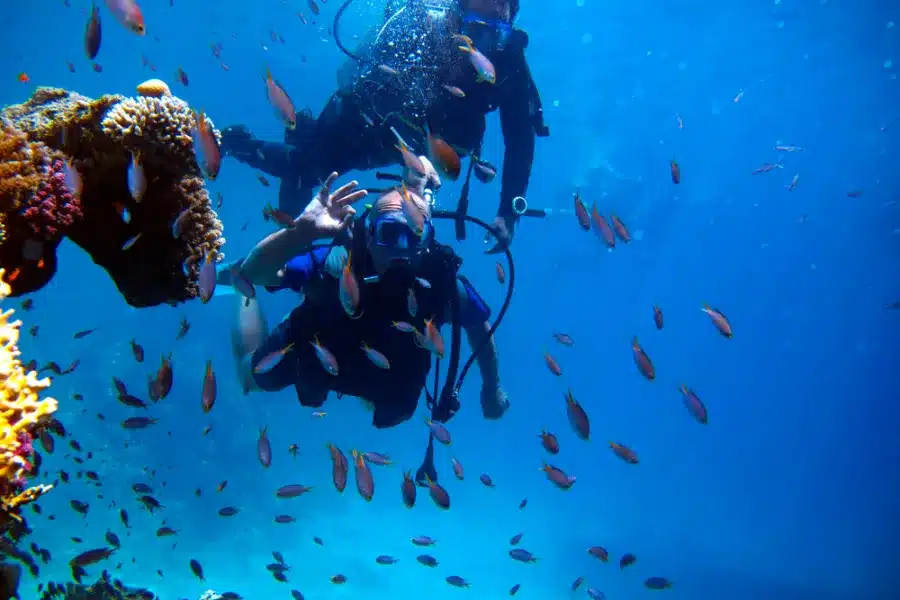
The Red Sea is one of the best regions in Egypt for diving, snorkeling, coral reefs, and marine life.
2. Sharm El Sheikh
Sharm el-Sheikh is one of Egypt’s most famous resort cities, located at the southern tip of the Sinai Peninsula. It is known for luxury resorts, coral reefs, diving, snorkeling, nightlife, and nearby natural attractions.
For travelers who want a polished Red Sea resort experience, Sharm El Sheikh is one of the best places to visit in Egypt. It is also a strong choice for honeymooners and travelers who want comfort, sea views, and organized activities.
Sharm is often combined with Cairo by domestic flight, making it easy to visit the pyramids and then spend a few days by the Red Sea.
3. Ras Mohammed National Park
Ras Mohammed National Park is one of the most beautiful natural areas near Sharm El Sheikh. It is famous for coral reefs, marine life, clear water, and dramatic coastal scenery.
It is one of the best places in Egypt for snorkeling and diving, especially for travelers who want to see the Red Sea’s underwater beauty. Even if you are not a diver, boat trips and snorkeling tours to Ras Mohammed can be a highlight of your stay in Sharm El Sheikh.
4. Dahab
Dahab is a relaxed Red Sea town known for its laid-back atmosphere, diving spots, mountain views, cafés, and adventure activities. Compared to Sharm El Sheikh and Hurghada, Dahab feels more casual and independent.
It is a worthwhile stop for nature lovers, also for younger travelers, divers, digital nomads, backpackers, and anyone who prefers a simple seaside atmosphere. Popular activities include diving at the Blue Hole, snorkeling, camel rides, mountain excursions, and seaside dining.
5. Marsa Alam
Marsa Alam is one of the best places in Egypt for travelers who want quieter beaches, beautiful reefs, and a more peaceful Red Sea experience. It is especially popular with divers and nature lovers because of its marine life, coral reefs, and cleaner, less crowded atmosphere.
Marsa Alam is ideal for travelers who want relaxation more than nightlife. It is also a strong choice for honeymooners and repeat visitors to Egypt who have already seen Hurghada or Sharm El Sheikh.
6. El Gouna
El Gouna is a stylish Red Sea resort town near Hurghada, known for lagoons, marinas, boutique hotels, restaurants, and a relaxed upscale feel. It is different from many traditional resort areas because it feels more like a planned coastal town.
El Gouna is one of the best places to see in Egypt for travelers who want Red Sea relaxation with good restaurants, nightlife, water activities, and a more modern resort atmosphere.
Local tip: Choose Hurghada if you want easier access from Luxor and a wide range of family-friendly resorts, Sharm El Sheikh or Dahab for Sinai-based diving and adventure, and Marsa Alam if you prefer quieter beaches and richer marine life.
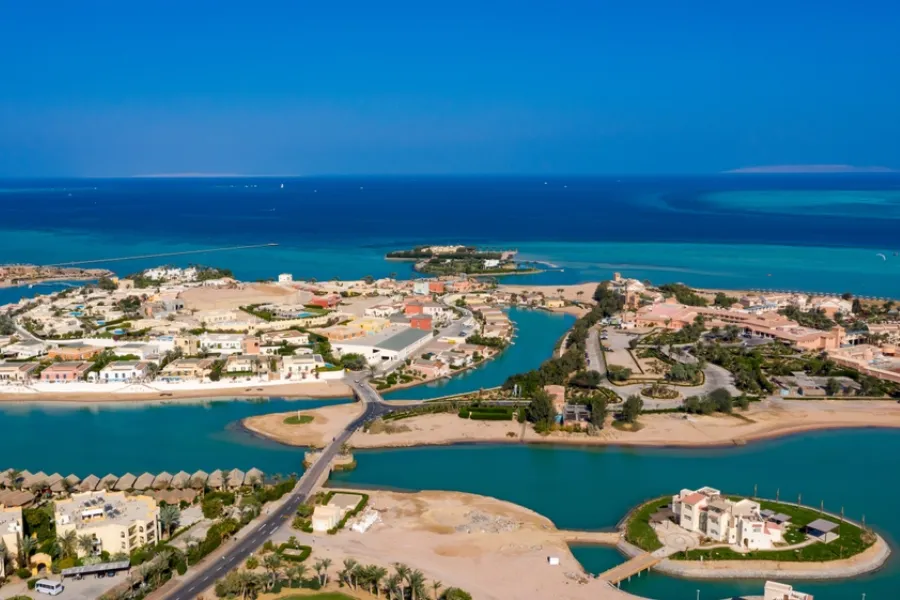
El Gouna is a stylish Red Sea resort town known for its lagoons, marinas, restaurants, and relaxed atmosphere.
Best Desert and Oasis Places to Visit in Egypt
Egypt is not only about temples and beaches. The deserts and oases offer some of the country’s most unique travel experiences, from surreal white rock formations to salt lakes, waterfalls, ancient villages, and peaceful landscapes far from the busy cities.
These destinations are perfect for adventurous travelers, photographers, nature lovers, and anyone who wants to see a different side of Egypt.
1. Fayoum
Fayoum Oasis is one of the best places to see in Egypt for a short nature escape from Cairo. Located southwest of the capital, it combines desert landscapes, lakes, waterfalls, pottery villages, and archaeological sites.
It is especially useful for travelers who do not have enough time to visit faraway oases but still want to experience nature and desert scenery. You can enjoy a day trip from Cairo to Faiyum or an overnight tour to Faiyum and Wadi Al Hitan.
2. Wadi El Rayan
Wadi El Rayan is one of Fayoum’s most famous natural attractions. It is known for its lakes, desert scenery, and waterfalls, creating a rare landscape where water meets sand.
The area is great for photography, light adventure, and relaxing away from Cairo’s busy streets. Many Fayoum tours include Wadi El Rayan as a main stop, especially for travelers interested in nature and open landscapes.
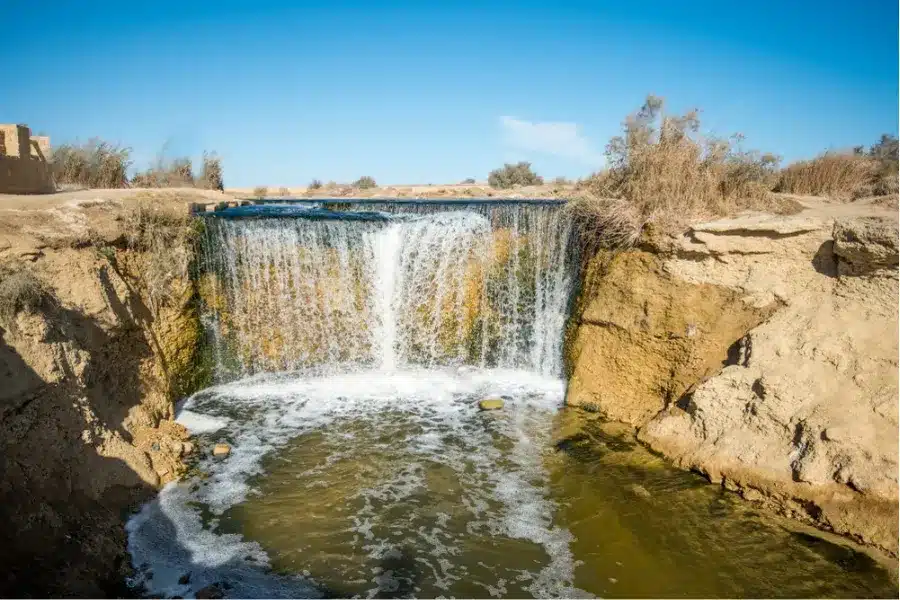
Wadi El Rayan is one of Fayoum’s most popular natural attractions, where desert scenery meets lakes and waterfalls.
3. Wadi El Hitan
Wadi El Hitan, also known as the Valley of the Whales, is one of Egypt’s most fascinating natural and scientific sites. Located in Fayoum, it contains ancient whale fossils that show an important stage in the evolution of whales.
This site is especially interesting for families, students, nature lovers, and travelers who want something different from temples and museums. It is one of the most unique places to visit in Egypt and adds real variety to a travel itinerary.
4. Qarun Lake
Qarun Lake is one of the oldest natural lakes in Egypt and a peaceful place to enjoy Fayoum’s landscape. The area is known for birdlife, desert views, and quiet scenery.
It is often combined with Wadi El Rayan, Tunis Village, and other Fayoum attractions. For travelers looking for a calm day trip from Cairo, Qarun Lake adds a softer and more relaxing side to the experience.
5. Siwa Oasis
Siwa Oasis is one of the most magical places to visit in Egypt. Located in the Western Desert near the Libyan border, Siwa is known for its palm groves, salt lakes, natural springs, mud-brick architecture, desert landscapes, and unique local culture.
Siwa is very different from Cairo, Luxor, or the Red Sea. It feels remote, peaceful, and deeply connected to desert life. Travelers visit Siwa to swim in salt lakes, explore the old Shali Fortress, visit Cleopatra’s Spring, enjoy desert safaris, and experience one of Egypt’s most distinctive oasis communities.
Because of the distance, Siwa is best for travelers who have extra time and want a slower, more adventurous Egypt itinerary.
6. The White Desert
The White Desert is one of the most surreal landscapes in Egypt. Famous for its chalk-white rock formations shaped by wind and time, it looks almost like another planet.
Most travelers visit the White Desert from Cairo through Bahariya Oasis, often as an overnight camping trip. Sleeping under the stars in the desert is one of the most memorable experiences in Egypt, especially for adventure travelers and photographers.
The White Desert is one of the top attractions in Egypt, if you want something completely different from temples, museums, and beach resorts.
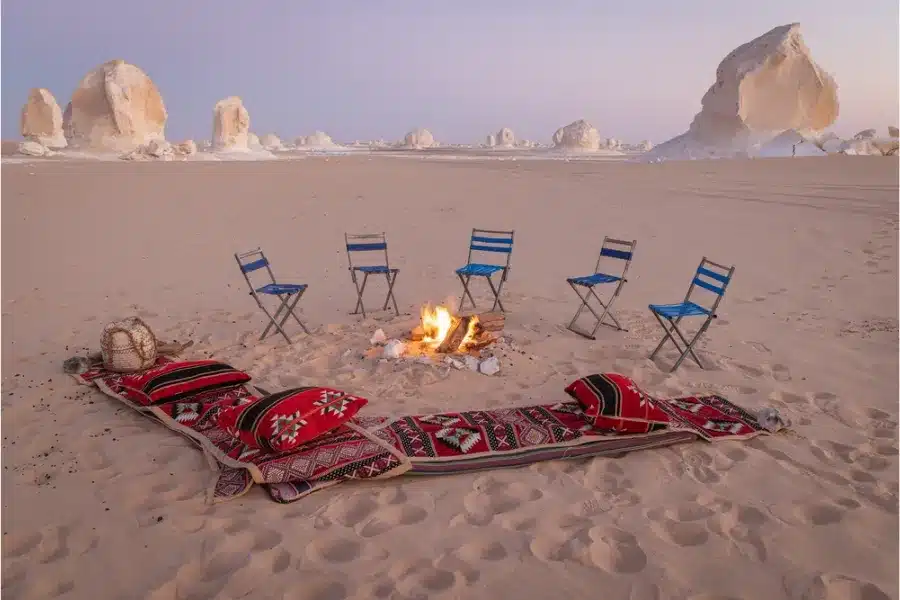
The White Desert is famous for its surreal rock formations and unforgettable overnight camping experiences.
7. Bahariya Oasis
Bahariya Oasis is often used as the gateway to the White Desert, but it is also worth visiting in its own right. The oasis has palm groves, hot springs, desert views, and access to nearby areas like the Black Desert and Crystal Mountain.
For travelers interested in desert landscapes, Bahariya gives a strong introduction to Egypt’s Western Desert and works well as part of a one-night or two-night adventure from Cairo.
Local tip: Desert and oasis trips need more planning than city visits, so keep Fayoum for a short escape from Cairo, choose the White Desert for overnight camping, and save Siwa Oasis for a slower itinerary with enough travel time.
Best Nile Experiences to Add to Your Egypt Itinerary
The Nile is one of the most important experiences to include in your Egypt itinerary, especially if you want to connect ancient temples, river scenery, and relaxed travel in one journey. While Cairo offers an urban Nile experience, the most famous Nile route is between Luxor and Aswan, where temples, villages, fields, and historic sites appear along the river.
From a multi-day Nile Cruise to a peaceful felucca ride in Aswan or a dinner cruise in Cairo, the Nile can fit different travel styles and trip lengths.
Nile Cruise from Luxor to Aswan
Egypt Nile River Cruise is one of the best ways to experience Egypt, especially for first-time travelers. Instead of moving between cities by road every day, a cruise allows you to travel slowly between Luxor and Aswan while visiting major temples along the route.
Most Nile Cruises include stops such as Karnak Temple, Luxor Temple, Valley of the Kings, Hatshepsut Temple, Edfu Temple, Kom Ombo Temple, Philae Temple, and sometimes Abu Simbel as an optional or added excursion.
A Nile Cruise is ideal for travelers who want history, comfort, scenery, and a more relaxed pace.
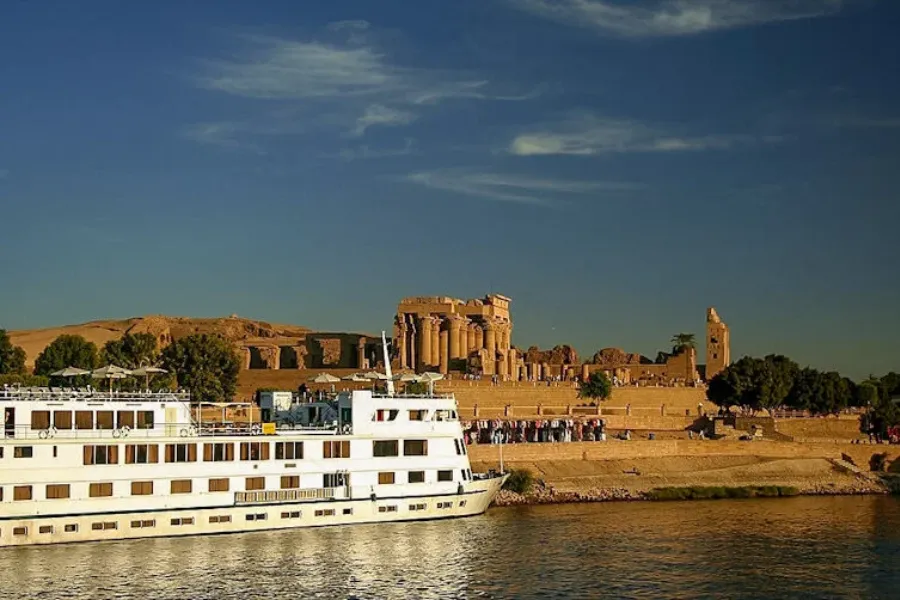
A Nile Cruise between Luxor and Aswan is one of the best ways to combine temples, scenery, and relaxed travel in Egypt.
Felucca Sailing in Aswan
A felucca ride in Aswan is one of the simplest and most beautiful experiences in Egypt. These traditional sailboats move quietly along the Nile, offering views of islands, palm trees, desert hills, and Nubian villages.
Unlike a large Nile Cruise, a felucca ride is short, peaceful, and personal. It is perfect in the late afternoon when the light becomes softer, and the river feels calm.
Nile Dinner Cruise in Cairo
A Nile Dinner Cruise in Cairo is a popular evening experience, especially for travelers arriving in Egypt for the first time. It usually includes dinner, music, and entertainment while sailing along the Nile.
It is not as historically focused as a Luxor-Aswan cruise, but it offers a relaxed way to enjoy Cairo at night and can be a nice start or end to your Egypt trip.
Local tip: If your schedule allows, experience the Nile in more than one way: a dinner cruise in Cairo for the city atmosphere, a felucca ride in Aswan for calm scenery, and a Luxor-to-Aswan Nile Cruise for temples and history.
Where to Go in Egypt by Travel Style
Egypt is not a one-style destination. Some travelers come for ancient history, others want beaches, family-friendly routes, photography, desert adventures, luxury comfort, or romantic escapes. Choosing where to go in Egypt becomes much easier when you match each destination with your travel style.
1. Where to Go in Egypt for History Lovers
If your main interest is ancient history, temples, tombs, and museums, the best places to visit in Egypt are Cairo, Giza, Luxor, Aswan, Abu Simbel, Saqqara, Edfu, and Kom Ombo.
Cairo and Giza introduce you to the pyramids, the Sphinx, and world-class museums, while Luxor and Aswan take you deeper into the temples, royal tombs, and sacred sites of ancient Egypt. Abu Simbel is also a must-see for travelers who want to experience one of the most powerful monuments built by Ramses II.
Egypt Classic Tours can be the best choice for history Lovers.
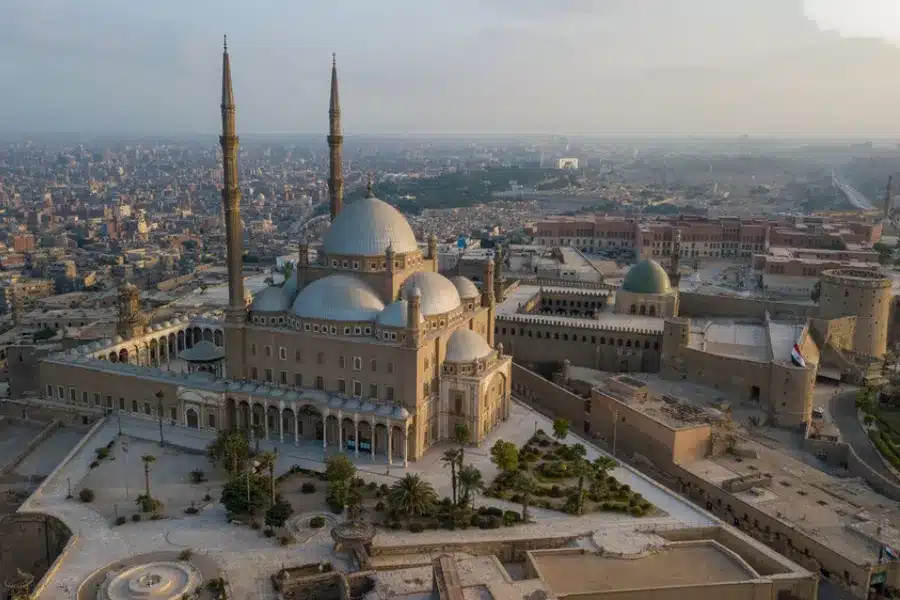
The Citadel of Saladin and the Mosque of Muhammad Ali are among the most impressive landmarks in Islamic Cairo.
2. Where to Go in Egypt for Beaches
For beach lovers, the Red Sea is the best region to visit in Egypt. Hurghada, Sharm El Sheikh, Dahab, Marsa Alam, and El Gouna are all excellent choices, but each one has a different atmosphere.
Hurghada is great for families, snorkeling trips, and easy resort stays. Sharm El Sheikh is ideal for diving, luxury resorts, and access to Ras Mohammed. Dahab is more relaxed and adventurous, while Marsa Alam is perfect for quieter beaches and rich marine life. El Gouna is a stylish option for travelers who want a modern Red Sea town with restaurants, lagoons, and marina views.
3. Best Places in Egypt for Families
Families usually enjoy destinations that combine famous sights with comfort and easy activities. Cairo and Giza are excellent for the pyramids and museums, while Luxor and Aswan offer open-air history and scenic Nile experiences.
For a more relaxed family holiday, Hurghada and Sharm El Sheikh are strong choices because they offer beach resorts, snorkeling trips, boat rides, and activities suitable for different ages. Fayoum can also be a good nature escape from Cairo, especially for families who want lakes, desert scenery, and light adventure.
Egypt Family Tours are specially customized for families seeking a calm, smooth, and relaxing travel experience.
4. Where to Go in Egypt for Couples and Honeymooners
Couples and honeymooners often prefer a mix of culture, privacy, scenery, and relaxation. A romantic Egypt trip can include Cairo and Giza, a Nile Cruise between Luxor and Aswan, Abu Simbel, and a Red Sea stay in Hurghada, Sharm El Sheikh, Marsa Alam, or El Gouna.
For couples who want something more peaceful and unique, Siwa Oasis is one of the most atmospheric places to visit in Egypt. Its salt lakes, desert scenery, palm groves, and quiet rhythm make it very different from the classic tourist route.
Egypt Honeymoon Packages are perfect for couples who want culture, privacy, Nile scenery, and relaxing Red Sea moments in one romantic journey.
5. Best Places in Egypt for Adventure
Adventure travelers should look beyond the classic temples and museums. Egypt has excellent adventure experiences in the Western Desert, Sinai, Fayoum, and the Red Sea.
The White Desert is one of the best places for camping and surreal landscapes. Bahariya Oasis is a strong base for desert safaris. Dahab is ideal for diving, snorkeling, mountain trips, and relaxed adventure. Fayoum offers sandboarding, lakes, waterfalls, and fossil sites, while Mount Sinai is a memorable choice for hiking and sunrise views.
6. Where to Go in Egypt for Luxury and Budget Travelers
Egypt can suit both luxury and budget travelers. Luxury travelers can enjoy private guides, 5-star hotels, premium Nile Cruises, and relaxing Red Sea resorts in places like Hurghada, Sharm El Sheikh, Marsa Alam, or El Gouna. Budget travelers can still visit many of the best places in Egypt by focusing on Cairo, Giza, Luxor, Aswan, local markets, simple hotels, and well-planned tours without adding too many extra destinations.
If you are looking for a cheap tour in Egypt, explore our Egypt Budget-Friendly Tours for affordable itineraries with well-planned sightseeing and comfortable travel.
Where to Go in Egypt for First-Time Travelers
If this is your first trip to Egypt, start with Cairo, Giza, Luxor, Aswan, and Abu Simbel. These destinations give you the strongest introduction to ancient Egyptian history, major monuments, Nile scenery, and cultural highlights.
A classic first-time Egypt itinerary usually begins with Cairo and Giza for the Pyramids, museums, and Islamic Cairo, then continues to Luxor for temples and royal tombs, followed by Aswan for Philae Temple, Nubian culture, and Nile views. Abu Simbel can be added from Aswan if your schedule allows.
If you have more time, adding Hurghada or Sharm El Sheikh at the end of your itinerary gives the trip a more relaxed finish and balances the sightseeing days with Red Sea beach time.
Best Places to Visit in Egypt in One Week
If you only have one week in Egypt, you need to choose carefully. A good 7-day Egypt itinerary should focus on the most essential highlights instead of trying to visit every region.
A strong one-week Egypt plan could include Cairo and Giza for the Pyramids, Sphinx, and museums, Luxor for Karnak Temple, Luxor Temple, and the Valley of the Kings, and Aswan for Philae Temple, Nubian culture, and Nile scenery.
If your schedule allows, you can also add Abu Simbel as an early-day trip from Aswan. This gives you a powerful introduction to Egypt’s most important historical places without making the trip feel too crowded.
If you want to turn these ideas into a ready-made route, the table below shows some 7-day Egypt tour options that combine the best places to visit in Egypt based on different travel styles.
1. 7 Days Cairo and Hurghada Holiday
Best for travelers who want the Pyramids, Cairo highlights, and Red Sea relaxation in one short trip.
7 Days Cairo and Hurghada Holiday
2. 7 Days Cairo, Aswan, Abu Simbel & Luxor Tour
Best for history lovers who want Cairo, Upper Egypt temples, Abu Simbel, Luxor, and Aswan.
7 Days Cairo, Aswan, Abu Simbel & Luxor Tour
3. 7 Days Cairo, Abu Simbel, Luxor and Bahariya Oasis Tour
Best for travelers who want ancient wonders with a unique desert adventure.
7 Days Cairo, Abu Simbel, Luxor and Bahariya Oasis Tour
4. 7 Days Egypt Itinerary: Cairo, Luxor & Alexandria
Best for culture-focused travelers who prefer cities, museums, temples, and coastal history.
7 Days Egypt Itinerary Cairo, Luxor & Alexandria Tour Package
Best Places to Visit in Egypt in Two Weeks
Two weeks in Egypt gives you enough time to enjoy a richer and more balanced itinerary. You can visit the classic ancient sites, add Mediterranean history, relax by the Red Sea, and even include a desert escape.
A strong two-week Egypt itinerary could include Cairo and Giza for the Pyramids, Sphinx, Grand Egyptian Museum, Islamic Cairo, and Khan El Khalili. You can then add Alexandria for Qaitbay Citadel, Bibliotheca Alexandrina, the Catacombs, and Mediterranean views.
After that, continue to Luxor, Aswan, and Abu Simbel for temples, tombs, Nile scenery, and ancient monuments. To complete the trip, add Hurghada, Sharm El Sheikh, or Marsa Alam for Red Sea beaches, or choose Fayoum, Siwa Oasis, or the White Desert if you prefer nature and desert landscapes.
With two weeks, Egypt becomes more than a sightseeing trip. It becomes a complete journey through ancient history, local culture, river scenery, beaches, and desert beauty.
If you have two weeks in Egypt, these 14-day tour ideas can help you choose a fuller route that combines ancient sites, Nile scenery, Red Sea relaxation, Mediterranean history, or desert adventure.
1. 14 Days Cairo, Grand Egyptian Museum, Luxor and Aswan Tour
Best for travelers who want a deep cultural route with Cairo, the Grand Egyptian Museum, Luxor temples, Aswan highlights, and Abu Simbel.
2. 14 Days Cairo, Grand Museum, Luxor, Aswan and Hurghada Tour
Best for travelers who want ancient wonders, a Nile journey, and a relaxing Red Sea beach finish in one balanced itinerary.
3. 14 Days Cairo, Hurghada, Nile Cruise & Alexandria Tour
Best for travelers who want a complete Egypt trip with Cairo, Alexandria, a Nile Cruise, and Red Sea relaxation.
Recommended Egypt Itinerary Idea for 12 Days
For travelers who want a balanced Egypt route, this 12-day itinerary idea combines Cairo, Giza, Aswan, Abu Simbel, a Nile Cruise, Luxor, Hurghada, and the Western Desert. It shows how history, Nile scenery, Red Sea relaxation, and desert adventure can fit together in one well-planned trip.
Here is one example of how a 12-day Egypt itinerary can be planned:
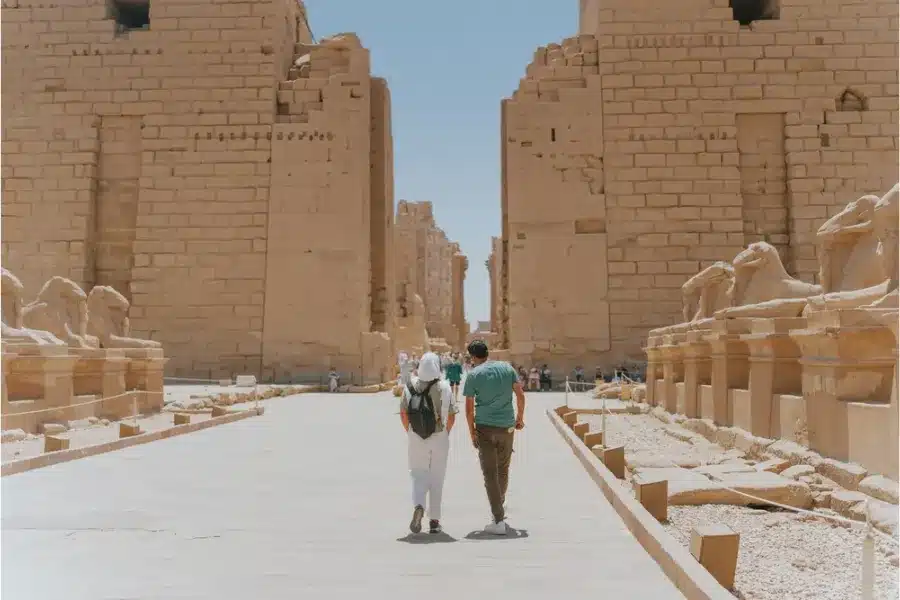
Karnak Temple is one of the largest and most impressive ancient temple complexes in Egypt.
| Feature | Detail |
|---|---|
| Day 1: Start our 12 Egypt Tours | Arrive to Egypt - Nile Dinner Cruise |
| Day 2: Giza & Cairo Highlights | Pyramids of Giza, Sphinx & The Grand Egyptian Museum |
| Day 3: Aswan Highlights | Philae Temple, The High Dam & The Unfinished Obelisk |
| Day 4: Explore Abu Simbel | Temples of Abu Simbel |
| Day 5: Sail to Kom Ombo | Kom Ombo & Edfu Temples Visit |
| Day 6: Visit Luxor Attractions | Valley of the Kings, Temple of Queen Hatshepsut & Colossi of Memnon |
| Day 7: Enjoy Hurghada Adventure | Snorkeling Excursion |
| Day 8: Continue Hurghada Adventure | Desert Safari & Bedouin BBQ Dinner |
| Day 9: Explore Cairo Attractions | The Egyptian Museum, Amr Ibn Al-Aas Mosque, Ben Ezra Synagogue, Hanging Church & Khan El Khalili Bazaar |
| Day 10: Visit Bahariya Oasis & The White Desert | Bahariya Oasis, The Black Desert, Valley of Agabat & The White Desert |
| Day 11: Visit Crystal Mountain & Back to Cairo | Crystal Mountain, one of the most stunning geological wonders of Egypt |
| Day 12: End our Cairo, Hurghada, Nile Cruise & Bahariya Tour | Enjoy breakfast at the hotel, then your driver will transfer you to Airport for your flight home |
Best Time to Visit Egypt
The best time to visit Egypt is generally from October to April, when the weather is cooler and more comfortable for sightseeing. This is especially important for outdoor sites such as the Pyramids of Giza, Luxor’s West Bank, Abu Simbel, and desert destinations.
Summer can be very hot, especially in Luxor, Aswan, and desert areas. However, Red Sea destinations such as Hurghada, Sharm El Sheikh, and Marsa Alam can still be popular in summer because travelers can spend more time by the water.
For the best balance of weather and sightseeing comfort, November, December, January, February, March, and early April are among the strongest months to visit Egypt.
Planning tip: If your itinerary includes Luxor, Aswan, Abu Simbel, or desert areas, the cooler months from October to April are usually more comfortable. If your focus is the Red Sea, summer can still work well because much of the trip is built around beaches and water activities.
How to Choose Where to Go in Egypt
Choosing where to go in Egypt depends on your travel style, trip length, and interests.
- If you love ancient history, focus on Cairo, Giza, Luxor, Aswan, Abu Simbel, Saqqara, Edfu, and Kom Ombo.
- If you want beaches and relaxation, choose Hurghada, Sharm El Sheikh, Dahab, Marsa Alam, or El Gouna.
- If you want desert landscapes and adventure, consider Fayoum, Siwa Oasis, Bahariya Oasis, and the White Desert.
- If you want a classic first-time Egypt trip, combine Cairo, Luxor, Aswan, Abu Simbel, and a Nile Cruise.
- If you want a balanced vacation, add the Red Sea at the end of your itinerary so you can relax after several days of sightseeing.
Practical tip: For a balanced first trip, avoid building an itinerary around only temples or only beaches. A stronger Egypt route usually combines Cairo and Giza, Luxor and Aswan, a Nile experience, and one relaxing finish such as the Red Sea, Fayoum, or a desert escape.
Travel Tips for Planning Where to Go in Egypt
- To enjoy the best places to visit in Egypt comfortably, it is important to plan your route carefully and prepare for different types of experiences.
- Visit outdoor sites early in the morning, especially the Pyramids of Giza, Luxor’s West Bank, Abu Simbel, and desert destinations. This helps you avoid stronger heat and larger crowds.
- Wear comfortable walking shoes because many temples, tombs, museums, and old streets require a lot of walking. Light clothing, sunglasses, sunscreen, and a hat are also useful, especially from spring to autumn.
- Use a licensed guide for major historical sites if you want to understand the stories behind the monuments. Places like Karnak Temple, the Valley of the Kings, Philae Temple, Abu Simbel, and Saqqara become much more meaningful when someone explains the history clearly.
- Do not try to fit too many cities into a short trip. Egypt is larger and more varied than many travelers expect, so leaving enough time for transfers and rest makes the journey much better.
- If you are planning to combine ancient sites with relaxation, keep the Red Sea at the end of your itinerary. After Cairo, Luxor, Aswan, and Abu Simbel, a few days in Hurghada, Sharm El Sheikh, or Marsa Alam can be the perfect way to end your trip.
Final Thoughts: Choosing Where to Go in Egypt
Choosing where to go in Egypt depends on your interests, travel time, and the type of experience you want. Cairo and Giza are the best starting point for the Pyramids, the Sphinx, major museums, Islamic Cairo, and the energy of Egyptian city life. Luxor and Aswan take you deeper into ancient temples, royal tombs, Nile scenery, and the stories of Egypt’s great kings and queens.
If you want more variety, Egypt also gives you excellent ways to extend your itinerary. Alexandria adds Mediterranean charm and Greco-Roman history, while Hurghada, Sharm El Sheikh, Dahab, Marsa Alam, and El Gouna are ideal for Red Sea beaches, diving, snorkeling, and resort relaxation. For travelers who prefer nature and adventure, Fayoum, Siwa Oasis, Bahariya Oasis, and the White Desert offer a completely different side of Egypt.
For a first trip, the strongest route usually starts with Cairo and Giza, continues to Luxor and Aswan, includes Abu Simbel if time allows, and finishes with the Red Sea or a desert escape for a more balanced journey. With the right itinerary, Egypt becomes more than a list of destinations. It becomes a complete travel experience shaped around history, culture, scenery, relaxation, and unforgettable moments.
From the Pyramids of Giza and the Grand Egyptian Museum to Luxor, Aswan, Abu Simbel, the Red Sea, and Egypt’s peaceful oases, Egypt Tours Group can help you build a private itinerary that matches your travel style.
FAQs About Where to Go in Egypt
Where should first-time travelers go in Egypt?
First-time travelers should usually start with Cairo, Giza, Luxor, Aswan, and Abu Simbel. These destinations include the Pyramids of Giza, the Great Sphinx, major museums, Karnak Temple, the Valley of the Kings, Philae Temple, and the Abu Simbel Temples.
How many days do you need to visit Egypt?
For a first trip to Egypt, 7 to 10 days is usually ideal. This gives you enough time to visit Cairo, Giza, Luxor, Aswan, and possibly Abu Simbel, while a 10 to 12 day trip can also include a Nile Cruise and the Red Sea.
What should I not miss when planning where to go in Egypt?
You should not miss the Pyramids of Giza, the Great Sphinx, the Grand Egyptian Museum, Karnak Temple, Luxor Temple, the Valley of the Kings, Philae Temple, Abu Simbel, Khan El Khalili, the Nile River, and at least one Red Sea destination.
What is the best time to visit Egypt?
The best time to visit Egypt is from October to April, when the weather is cooler and more comfortable for sightseeing. Summer can be hot, especially in Luxor, Aswan, and desert areas, but Red Sea destinations remain popular for beach holidays.
Is Luxor or Aswan better to visit?
What are the best beach places to visit in Egypt?
The best beach places to visit in Egypt are Hurghada, Sharm El Sheikh, Dahab, Marsa Alam, and El Gouna. These Red Sea destinations are popular for snorkeling, diving, resorts, boat trips, and beach relaxation.
Can I visit the best places in Egypt in one trip?
Yes, you can visit many of the best places in Egypt in one trip with a well-planned 10 to 12 day itinerary. A strong route can include Cairo, Giza, Luxor, Aswan, Abu Simbel, a Nile Cruise, and Hurghada or Sharm El Sheikh.