Amr Ibn Al-As Mosque: History, Architecture & Visitor Guide
Amr Ibn Al-As Mosque is the oldest mosque in Egypt and Africa, located in Old Cairo in the historic city of Fustat, the first Islamic capital of Egypt. Founded in 642 AD by the commander Amr Ibn Al-As after the Islamic conquest of Egypt, the mosque became one of Cairo’s most important Islamic landmarks, valued not only for its religious status but also for its place in the development of Islamic architecture.
Over the centuries, Amr Ibn Al-As Mosque went through several stages of expansion, restoration, and rebuilding, so its original form has changed significantly. Yet its historical and spiritual importance remains strong today. The mosque continues to attract worshippers, visitors, and travelers interested in Islamic history, thanks to its deep connection with Old Cairo and the early beginnings of Islamic Egypt. In this guide, we will explore the mosque’s history, architectural development, visiting information, and the most important nearby attractions.
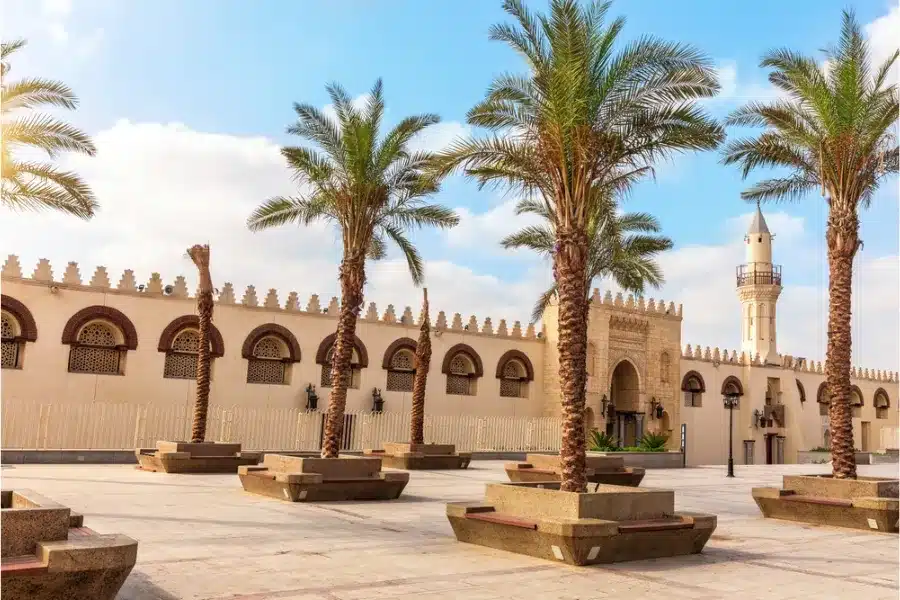
Exterior view of Amr Ibn Al-As Mosque, the oldest mosque in Egypt and Africa.
Why Is Amr Ibn Al-As Mosque Important?
Amr Ibn Al As Mosque is important not only because it is the oldest mosque in Egypt and Africa, but also because it marks the beginning of Islamic history in the country. Its location in Fustat, Egypt’s first Islamic capital, gives it a special place among the religious and historical landmarks of Old Cairo.
From its early years, the mosque was more than a place of prayer. It served as a center for worship, learning, and community life during the early Islamic period in Egypt. Over time, it became closely connected with the growth of Islamic society in Cairo and remained an active religious site for generations.
Today, the mosque still holds its importance as both a living place of worship and a historic landmark. Its value comes from its religious role, its connection to the foundation of Fustat, and its influence on the development of mosque architecture in Egypt.
Who Was Amr Ibn Al-As?
Amr Ibn Al-As was one of the most important Muslim leaders and one of the companions of Prophet Muhammad. He played a major role in the Islamic conquest of Egypt during the seventh century. He led the Islamic army into Egypt in 640 AD, and after the conquest, he established the city of Fustat, which became the first Islamic capital of the country and later helped in the rise of Islamic Cairo throughout the centuries.
The name of Amr ibn al-aas became connected to the mosque because he established the place that later became the first mosque in Egypt and Africa. The mosque was built in the area that gradually turned into an important religious and social center in the new city. Since that time, the mosque has become an essential part of Egypt’s Islamic history, not only because of its religious importance, but also because of its connection to the beginning of Islamic rule in Egypt. In the next section, you will learn more about the history of the mosque itself and how it passed through many stages of expansion and change after the Islamic conquest of Egypt.
History of Amr Ibn Al-As Mosque
The history of Amr Ibn Al-As Mosque extends for more than 13 centuries, and during this long period, the mosque passed through many stages of change that made it one of the most important Islamic and historical landmarks in Egypt. Although its current shape is different from the original mosque, the place still keeps its religious and historical importance in the Old Cairo area.
1. Foundation in 642 AD
Amr Ibn Al-As Mosque was founded in 642 AD after the Islamic conquest of Egypt led by Amr Ibn Al-As, and this took place in the city of Fustat, which later became the first Islamic capital of the country. The beginning of the mosque is also connected to a famous story about the tent of Amr Ibn Al-As, as he reportedly decided not to move it after finding a pigeon’s nest inside, so the place was chosen to become the location of the mosque.
2. The Original Simple Design
The original design of the mosque was very simple compared to its current appearance. It was built using simple materials available at that time, such as mud bricks, palm trunks, and palm leaves. It also did not include the decorations or architectural features that later became common in Islamic mosques.
3. Rebuilding and Expansion
The mosque passed through many stages of rebuilding and expansion over the centuries. It was affected by fires, political changes, and the natural deterioration of the building over time. Because of this, several rulers and Islamic dynasties restored and expanded the mosque to match the growing population and the increasing importance of the religious area.
4. The Current Structure
Most of the current structure of the mosque goes back to restoration and rebuilding works that were carried out during the nineteenth and twentieth centuries, so very little of the original building still remains today.
5. Historical Value Today
The importance of the mosque today does not come only from the building itself, but also from its historical value as the beginning of Islamic existence in Egypt, in addition to its role as an important religious center in the Old Cairo area until today.
How Amr Ibn Al-As Mosque Changed Through the Centuries
Amr Ibn Al-As Mosque changed a lot through centuries because of the expansions and restoration works that were added to it over time. The mosque which started with a very simple design later became larger and more developed architecturally because of its religious importance and its location in old Cairo. It also became one of the well-known examples of Egypt mosque architecture through Islamic history.
During different Islamic periods, many architectural elements were added to the mosque such as arcades, minarets, and open courtyards. The mosque also passed through several rebuilding stages to preserve it after some parts deteriorated over time. Because of that, the mosque no longer reflects only one architectural period, but combines influences from different historical eras.
When visiting the mosque today, visitors can notice that the current building carries architectural features developed through many centuries, not only from the early Islamic period. This gives the mosque both religious value and architectural importance at the same time.
Despite all these changes, the mosque still keeps its importance as a historic mosque in Cairo connected to the beginnings of Islamic history in Egypt, and it remains one of the most important religious and historical landmarks in the city until today.
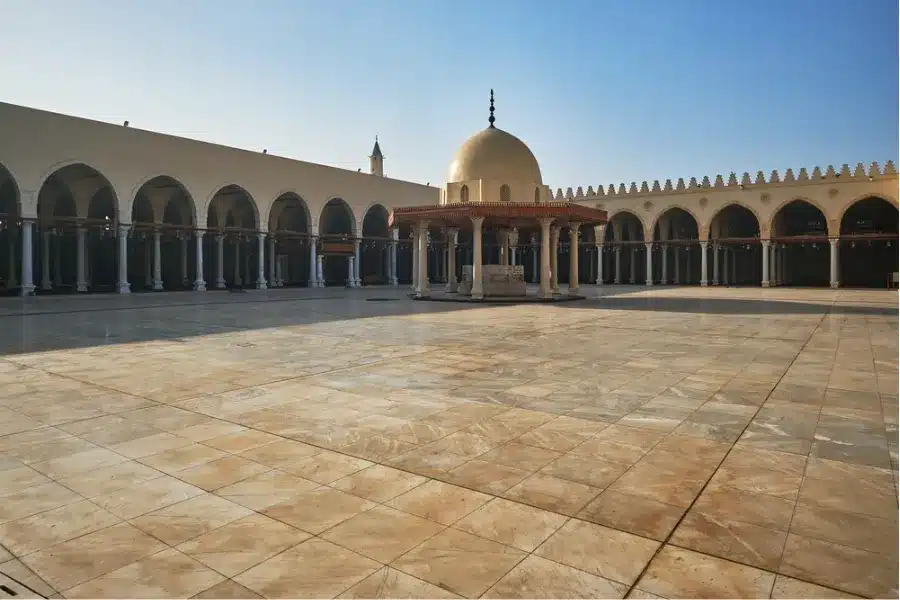
The spacious courtyard of Amr Ibn Al-As Mosque reflects its historic Islamic architecture.
Architecture and Design of Amr Ibn Al-As Mosque
The design of Amr Ibn Al-As Mosque reflects the simplicity of early Islamic architecture, while also showing the impact of the many expansions and restorations it has gone through over the centuries. The mosque’s current form does not fully represent the original structure, but it still preserves its original spirit as a place for prayer and gathering.
Over time, the mosque developed into a layout similar to a hypostyle mosque, with a large prayer hall supported by rows of columns and a central courtyard, or sahn, at its center. This open courtyard creates a sense of space and calm, while the surrounding arcades help organize movement and allow the mosque to accommodate large numbers of worshippers.
The mosque includes several important architectural elements, such as the main prayer hall and the qibla riwaq, which contains the mihrab. Its minarets add a strong visual presence, while the arches and arcades connect different parts of the building smoothly. The stone and marble columns give the mosque a simple yet impressive character.
The importance of its design comes from its simplicity and function rather than heavy decoration. Each renovation and expansion left its own mark, making it an important example of how the Egyptian mosque evolved over time and giving visitors a chance to see different layers of Cairo’s Islamic history.
Is Amr Ibn Al-As Mosque Still Active Today?
Yes, Amr Ibn Al-As Mosque is still an active mosque in Cairo today, not just a historical site visited by tourists. Daily prayers are still held there regularly, including Friday prayers, as it remains an important part of religious life in the Old Cairo area. This is what gives the place a special character, as its role is not limited to being just a witness to history, but it continues to serve as a living center of worship and gathering.
Key Details About the Mosque Today:
• Daily Prayers: The mosque receives worshippers every day, and all five daily prayers are performed regularly. Friday prayer is also held there.
• Visitor Access: Visitors are generally welcome outside prayer times, allowing them to explore the mosque respectfully.
• Religious Atmosphere: Modest clothing is required, and visitors are expected to maintain silence and respect the spiritual setting.
• Historic Importance: Despite multiple restorations over time, the mosque still preserves its strong religious and historical significance.
What makes the mosque truly distinctive is that it continues to serve its original purpose even today. Unlike many historical sites in Cairo that have become simply landmarks for visitors, Amr Ibn Al-As Mosque still brings together history and worship in one place, giving visitors a unique chance to experience Islamic history as a living part of the present.
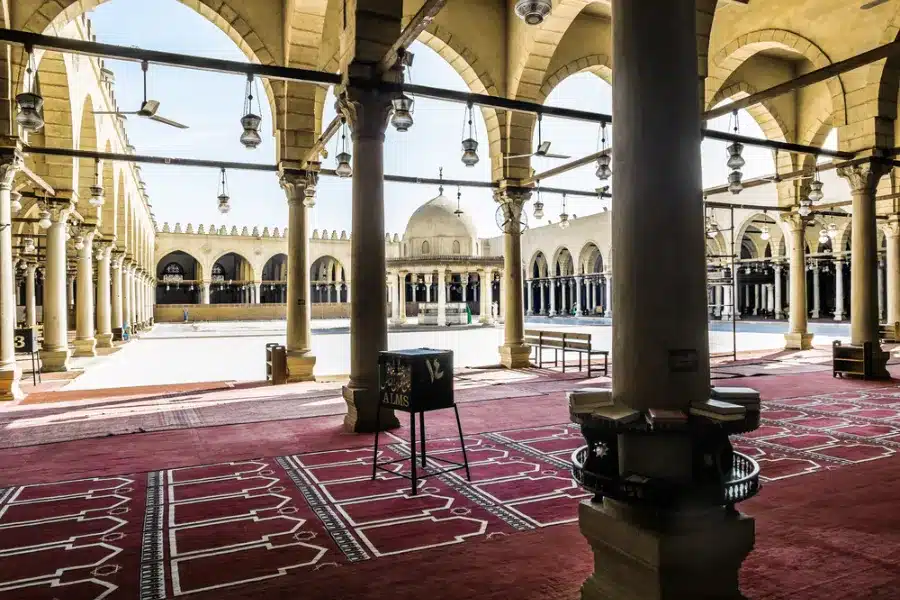
Interior view of the prayer hall at Amr Ibn Al-As Mosque in Old Cairo.
Visiting Amr Ibn Al-As Mosque in Cairo
Visiting Amr Ibn Al-As Mosque is different from visiting any other archaeological site, as it is still an active religious place today. Visiting this mosque in Egypt Cairo becomes easier and more comfortable when you know a few practical details in advance.
Opening Hours
Amr Ibn Al-As Mosque is generally open daily from 09:00 AM to 04:00 PM. Since it is still an active mosque, it is recommended to avoid visiting during prayer times, especially on Fridays when the mosque can be more crowded. Opening hours may also change during religious occasions or special events.
Entry Fee and Tickets
Entry to Amr Ibn Al-As Mosque is generally free of charge, and visitors do not usually need to buy tickets or make an advance booking. If you are searching for Amr Ibn Al-As Mosque tickets, you will usually find that no official entry ticket is required. Visitors may leave a small donation if they wish, but it is not mandatory.
Dress Code
Modest clothing is required when visiting the mosque, so it is recommended to cover your shoulders and knees. You may also be asked to remove your shoes before entering certain areas.
Best Time to Visit
Morning or late afternoon are usually the best times to visit, as the mosque is quieter and the lighting is better. Visiting outside prayer times is generally more comfortable as well.
Can Non-Muslims Visit?
Yes, non-Muslims can visit Amr Ibn Al-As Mosque, preferably outside prayer times. Visitors are expected to dress modestly, keep a respectful attitude, avoid disturbing worshippers, and follow any instructions given at the mosque.
Who Will Enjoy Visiting Amr Ibn Al-As Mosque?
Visiting Amr Ibn Al-As Mosque does not suit only one type of visitor. It is an experience that matches different interests within the Old Cairo area, which makes it a distinctive destination for many travelers.
History lovers will see the mosque as a place full of stories connected to the beginning of Islamic history in Egypt. Meanwhile, architecture enthusiasts will enjoy seeing how the mosque’s design has developed over the centuries, and the features that reflect the evolution of Islamic architecture.
For culture seekers, visiting the mosque offers a chance to experience a place that is still a living part of daily religious life. Photographers can also find distinctive angles in the courtyard, columns, and peaceful atmosphere to capture images that reflect the spirit of the place.
The mosque is also a great stop for visitors exploring the Old Cairo area, thanks to its close location to many important religious and historical landmarks.
In the end, the value of the visit may differ from one person to another depending on their interests, but it remains an important experience for anyone looking to understand an essential part of Cairo’s history and cultural identity.
How to Get to Amr Ibn Al-As Mosque
Amr Ibn Al-As Mosque is located in an important historical area inside Old Cairo, near many of Cairo’s most famous religious and cultural landmarks. Reaching this mosque in Egypt Cairo is easy because of the different transportation options available.
By Metro
Mar Girgis Metro Station is usually the nearest station to the mosque. It is considered one of the easiest ways to reach the area, especially for visitors moving around Cairo by metro.
By Taxi or Ride Apps
Taxis and ride apps like Uber and Careem provide a comfortable way to reach the mosque directly. Most drivers are also familiar with the location because of its historical importance and popularity among visitors.
Through Guided Tours
Many Old Cairo and Islamic Cairo tours include the mosque as part of their program, which makes it a good option for visitors who prefer exploring the site with historical explanation from a guide.
Walking Around the Area
Some visitors prefer discovering the area on foot, as the mosque is located close to several other historical landmarks, making the walk between sites easy and enjoyable.
Because of its central location, the mosque is an easy stop to include in any tour for exploring Old Cairo and discovering Cairo’s nearby Islamic and historical attractions.
Things to See Near Amr Ibn Al-As Mosque
Visiting Amr Ibn Al-As Mosque can be a great start to discovering different layers of Cairo’s history. The surrounding area inside Old Cairo includes various religious and historical sites that reflect the succession of civilizations and cultures throughout the centuries.
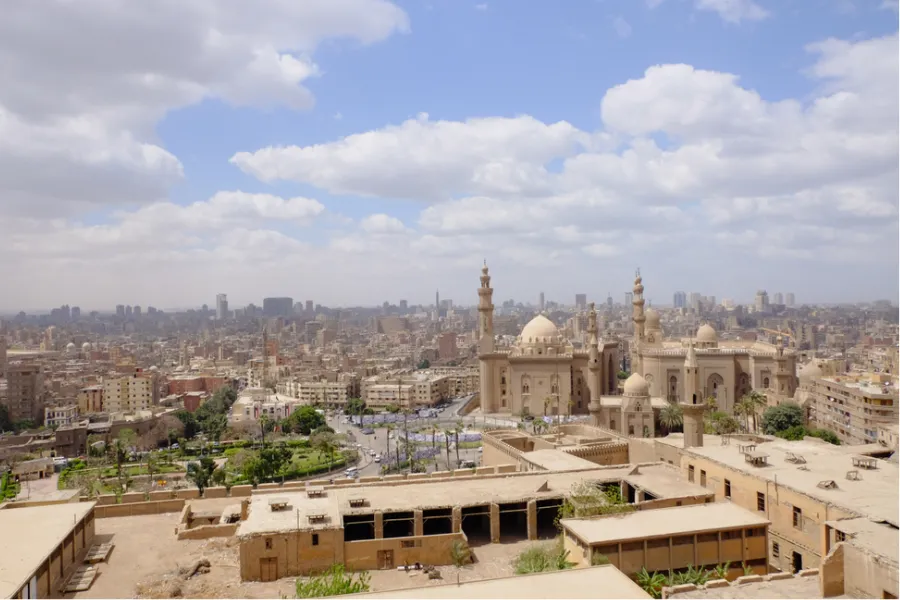
Historic Cairo is home to many religious and cultural landmarks near Amr Ibn Al-As Mosque.
Coptic Cairo
One of the most remarkable historical districts near Amr Ibn Al-As Mosque. The area is home to several ancient churches and religious landmarks, including Saints Sergius and Bacchus Church and Saint George Church. Visiting this district helps travelers discover another essential side of Old Cairo’s religious diversity and cultural identity.
The Hanging Church
The Hanging Church one of the most famous historical churches in Cairo, distinguished by its religious importance and unique architectural design.
The Coptic Museum
The Coptic Museum includes a unique collection of artifacts and manuscripts that reflect Coptic heritage in Egypt across different periods.
Ben Ezra Synagogue
Ben Ezra Synagogue, one of the most well-known historical Jewish landmarks in Old Cairo, connected to several important historical stories.
Babylon Fortress
The remains of an ancient Roman fortress that reveal part of the area’s history before the Islamic era.
National Museum of Egyptian Civilization (NMEC)
The NMEC is a perfect choice for museum lovers, as it offers a comprehensive presentation of Egyptian civilization from ancient times to the present day.
Mosque of Ibn Tulun
Ibn Tulun Mosque is a great additional stop for those who want to continue exploring Cairo’s historical mosques, and it can be easily reached by taxi.
Combining these sites in one day gives visitors a better understanding of the religious and cultural diversity that shaped Cairo’s history and identity over the centuries.
Tips Before Visiting Amr Ibn Al-As Mosque
Visiting Amr Ibn Al-As Mosque becomes more enjoyable when visitors are prepared for the nature of the place, as it is both an active mosque and a historical site at the same time. Some simple tips can make the visit easier and more comfortable.
1. Dress Modestly
It is better to wear modest clothes suitable for visiting mosques, with shoulders and knees covered.
2. Visit Outside Prayer Times
Try to visit the mosque outside prayer times, especially on Fridays, to enjoy a quieter atmosphere.
3. Wear Comfortable Shoes
The surrounding area is suitable for walking, especially if you plan to explore more attractions nearby.
4. Respect Photography Rules
Taking photos is usually allowed, but it is better to avoid photographing worshippers or disturbing them.
5. Carry Water in Summer
During summer, Cairo’s weather can be hot, so carrying a bottle of water is a good idea.
6. Combine the Visit with Nearby Attractions
You can make the most of your visit by exploring other historical places close to the mosque.
In the end, respecting the nature of the place helps visitors enjoy the historical and cultural experience in a better way.
Conclusion
Amr Ibn Al-As Mosque is not just an old historical landmark, but a living witness to the early beginnings of Islamic history in Egypt. Its value comes from its historic location, its continued role as an active place of worship, and its strong connection to the city of Fustat and the rise of Islamic Cairo. This is what makes the mosque a place that combines historical depth with a strong spiritual presence.
Visiting the mosque becomes even more meaningful when combined with nearby attractions in Old Cairo, as it gives visitors a wider understanding of the religious and cultural diversity that shaped Cairo throughout the centuries. If you are planning to explore this historic area in a more comfortable and organized way, Egypt Tours Group can help you arrange a complete historical tour that includes Amr Ibn Al-As Mosque and the surrounding landmarks for a richer experience in the heart of Cairo.
How old is the Mosque of Amr Ibn Al-As?
Amr Ibn Al-As Mosque was originally built in 642 AD, making it more than 1,300 years old. Although the structure has gone through several restorations and expansions over the centuries, it is still considered one of the oldest and most important Islamic landmarks in Cairo.
Can tourists visit Amr Ibn Al-As Mosque?
Yes, tourists can visit Amr Ibn Al-As Mosque. Visits are usually allowed outside prayer times, giving visitors the chance to explore the mosque peacefully. It is important to respect the calm atmosphere of the place and follow the rules during your visit.
Is there an entry fee for Amr Ibn Al-As Mosque?
Entry to Amr Ibn Al-As Mosque is usually free. There are generally no official tickets or entrance fees required to visit. However, some visitors choose to leave small donations as a respectful gesture to support the maintenance of the mosque.
What should I wear when visiting the mosque?
Modest clothing is required when visiting the mosque. Visitors should cover their shoulders and knees, and women may prefer carrying a scarf if needed. You may also be asked to remove your shoes before entering some parts of the mosque.
Can non-Muslims enter Amr Ibn Al-As Mosque?
Yes, usually non-Muslims can enter Amr Ibn Al-As Mosque. Visits are generally welcomed outside prayer times to avoid disturbing worshippers. Respecting the place, wearing modest clothes, and maintaining quiet behavior are important during the visit.
What is the best time to visit Amr Ibn Al-As Mosque?
Morning or late afternoon are usually the best times to visit Amr Ibn Al-As Mosque. Visiting outside prayer times offers a quieter experience and better opportunities to explore comfortably. It is better to avoid Friday midday because the mosque is usually crowded.
How do I get to Amr Ibn Al-As Mosque?
Amr Ibn Al-As Mosque is located in Old Cairo, near the historic area of Fustat. The nearest metro station is Mar Girgis Metro Station, which makes reaching the mosque easy. Taxis and ride apps like Uber are also comfortable options.
What can I see near Amr Ibn Al-As Mosque?
The mosque is close to several important landmarks. Nearby places include the Hanging Church, the Coptic Museum, Ben Ezra Synagogue, and Babylon Fortress. This makes the area perfect for combining your visit with a wider historical tour around Old Cairo.
Is Amr Ibn Al-As Mosque the oldest mosque in Egypt?
Yes, Amr Ibn Al-As Mosque is considered the oldest mosque in Egypt and Africa. It was the first mosque built after the Islamic conquest of Egypt. While the current building has gone through many restorations, its historical importance remains unchanged.
Why is Amr Ibn Al-As Mosque important?
Amr Ibn Al-As Mosque is important because it marks the beginning of Islamic history in Egypt. It is closely connected to the founding of Fustat and still functions as an active mosque today. This gives it a special value that combines history, religion, and culture.