The Nile River: Lifeline of Egypt and Source of Civilization
The Nile River is not just a river you read about in history books—it is a living force that continues to shape life in Africa today. Stretching about 6,650 kilometers, the Nile is often considered the longest river in the world. It winds through jungles, deserts, and bustling cities before finally reaching the Mediterranean Sea.
So, where exactly is the Nile River? It flows across 11 African countries, beginning from the sources of the White Nile and the Blue Nile, which meet in Sudan, and then continuing through Egypt until it reaches the sea. Along its journey, it has always provided people with water, fertile soil, and a reason to settle. Even today, the Nile stands as a symbol of history, culture, and exploration—whether you experience it on a cruise between Luxor and Aswan or near the Nile River Delta.
Key Takeaways
- The Nile River stretches over 6,650 km across Africa, often considered the world’s longest river.
- The Nile passes through 11 countries, providing water, fertile land, and livelihoods.
- In Egypt, the Nile is the lifeline for civilization, agriculture, and culture.
- The Nile Delta is among the most fertile lands on Earth and powers Egypt’s economy.
- From ancient rituals to modern Nile cruises, the river continues to inspire travelers worldwide.
Where is the Nile River?

Nile River is located in Africa, flowing through 11 countries from the sources of the White Nile and Blue Nile until they meet in Sudan, and then passing through Egypt all the way to the Mediterranean Sea.
The Nile River flows through 11 countries in northeastern Africa.
The Nile River, located in northeast Africa, passes through 11 countries and provides them with water and fertile land… Together, these 11 Nile River countries form the Nile Basin, covering over three million square kilometers and sustaining more than 280 million people.
Nile River Path to the Mediterranean
The Nile River in Africa is an extraordinary waterway… In Khartoum, the White Nile meets the Blue Nile, forming the main branch that continues to the Mediterranean. In Egypt, it passes through a narrow but fertile valley, earning the nickname “the Father of African rivers.”
Nile River Map & Location

With a closer look at the Nile River map, you will see its journey from the source to the mouth… Understanding the Nile’s tributaries and path shows its vital role in shaping civilizations along its banks.
Maps show two major tributaries
The two major tributaries are the White Nile (from Lake Victoria) and the Blue Nile (from Lake Tana). The Blue Nile’s annual floods enrich soils in Sudan and Egypt. Together, they form the main Nile.
Major cities: Cairo, Luxor, Aswan & Khartoum
Cairo, Luxor, Aswan, and Khartoum are key hubs shaped by the river’s flow—home to world-class monuments, Nubian heritage, and the famous Nile confluence at Khartoum.
Source of the Nile River
The source of the Nile River is Lake Victoria in East Africa (White Nile) and Lake Tana in Ethiopia (Blue Nile).
The White Nile begins in Lake Victoria
The White Nile starts at Lake Victoria, bordered by Uganda, Kenya, and Tanzania, then travels north through swamps and plains to meet the Blue Nile in Khartoum.
The Blue Nile rises at Lake Tana
Shorter but rich in water and silt, the Blue Nile floods during the rainy season and contributes much of the fertile sediment downstream.
Confluence in Khartoum, Sudan
In Khartoum, the White and Blue Nile meet—one of Africa’s most important hydrological junctions—forming the main Nile that flows toward Egypt.
How Long is the Nile River?
The Nile River stretches approximately 6,650 kilometers (4,130 miles) from its distant headwaters in East Africa to its delta on the Mediterranean Sea, making it widely recognized as the world’s longest river. Flowing through 11 countries, it provides life and sustenance to millions of people across the African continent.
The world’s longest river (with a debate)
For centuries, geographers and explorers have debated the title of the world’s longest river — the Nile River vs. Amazon River discussion continues even today. While the Nile is traditionally credited as the longest, stretching from Lake Victoria in Uganda to northern Egypt, some modern satellite measurements suggest the Amazon may be slightly longer depending on how tributaries are measured. Regardless of the debate, the Nile’s historical and cultural impact far exceeds its length — it’s the artery that sustained ancient Egypt and remains one of the most iconic Nile River facts in human history.
Length and significance
Beyond its impressive measurement, the Nile River length represents far more than numbers on a map. It symbolizes continuity, connection, and survival. From the equatorial lakes of Africa to the fertile Nile Delta, this extraordinary river links civilizations, landscapes, and centuries of human progress — a true testament to the power of nature and time.
The Nile Delta

Where the Nile River meets the Mediterranean, it forms one of Earth’s most fertile lands: the Nile Delta.
Location & size of the Nile River Delta
In Northern Egypt, the Delta is framed by the Mediterranean and the Rosetta & Damietta branches, spanning ~240 km of coastline and feeding millions.
Governorates
Includes Menofia, Alexandria, Beheira, Kafr El-Sheikh, and Dakahlia—key agricultural and industrial hubs powered by the Nile.
History of the Nile River
Foundation of Ancient Egypt
“Egypt is the gift of the Nile.” This timeless phrase by Herodotus perfectly captures how the Nile River shaped Egyptian civilization. Its fertile banks provided the foundation for the rise of one of the world’s greatest empires. Early settlers cultivated crops, developed irrigation systems, and built thriving communities that depended entirely on the river’s life-giving water. Over time, the Nile became the unifying thread connecting Egypt’s Upper and Lower regions into a single, powerful kingdom.
Annual Floods and Agricultural Prosperity
Every year, the Nile flooded its valley, spreading a layer of rich black silt across the land. This natural rhythm transformed the surrounding desert into fertile farmland and determined Egypt’s agricultural calendar. The floods were so vital that ancient Egyptians built their economy, religion, and calendar around them—celebrating festivals of gratitude to the gods for the river’s bounty. Without the Nile’s predictable flooding, Egypt could never have supported such a prosperous civilization in an otherwise arid region.
Trade, Transport, and Unification
The Nile River in Egypt also served as a natural highway that linked distant regions of the country and encouraged cultural unity. Boats carried stone, grain, gold, and people along its current, turning the river into the backbone of trade and communication. Temples and cities rose along its banks, from Thebes and Luxor in the south to Memphis and Cairo in the north. This constant flow of commerce and ideas fostered both political unification and artistic flourishing, shaping Egypt’s identity for more than five thousand years.
The Nile River in Ancient Egyptian Religion & Culture

For the Ancient Egyptians, the Nile River was more than a source of water — it was a sacred gift from the gods, central to their faith and daily existence. The river’s cycles of flooding and renewal mirrored their beliefs about life, death, and rebirth, shaping temples, rituals, and myths that endured for thousands of years.
The Nile was worshipped as a life-giving force in Egyptian mythology
In Nile River mythology, the river symbolized creation itself. Ancient Egyptians believed the Nile flowed directly from the heavens, carrying divine energy to sustain the land. Its life-giving waters nourished crops, animals, and people — every aspect of survival. The Egyptians viewed the river as a sacred being to be honored through offerings and prayers. From the daily rhythm of agriculture to the grand temples along its banks, every part of Egyptian life reflected deep reverence for this divine flow. To them, the Nile was not just water, but the living spirit of fertility, renewal, and eternal continuity.
Hapi, the god of the flood, symbolized fertility and abundance
Among the many Nile River gods, Hapi stood as one of the most beloved and essential. Known as the god of the flood, Hapi represented the prosperity that the annual inundation brought to Egypt. He was usually depicted as a well-fed man with blue or green skin, wearing lotus and papyrus plants — symbols of both Upper and Lower Egypt. His image reflected fertility and abundance, celebrating how the river united the country and renewed the land each year. Egyptians offered food and hymns to Hapi, believing his blessings ensured plentiful harvests and peace across the kingdom.
Rituals and festivals celebrated the annual flooding of the Nile
The annual flooding of the Nile, known as the Akhet season, was one of the most sacred events in Ancient Egyptian Nile culture. When the waters rose, the Egyptians held festivals filled with music, feasts, and offerings to the gods, especially Hapi. These Nile River rituals symbolized gratitude for the fertile soil and divine order that kept Egypt thriving. Priests performed ceremonies at temples near the riverbanks, while people gathered to celebrate the renewal of life. The rhythm of the Nile flood was deeply intertwined with agriculture, faith, and identity — reminding Egyptians that their prosperity depended on balance between the earth and the divine.
Wildlife of the Nile River

Beyond history and civilization, the Nile River sustains one of Africa’s richest ecosystems. From powerful crocodiles to elegant birds and ancient plants, the river’s wildlife has always been a vital part of Egypt’s natural and cultural identity.
The Nile is home to crocodiles, hippos, and over 300 species of fish
The Nile River animals represent an incredible range of life adapted to its waters. The most famous is the Nile crocodile, one of the largest reptiles in the world, which can grow over six meters long. These predators once posed a real danger to anyone who ventured too close to the riverbanks. Alongside them live Nile hippos, graceful yet powerful creatures that spend most of their day submerged in water. The river also teems with more than 300 species of fish, supporting local fisheries and communities that rely on this biodiversity for food and trade.
Birds such as herons, kingfishers, and egrets thrive along its banks
The Nile River birds add color and music to the river’s scenery. Species like herons, kingfishers, and egrets can be seen nesting among reeds or gliding over the water’s surface. Migratory birds also stop here during seasonal journeys, making the Nile an essential sanctuary for avian life. These birds not only enrich Egypt’s landscapes but also help maintain the ecological balance by controlling insect populations and spreading plant seeds along the riverbanks.
Papyrus plants once grew abundantly on the Nile’s shores
Among the most iconic Nile River plants is the papyrus reed, which flourished along the river’s edges in ancient times. Papyrus was more than a plant — it was a cornerstone of Egyptian innovation, used to make boats, mats, and most importantly, the world’s first form of paper. This humble reed helped record history, religion, and trade, becoming a timeless symbol of Egyptian ingenuity. Today, papyrus can still be found in parts of Upper Egypt, reminding us how nature and culture intertwined along the papyrus-lined Nile River.
Modern Importance of the Nile River Egypt
Until now, the Nile continues to be Egypt’s lifeline, shaping agriculture, water security, and development.
Water & agriculture
The Nile supplies nearly 90% of Egypt’s freshwater, enables canal irrigation, and supports key crops like wheat, rice, and sugarcane.
Aswan High Dam
Built in 1970 to control floods and generate hydroelectricity, anchoring modern industry and daily life.
Politics & GERD
Regional cooperation remains essential as Ethiopia’s GERD focuses attention on fair water sharing among basin countries.
Nile River Tourism & Cruises

Travelers from around the world come to Egypt to experience the Nile River through unforgettable Nile cruise tours. Sailing along the river is one of the most peaceful and inspiring ways to connect with Egypt’s ancient heritage, where every sunrise over the water brings history to life.
Nile cruises are among the most popular ways to explore Egypt
A Nile River cruise is more than just a journey — it’s an immersion into thousands of years of history wrapped in modern comfort. Guests relax on elegant ships equipped with restaurants, pools, and panoramic decks while drifting past timeless temples and traditional villages. These Egypt Nile cruises blend the serenity of the river with cultural discovery, offering daily excursions guided by expert Egyptologists. From sunrise over the Theban mountains to evening dinners under the stars, cruising the Nile is one of the most memorable experiences any traveler can have in Egypt.
Cruises usually run between Luxor and Aswan
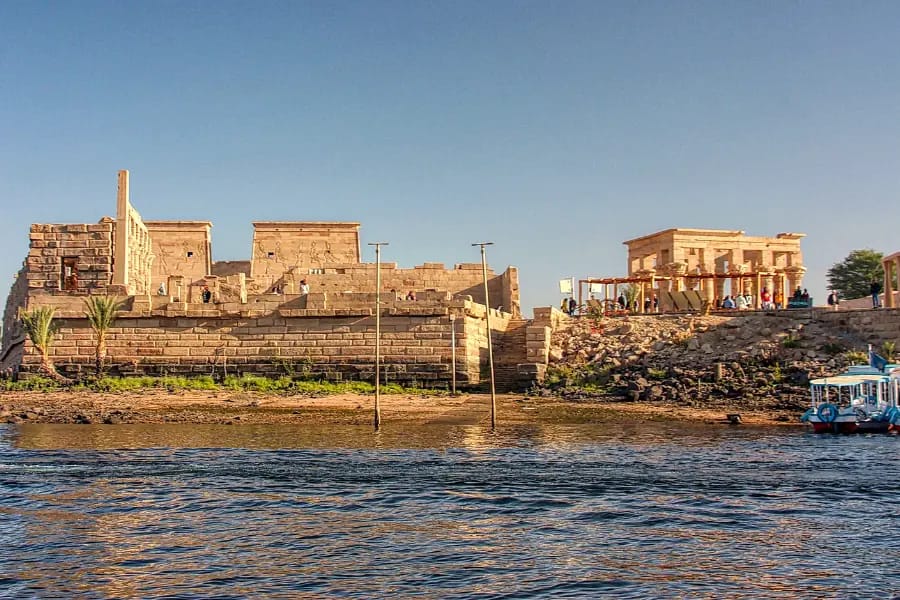
Most Nile River tours follow the legendary route between Luxor and Aswan, the heart of ancient Upper Egypt. Along this corridor, travelers explore iconic landmarks like the Karnak Temple, Luxor Temple, Valley of the Kings, Edfu Temple dedicated to Horus, and Kom Ombo Temple shared by Sobek and Haroeris. In Aswan, highlights include the Philae Temple and the Aswan High Dam — symbols of Egypt’s engineering and spiritual heritage. Each stop reveals a new chapter of history, making the Luxor to Aswan cruise one of the most enriching Egypt Nile tours available.
The best time for a Nile River cruise is from October to April
The best time for a Nile cruise is during Egypt’s cooler months, from October to April. During this season, daytime temperatures range between 20°C and 28°C, offering perfect weather for sightseeing and deck lounging. The winter sun provides soft, golden light ideal for photography and exploration. While summer (May to September) can reach above 38°C, it also brings fewer crowds and lower prices, appealing to travelers seeking quieter voyages. Whether you sail in the mild winter or the warm summer breeze, each Nile cruise season unveils the river’s timeless beauty from a different perspective.
Conclusion
The Nile River is more than a waterway — it is the heart of Egypt and a symbol of life across Africa. For thousands of years, it has shaped civilizations, nourished farmlands, and inspired legends. Today, its importance continues through agriculture, hydroelectric energy, and tourism. Whether you’re exploring ancient temples, sailing on a Nile River tour, or simply watching the sunset over its waters, the Nile River Egypt remains timeless — a living link between the world’s past and present, and a journey that every traveler should experience at least once in their lifetime.
Travel Tip from Egypt Tours Group 🌿
To experience the Nile in person, explore our Nile River Cruise Packages between Luxor and Aswan or our Egypt Tour Packages — a once-in-a-lifetime journey combining comfort, culture, and stunning scenery.
The Nile River begins primarily at Lake Victoria in East Africa and flows north through Sudan and Egypt, emptying into the Mediterranean Sea. It passes through 11 countries, serving as a vital water source across northeastern Africa.
The Nile River flows through or touches 11 countries: Burundi, Rwanda, Tanzania, Kenya, Uganda, South Sudan, Sudan, Ethiopia, Eritrea, the Democratic Republic of the Congo, and Egypt. Each of these nations depends on its waters for agriculture, power, and transport.
Known as the “lifeline of Egypt,” the Nile River Egypt has supported life for more than 5,000 years. It provides fertile soil for crops, water for irrigation, and has been essential for transportation, trade, and settlement along its banks since ancient times.
The Nile River is home to diverse wildlife, including Nile crocodiles, hippos, and over 300 species of fish. Along its banks, papyrus plants grow naturally, while herons, egrets, and kingfishers are among the most common birds in the ecosystem.
Yes, travelers can still enjoy Nile River cruises, mainly between Luxor and Aswan, visiting temples like Karnak and Philae. However, swimming is generally not recommended due to strong currents and local wildlife such as crocodiles.
The Nile River stretches about 6,650 kilometers (4,130 miles), making it the longest river in the world by most measurements. Though some studies suggest the Amazon might be slightly longer, the Nile remains the most historically significant river on Earth.